Converting Your Flat Roof? Here's What the Project Will Actually Cost You

Converting Your Flat Roof? Here’s What the Project Will Actually Cost You

Converting Your Flat Roof? Here's What the Project Will Actually Cost You

Assumption versus inspection. Twenty-five grand is the number people say to me when they haven't opened the ceiling yet - and in Queens, a simple code-compliant roof access and light-use terrace conversion often starts around $35,000-$60,000, while more involved projects commonly land in the $65,000-$120,000+ range. That number is usually wrong until structure, slope, access, and waterproofing have actually been looked at, because any one of those four things can quietly double what you thought you were spending.

Queens Price Ranges Before Anyone Opens the Roof

A homeowner asking for the cost to convert a flat roof to a terrace, or the cost to turn a flat roof into a balcony, is really asking several different cost questions at once - and they don't always realize it yet. There's the dream version: clean pavers, a railing, some lighting, and a view. Then there's the rain version: what the roof system underneath has to do in February, after six inches of snow, with five adults and a planter near the corner. Those two versions can be $40,000 apart before a single board goes down.
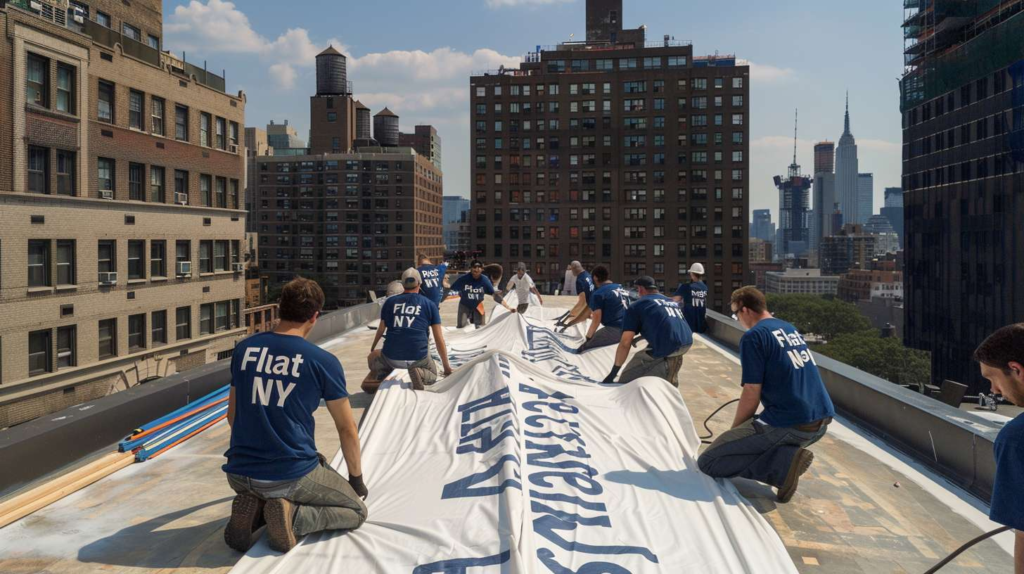
A flat roof being converted on a residential home, showing workers installing new materials and roofing structure.

Queens Flat Roof Conversion: Cost Scenarios at a Glance

Project Scenario Typical Queens Price Range What's Assumed
Basic walk-out terrace refresh on already engineered roof $35,000 - $50,000 Existing structure is load-rated, membrane is intact, legal access already in place
Terrace conversion needing drainage correction and membrane replacement $50,000 - $75,000 Ponding exists, membrane is aging or failed, tapered insulation needed for slope correction
Roof deck with railing, upgraded access, and moderate framing reinforcement $65,000 - $95,000 Some joist sistering required, bulkhead or stair access upgrade, code-compliant guard rail design
Balcony-style project with major structural work and code upgrades $85,000 - $130,000 Engineer-required load upgrades, full membrane system, DOB filings, legal access from scratch
Premium entertaining roof with pavers, custom rail, lighting rough-ins, and extensive engineering $120,000 - $180,000+ Full structural redesign, premium finishes, custom fabrication, MEP rough-ins, multi-agency approvals

Note: Permits, DOB filings, and hidden framing conditions can move pricing significantly in either direction. These ranges reflect typical Queens project conditions - not national averages.

What Changes the Price Fastest

Biggest Cost Trigger

Structure and load capacity - if your joists weren't designed for occupied use, that gap gets corrected before anything else moves forward.

Most Ignored Issue

Drainage and ponding - standing water after rain is a disqualifier, not a cosmetic complaint.

Most Misunderstood Line Item

Legal access and guard details - a door that isn't code-compliant and a railing that isn't engineered can hold up a full permit approval.

Fastest Way to Waste Money

Installing finishes before fixing the roof system - pavers and decking over a failing membrane just delay the inevitable and make the repair more expensive.

Where the Estimate Gets Heavier Than the Deck Boards

Structural Load and Framing Reality

Here's the part nobody likes: the flat roof itself is often not the expensive surprise. What surprises people is what's underneath it. Engineers may require sistering joists, adding beams, reinforcing bearing points, or capping allowable occupancy - and as Marisol Vega, with 19 years in flat roofing focused on drainage failures and conversion prep across Queens, often tells clients, the building doesn't care what your design inspiration looks like. It cares about load math.

Last fall in Elmhurst, I watched a homeowner's face change the second the engineer mentioned live load. He thought live load meant how many people could stand up there. And yes, that's part of it - but it also means patio furniture, planters (which can hit 100+ lbs when wet and planted), snow accumulation, and the dynamic load of six people shifting their weight toward a railing post at the same time. None of that was priced into the "simple deck" number in his head.

Blunt truth: if your roof holds water now, it's not ready for furniture and five adults. The membrane tie-ins, tapered insulation, flashing height at the door threshold, and how railing posts penetrate the assembly - those details decide whether this terrace holds up for 20 years or calls you at 8:00 p.m. on a Sunday. The dream version looks great in photos. The rain version is the one that has to work every time.

Drainage, Slope, and Waterproofing Transitions

Hidden Cost Driver Why It Matters Typical Budget Effect in Queens
Structural reinforcement Older Queens framing often wasn't designed for occupied roof loads; sistering or beam additions may be non-negotiable +$8,000-$25,000+ depending on span and access
Tapered insulation / slope correction Flat roofs with zero drainage pitch will pond; tapered insulation creates slope without rebuilding the deck +$5,000-$15,000 depending on roof size and severity
New membrane system A finish layer over a failing membrane fails twice; the right sequence is waterproofing first, finishes second +$6,000-$18,000 for TPO, modified bitumen, or liquid-applied systems
Guard / railing engineering Post bases must be engineered so penetrations don't compromise the waterproofing layer; NYC code requires specific rail heights and load ratings +$4,000-$14,000 for engineered detail, fabrication, and install
Stair / bulkhead / access upgrades A skylight hatch or interior pull-down does not meet code for regular occupancy; a proper bulkhead or compliant door is required +$7,000-$22,000 depending on stair run, bulkhead size, and finish
Permit / design / DOB filing fees NYC requires filings for occupied roof changes; skipping this creates resale and insurance exposure that costs far more later +$3,500-$10,000+ depending on scope and whether an expediter is needed

What Homeowners Get Wrong About Terrace and Balcony Conversions

Myth Reality
"It's mostly decking and railings." Decking and railings are the last 20-30% of the budget. Structure, waterproofing, drainage, and code access are the other 70-80%.
"If the roof isn't leaking, it's ready." A roof that's "not leaking" may still be ponding, under-sloped, and carrying a membrane that wasn't designed for foot traffic or railing penetrations.
"Pavers protect the roof by themselves." Pavers protect against UV and foot traffic only. They trap drainage problems and hide membrane deterioration until water has already found its way inside.
"A balcony is just a smaller terrace." Balcony-style occupancy triggers different live load assumptions, guard height requirements, and structural review - even if the footprint is small.
"Permits are a formality." NYC DOB filings for occupied roof changes are legally required. An unpermitted terrace creates resale problems, insurance gaps, and liability exposure that no railing design can fix.

Pick the Build Type Before You Compare Price Tags

What are you actually trying to build up there - a quiet terrace, a party deck, or something you can legally call a balcony? That question isn't just about semantics. Use-case controls your engineering assumptions, your occupancy calculations, which finish materials make sense, what your access needs to look like, and how much insurance exposure you're carrying while the space is in use. Different names often hide very different scopes - and the price tags that go with them.

Which price are you shopping for - the one for photos, or the one that survives February rain and six people standing in one corner?

Terrace / Roof Deck Use

Intended Use

Personal enjoyment, small gatherings, lounging - typically owner or unit occupant use

Live Load Expectations

Moderate; typically 40-60 psf depending on occupancy classification and engineer review

Railing / Guard Implications

42" guard required at accessible edges; post bases must be engineered and waterproofed

Access Expectations

Code-compliant door or bulkhead required; stair width and head clearance matter for permits

Waterproofing Risk Points

Door threshold height, drain placement, paver-to-membrane interface, and slope correction

Budget Tendency

Often lands in the $35,000-$95,000 range depending on structural and drainage conditions

Balcony-Style Occupancy Expectation

Intended Use

Regular occupancy by multiple people; guests, entertainment, or multi-unit building access

Live Load Expectations

Higher; engineer may require 60-100 psf with concentrated load checks at rail attachment points

Railing / Guard Implications

Engineered guard systems, higher horizontal load requirements, and stamped shop drawings expected

Access Expectations

Full stair and landing may be required; emergency egress path review often applies in attached buildings

Waterproofing Risk Points

Higher traffic, more post penetrations, and edge conditions that require engineered flashing details throughout

Budget Tendency

More commonly runs $85,000-$180,000+ once engineering, membrane, and access scope are fully defined

Which Conversion Scope Are You Actually Pricing?

START: Do you already have legal, comfortable roof access?

NO → Budget for access upgrade review first. A skylight hatch doesn't meet code for regular occupancy - a compliant door or bulkhead has to come before finish pricing.

YES → Move to drainage question below.

Does the roof already drain cleanly with no ponding after rain?

NO → Fix slope and membrane before finish pricing. Putting pavers over a drainage problem is how you end up with a bucket under a ceiling - I've seen it.

YES → Move to occupancy question below.

Will more than 4-5 people use the space regularly?

YES → Expect engineering and structural reinforcement review. Live load for regular group occupancy changes the whole structural conversation.

NO → You may be closer to a light-use terrace scope. Still get a structural opinion - just don't assume the worst yet.

Do you want built-ins, pavers, planters, or lighting?

YES → Move into a premium conversion budget. Planters add dead load, lighting needs rough-ins, and built-ins require additional structural consideration.

NO → Stay in the basic conversion tier and price from the structural and waterproofing baseline up.

Inspect This List Before You Ask for a Quick Number

Questions to Answer Before an Estimate Visit

I remember arriving at a two-family in Astoria at 6:40 in the morning, coffee still too hot to drink, while the owner pointed at his flat roof and said he just wanted a simple deck up there. It had rained overnight, and I could see water sitting in three low spots he hadn't noticed from the window. By 7:00, I was explaining that his terrace budget wasn't the terrace budget - first we had to correct slope, reinforce framing, and bring the access up to code. That's a scene that plays out constantly in Queens, where attached two-families and older top-floor units often have limited ceiling height for sistering work, shared structural walls that complicate load paths, and interior access routes that make hauling materials up surprisingly expensive before a single board gets placed.

One August afternoon in Rego Park, I met a couple who had screenshots of rooftop lounges from Manhattan hotels and a number in their heads that was off by about $40,000. They thought the flat roof conversion cost was mostly railing and nice decking - and honestly, that's what the pictures showed. What the pictures didn't show was the engineering, the waterproofing transitions, how the guard posts attach without punching holes through the membrane, or what legal access to that space actually requires. I'm not mocking that - those things are genuinely invisible in the photos. But that gap between the inspiration image and the actual scope is exactly where budgets fall apart, and I'd rather close it at the estimate than three months into a project.

Before You Request an Estimate: 8 Things to Verify First

  1. Age of current membrane - if it's over 15 years old, budget for full replacement before pricing finishes
  2. Active leaks or top-floor ceiling stains - any water intrusion history changes the inspection scope significantly
  3. Whether water ponds after rain - even 1-2 inches of standing water 48 hours post-rain is a drainage problem that has to be fixed first
  4. Current roof access type - hatch, skylight, interior stair, or exterior ladder all carry different code and cost implications
  5. Building type - attached, detached, two-family, or mixed-use each affects structural assumptions and permit pathways
  6. Any prior structural drawings - if an engineer has looked at this building before, those documents save time and money during review
  7. Intended occupancy and use - quiet personal use versus regular entertaining changes the structural and permit conversation from the first conversation
  8. HOA, co-op, or landlord approvals - in Queens multi-unit buildings, board or owner approval may be a prerequisite before any permit filing

âš  Warning: "Just Add Railings and Decking" Creates Leaks and Liability

Fastening railing posts through a waterproofing membrane without engineered details is one of the most common causes of chronic top-floor leaks in Queens. The penetration doesn't fail the first week - it fails after two winters of freeze-thaw movement, and by then the damage is already inside the framing.

Laying pavers over poor drainage traps water beneath the surface, accelerates membrane breakdown, and hides the problem until the ceiling below it tells on itself.

And assuming a flat roof assembly built for weather protection was also built for occupied use is the kind of assumption that doesn't show up until a structural engineer does. Don't skip that review to save the fee.

After the Dream Drawing Comes the Weather Test

A roof conversion is like turning a classroom stage into a second-floor porch - the surface looks easy, the support system is the whole story. I got called to inspect a "finished" roof terrace in Woodside right after a windy Sunday storm. The previous contractor had set pavers over bad drainage and tied railing posts through the waterproofing like they were hanging a curtain rod. The owner met me up there in slippers at 8:15 p.m., holding a bucket under a top-floor leak, and that's the job I still think about whenever somebody asks for a quick number on flat roof conversion cost. The pavers looked fine. The railing looked fine. The membrane underneath had been quietly failing for months, and nobody knew it because the finishes were covering the damage. That's the gap between the dream version and the rain version - and it's entirely avoidable when the waterproofing scope gets treated as the job, not the afterthought.

My strong view - and I'd rather say this during an estimate than after a callback - is that every contractor's bid should be split into four clear buckets: structure, roofing and waterproofing, access and code compliance, and finishes. If a quote lumps everything together, you can't tell whether your money is protecting the building or just decorating it. Ask for that breakdown before you compare bids. And if you want a real number for your specific Queens property, get a site inspection first - that's where the actual cost lives, not in a ballpark figure from a phone call. Flat Masters offers site-specific inspections and itemized conversion estimates; give us a call and let's look at what your roof is actually telling us before anyone starts planning the furniture layout.

Common Cost Questions About Converting a Flat Roof in Queens

â–¸ What is the flat roof conversion cost in Queens for a basic terrace?
A basic terrace conversion on a roof that's already structurally sound, drains cleanly, and has existing legal access typically starts around $35,000-$50,000 in Queens. That price range assumes no major structural reinforcement, no membrane replacement, and a modest finish scope. If any one of those assumptions turns out to be wrong, the number moves - often by $10,000-$20,000 or more.
â–¸ How much does it cost to convert a flat roof to a terrace if the roof needs reinforcement?
Once structural reinforcement enters the picture - sistering joists, adding beams, reinforcing bearing points - you're typically looking at $65,000-$95,000 or higher depending on the extent of the work and how accessible the framing is from below. In Queens attached homes and older two-families, ceiling access limits can drive up labor costs for that phase alone.
â–¸ What affects the cost to turn a flat roof into balcony-style use?
Balcony-style occupancy triggers higher live load requirements, engineered railing and guard systems, stricter access rules, and more comprehensive DOB filings. Those factors together often push projects into the $85,000-$130,000+ range even before premium finishes. The term "balcony" implies regular multi-person use, and the building code treats that differently than casual personal-use roof access.
â–¸ Can I reuse my existing flat roof membrane?
Sometimes - but it depends on membrane age, condition, and what type of system it is. A TPO or modified bitumen membrane in good condition with proper slope and no active failures can occasionally be retained with new detail work at penetrations and edges. If it's over 12-15 years old, showing brittleness, or was never designed for foot traffic, replacing it before installing finishes is the right call, not an upsell.
â–¸ Do permits and engineering usually come before finish choices?
Yes - and this is worth getting right from the start. Structural review and DOB filing requirements shape what you can actually build, where posts can go, what your access must look like, and sometimes how much of the roof area can be occupied. Picking pavers and railing styles before those reviews are done is working backwards. In Queens, the permit and engineering phase is what makes the finish phase buildable.

What a Proper Conversion Estimate Should Include

1

Site Inspection

A physical review of the existing membrane, drainage conditions, framing access, and current roof access - not a photo review and not a satellite estimate.

2

Structural & Code Review

An engineer evaluates load capacity, identifies reinforcement needs, and clarifies what NYC DOB will require for permits before any scope is finalized.

3

Roofing & Drainage Scope

A separate line item for membrane work, slope correction, tapered insulation if needed, and flashing details - priced independently so you can see exactly what the building work costs.

4

Finish & Access Pricing

Pavers, decking, railings, lighting, and access upgrades quoted only after the structural and waterproofing scope is set - so the decorative number is real, not aspirational.

If you've read this far, you already know more about flat roof conversion cost than most people who've gotten three bids. The real number lives in your specific building - in the framing, the membrane, the drainage, and the access - not in a general range. Call Flat Masters for a site-specific inspection and a line-item estimate that separates the structural work from the finish work, so you know exactly what you're buying before the first screw goes in.

Faq’s

Flat Roofing FAQs: Everything Queens, NY Homeowners Need to Know

How long does a flat roof conversion actually take?
Most conversions take 2-4 weeks depending on complexity. Simple terrace setups might finish in 10-14 days, while full balcony conversions with structural work can stretch 4-6 weeks. Weather delays and permit approvals often add extra time, so plan accordingly.
Absolutely not recommended. These projects require structural engineering, waterproofing expertise, and NYC permits. DIY attempts often lead to leaks, safety hazards, and code violations that cost more to fix than hiring professionals from the start.
In Queens’ tight housing market, quality conversions typically add 70-90% of their cost to home value while creating priceless outdoor living space. The key is realistic budgeting and proper execution – cutting corners usually backfires financially.
You need a structural engineer assessment first – this costs $500-1,500 but prevents expensive surprises later. Buildings from before 1960 often need significant reinforcement, while newer construction may handle basic conversions easily.
Delaying won’t save money – material and labor costs keep rising in NYC. However, rushing into a conversion without proper planning and budgeting often leads to cost overruns and disappointing results. Take time to plan properly first.

Ask Question

Or

That Flat Roof Is Just Wasted Space Right Now - Here's How to Change That

16 min read

Professional Flat Roof Overhang Construction Services Near You

7 min read

How to Melt Snow on Flat Roof: 5 Safe Methods That Work

6 min read

Flat Rubber Roof Replacement in NYC - New Roof, Free Estimate

7 min read

What's the Average Flat Roof Labor Cost for Your Project?

5 min read

How Much Does Flat Roof Coating Cost? Get an Honest Answer

7 min read

Connecting a Flat Roof to an Existing Roof Is Where a Lot of Jobs Go Wrong

14 min read

Reflective Flat Roof Coating in NYC - Cut Your Energy Bills

6 min read

How to Make Your Flat Roof Tiles Last Longer - Pro Tips

5 min read

What's Holding Your Flat Roof Up? Here's the Structural Support It Depends On

17 min read

Redoing a Flat Roof Is a Big Commitment - Here's What the Project Really Involves

16 min read

Your Complete Guide to How to Remove Old Flat Roof Safely

7 min read

Flat Roof Leaking Problems - We Diagnose and Fix Them Properly

11 min read

Flat Roof Leaking Again? Here's Why It Keeps Happening and How to Stop It

15 min read

What to Do When Your Flat Roof Blown Off During Storm Season

7 min read

Opening Flat Roof Windows in NYC - Let the Air In, Keep the Rain Out

9 min read

Your Flat Roof Might Just Need Resealing - Here's How to Know and What's Involved

16 min read

Your Garage Flat Roof Is Leaking - Here's the Most Likely Reason and the Fix

15 min read

Getting Flat Roof Skylights Right Comes Down to the Installation Details

15 min read

What's the Average Flat Roof Truss Cost for Your Project?

5 min read

What Material Is Used for Flat Roofs? Our NYC Experts Explain

7 min read

Flat Roof Refurbishment in NYC - Give Your Roof a New Lease on Life

10 min read

How Much Does a Flat Roof Repair Actually Cost? Real Prices, Not Guesswork

13 min read

How to Make a Flat Roof Revit: Professional Design Guide

6 min read

Not All Flat Roof Companies Are Equal - Here's How to Tell the Good Ones Apart

13 min read
blue circle

Get a FREE Roofing Quote Today!

Schedule Free Inspection