
Fascia Board Installation on a Flat Roof Is More Involved Than Most People Expect

Fascia Board Installation on a Flat Roof Is More Involved Than Most People Expect

Fascia Board Installation on a Flat Roof Is More Involved Than Most People Expect

Let's get you a real answer instead of a qualified one. The first real mistake people make is treating fascia on a flat roof like decoration - a finish touch you slap on at the end - when it's actually a load-bearing piece of the roof edge system, and everything upstream of it depends on it being right.

The first failure happens before the board goes up

Picture where the water sits at 4:17 on a cold Thursday - not moving, not draining, just sitting at the roof edge while the temperature drops another two degrees. That's the moment flat roof fascia installation either proves itself or starts its slow failure. On a flat roof, there's no slope to rescue a bad edge detail. Treating the fascia board like a trim piece means you're solving the wrong problem while the real one gets wetter.
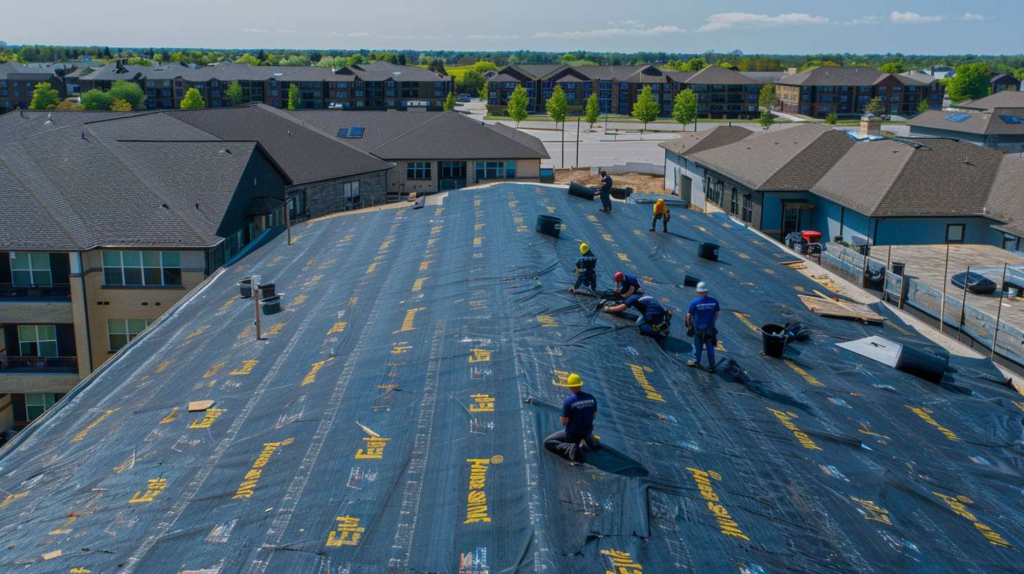
Contractor installing white fascia boards on a commercial flat roof, securing them with professional-grade tools and hardware.

At the roof edge, everything tells on you. Fascia performance on a flat roof depends on four things working together: the condition of the substrate behind it, where and how the membrane terminates, the relationship between the board and the edge metal, and whether water has a clean exit path off the edge. I don't consider fascia a trim item on flat roofs - I never have. It's the visible front of the edge system, and if the system isn't right, the board is just a prettier way to hide the problem until it's a bigger one.

MYTH VS. FACT: What People Get Wrong About Fascia on Flat Roofs
Myth Real Answer
It only needs to look straight from the street. Visual straightness says nothing about structural soundness. A board can look perfect from the sidewalk while fastened into soft, split wood that's already holding moisture.
Any exterior board works if it's painted. Paint is not waterproofing. The board material matters, but the edge assembly it's attached to matters more. A well-painted board over rotten backing is still a ticking clock.
If the old board lasted a few years, the edge detail is fine. Flat roof edge assemblies can hold moisture for years before showing visible failure. A board that "lasted" may have been hiding rot, saturated nailers, and a blocked drip path the whole time.
More fasteners automatically means a better install. Overdriven fasteners into weak backing create more pull-through points, not more holding power. Consistent spacing into solid material beats a dense pattern into punky wood every time.
Small flat roofs don't need the same edge planning as big ones. Small roofs fail faster, not slower, because they have less margin for error. A 10-foot garage roof with one poorly built edge has nowhere to compensate. Edge planning is proportionally more critical, not less.

⚠ What Goes Wrong When You Skip the Edge Assembly Check

  • Moisture gets trapped behind the board - with no vapor path and no air gap, the wood on both sides begins to break down within one freeze-thaw cycle.
  • Fasteners go into rotten nailers - the board may look attached for a season, but there's nothing solid holding it. It flexes, it loosens, and eventually it moves.
  • The drip edge gets blocked - when fascia is installed without accounting for drip edge geometry, water pools at the board face instead of shedding away from the structure.
  • Ice and staining follow - water sitting at a tight, blocked edge refreezes in winter and leaves dark staining on the fascia face by spring. Both are symptoms of the same drainage failure.

What has to be checked on the roof edge before fitting begins

Backer condition comes before finish material

Here's the part people rush, and it's the part that leaks. Before a single piece of new fascia goes anywhere near that edge, you need to work through a sequence: probe the nailer or backing board for softness, splits, and flex; verify that the edge metal is correctly lapped over the membrane termination; check that the membrane isn't just loose or bridged at the edge; and look at staining patterns - because water tells you exactly where it's been traveling, if you look. As Doreen Valdez, with 19 years in flat roofing and a reputation across Queens for fixing failed roof perimeters that other crews called "done," puts it: the inspection isn't a formality, it's the work.

A straight line means nothing if the fastening line is weak

I remember one drizzly Tuesday in Maspeth, just after 7 a.m., standing on a two-family garage roof with a homeowner in house slippers pointing proudly at the new fascia he'd had installed the week before. I pressed one thumb into the lower edge and the whole painted face flexed because they'd trapped moisture behind it with no proper backing and no thought for the drip edge. He got quiet fast when I showed him the water stain line sitting exactly where I said it would sit. That's the kind of thing that happens constantly on small garage roofs, rear kitchen extensions, and the open parapet-less edges you see all over Queens - especially where wind-driven rain hits from the southeast and the edge takes the full exposure with nothing behind it to resist it.

I had a small flat roof in Astoria where the fascia looked fine from the sidewalk, but at sunset - literally that orange 6:40 p.m. light - you could see a wave running across the whole front edge. That sounds logical when a crew says they "corrected" a crooked line during installation, but here's where it goes wrong: the previous installer had fastened into soft, split wood and compensated by overdriving nails to pull the board tight. The board was fighting itself the full width of the roof. Overdriven fasteners don't hold - they pull through, especially in compromised wood - so the "straight" line they thought they'd achieved was already working loose. That job is still the one I think about when somebody tells me fitting fascia boards on a flat roof is mostly cosmetic.

Pre-Install Inspection: 6 Steps Before Fitting Fascia Boards on a Flat Roof
1
Remove loose trim and expose the edge

Pull off any existing fascia or trim. Don't try to inspect through it - you need to see what's actually holding the edge together before you commit to anything new.

2
Probe the backing and nailer for rot and splits

Use a screwdriver or awl. Soft spots, sponginess, and wood that crumbles under light pressure all mean the backing needs repair before any new board goes on - full stop.

3
Measure the run for bow or dip

String a line or use a long straightedge across the full fascia run. Any bow or dip greater than what the new board can bridge means the framing behind it needs to be addressed first.

4
Verify drip edge and membrane termination

The membrane should terminate cleanly over the drip edge, not under it or loose at the edge. A reversed or missing drip edge means water is being directed toward the wall, not away from it.

5
Check for water stains and freeze lines

Staining on the backing wood, mortar, or wall surface below tells you exactly where water has been sitting. Freeze lines on masonry are especially telling in Queens winters.

6
Decide whether a rebuild is needed before proceeding

If any of the above show problems, new fascia is the last step, not the first. Rebuilding the edge assembly first is what separates an installation that lasts from one that looks good for eight months.

Edge Inspection Reference: What Each Finding Usually Means
Edge Component What You're Looking For Bad Sign What It Usually Means for Installation
Nailer / backing board Firmness, dry wood, no splits Soft or crumbling under probe pressure Full backing replacement before any new fascia - fasteners won't hold in punky wood
Drip edge Correctly lapped, membrane over metal, clean profile Missing, reversed, or bridged by membrane Drip edge must be reset before fascia - water is currently directed at the wall or backing
Membrane termination Clean, sealed termination at edge Loose edge, bridging at the corner, no seam seal Water is entering behind the membrane at the edge - new fascia won't change that at all
Edge run (straightness) Level, consistent fascia height along the run Bow, dip, or wave visible with string line Framing or backing needs correction - bowing the new board to match a crooked line guarantees a wavy fascia
Staining on wall / backing Clean, dry surface behind edge Dark tide lines, mineral deposits, or tannin staining Active or historical water travel - source must be found and fixed, especially on Queens garage roofs and rear additions
Fascia face on small flat roof Paint adhesion, no flex under hand pressure Paint peeling at lower edge only; board flexes when pressed Classic trapped-moisture symptom - bottom edge is wicking, backing is compromised, board needs to come off for full assessment

How the board actually gets installed without creating a future leak path

Two screws and a prayer is not an installation method. When everything checks out on the inspection - or after the backing and edge assembly have been rebuilt - the actual install follows a sequence that doesn't skip steps: rebuild or confirm backing is solid, establish a straight reference line and commit to it, dry-fit the board and look for gaps or forced curves before a single fastener goes in, confirm the board's relationship to the drip edge and edge metal so water will shed forward and down, then fasten into solid structure at consistent spacing without overdriving. And the honest insider tip, especially on small flat roof fascia runs: after you dry-fit, sight the line from two angles - standing height at the roof edge, and then walk to the sidewalk and look again. The eye catches waves at sidewalk angle late in the day that you will completely miss standing directly above the board. Don't skip that walk.

If you cannot explain where the water goes, you are not ready to fasten the board.

❌ Quick Trim-Board Approach

  • Face-fastened directly into whatever wood is behind it - soft, split, or otherwise
  • No assessment of the backing condition before nailing
  • Edge rebuild skipped entirely - old drip edge or no drip edge left in place
  • No thought given to where water exits at the bottom edge
  • Fasteners overdriven to pull a bowed board tight
  • Paint treated as the primary moisture barrier

✅ Correct Roof-Edge Approach

  • Backing inspected and repaired or replaced before new board is cut
  • Drip edge and membrane termination confirmed or corrected first
  • Straight reference line established and dry-fit completed before fastening
  • Board positioned to maintain correct relationship with edge metal
  • Fasteners driven at consistent spacing, not overdriven
  • Water exit path confirmed from sidewalk angle before final fastening

Non-Negotiables During Installation

  • Solid fastening base - every fastener goes into confirmed, dry, structurally sound backing
  • Consistent fastener pattern - even spacing along the full run, not clustered where it was easy to reach
  • Board aligned to edge metal - the relationship between fascia and drip edge determines shedding behavior, not aesthetics
  • Do not trap the lower edge tight against the wall or membrane - that gap is where moisture needs to escape, not collect
  • Do not fasten into split or punky backing - no matter how many fasteners you use, there's nothing there to hold them
  • Confirm water exit path before final fastening - walk to the sidewalk, look at the drip angle, then finish the job

Picture the water before you picture the paint

Small roof edges fail fast when water has nowhere to leave

Think of the fascia like the hem on a coat in slush - it's the part that gets hit first, holds the most, and fails the earliest if it's not built right. One February afternoon in Ridgewood, with sleet hitting sideways off Myrtle Avenue, I was called to look at ice forming in thick teeth off a tiny back addition. The fascia board itself wasn't even the original mistake - the real issue was that the edge detail had been built too tight, with nowhere for water to shed cleanly forward and down, so everything refroze along the face through every freeze-thaw cycle. I ended up sketching the whole edge assembly on the back of a bakery box in the customer's kitchen because that was the fastest way to explain why "install fascia board on flat roof" is not the same thing as "screw a board to the front." Splashback, runoff pooling at a tight lower edge, and even the slow capillary staining from freeze-thaw - they all start with the same root cause: water had nowhere to leave.

I had a woman in Woodside ask me, "If the board looks straight, why does anything else matter?" And honestly, I get why that sounds reasonable. That sounds logical, but here's where it goes wrong: appearance is the last thing you judge on a flat roof edge, not the first. A crisp paint line tells you nothing about drainage clearance. It tells you nothing about whether the lower edge is wicking, whether the drip relationship is correct, or whether you'll have ice teeth again by January. The water doesn't care what the board looks like. It goes where the edge assembly sends it - and if nobody planned that, it goes into your wall.

Decision Tree: Do You Need Fascia Replacement or Roof-Edge Rebuild First?

START: Are the backing/nailers solid and dry?

NO → Rebuild edge assembly before installing any fascia. Stop here.

YES → Is drip edge and membrane termination correct?

NO → Rebuild edge assembly before installing any fascia. Stop here.

YES → Does water shed cleanly off the edge - no pooling, no tight-edge refreezing?

NO → Rebuild edge assembly before installing any fascia. Stop here.

YES → Proceed with fascia board installation.

⚠ Small flat roof or back addition with ice formation or heavy staining at the edge?
Skip straight to rebuild recommendation. These conditions on small roofs almost always indicate the edge assembly was never built correctly, not just that the fascia board is worn.

What Different Symptoms Usually Mean at the Fascia Line

Wavy fascia from the street
A wave in the fascia line almost always means either the backing was bowed before the board went on, or the installer tried to "pull" the board straight by overdriving fasteners into soft wood. Either way, the problem is behind the board, not in the board itself. Install-only is not enough - the backing needs to come out, be assessed, and be rebuilt level before new material goes on.
Peeling paint on the lower edge only
When paint fails at the lower edge first and nowhere else, that's a moisture-wicking pattern. Water is sitting at the bottom of the board - either because the lower edge is too tight against a surface, the drip path is blocked, or water is coming up from behind. A new coat of paint won't fix it. The edge assembly needs to be opened up and the shedding path confirmed before any new fascia or paint is applied.
Dark stain line behind the board
A dark tide line behind the removed fascia board is water telling you exactly where it's been sitting - and for how long. This usually points to a failed or missing drip edge, an improperly terminated membrane, or both. The stain line itself isn't the problem to fix; it's evidence. Install-only is not appropriate here. Full edge rebuild required.
Icicles or ice teeth off a small flat roof edge
Ice teeth forming off a flat roof edge in winter are almost always a drainage problem, not a temperature problem. Water is pooling or trickling slowly at the edge instead of shedding cleanly, and it's refreezing there. The fascia itself may look fine, but the edge detail - how tight it is, where the drip edge sits, whether water can actually leave - is wrong. This is a rebuild situation, not a fascia-replacement situation.

Queens owners usually ask the same practical questions

On a 12-foot run, a crooked eighth of an inch turns into an argument - with your neighbor, with the contractor, or with yourself six months later when the staining starts. The questions I hear most from homeowners in Queens are the practical ones: Can I just replace the board without touching anything else? Are small flat roofs simpler because there's less of them? And if it looks neat and straight, isn't the edge fixed? The answer to all three is usually "it depends on what the inspection shows," and on small rowhouse extensions, rear kitchen additions, and detached garage roofs - which are everywhere out here - the inspection almost always finds something that a board swap alone won't solve. Flat Masters has seen this pattern enough times to say it plainly: the board is the last thing that goes on, not the first thing you deal with.

Flat Roof Fascia Board Installation - Questions Queens Homeowners Ask
How to install fascia board on flat roof without causing rot later?
The short answer: don't install it until the backing is dry and solid and the edge metal is correctly set. Rot after installation almost always traces back to moisture being trapped behind the board - either because the lower edge was sealed too tight, the drip edge was wrong, or the backing was already compromised before the board went on. Fix the edge assembly first. Install the board second.
Can I install fascia board on flat roof if the old wood underneath is a little soft?
No. "A little soft" means the wood has already taken on moisture and the fibers are breaking down. Fasteners won't hold reliably, and the moisture that softened it is still there - meaning your new board is going onto a wet, failing substrate. Replace the backing. It's not a big job on its own, but skipping it turns a small job into a callback in two seasons.
Is fitting fascia boards flat roof details different on a small garage roof?
The details are the same. The margin for error is smaller. A small garage roof in Queens usually has one or two exposed edges that take all the weather, limited drainage slope, and sometimes no parapet to provide any protection. Every step of the edge inspection matters just as much - honestly, it matters more, because there's no redundancy on a 10-foot run.
How to fit fascia boards to flat roof when the front edge is already uneven?
An uneven edge means the backing or framing behind it is uneven. You don't correct that by forcing the board to the crooked line - you correct it by addressing the backing first. Shimming, sistering a new nailer alongside the old one, or full backing replacement are all options depending on what the inspection shows. Forcing a straight board onto a crooked edge cracks finishes and loosens fasteners within a year.
Does new fascia solve leaking at the edge by itself?
Almost never. Leaking at a flat roof edge is almost always a membrane termination problem, a drip edge problem, or a backing saturation problem - not a fascia board problem. The fascia is downstream of all of those. Replacing it without addressing the actual source of water entry means the new board will fail for the same reason the old one did.

Before You Call About Fascia Work - 5 Things to Note First

  • Note your roof type and approximate size - flat membrane, built-up, or modified bitumen, and whether it's a garage, addition, or main house roof
  • Note whether staining or ice forms at the edge - and roughly when it started. First winter? Multiple winters? After a repair?
  • Take two photos: one close-up of the fascia face and one from the sidewalk - the sidewalk shot often shows the wave or sag that the close shot misses
  • Check whether paint is peeling at the lower edge only - that pattern is a specific symptom worth mentioning, not just general weathering
  • Note whether the roof edge was worked on recently - and if so, whether the fascia was replaced at that time or left in place

If the fascia line on your flat roof is wavy, soft under pressure, icing in winter, or was recently "redone" and still doesn't look right - call Flat Masters. We'll tell you what's actually happening at that edge, and we won't guess.

Faq’s

Flat Roofing FAQs: Everything Queens, NY Homeowners Need to Know

How do I know if my flat roof needs new fascia boards?
Look for visible rot, loose or sagging boards, water stains on exterior walls, or gaps where the fascia meets the roof. If your gutters are pulling away from the house, that’s often a fascia board problem. In Queens weather, wood fascia typically needs replacement every 8-12 years.
While it’s technically possible, flat roof fascia installation involves working at dangerous heights, precise water management, and specialized flashing techniques. Most DIY attempts we fix cost homeowners more than hiring professionals initially. The safety risks and potential for costly water damage make this a job for experienced roofers.
Damaged fascia boards allow water to penetrate behind your roof membrane and into the structure. This can cause roof deck rot, interior water damage, and mold issues costing $5,000-15,000 to repair. What starts as a $1,500 fascia job can become a major structural problem if ignored.
For a typical Queens flat roof, expect $880-3,960 total including materials and labor. Basic pressure-treated lumber costs less but requires more maintenance. Premium composite materials cost more upfront but last twice as long and never need painting in our harsh climate.
Most residential installations take 1-2 days depending on roof size and complexity. Weather conditions, material delivery, and access difficulty can affect timing. We schedule projects for late spring or early fall when weather conditions are most favorable for proper sealant curing.

Ask Question

Or

Expert Residential Flat Roof Inspection Services Near You

9 min read

Adding Slope to a Flat Roof for Drainage - Here's How It's Actually Done

14 min read

Shingles Won't Lie Flat on a Low-Pitch Roof - And Here's Exactly Why

14 min read

Standing Water on Your Flat Roof After Rain? That's a Problem You Can Fix

13 min read

Fixing a Flat Roof Leak the Right Way Takes More Than a Tin of Sealant

16 min read

Ice Dams on a Flat Roof Are a Different Problem - Here's What to Do About Them

13 min read

Connecting a Flat Roof to a Cavity Wall - Here's the Detail That Makes or Breaks It

13 min read

Flat Roof Extension on a Bungalow - Our NYC Team Builds It Right

8 min read

Should You Remove Snow from Flat Roof? Expert Winter Roofing Guide

5 min read

Which Flat Roof is Best? Your 2026 Guide to Top Options

7 min read

Underlayment Is the Layer Nobody Sees - And It's the One That Matters Most

17 min read

How to Melt Snow on Flat Roof: 5 Safe Methods That Work

6 min read

Professional Flat Roof Single Storey Bungalow Extension Services

6 min read

There's More Than One Way to Drain a Flat Roof - And the Choice Matters a Lot

15 min read

Expert Colonial Type Flat Roof House Architecture Roofing Solutions

7 min read

Professional Domestic Flat Roof Installations & Repair Services

9 min read

How to Keep Snow Off Flat Roof: 5 Essential Methods That Work

7 min read

Garage Flat Roof Giving Up? Here's What a Proper Replacement Involves

17 min read

Flat Roofs Get Mixed Reviews - Here's the Honest Pros and Cons From Someone Who Knows

17 min read

TPO Roofing Is One of the Best Flat Roof Systems Around - Here's Why It's Chosen

13 min read

Professional Flat Roof Tar Paper Installation & Repair Services

6 min read

How Much Area Does Your Flat Roof Cover? Here's How to Measure It Accurately

13 min read

Professional Flat Roof Moss Treatment Products & Solutions

6 min read

How Do You Know When a Flat Roof Actually Needs Replacing and Not Just Repairing?

17 min read

Turning Your Flat Roof Into a Deck - Here's What the Installation Actually Involves

18 min read
blue circle

Get a FREE Roofing Quote Today!

Schedule Free Inspection