
Shingles Won't Lie Flat on a Low-Pitch Roof - And Here's Exactly Why
Knowing the real cause is almost always better than guessing. Shingles not lying flat are sometimes a material-settling issue - new tabs need heat and time to relax and seal down - but on low-pitch sections, that same symptom can be a warning that the roof was never a good shingle candidate in the first place.
Suitability Matters More Than Patience When Shingles Are Used on Low-Slope Sections
Before you ask whether roof shingles should lay flat, what kind of slope are we actually dealing with? Pitch, drainage behavior, substrate shape, and transition details all determine whether the complaint is cosmetic, temporary, or a sign of the wrong roof system choice entirely. I'm Calvin Reese, with 17 years diagnosing low-slope edge cases in Queens where steep-slope materials get pushed onto roofs that behave differently - and the pattern I see most often is a suitability problem being sold as a patience problem. What the material is physically doing matters: whether it's relaxing, resisting, telegraphing the substrate beneath it, or fighting geometry it was never designed to handle.
Drainage Behavior Exposes the Real Problem Long Before the Shingle Lies to You Less Convincingly
The Runoff Pattern Is Usually More Honest Than the Sales Pitch
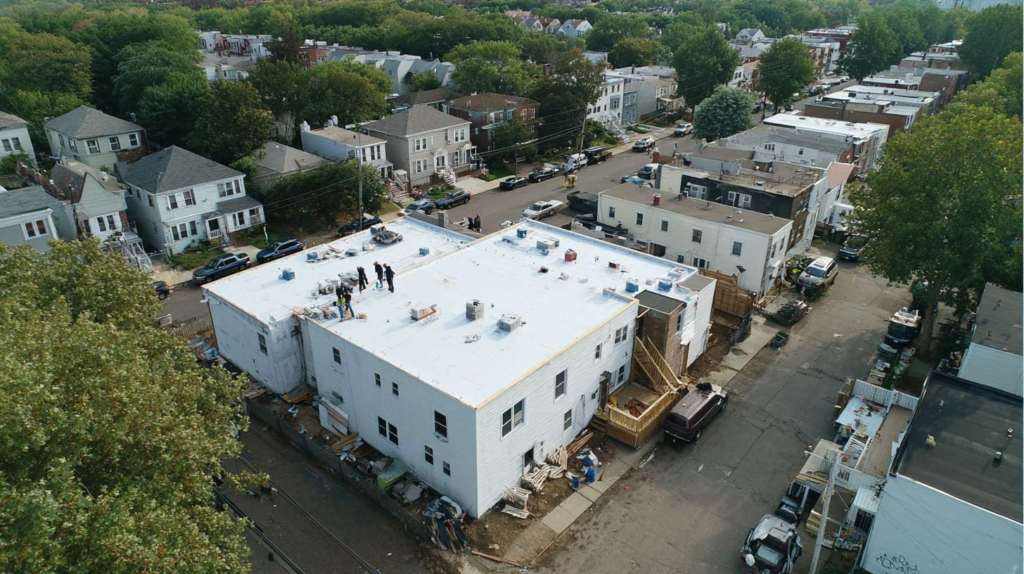
At the tab edge, materials start telling on the installation. I had a contractor ask me to second-look a small addition in Ridgewood during a humid June evening because his customer was complaining that new roof shingles not laying flat made the whole job look bad from the upstairs window. Once I checked the layout, the substrate transitions, and the pitch, it was obvious the shingles were being asked to behave on a surface that didn't drain like a true shingle roof should. That's one of those flat roof shingle installation problems where the appearance complaint is just the first symptom - the wrong product on the wrong geometry, and no amount of installation quality was going to fix what the pitch had already decided.
I remember one roof where the dirt lines explained everything before the owner did. A Sunnyside inspection - low-pitch rear section, homeowner who'd watched three videos and was convinced warm weather would settle the raised edges. Fair thought. But the water staining and dirt lines were already showing runoff lingering exactly where it shouldn't. I pulled out my heat gun and showed him how the tabs changed with warmth, then explained why better flexibility doesn't fix bad drainage design. He got it immediately. And honestly, that's the piece a lot of Queens homeowners miss: upper-story sightlines are making those raised tabs look worse because you're looking down on a low-pitch rear section that was sold as a regular shingle roof when it was behaving like something else entirely. Small additions off the back of attached rowhouses - common from Woodhaven to Jackson Heights - are where this problem repeats itself quietly, one job at a time.
Summer heat will change how flexible a shingle tab feels. It will not change the pitch. It will not redesign the drainage. It will not fix a product that was selected for a slope it was never rated for. If your contractor's entire answer is "give it time and let the sun do its work," ask them specifically about:
- Whether the pitch meets the shingle manufacturer's minimum slope requirement
- How runoff is expected to behave across the full surface, not just at the ridge
- Whether a low-slope membrane system would have been the more appropriate choice from day one
Shingle Movement Can Be Normal, but Wrong Geometry Keeps Asking the Material to Do Impossible Work
My honest take? People blame the shingle when the pitch is the real problem. Material settling is real - seal strips need heat cycles to activate, tabs take time to relax, and cold installs in late fall or winter always look worse before they look better. But none of that changes slope requirements, and none of it rewrites what the manufacturer's data sheet actually says about minimum pitch. Temperature buys you time on the cosmetic side. It doesn't buy you a code-compliant drainage system.
Here's the blunt truth: not every roof that looks shingle-able should get shingles. One cold March afternoon in Maspeth, I was called to look at a rear roof section where the owner kept asking whether shingles should lay flat by now. The shingles were brand new, but the bigger issue wasn't just sealing time - it was that the roof pitch was too low for the system they'd chosen. I remember kneeling near the eave with a stiff wind coming across the block and realizing the whole problem had been sold as a cosmetic patience issue when it was actually a suitability issue. The shingles weren't failing. They were doing exactly what shingles do on a surface that shouldn't have had shingles on it.
A shingle on the wrong low-slope roof is like a vinyl wrap over a dent - it may stick for a while, but the shape underneath still wins. And here's the insider tip that separates a real diagnosis from a sales reassurance: if a contractor is talking about patience and sun exposure but not pitch, drainage capacity, and low-slope system suitability, they're answering the wrong question. The right question isn't "will these flatten out?" It's "should this roof have shingles on it at all?"
| Factor | Possible Normal Settling Issue | Likely Low-Pitch Suitability Issue |
|---|---|---|
| What causes it | Seal strip not yet activated due to cool temperatures at time of install | Pitch below shingle manufacturer's minimum; material can't perform as designed |
| What time can improve | Tab adhesion, overall flatness as heat cycles allow the shingle to relax naturally | Appearance only - flexibility improves, but drainage geometry stays broken |
| What weather changes | Warm weather softens asphalt, allows seal strip to bond, tabs press down | Warm weather makes the problem less visible while water still lingers where it shouldn't |
| What drainage reveals | Clean runoff paths, no persistent dirt lines, water moving toward the edge properly | Dirt lines, staining patterns, water pausing under tabs - all visible on inspection |
| What persists after warming | Problem largely resolves; shingles lie flat, seal strip bonds, appearance improves | Edge lift repeats, dirt lines remain, transitions still misbehave - the geometry hasn't changed |
| What the fix involves | Monitoring, possibly hand-sealing a few tabs; no system change needed if pitch is adequate | System replacement - removing shingles and installing a proper low-slope membrane solution |
-
1
What is the actual pitch? Get the number. Don't accept "it's a little low" as an answer - check it against manufacturer specs. -
2
How is runoff actually behaving? Watch where water goes during rain - not where it's supposed to go, where it actually goes. -
3
Are dirt lines forming below the tabs? That's not a cosmetic issue. That's the roof telling you where water is pausing. -
4
Are transitions or substrate changes involved? Addition tie-ins, pitch breaks, and deck seams are where shingle geometry problems concentrate. -
5
Was this roof designed to drain like a shingle roof? Not "does it look like a shingle roof" - was the drainage actually designed for shingle performance? -
6
What low-slope system would have been more appropriate? TPO, modified bitumen, and EPDM all exist for a reason. Knowing the alternative is part of understanding the problem.
If the Roof Was Never a Good Shingle Candidate, the Honest Fix May Not Be Another Shingle Conversation
The Right Answer Can Be System Change, Not More Waiting
At the tab edge, materials start telling on the installation - and when that same symptom keeps repeating after multiple seasons, multiple temperature swings, and multiple "give it time" conversations, the tab edge isn't lying anymore. It's delivering a verdict. Some low-pitch roofs in Queens get shingles because shingles are familiar, shingles are what the previous job used, or shingles were what the contractor had on the truck. But the product's familiarity doesn't change the physics. If the surface was never going to drain the way a shingle roof needs to drain, the honest answer isn't a better installation - it's a different system. Modified bitumen, TPO, EPDM: these exist precisely for the geometries that shingles were never designed to handle. The cool-headed thing to do, and the thing that actually protects the building, is to name that correctly instead of scheduling another touch-up.
| ✗ Myth | ✓ Fact |
|---|---|
| "If shingles are new, they always flatten out eventually." | New shingles settle on appropriate pitches. On low-slope surfaces, repeated lifting is the roof's response to wrong geometry - not an age issue that resolves itself. |
| "A low-pitch section is close enough to a shingle roof." | "Close enough" isn't a drainage standard. Shingles rely on gravity-assisted runoff at specific pitch angles. Below those thresholds, water behavior changes fundamentally. |
| "Warm weather fixes raised edges." | Heat improves tab flexibility and seal strip activation. It does not change pitch, improve drainage design, or solve a system suitability mismatch. |
| "Appearance is the only issue with shingles not lying flat." | Raised tabs are a drainage and moisture vulnerability. Water entering under lifted tabs on a low-slope surface has nowhere to go quickly - that's where rot, leaks, and structural damage originate. |
| "If it was installed, it must have been suitable." | Installation and suitability are not the same thing. A shingle can be installed on a low-pitch roof - it just shouldn't be. The install happening doesn't validate the system choice. |
Should roof shingles lay flat right away?
+
Why are my new roof shingles not laying flat?
+
Can low-pitch roofs cause flat roof shingle installation problems?
+
When is the real fix a different roof system instead of waiting?
+
Does your roof actually need more time - or does it need a more appropriate low-slope solution? If you're not sure, don't keep guessing from the tab edge. Call Flat Masters for a real diagnosis. We're based in Queens and we've been doing this long enough to tell the difference between a shingle that's settling and a roof that was never a shingle candidate in the first place.