
Flat Roofs Get Mixed Reviews - Here's the Honest Pros and Cons From Someone Who Knows
Messy reputations are hard to shake, and flat roofs have one of the messiest in the roofing world - but here's the counterintuitive truth: flat roofs are not bad by default. What ruins them in Queens is usually poorly planned drainage, bargain repairs, and contractors who tell owners that surface appearance matters more than where the water actually goes. This is an honest flat roof pros and cons breakdown based on what actual roofs reveal in the field, not on sales language.
Why flat roofs get blamed for problems they did not create
On a Queens roof, the first thing I look at is the drain, not the membrane. I'm Darlene Pike - I've been working flat roofs for 19 years, and co-op boards across this borough know me as the person Flat Masters sends when they want the straight analysis on drainage and repairs, not a pitch. The way I see it, a roof is a science experiment with visible results: the water ran here, the seam proved weak there, and the building revealed the truth before anyone was willing to admit it. Poor drainage planning and cheap patchwork are the variables that keep failing - not the flat roof design itself.
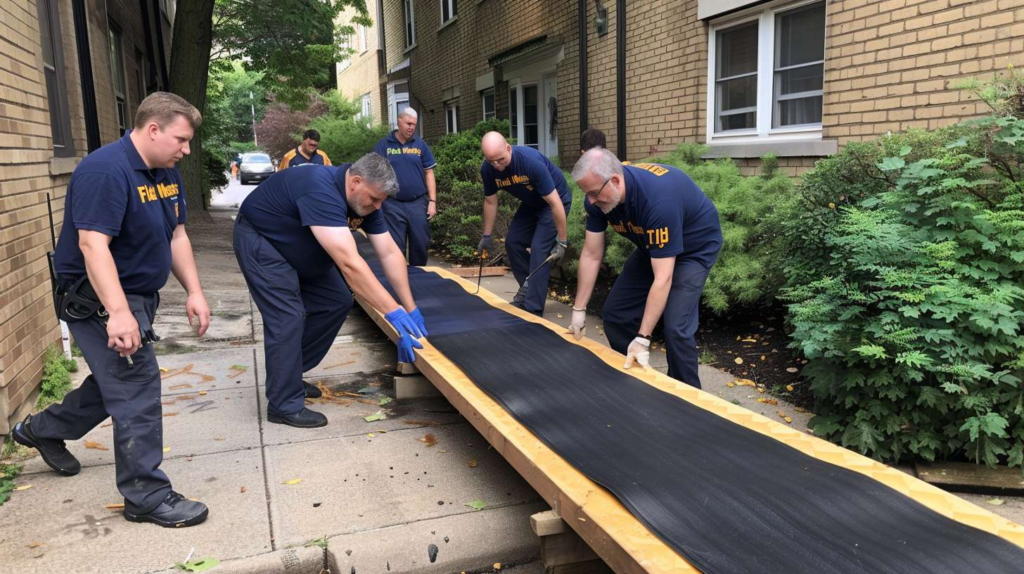
I'm going to be unfair to flat roofs for a second, because they deserve it in one specific way: they forgive sloppy work less than pitched roofs do. A pitched roof can hide a bad flashing job for years before it becomes a ceiling stain. A flat roof will expose lazy decisions in one good rainstorm. That's not a design flaw - that's accountability. The problem is that too many conversations treat all flat roof systems as identical, which means design gets blamed for workmanship failures and workmanship gets blamed for maintenance neglect. Those are three completely different problems with three different fixes.
| Myth | What the roof evidence actually says |
|---|---|
| Flat roofs always leak. | Flat roofs with properly designed drainage, sound seam work, and consistent maintenance have long service lives. Leaks trace back to seam failures, drain neglect, or inadequate slope - not to the flat profile itself. |
| Standing water is fine as long as it dries eventually. | Standing water that remains 48 hours after rain is actively stressing the membrane, adding structural load, and inviting seam and blister failures. "It dried" is not a drainage strategy. |
| A patch is as good as a proper repair. | A patch seals a surface symptom. If there's moisture trapped beneath the existing membrane - and there often is - the patch is just another layer over an active problem. The roof will keep telling you this until someone listens. |
| Flat roofs are always cheaper over time. | Lower installation costs can be real, but they disappear fast when drainage corrections get deferred, membranes are chosen by price alone, or repairs get stacked on top of each other without investigating what's underneath. |
| All flat membranes perform the same. | TPO, EPDM, modified bitumen, and built-up roofing behave differently under UV, heat, foot traffic, and Queens-level temperature swings. Material choice relative to building use and sun exposure matters more than most owners are told. |
| ✅ Pros | ⚠️ Cons |
|---|---|
| Usable rooftop space - rooftop decks, equipment platforms, and garden setups are realistic on a properly built flat roof. | Drainage sensitivity - even a modest low spot concentrates water in one area, accelerating membrane wear and seam stress. |
| Easier equipment access - HVAC units, ductwork, and rooftop mechanicals are simpler to place, service, and reach than on a pitched surface. | Puncture vulnerability - foot traffic from HVAC technicians, satellite installers, or anybody without walk pads can damage the membrane in ways that aren't visible until rain proves it. |
| Cleaner edge profile - parapet walls and flat lines suit Queens attached and semi-detached building aesthetics without the visual weight of pitched eaves. | Heat performance depends on membrane color - a dark membrane on a Queens rooftop in July is essentially a radiator directly below the top-floor ceiling. |
| Simpler snow-edge profile - no steep pitch means less ice dam risk at the eaves, and no ridge to accumulate uneven load. | Repair quality dependence - a flat roof is less forgiving of half-measures than a pitched roof. Poor seam work or a missed moisture investigation will cost you again within two seasons. |
| Inspection visibility - the entire surface can be walked and assessed systematically; there are no hidden valleys or complex geometries to miss. | Membrane aging under UV - without proper coating or appropriate membrane selection, UV degradation shortens service life faster than Queens owners are typically warned about. |
| Reflective surface potential - white or light-colored TPO membranes can meaningfully reduce heat gain and lower cooling costs during Queens summers. | Ponding accelerates problems - standing water adds weight, degrades seams, promotes algae growth, and makes it harder to spot the actual source of a failure. |
| Lower initial installation cost - material and labor costs are typically lower than complex pitched roofing on comparable square footage. | Long-term cost depends on maintenance - that cost advantage disappears if drainage isn't addressed from the start and repairs are treated as optional until something fails visibly. |
Where the real advantages show up in Queens buildings
Access, equipment, and usable roof space
I was on a six-unit building in Astoria at 6:40 in the morning, still holding my coffee, when the super told me, "The roof looks fine, but apartment 5B has a bubble in the paint." It had rained overnight, and the membrane really did look decent from ten feet away. Then I found one seam by the drain where water had been sitting so long it reminded me of a Petri dish from my teaching days - tiny weakness, big consequence. That's how flat roof pros and cons stop being theoretical in Queens: one low spot by a clogged drain, tucked behind a parapet or at the back edge of a rear addition, can become your entire budget conversation before a co-op board meeting. And this is a borough full of those conditions - attached rowhouses with parapets on three sides, rear additions over extensions, rooftop HVAC on semi-detached properties where the only flat surface is the roof itself, and drainage pinch points that show up after every heavy summer storm or a slow winter melt on Northern Boulevard.
Once drainage works the way it's supposed to, the genuine advantages of a flat roof are real and practical. You can get a technician to an HVAC condenser in ten minutes without a ladder truck. You can walk the full surface for an inspection without specialized equipment. Rooftop space, when properly built out with the right membrane and load planning, can become a functional deck or garden - something a pitched roof simply can't offer in a dense Queens neighborhood where outdoor space is always at a premium.
Material choice drives a lot of the benefit side of the ledger. A reflective white or light-colored TPO membrane on a south-facing Queens rooftop doesn't just reduce heat gain - it makes the surface legible. Blisters, seam lifts, and pooling zones are all easier to spot on a light surface during a routine inspection. Access gets an A; ignoring slope gets a D-minus. The roof doesn't care which one you chose - it'll show you.
| Building Type | Most Useful Flat-Roof Advantage | What Has to Be Done Right | Common Queens Catch |
|---|---|---|---|
| Rowhouse | Low installation cost relative to square footage; cleaner parapet profile on attached properties. | Slope and drain placement must be engineered from the start, not assumed from the existing deck angle. | Party wall flashings and shared drainage edges that the neighbor's roof also drains toward - nobody owns the problem until it's a big one. |
| Small multifamily / co-op | Full surface access for mechanical equipment and easier routine inspections across larger footprints. | Drain maintenance schedule must be formalized - one clogged drain on a six-unit building backs up fast. | Deferred board decisions on repair budgets mean small seam failures become multi-unit interior damage before anyone votes yes. |
| Mixed-use storefront with apartments | Rooftop HVAC placement and easier access for commercial equipment without disrupting the building's street profile. | Every penetration for equipment, venting, or conduit is a potential leak point - each one must be flashed and sealed correctly. | Tenant turnover on the commercial side often means new contractors making new penetrations without notifying the property owner. |
| Rear extension / addition | Cost-effective cover for added square footage; easier to tie into the existing structure without complex framing. | The junction between the addition roof and the main building wall must be flashed with enough overlap to handle differential movement. | The addition often drains toward the main building, making the junction the lowest and wettest point - and the last place anyone looks first. |
Best-Case Flat Roof Benefits - When the Roof Is Designed and Maintained Properly
- 🔧 Service access without specialized equipment - HVAC, plumbing vents, and conduit can all be reached, inspected, and serviced with standard tools and no ladder truck.
- 🏙️ Cleaner exterior profile - flat lines fit Queens attached buildings without the visual bulk of pitched overhangs or complex rooflines on narrow lots.
- ❄️ Rooftop equipment placement - condensers, satellite arrays, and rooftop mechanicals sit stably on a flat surface and can be positioned for optimal clearance without pitch constraints.
- 👁️ Full surface inspection visibility - the entire membrane can be walked systematically; there are no hidden valleys, complex hips, or steep sections to skip during an assessment.
- ☀️ Reflective membrane heat reduction - a white or light TPO surface in Queens can measurably reduce top-floor temperatures and lower summer cooling costs when the right product is chosen for sun exposure.
- 🎯 Targeted maintenance efficiency - because the surface is walkable and visible, problems can be isolated and addressed precisely rather than requiring broad section replacements as on some pitched systems.
If water has nowhere disciplined to go, the roof will grade your decisions for you.
Which disadvantages deserve your attention before you sign anything
One August afternoon in Rego Park, I had a homeowner follow me around the roof asking why his flat roof felt hotter than his old shingle roof if flat roofs are supposed to be "modern." He'd just installed a dark membrane because it was cheaper up front, and the top-floor bedrooms felt like toaster ovens by 4 p.m. I remember tapping the surface with my boot and saying, "This roof is doing exactly what black surfaces do in full sun." That job made me a lot more direct when I talk about flat roof advantages and disadvantages - because the conversation can't stop at structure. Heat gain, comfort, and energy bills are part of the same equation. What looked like savings on installation day showed up on the electric bill and in the AC unit running eight hours straight in August.
Here's the blunt part about the other major cons: drainage sensitivity is the biggest one. A flat roof does not naturally shed water - it relies entirely on engineered slope and drain function to move water off the surface, and when either is wrong, water sits. Seam failure is next. Seams are where membranes join, where flashings meet walls, and where drain collars connect - and they are where flat roofs fail most often, not in the middle of a field of clean membrane. Puncture risk from foot traffic is real, especially on properties where HVAC technicians, satellite installers, or anyone else walks the roof without proper walk pads. And UV degradation on an unmaintained or poorly coated membrane shortens service life faster than the original quote suggested. Before you talk to any contractor, ask three things: where does the water exit this roof, how is ponding corrected if a drain clogs, and does this repair address what's beneath the surface or just what's visible from above? The answers to those three questions will tell you more than the estimate will.
⚠️ Three Flat-Roof Shortcuts That Create Expensive Problems Later
- Choosing membrane color by price alone. A cheaper dark membrane on a sun-exposed Queens rooftop increases heat gain, raises cooling costs, and degrades faster under UV. The price difference between membrane colors is small; the energy and comfort impact is not.
- Accepting vague assurances about drainage. "It's basically flat enough" is not a drainage plan. If a contractor can't explain slope direction, drain placement, and what happens if a drain clogs, that vagueness will eventually become a ponding problem - and ponding becomes a seam problem.
- Layering patch over patch without moisture investigation. Every patch that goes over an uninvestigated area traps what's already there. Trapped moisture under old layers continues to degrade the deck and insulation. You're not repairing the roof - you're giving the damage a cover while it keeps working.
How to judge whether a flat roof is a smart fit for your property
Questions that separate a good roof plan from a sales pitch
During a windy November service call in Ridgewood, a property manager told me his recurring leaks were proof that flat roofs were a bad idea altogether. What I found when I got up there was worse and more ordinary: three different contractors had patched the same area over eight years, each one solving only the symptom they could see. I peeled back one messy repair - the kind where you can count the layers like rings on a tree - and found trapped moisture under old material that had been sitting there since at least the second patch. The building had been showing the result of those stacked-up decisions the whole time. The design wasn't wrong. The repair history was a disaster. Once we pulled everything back and let the deck dry, the original slope was actually adequate - it just hadn't been connected to a clear drain path in years. The roof wasn't the problem. The experiment had been contaminated by shortcuts before anyone thought to read the results.
📋 Before You Call for a Flat Roof Quote or Leak Opinion - Verify These First
- Leak location and timing: Note exactly where interior water appears and whether it shows up during rain, after rain, or during freeze-thaw. The timing narrows the source.
- Age of the current membrane: If you don't know it, check building records or ask the super. Age context changes what a contractor should be recommending.
- Number of prior patches: Count what you can see from the roof surface, and ask for any prior contractor invoices if you have them.
- Drain and scupper locations: Know where water is supposed to exit. Walk the roof if you can and see whether those drains are clear or clogged.
- Whether rooftop equipment is present: HVAC units, satellite dishes, or any other penetrations are potential leak points - a contractor needs to account for all of them.
- Whether upper-floor heat is a complaint: If top-floor tenants or residents are running AC constantly in summer, membrane color and heat gain may be part of the conversation.
- Whether ponding remains 48 hours after rain: If it does, that's not a cosmetic issue - it's a drainage problem that should be addressed in any repair or replacement scope.
Straight Answers to the Questions Owners Ask After Hearing Mixed Reviews
Are flat roofs more likely to leak than pitched roofs?
Not inherently. Pitched roofs shed water through gravity and slope; flat roofs rely on engineered drainage. When that drainage is designed well and maintained, leak rates are comparable. The difference is that a flat roof's failures tend to be more obvious and faster-moving when drainage is ignored - which is why they get the worse reputation.
How much ponding water is too much?
The standard industry threshold is 48 hours. If water is still standing two days after rain stopped, that's not a drainage design that's working. A little surface wetness that clears within a day is less concerning - but even that is worth tracking over time to see whether it's getting worse.
Do flat roofs always make upper floors hotter?
No - but dark membranes on sun-exposed rooftops in Queens absolutely contribute to heat gain, and that heat transfers into the top floor. The fix isn't a different roof type; it's the right membrane color and, where possible, adequate insulation below the deck. A reflective white membrane on the same Queens rooftop performs dramatically differently than a black one in August.
When is replacement smarter than another repair?
When the same area has been patched more than twice without a moisture investigation underneath. When more than 25-30% of the membrane surface shows wear, blistering, or seam separation. And when a moisture scan or probe reveals that the insulation or deck beneath is wet - because putting a new membrane over wet material just restarts the clock on the same problem.
If you want a straight assessment of whether your roof's problem is design, drainage, material choice, or years of patchwork, Flat Masters can walk the roof with you and explain what the evidence is actually showing - not what's easiest to sell. That's the conversation worth having before any contract gets signed.