What Do Flat Roof Materials Actually Cost? Here Are the Real Material Prices
Look at the problem with fresh eyes before spending anything. Flat roof materials in Queens can run anywhere from $1.50 to $14.00+ per square foot depending on the system, the supporting components, and what your specific roof actually demands - and this article is going to separate those material ingredients from the installation recipe so you can read a quote without getting lost.
Queens Price Snapshot by Material System
In Queens, I can show you two roofs on the same block with a $3-per-square-foot material difference before I even open my notebook. One owner is running a basic coating refresh on a sound existing surface; the neighbor is looking at a full PVC assembly with tapered insulation and a complete flashing package. Both say "flat roof." Both are completely different material bills.
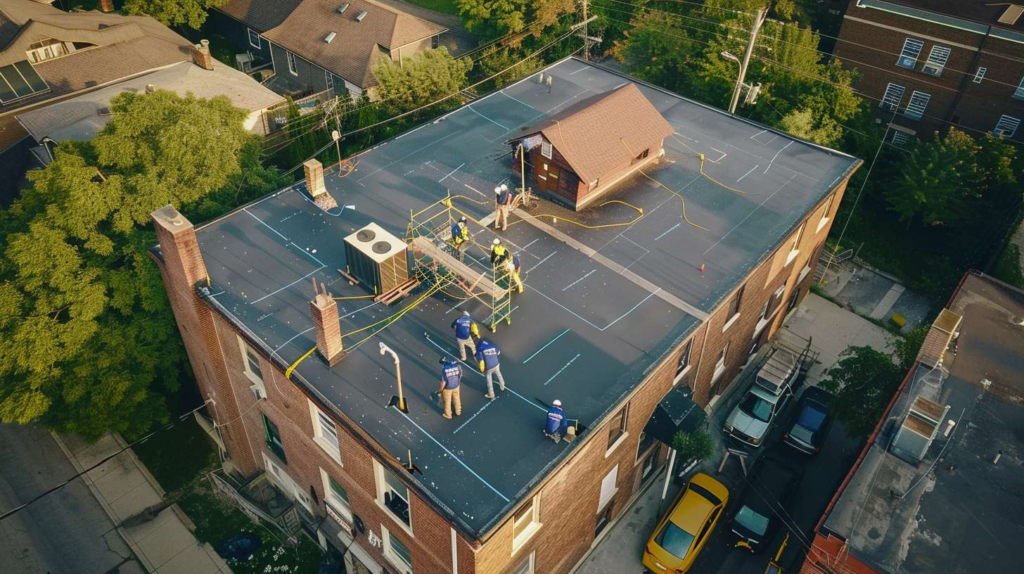
Here's Rosa's firm position on this: shopping by membrane name alone is how people end up with numbers they can't honestly compare. The membrane is one ingredient. The recipe includes insulation, cover board, adhesives, fasteners, flashing material, edge metal, and drain accessories - and that full package is what this article prices out. A quote that says only "flat roof" or "modified bitumen" is missing most of the story.
Queens Material Pricing - Fast Facts
Entry Material Range
$1.50-$3.50 per sq ft
Basic coating or lighter-duty material scenarios over suitable existing roofs
Common Full-System Range
$4.50-$10.50 per sq ft
Membrane + insulation + cover board + flashing + accessories
Premium Material Packages
$9.00-$14.00+ per sq ft
Full PVC or high-spec TPO with upgraded accessory package and full detailing
Why Quotes Swing So Much
It's never just the membrane
Membrane + insulation + cover board + flashing + edge metal + drain accessories
Ingredient Buckets That Change the Number
Membrane cost is only the first beaker
Here's the part people do not enjoy hearing: many owners ask for a roof type as if it's a single fixed product you pull off a shelf - as Rosa Mendez, with 19 years in flat roofing in Queens and a specialty in diagnosing membrane and assembly failures, keeps telling customers, the membrane name is just the label on the beaker, not the full formula. The insulation below it, the cover board protecting it, the adhesive holding it down, the flashing wrapping every wall and pipe - those are all separate material costs that swing the number hard.
The hidden jump usually comes from the supporting layers
I remember one August afternoon in Astoria, around 3:40 - the roof surface was so hot my tape measure felt soft in my hand. The owner had three estimates spread on a plastic patio table, and every contractor had written "modified bitumen" like that answered everything. When I asked whether they were pricing smooth cap, granulated cap, torch-applied, or self-adhered, he just stared at me and said, "There are versions?" That was the whole job in one moment: same material family, wildly different material price - before you even layer in the insulation and cover board.
When I ask, "What exactly are you paying for?" most people answer with the roof type, not the parts. So let's label the beakers properly. There are six ingredient buckets in a flat roof material package: the membrane (type and thickness), insulation (polyiso, EPS, or none), cover board (often skipped in cheap bids), adhesives and fasteners, flashing materials for walls and penetrations, and edge metal and drain accessories. Each one has its own cost. And honestly, the membrane is often not the most expensive line on a real quote.
🔍 The Six Ingredients Rosa Wants Itemized on Every Material Quote
- 🧱Membrane type and thickness - not just the family name; the specific mil, grade, and attachment category
- 🧊Insulation type and thickness - polyiso, EPS, tapered or flat, R-value target
- 📋Cover board - thickness, density rating, and whether it's included at all
- 🔩Attachment method materials - adhesive type or fastener pattern for both insulation and membrane
- 🔧Flashing materials for walls and penetrations - linear footage covered, material spec, membrane compatibility
- 🚰Edge metal, drain inserts, and scupper accessories - count, size, and material grade
⚠️ Watch Out
If a proposal says only "TPO," "PVC," or "modified bitumen" - without specifying thickness, attachment method, flashing scope, and support layers - the material number is too vague to compare honestly against any other quote. You're not comparing prices; you're comparing labels.
Recipe Variables That Make Similar Materials Price Out Differently
I had a landlord in Sunnyside say this to me once - "Rosa, two guys gave me the same material, same price per foot, but one quote is $4,000 higher, so someone's lying." Neither one was lying. His roof had three bulkhead walls, a cluster of HVAC penetrations near the rear, and a parapet that wrapped three sides and stepped down at the fire wall between his building and the attached rowhouse next door. The field membrane was identical in both bids. The flashing, the edge transitions, the tapered insulation to redirect drainage - that's what spread the quotes. Sunnyside, Ridgewood, Woodside - attached rowhouses and small mixed-use buildings with bulkheads and awkward penetrations are everywhere in Queens, and they turn a straightforward material package into a detail-heavy one fast.
Bluntly, a cheap membrane can become an expensive roof in about six months. Skipping flashing material at wall terminations, going thin on cover board, leaving drains on the factory insert instead of upgrading - those aren't savings, they're scheduled failures. Water finds seams, terminations, and low spots, and it doesn't wait for a convenient time to do it. That's the ingredient - now let's talk about the recipe.
Bottom line: The same membrane family on both roofs. The material package on the detail-heavy roof can run 40-60% higher - entirely because of the recipe, not the ingredient.
If the quote does not name the ingredients, the recipe cannot be priced honestly.
🔀 Are You Comparing Real Material Prices or Incomplete Quotes?
NO
YES ↓
NO
YES ↓
Line-by-Line Examples From Real Queens Quote Reviews
The bakery roof that looked overpriced but wasn't
One February morning in Ridgewood, just after a freezing drizzle, I climbed up with a bakery owner who was furious because she thought she'd been overcharged the year before. We peeled back the paperwork and found the expensive line item wasn't the membrane at all - it was the cover board, the tapered insulation directing water toward a single rear drain, and the edge metal running the full perimeter. I stood there with wet gloves, pointing line by line, and by the end she said, "So the roof wasn't expensive, the system was." Exactly. The membrane was mid-range. The system around it was doing real work.
The low bid that forgot half the roof edges
I once got called to a two-family in Elmhurst at 7:10 in the evening because the owner wanted me to "verify" a suspiciously low bid before he signed it. The proposal had a price that looked fantastic until I noticed they'd measured only the main field and completely ignored the bulkhead walls, flashing details, and drain work - which on that building added up to meaningful square footage and a lot of linear feet of detail. I told him: "That quote is like pricing a birthday cake and pretending frosting is optional." He laughed, then hired nobody until he got a real apples-to-apples material breakdown. And here's the insider move: ask for the actual quantities - linear feet of edge metal, number of drain inserts, and square footage of wall flashing area - not just a lump-sum accessories line. That one question separates a real quote from a placeholder number.
| ❌ Myth | ✅ Real Answer |
|---|---|
| "Modified bitumen is one fixed price." | Smooth cap, granulated cap, torch-applied, and self-adhered are all modified bitumen - and they carry materially different per-square-foot costs before you add a single accessory. |
| "The membrane is most of the material bill." | On roofs with tapered insulation, cover board, and heavy parapet detail, the membrane can be the third or fourth most expensive line item. Don't assume. |
| "Low bids prove the contractor buys cheaper direct." | Low bids more often prove that half the scope is missing. Cover board, flashing area, and drain accessories vanish quietly when someone wants a winning number. |
| "Roof size alone predicts material cost." | Two 1,200-square-foot Queens roofs can carry a $6,000 material difference if one has a bulkhead, two drains, and tall parapets while the other is an open rectangle with a single scupper. |
| "If two quotes name the same system, the materials are equivalent." | Two quotes saying "60 mil TPO" can represent wildly different material packages if one includes cover board, tapered insulation, and full edge metal while the other prices only the membrane and basic seam tape. |
Questions to Settle Before You Approve a Material Number
It's like reading the label on a soup can: the name tells you something, but the ingredients tell you the truth. A material quote worth trusting names the actual products, calls out quantities, and separates the field from the detail work. If it doesn't, you're not approving a price - you're approving a guess. Don't skip asking for the breakdown. The numbers look very different once every ingredient has its own line.
Before You Call About Flat Roof Material Prices - Gather These 7 Things
-
1
Your approximate roof square footage - a rough measure is fine to start -
2
Photos of the roof surface and parapet walls from multiple angles -
3
The number of internal drains or scuppers currently on the roof -
4
Known leak locations or areas of concern - even if you're not sure of the cause -
5
Whether insulation replacement is expected or being considered -
6
Copies of any competing proposals you've already received -
7
Whether there's a bulkhead, elevator shaft, or multiple rooftop penetrations that will need flashing
Frequently Asked Questions - Flat Roof Materials Cost
If you've got a quote in hand and the material number doesn't quite add up - or the proposal is light on details - bring it to Flat Masters. We'll go through it line by line and tell you what's there, what's missing, and whether the flat roof materials cost reflects the real scope of your roof. That review costs nothing and usually saves a lot.
- Rosa Mendez, Flat Masters, Queens, NY