
A Single Storey Flat Roof Extension Is Often the Most Cost-Effective Way to Add Space
Getting the diagnosis right costs less than getting it wrong twice. In Queens, a well-planned single storey flat roof extension can come in tens of thousands of dollars less than a more elaborate addition - because every extra corner, every level change, and every drainage complication you add to a design means more labor, more materials, more membrane detailing, and more places for water to find a flaw years down the road.
Why Simpler Flat Roof Extensions Usually Cost Less in Queens
In Queens, I've seen a $14,000 mistake start with one bad assumption about drainage. Homeowners compare square footage and think they're comparing apples to apples - but what they're really missing is waterproofing complexity, because where the water wants to go is the lens you need on every decision. A simple rectangular rear extension gives water one clear path out. A heavily detailed design with steps, multiple inside corners, rooflights clustered too close together, and a parapet running four sides gives water a dozen chances to sit still, work its way in, and turn your renovation into a remediation. Shape, drainage, labor, and failure points: those four things control your budget more than square footage ever will.
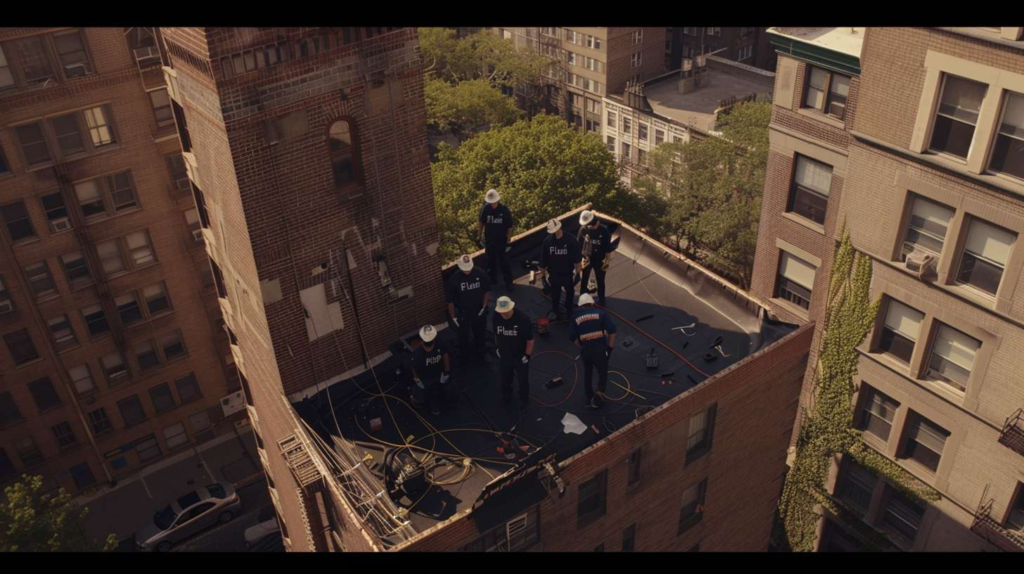
Most cost-effective shape: Simple rectangle - one fall direction, one outlet, clean membrane laps.
Most expensive surprise: Correcting bad falls and drainage after the deck is already framed.
Best value decision: Spend your budget on waterproofing and insulation before decorative complexity - the roof you can't see matters more than the finish you can.
Queens reality: Party walls, tight rear-yard access, and families living in the home during construction can shift labor costs fast - and most online estimates don't account for any of that.
Following Water Before You Approve the Design
Before you fall in love with the drawing, ask yourself where the rain is leaving. Queens row houses and semi-attached homes are not clean-slate builds - a flat roof single storey extension pushed to the rear of one of these homes almost always meets an awkward yard grade, a neighbor's wall, an existing back door that can't be disturbed, or a drain that was sized for a patio, not a roof. I remember a drizzly Tuesday around 6:40 in the morning in Woodside, standing on a half-finished single storey rear extension flat roof with a thermos in one hand and my laser level in the other, because the homeowner's father swore the old patio slope was "close enough." It wasn't. By 8 a.m. we had already found the low pocket that would've turned the new extension into a shallow bathtub after the first hard summer storm. Tight access off the alley behind 60th Street meant every correction required hand-carrying materials through the kitchen. That's not a horror story - that's Queens construction on a regular Wednesday, and it's exactly why where the water wants to go has to be the first question, not an afterthought.
Here's my blunt opinion: simple shapes age better. A clean rectangle with intentional outlets performs years ahead of the stepped silhouette that photographs beautifully on inspiration sites but hands the roofer four inside corners, two drainage zones, and a membrane detailing puzzle that most crews are pricing too low to solve correctly. As Marisol Vega, with 19 years in flat roofing and a specialty in solving drainage conflicts on lived-in Queens additions, I've watched more than a few "design-forward" extensions become very expensive lessons in water physics within thirty-six months of completion. Fewer corners arguing with water is not a compromise - it's an engineering advantage.
I still remember the sound of that ponded water sloshing under my boots in Elmhurst. It was on a rear extension where someone had trusted a verbal promise that the fall was built in. It wasn't. That low spot held about an inch of standing water across three square meters of roof, and nobody noticed until the ceiling inside had already started to stain. The owner paid to fix it twice - once with a patch, once properly. False savings don't stay false for long.
If this roof gets hit with a hard August storm, can you point to the exact exit path for that water?
Design Approval Warning
A clean drawing is not a drainage plan. Before you sign off on any single storey rear extension flat roof design, confirm these three things in writing - not in conversation:
- The roof has a confirmed, reliable outlet location - not "somewhere at the back."
- The bifold or sliding door threshold height has been checked against the finished roof and floor levels. A threshold set too low is one of the most common leak misdiagnoses in Queens extensions.
- The extension's tie-in to existing masonry includes a realistic waterproofing upstand detail - old brick and new membrane need a transition that actually works in real Queens weather, not just on paper.
What Actually Drives the Final Price Up or Down
Blunt truth - cheap upfront and cheap overall are almost never the same thing. A retired school principal in Middle Village once asked me, right as the sun was going down in November, why I kept pushing for a simpler rectangular single storey flat roof extension instead of the stepped design she'd been admiring online. I told her what I tell everyone: every extra corner is a future argument with water, and every argument with water costs money. Shape complexity, structural coordination, insulation build-up, roof access, drainage corrections, skylight count, parapet edge details, and door threshold heights - every single one of those factors either helps water leave the roof cleanly or fights it. Two winters after her project finished, she called to say her heating bill had dropped and her grandkids use the new room every Sunday. That's what the right spec actually buys you.
A flat roof extension is a lot like a lobby floor: if the pitch is off, people notice late and pay big. I spent seven years before roofing doing terrazzo restoration in pre-war lobbies around Jackson Heights, and water taught me the same lesson in both trades - hidden prep work determines visible comfort. The membrane you can't see, the insulation thickness that doesn't show up in photographs, the half-inch fall that nobody brags about at dinner: those are the details that separate a flat roof that performs for twenty-five years from one that needs remediation at year four. Flashy finishes don't fix bad falls.
Questions to Settle Before Construction Starts
What to Verify with Your Builder and Roofer
Do you know the exact outlet location, your finished threshold height, and what happens if the existing structure turns out to be out of level? Because those three things - not the tile choice, not the handle style on the bifold doors - are what will determine whether this project stays on budget. One August afternoon in Astoria, I had a couple call me out for what they were certain was a leak in their new flat roof single storey extension. It wasn't. The problem was a bifold door threshold installed too low, and I had their contractor, their uncle, and their neighbor all pointing at the roof. I said: "Watch the hose test, not the opinions." The membrane was fine. The threshold detail wasn't. That story comes back to me every time I hear someone say they'll sort the drainage questions out later. Ask for the drainage path to be marked on the actual drawing before you sign anything - not described verbally, not "handled in the field." On paper, with arrows. Now follow the water with me through what you need confirmed before a single board goes up.
- Roof slope direction confirmed - in writing, on the plan, not verbally agreed at site visit
- Outlet or scupper location shown on plan - exact position marked, not estimated
- Threshold height checked against finish levels - door threshold must clear the finished roof surface with correct waterproofing upstand
- Insulation build-up specified - type, thickness, and thermal performance target all documented
- Parapet or drip edge finish chosen - edge detail affects both drainage and long-term membrane life at perimeters
- Existing wall tie-in detail explained - how does the new roof membrane meet the old masonry? Get the actual detail, not a general description
- Access and material staging plan confirmed - in Queens, rear access often doesn't exist; know the route before demo starts
- Temporary weather protection discussed - if the build runs more than two weeks, what covers the open structure during rain?
If you want a Queens extension priced around real drainage, real access, and real long-term performance, call Flat Masters before a clean drawing turns into an expensive water lesson.