
Flat Roof Cladding That's Seen Better Days? Here's When to Replace It
A season from now, that wall stain you've been blaming on the membrane might look exactly the same - because the membrane was never the problem to begin with. A surprising number of flat roof leaks actually start at failing cladding and parapet edge details, and this article gives you a clear, honest way to tell when flat roof cladding replacement is the smarter call than writing another check for a patch.
Where Leak Blame Usually Goes Wrong
A season from now, moisture, metal, fasteners, and sealants can lock into a chain reaction behind your parapet that no amount of membrane patching will interrupt. Once water slips past the cladding edge, it starts working on the fasteners, which loosen, which lets the cladding move, which opens new gaps - and the whole assembly starts reacting like a slow chemical spill, not a single isolated failure.
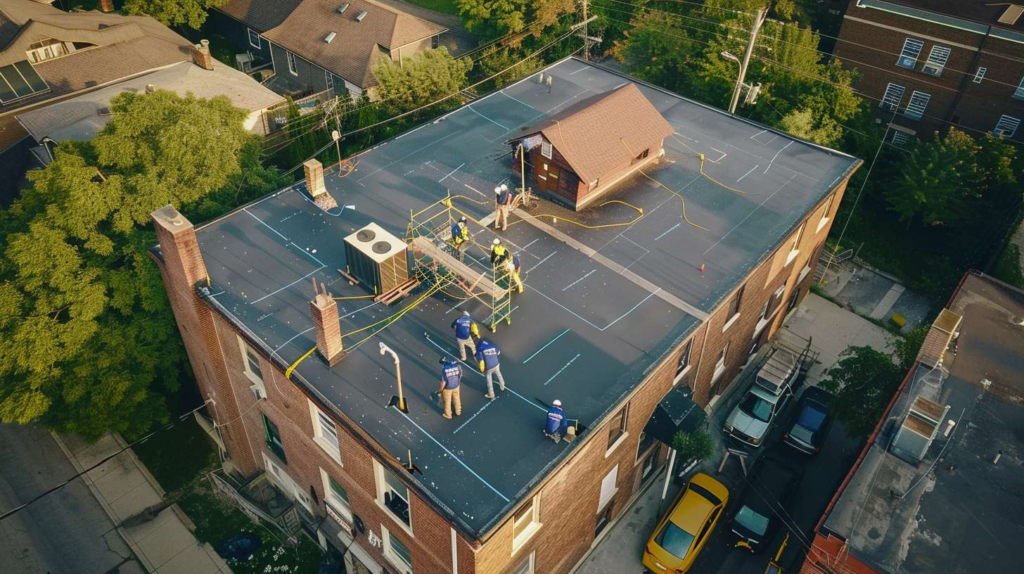
Three feet from the parapet is where I usually stop and look twice. Edge details fail quietly - no dramatic blowout, no obvious tear - just a slow separation at a seam, a stain on the interior wall that keeps coming back, a sound that changes when you knock near the coping. That's the sound-stain-seam diagnostic talking, and it's almost always ahead of whatever water damage finally shows up inside.
| Myth | What's Actually Happening |
|---|---|
| "If the membrane was patched last year, the edge detail is fine." | Membrane patches address the field - they don't touch parapet cladding, open laps, or fastener corrosion at the edge. Both systems can fail independently. |
| "Bent cladding is cosmetic." | Bent metal changes the lap angle and breaks the water-shedding path. Wind-driven rain doesn't need a large opening - a deflected edge section is an invitation. |
| "A little fresh sealant buys several more years." | Sealant on moving metal cracks within one freeze-thaw cycle. It can also trap water behind the surface, hiding corrosion and failed laps until damage spreads deeper. |
| "Leaks only in wind-driven rain mean random weather, not a roof defect." | Leaks that only appear during sideways rain are a signature cladding and edge-detail failure - not bad luck. Gravity-fed leaks hit field membrane; pressure-driven leaks hit transitions. |
| "If water shows inside near a wall, it must be the wall alone." | Water that enters at the parapet cladding runs down behind the wall assembly and exits wherever it finds a gap - often far from the actual entry point. The interior stain is rarely the source. |
Signals That Replacement Has Already Overtaken Repair
Visible Clues at the Edge
Here's the part building owners don't enjoy hearing: cladding replacement on flat roofs becomes the practical choice the moment failure is no longer isolated to one clean spot - and, as Marisol Vega with 19 years in flat roofing and a specialty in Queens parapet and edge-metal failures will tell you, that threshold gets crossed a lot earlier than most people expect. The jump from "one bad seam" to "the whole edge assembly is reacting" happens fast once water has a route behind the metal.
Hidden Clues Below the Metal
Blunt truth: old cladding lies. One August afternoon in Astoria, the sun was cooking the metal so hot I had to set my tape measure down with gloves on - the building super was pushing for one more sealant repair because tenants were already tired of scaffolding noise. When I peeled back a loose section, the fasteners were corroded and the insulation underneath was damp. The assembly wasn't failing one piece at a time; the whole thing was reacting together, and no amount of surface sealant was going to reverse that.
Replacing the visible metal without addressing what it soaked is just putting a clean lid on a wet box.
| What You See | What It Usually Means | Repair May Work If… | Replacement Is Smarter When… |
|---|---|---|---|
| Isolated open sealant joint | Normal thermal movement, sealant aged out | Metal is secure, fasteners solid, no repeat history | Same joint has been re-sealed before and re-opened |
| One dent with intact fastening | Impact damage, isolated to one section | No deflection of lap, no moisture intrusion detected below | Dent has altered the water-shedding angle or exposed a lap |
| Repeated leaks at same parapet | Entry point is structural, not incidental | Rarely - repetition usually signals systemic failure | Two or more recurrences at the same location |
| Rusted fasteners | Galvanic reaction or persistent moisture behind metal | Only if one or two fasteners, no cladding movement present | Multiple fasteners corroded across a run of cladding |
| Cladding movement during wind | Fasteners have lost grip; assembly is no longer secured | Not applicable - movement means replacement | Any observed movement is a replace-now signal |
| Damp substrate or insulation below | Water has been moving behind cladding long enough to saturate | Not applicable - saturation requires full scope correction | Any moisture confirmed below the metal - replace and dry out |
⚠️ Why Repeated Sealant Repairs Can Make Diagnosis Harder
Every layer of sealant applied over moving metal traps a little more water behind it. Over time, that layering hides failed laps, disguises corrosion that's actively eating fasteners, and fills in the visual gaps that would otherwise tell an inspector exactly where the breach is. By the time you finally call for a flat roof cladding replacement evaluation, the wall assembly and insulation below may have absorbed months - or years - of slow water infiltration that a surface inspection alone won't reveal.
Queens Conditions That Speed Up Cladding Failure
I was on a ladder in Sunnyside once when this clicked again - a customer had called after a spring storm came in sideways off the Long Island Expressway corridor, and he kept saying it only ever leaked when the rain got nasty. That phrase is a tell. I'd heard it in Elmhurst, too, after a storm bent up the edge cladding on a mixed-use building near Junction Boulevard, probably from a satellite dish install years back - every hard gust was pushing water right into that opening like it had a reserved spot. Older buildings in Astoria, Ridgewood, and Elmhurst share the same story: multiple generations of quick fixes, layered over each other, and nobody ever pulled back the metal to check what was happening underneath.
A roof edge behaves a lot like a bad lab seal - fine until pressure shows up. Wind-driven rain in Queens doesn't hit a roof the way vertical rainfall does; it hits walls, parapets, and edge returns at angles that expose every weak lap and open seam. Freeze-thaw movement in winter works those same seams from the other direction, expanding gaps that sealant already failed to close. And here's the insider tip worth writing down: don't stare at the membrane field when you're trying to trace a leak. Walk the parapet returns, look at the corners, check where the wall line meets the roof edge - that's where stain patterns and seam separations are going to give you the real answer.
Local Flat Roof Cladding Realities in Queens
Most-Missed Leak Source
Parapet and edge transitions - not the membrane field
Weather Trigger
Wind-driven rain from side exposure - the kind Queens gets from the north and west during storm events
Common Building Type
Older mixed-use buildings with layered repairs, equipment installs, and parapets that predate current edge-metal standards
Best Inspection Clue
Movement, staining, and seam separation appearing together - any one alone is a warning; all three mean schedule the evaluation now
What a Proper Replacement Scope Should Include
What Gets Removed and Checked
If I asked you where the water first gets invited in, what would you point at? Most people gesture somewhere toward the interior stain, or the obvious wet spot on the ceiling. Wrong direction. I remember being on a low commercial roof in Ridgewood at 6:40 in the morning, coffee still too hot to drink, when the owner pointed at a wall stain and swore the membrane was the whole problem - it wasn't. The flat roof cladding along the parapet had opened just enough for wind-driven rain to slip behind it, and every patch they'd paid for before was arguing with the wrong part of the roof entirely. Replacing cladding alone without checking parapet tie-ins, substrate condition, and wet insulation just repeats that same mistake in different packaging.
Not that. This. The scope of a proper flat roof cladding replacement runs past the visible metal - and honestly, Marisol does not trust any estimate that skips fastening patterns, underlayment or substrate condition, corner details, and tie-ins to both the membrane termination and the coping or parapet components above. A proposal that only prices the metal is a proposal that's planning for a callback.
What Should Be Rebuilt, Not Hidden
How Professional Cladding Replacement on Flat Roofs Should Proceed
Common Questions About Flat Roof Cladding Replacement in Queens
If your flat roof keeps leaking near a parapet, wall line, or edge after multiple patches, the cladding path needs to be inspected before you spend another dollar on membrane repair. Call Flat Masters - we'll trace the actual entry point and tell you straight whether this is a repair or a replacement situation.
- Marisol Vega, Flat Masters | Serving Queens, NY