
The Flat Roof on Your Extension Has Had Enough - Here's What Replacement Involves
I've lost count of the extension flat roofs I've walked that looked repairable from the street and were completely cooked the moment I got on top of them. Most of them didn't fail because they were old - they failed because someone kept patching over wet decking, a bad slope, or an edge detail that never worked right in the first place, and water kept getting clever, finding new ways in through every seam, every low spot, every layer that trapped moisture instead of releasing it.
Why Extension Roofs Quit Before Homeowners Expect
Twelve feet from the back parapet, that's usually where the story starts. There's a soft zone, a stain on the ceiling below, or a bubble that appeared after the last rain and "mostly went down." I remember being on a job in Maspeth at 7:10 in the morning, freezing drizzle, and the homeowner kept apologizing because she thought the leak was "just one seam." We peeled back the top layer on her extension and found three generations of repairs sitting over damp fiberboard like a bad lasagna - every patch had sealed in the moisture from the one before it. That's the day I started telling people: a tired extension flat roof doesn't usually need one more patch. It needs honesty. And my honest opinion is that when the roof assembly has already been compromised - wet deck, buried repairs, failed tie-ins - replacement is the only thing that actually resets the clock.
| Myth | Real Answer |
|---|---|
| "If the main roof is fine, the extension roof is fine too." | Extension roofs fail completely independently. They have their own membrane, their own drainage path, and - critically - their own tie-in where they meet the house wall. That junction is where water gets its best opportunities. |
| "One leak means one seam." | Water travels before it drips. By the time you see a stain, moisture has usually moved laterally through the deck or insulation. One visible leak can mean three compromised areas. |
| "A new coating resets the roof life." | A coating applied over wet or failing material seals moisture in and gives it nowhere to go. It delays the visible symptom while the deck continues to degrade underneath. |
| "Bubbling only matters cosmetically." | Bubbles mean the membrane has lost adhesion. Water has already penetrated below the surface layer. Those voids fill, expand with freeze-thaw cycles, and collapse - taking the deck with them over time. |
| "If it dries out in summer, the roof recovered." | Surface drying doesn't mean the deck dried. Fiberboard and plywood absorb and hold moisture long after surface conditions change. Summer drying is cosmetic. The structural damage stays. |
⚠ Signs a Patch Is Only Buying Time
- Recurring water stains near the wall tie-in - same spot, different seasons
- Soft or spongy feel underfoot when walking the extension roof
- Membrane bubbling or blistering within days of heavy rain
- Visible evidence of two or more prior repair layers at any edge
- Dripping or moisture at ceiling corners or through light fixtures below
Sealing over wet materials doesn't stop the leak - it just gives water a new path to find.
What Replacement Actually Includes Once the Surface Comes Off
Deck, Insulation, and Membrane Are Separate Decisions
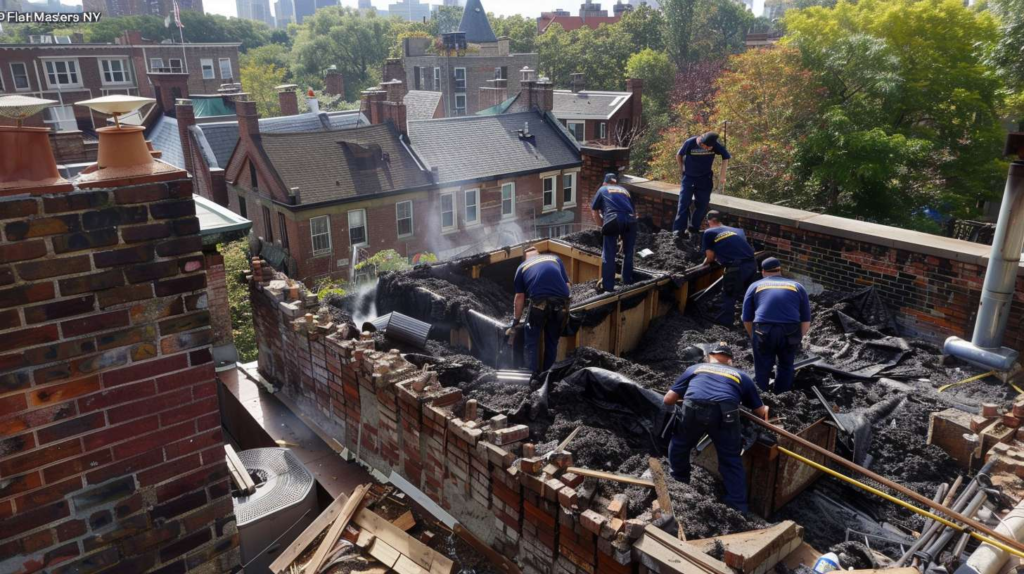
Here's my blunt opinion: if the deck is wet, the patch is a delay, not a fix. A real flat roof replacement on an extension starts with full tear-off - every layer comes up - so you can actually see what you're working with. From there, the deck gets inspected for soft spots, rot, and delamination. Any compromised substrate gets pulled and replaced before anything else goes down. Then comes insulation review, because old extensions often have none worth keeping, followed by the membrane installation itself, proper flashing at every wall and edge, and drain or scupper checks to confirm water has somewhere to go. And as Marta Zielińska, with 19 years of flat roofing experience and a specialty in diagnosing failing extension tie-ins across Queens, keeps explaining to anyone who'll listen - the membrane is the last step, not the first conversation.
The ugly truth is that extension roofs get treated like the cheap add-on, and water notices. On Queens rowhouses - the kind you find block after block in Ridgewood, Maspeth, and Jackson Heights - rear extensions almost always have awkward wall intersections where the addition meets the original structure. Those transitions were flashed once, maybe reflashed once more, and now they're holding a small lake every time it rains hard. Old decks on these extensions are often a patchwork of whatever was on hand at the time, and none of it drains well because the original slope was marginal at best and has only gotten worse as the structure settled.
A new membrane over a bad slope is just giving water a cleaner runway.
Edge Details Matter More Than Homeowners Get Told
Exact Sequence for Replacing a Flat Roof on an Extension
-
1
Protect access and the interior below - Cover floors, furniture, and any ceiling areas at risk before a single layer comes off.
-
2
Remove old membrane and all patch layers - Full tear-off, not a skim cut - every prior repair layer comes up so the deck can be properly assessed.
-
3
Inspect deck and framing - Probe every section for softness, rot, or delamination before deciding what stays and what gets replaced.
-
4
Replace wet or rotten substrate - New plywood or board goes in wherever the old material has absorbed moisture or lost structural integrity.
-
5
Correct drainage and slope where possible - Tapered insulation or crickets are added to direct water toward drains or scuppers instead of letting it sit.
-
6
Install insulation, base layer, and finish membrane - The right membrane for the application goes down over a properly prepared, dry surface.
-
7
Complete flashing, edge metal, and final water test - Every wall tie-in, perimeter edge, and drain gets properly detailed and verified before the job is closed out.
| Problem Area | What Full Replacement Addresses | What a Patch Usually Does | Likely Outcome If Ignored |
|---|---|---|---|
| Wet deck | Damaged sections removed and replaced with dry substrate before membrane goes down | Seals moisture in - deck continues to degrade under the new surface | Structural failure, sagging, and interior damage within 1-3 seasons |
| Bad slope / ponding | Tapered insulation or crickets installed to restore positive drainage | New surface still collects water in the same low spots - accelerated wear restarts immediately | Membrane fails prematurely, prolonged ponding accelerates deck saturation |
| Failed wall flashing | Flashing torn out and rebuilt at the wall-to-roof junction with proper overlap and termination | Caulk or surface coat applied over failed detail - bond breaks within months | Water enters at the wall regularly, wets insulation and framing, causes interior damage |
| Trapped moisture under old layers | All prior layers removed, moisture allowed to escape, dry substrate confirmed before rebuild | Each new layer adds weight and seals in existing moisture, compounding the problem | Mold, rot, and eventual deck collapse - plus dramatically higher replacement cost later |
How Queens Owners Can Judge Whether It Is Time
Last winter in Woodside, I peeled up a corner and already knew what I was going to find. The surface felt right. There was no obvious pooling. But the flashing at the back wall had a small gap, the kind that looks almost intentional, and I'd seen that gap's cousin a dozen times before - in Ridgewood, after a Sunday night thunderstorm, when a family called at 9:30 in the morning because water was dripping through a light fixture over the breakfast table. Their extension had been coated twice by someone trying to save it. But the real problem was trapped moisture and no proper edge detail where the extension met the house wall. I spent half that visit showing the owner exactly why I wasn't upselling her - I was refusing to put lipstick on rotten plywood. Replacement isn't the expensive option when the alternative is rebuilding it again in eighteen months.
When I ask, "Do you want one more season or do you want this done right?" people usually go quiet. That silence is worth paying attention to. Here's the insider tip I give every Queens homeowner before they call anyone: ask the roofer directly what they expect to find under the membrane, and ask whether the estimate includes a line item for replacing damaged deck sections and rebuilding wall and edge details if hidden damage turns up. If the answer is vague, the quote is incomplete. A contractor who's actually opened these roofs will have a clear answer about what they're prepared to find - and a written scope that accounts for it.
Should You Replace the Flat Roof on Your Extension - or Patch It One Last Time?
Do leaks return after prior repairs?
YES → Is there any bubbling, softness underfoot, or interior staining near the wall tie-in?
YES → Plan for a replacement estimate - the assembly is likely compromised.
NO → Has this roof had 2 or more repair events in the last 3 years?
YES → Replacement is strongly likely - frequency is the tell.
NO → Get a professional inspection before deciding either way.
NO (leaks haven't returned) → Is water ponding for 48+ hours after rain?
YES → Drainage or slope issue - replacement is likely the right fix.
NO → Inspect flashing and seams carefully before making a decision.
Before You Call for a Replacement Quote - Know These 6 Things
-
✓
The approximate age of the extension roof, if you know it -
✓
How many prior repairs or coatings have been applied -
✓
Exactly where moisture shows up inside - ceiling corners, light fixtures, walls -
✓
Whether you've noticed any bubbling, blistering, or softness when walking the roof surface -
✓
Whether the extension ties into a parapet wall or directly into the main house wall -
✓
How access to the roof works - through the house interior, a rear yard gate, or another route
Price Isn't the First Question but It Still Matters
What Changes the Quote on a Queens Extension
A flat roof on an extension behaves like a shallow baking tray - once the tilt is wrong, everything sits where it shouldn't. The cost of replacement moves around quite a bit depending on the size of the extension, how difficult access is (and on a Queens rowhouse, that access question can swing the whole day's work), how deep the tear-off goes, how much deck needs replacing, whether insulation has to be upgraded to meet current energy code, how complex the edge and flashing details are, and whether correcting a ponding problem requires tapered insulation or structural adjustments. None of those variables are visible from a driveway estimate.
Now, people love to say the cheapest quote saves money. It rarely does on an extension flat roof replacement. Low bids almost always skip a substrate replacement allowance, which means the moment the contractor peels back the layers and finds wet plywood - and they will - the project becomes a change-order conversation you weren't prepared for. One August afternoon in Jackson Heights, the sun was brutal and the rear extension roof felt like a skillet. The customer was a retired electrician who swore the bubbling membrane had "another five years easy," but when I stepped near the back corner the deck gave a soft crunch under my boot. We ended up replacing the whole flat roof on that extension, and he later told me the only thing he regretted was waiting through two leak seasons first. A complete quote accounts for what might be found - and writes it down.
Typical Replacement Cost Scenarios - Queens, NY Extension Flat Roofs
| Scenario | Likely Conditions | Estimated Price Range |
|---|---|---|
| 1. Small extension, easy access | Rear yard access, minimal layers, deck in good shape, standard membrane swap | $2,500 - $4,500 |
| 2. Small-to-mid extension, partial deck replacement | Some wet plywood sections found after tear-off, moderate flashing work at one wall | $4,500 - $7,000 |
| 3. Rear extension, interior access only + wall flashing rebuild | Access through the house, failed wall tie-in flashing that needs full removal and rebuild | $6,500 - $9,500 |
| 4. Extension with insulation upgrade + edge metal replacement | Old or absent insulation, deteriorated perimeter metal, code upgrade required | $7,000 - $11,000 |
| 5. Heavily patched extension, widespread wet deck | Multiple repair generations, saturated deck throughout, complete rebuild of substrate and details | $10,000 - $15,000+ |
* Prices vary significantly after inspection. Hidden damage under old patch layers is common and almost always affects final scope.
Lowest Quote Includes:
- Vague "tear-off" language with no defined scope
- No deck contingency or allowance for substrate replacement
- Basic membrane type mentioned, no system detail
- Flashing scope unclear or absent
- No mention of drainage correction or edge metal
Complete Quote Includes:
- Defined tear-off scope - number of layers, disposal included
- Deck replacement allowance terms written in
- Insulation type and R-value noted
- Flashing and edge metal detail specifically described
- Cleanup plan and leak-path diagnosis included in scope
Questions Worth Asking Before You Approve the Work
That's the part homeowners get told least clearly - what actually gets opened, and what happens if the contractor finds something worse than expected. The best contractor conversation you can have before signing off on an extension flat roof replacement is about three things: what's being removed and how far down, what gets rebuilt if the deck or framing is compromised, and how the tie-ins at the main house wall are detailed so water genuinely loses its opportunities rather than just being redirected to a new one. A roofer who squirms at those questions probably doesn't have a good answer.
Common Questions Before Approving the Work
Why Queens Homeowners Call Flat Masters
-
✔
Licensed and fully insured roofing contractor serving Queens, NY -
✔
Extension roof diagnostic inspection before any quote is written - no guessing, no hidden scope -
✔
Deep familiarity with rowhouse and rear-addition tie-ins across western and central Queens -
✔
Written scope for every job - tear-off depth, flashing plan, deck replacement terms, and cleanup all spelled out -
✔
Service area covers all of Queens including Ridgewood, Maspeth, Jackson Heights, Woodside, and surrounding neighborhoods
If you're done guessing whether the next patch will hold another season, call Flat Masters for a real extension flat roof replacement assessment. We'll put eyes on the membrane, tell you what we expect to find underneath it, and give you a written scope that explains exactly what's being removed, what's being rebuilt, and how every edge and tie-in gets protected - so water stops finding opportunities it doesn't deserve. Queens homeowners can reach us directly to schedule an inspection.