
Who You Hire for Your Flat Roof Installation Matters More Than Most People Realize
Seasonal weather in Queens doesn't destroy flat roofs - wrong crews do. The worst flat roof problems I've seen here don't start with hurricanes or freak hailstorms. They start with ordinary-looking installs where the membrane is smooth, the edges are clean, and everything looks fine from the sidewalk - until it doesn't. This article will show you exactly how to tell whether flat roof installers are building a real roof system or just leaving behind expensive-looking mistakes.
Why Ordinary-Looking Installs Fail So Fast
On a Queens roof, I look at the drains before I look at anything pretty. That's not a habit - it's a conclusion I reached after years of watching costly failures develop under surfaces that looked completely acceptable. Honestly, if slope is ignored, ponding starts; if ponding starts, seams begin to soften and insulation absorbs water; if insulation absorbs water, you're not fixing a membrane anymore - you're rebuilding a roof system. Roofs gossip if you know how to hear them, and the drain is always the first one talking.
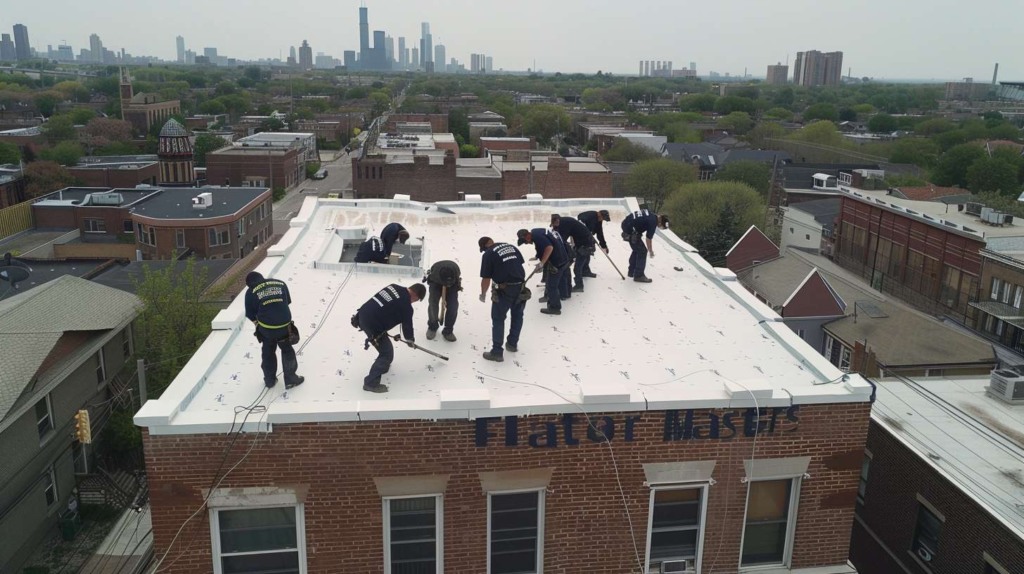
I remember being on a two-family in Ridgewood at 6:40 in the morning after one of those sticky August nights, and the owner was furious because his brand-new flat roof was already holding puddles deep enough to reflect the satellite dish. I climbed up with my coffee still in my hand and could tell in five minutes the crew had laid material cleanly but ignored the slope entirely. That was the day I had to explain that neat-looking work from the wrong flat roof installer is still wrong work. I'm Maribel Soto, and I've spent 22 years in flat roofing with a specialty in diagnosing drainage failures on Queens flat roofs - and I'll tell you plainly, that Ridgewood call was not unusual. Now, what does that tell us?
| Myth | What Actually Happens |
|---|---|
| If the roof looks smooth, the install is solid. | A smooth surface hides poor slope, unsealed laps, and dry-fitted flashing. On a Queens flat roof, water will find every one of those problems within one rainy season. |
| The cheapest bid usually means the same roof for less. | It usually means skipped steps - thinner insulation, rushed seams, no drainage plan. The savings disappear fast when a full tear-off follows two years later. |
| All flat roofing installers use the same seam standards. | Seam technique varies enormously. Heat-welded TPO seams require precise temperature control. EPDM seams rely on adhesive prep. A careless crew on either system leaves open failure points. |
| A new membrane fixes bad drainage. | It doesn't. Laying new material over a flat or negative-slope deck just gives the water a newer surface to pond on. The drainage problem survives the membrane replacement. |
| Brand matters more than crew skill. | A premium membrane installed by an undertrained crew will fail faster than a standard membrane installed correctly. The installer controls the result, not the logo on the roll. |
Don't Judge a Flat Roof Installation by Appearance Alone
Straight lines, fresh coating, and clean edges do not confirm proper slope, secure fastening, dry insulation, or correctly built flashing. A roof can check every visual box and still be holding water inside the system right now. What you can't see from the ladder is exactly where failures begin.
Questions That Expose Whether a Crew Knows What It's Doing
If I asked you who's actually supervising your install, could you answer me in one sentence? Not the company name - the actual person making decisions on the roof each day. Most customers can't answer that, and not because they didn't try. It's because many contractors sell the job at the office and send whoever's available to the roof. Queens buildings in Astoria, Jackson Heights, and Ridgewood don't forgive that arrangement. These are structures with low-slope drains that back up in heavy rain on Steinway Street, parapet walls that need precise flashing, HVAC curbs added after the original build, and rooftop additions that created transitions nobody planned for. Every one of those details punishes guesswork from flat roofing installers who haven't seen them before.
One November afternoon in Astoria, with that cold wind coming off the water, I met a retired bus driver who kept saying, "But they were the cheapest rubber flat roof installers by four grand." By sunset we had peeled back a corner and found wet insulation, sloppy seam work, and fasteners spaced like somebody was guessing in the dark. I can still see his face when I told him the low bid had just turned into a full tear-off. That points to the real issue: a low number on a proposal doesn't tell you who's checking seams, measuring fastener spacing, or deciding how water gets off that roof. Those decisions happen during the install, not before it.
Who is checking the details every day?
Before You Call: Verify These 8 Things With Any Flat Roof Installer in Queens, NY
- Onsite supervisor: Ask by name who will be making decisions on your roof each day - not the sales rep, the person with boots on the membrane.
- Drainage plan: Ask them to explain in plain language where water will go and how slope or tapered insulation will get it there.
- Membrane system: Ask which system they're proposing - TPO, EPDM, modified bitumen - and why that system fits your specific deck and building use.
- Flashing at curbs and parapets: Ask how they handle termination at parapet walls and HVAC curbs, specifically how they prevent moisture entry at those transitions.
- Tear-off vs. overlay: Ask whether the old material needs to come off and why. A credible installer will check insulation moisture before recommending an overlay.
- Photo documentation: Ask whether the crew photographs the deck condition, drain placement, and seam work before the membrane goes down.
- Cleanup and protection: Ask how they protect your building, skylights, and AC units during the job and what cleanup looks like at the end of each day.
- Warranty coverage: Ask what the installer's workmanship warranty covers and whether they're a certified applicator for the manufacturer's material warranty.
Listen for These Specifics
Signals on the Roof That Reveal the Installer's Priorities
Here's the blunt part nobody likes hearing. A flat roof installer reveals priorities through drain layout, seam discipline, flashing cuts, and how transitions are handled around penetrations - not through sales language. The work either holds water out or it doesn't, and those decisions were made by the crew during installation, not by the brand name on the material.
Would you know these details if you only looked from the sidewalk?
| Roof Clue | What a Careful Installer Does | Why It Matters |
|---|---|---|
| Drains and taper | Installs tapered insulation or crickets so water drains within 48 hours of a rain event | Persistent ponding adds dead load and degrades seams - cutting roof life by years, not months |
| Seams | Heat-welds or bonds seams to spec width and tests each one with a probe tool before moving on | An untested seam is an open invitation - it may hold for one season and fail during the next freeze-thaw cycle |
| Edge termination | Secures membrane edges with metal termination bar and sealant, not just adhesive to the parapet face | Wind uplift starts at the edge - a loose termination on a Queens rooftop can peel membrane back in one storm |
| Flashing at HVAC curbs | Runs flashing up the curb to the correct height and ties it into the field membrane with a proper overlap | Curb flashing cut too short or patched in sections is the most common single-source of repeat leaks on Queens commercial roofs |
| Fastener pattern | Follows manufacturer's specified fastener spacing by zone - field, perimeter, and corners each get different densities | Random spacing lets the membrane flutter under wind load, compromising seam bonds and accelerating membrane fatigue |
| Cleanup and documentation | Photographs deck condition, insulation placement, drain locations, and seam layout before the membrane is installed | Without that record, neither the installer nor the manufacturer can confirm what's under the membrane - and warranty claims become nearly impossible to support |
One Bad Detail Becomes Three Repair Bills
I once stood on a roof in Corona with three different repair invoices in my hand. The owner had called three separate contractors after three separate leaks, and not one of them had asked the same question twice. Each patch treated a surface symptom. Nobody had gone looking for the original mistake the first flat roofing installer made, because nobody knew to look past the obvious wet spot. Repeated patches almost always mean the original installation missed a system detail - not that the roof is mysteriously unlucky.
How leak paths trick owners into blaming the wrong spot
During a light spring drizzle in Elmhurst, I got called to look at a mixed-use building where the tenant blamed the landlord, the landlord blamed the last flat roofing installer, and everybody was talking over each other. I asked for ten quiet minutes, traced the leak path past an HVAC curb, and found the flashing had been cut too tight and patched like an afterthought. Here's the insider tip worth writing down: when a leak appears far from any visible opening in the field membrane, start your inspection at penetrations and transitions - curbs, pipes, walls, drains - before you blame the open flat surface. Water travels. It enters where flashing is weak and shows up where the ceiling is soft, and those two points are almost never the same.
A flat roof doesn't forgive guessing. If flashing is rushed, then water migrates under the membrane; if water migrates, then insulation gets wet; if insulation gets wet, then you're not patching - you're tearing off. Every callback, every invoice, every argument between tenant and landlord traces back to one decision someone made during installation. The crew either treated the roof as a connected system - slope to drain, membrane to flashing, flashing to curb - or they treated each section as its own problem. That decision was made before you ever saw a leak.
How a Competent Flat Roof Installer Evaluates Your Project Before Installation
Inspect deck and insulation - Assess structural condition, check for moisture in existing insulation layers, and confirm the deck can accept the proposed attachment method.
Map drainage and ponding - Identify where water currently sits, confirm drain locations and capacity, and plan tapered insulation or crickets where slope is insufficient.
Review penetrations and edges - Catalog every HVAC curb, pipe boot, parapet wall, and skylight that requires custom flashing before the membrane system is specified.
Recommend membrane and attachment method - Select the system based on deck type, building use, load requirements, and local weather exposure - not just what's on the truck.
Explain supervision and quality checks - Identify who makes daily decisions on the roof, which stages get inspected before proceeding, and what documentation the owner receives at completion.
Choosing the Crew Without Getting Distracted by the Bid
Think of it like a classroom lab - if one step is skipped, the whole result gets contaminated. A low number on a proposal means nothing without knowing what that number includes and who's executing it. Before you compare prices from flat roof installers, compare scope: is drainage planned or assumed? Who supervises seam work? How are curbs and parapets flashed? A crew that answers those questions specifically is worth more than one that beats the bid by two thousand dollars and goes quiet when you press for details. At Flat Masters, that's the standard we hold ourselves to on every Queens job.
| Short-Term Upside of Choosing by Lowest Price | Long-Term Downside |
|---|---|
| Lower number on the initial invoice | Wet insulation under the membrane means a full tear-off cost you didn't plan for - usually within 2-3 years |
| Faster verbal agreement and quicker start date | Sloppy seam and flashing work creates leak paths that multiply into separate repair bills with separate contractors |
| Less back-and-forth during the proposal stage | Shorter roof life - a properly installed flat roof lasts 20+ years; a rushed install often fails before year 7 |
| Immediate cash savings feel real on day one | Manufacturer warranty is voided if the installer isn't certified - leaving you with no coverage when materials fail prematurely |
Last Questions Before You Hire a Flat Roofing Installer