
A Roof Lantern on a Flat Roof Lets the Light In and Changes the Room Completely
Has it been a while since you walked into a room and actually felt it open up - not because the walls moved, but because the light changed? A roof lantern on a flat roof does that more reliably than a bigger wall window, because overhead light travels to the center of the room instead of washing one side and leaving the other half dim. The room can feel taller, calmer, and more usable without touching the footprint.
Why a Lantern Rewrites the Room Faster Than a Bigger Wall Window
Three feet of extra height in the glazing changes more than people expect. A wall window, no matter how wide you make it, pushes light in horizontally - it brightens the edge nearest the glass and fades fast toward the middle. A flat roof lantern drops daylight from above, and that angle reaches the parts of the room that wall glazing simply cannot touch.
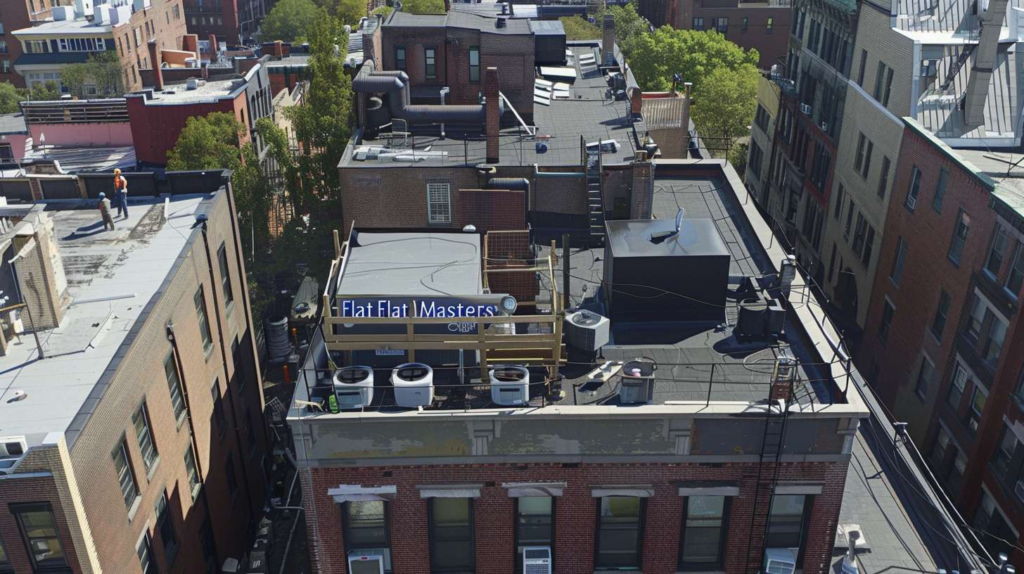
Light and water are two students that must be seated correctly - if you place them well, the whole room behaves; if you don't, you get chaos. Light should be invited to the center of the room where it does the most work. Water should be guided away from every edge and joint before a single pane of glass goes in. Get the seating wrong on either one, and the whole lesson falls apart.
| Myth | What Actually Happens on a Flat Roof |
|---|---|
| A larger sliding door brings in the same light. | Horizontal light hugs the perimeter. Overhead light from a flat roof lantern reaches the center of the room - the part that matters most in Queens rear extensions where the far wall gets nothing. |
| Roof lanterns only help on sunny days. | Diffuse overcast light - the kind Queens gets most of the year - actually spreads more evenly through overhead glazing than direct sun does. Gray days still transform the room. |
| Any roofer can drop one into a flat roof. | A lantern flat roof assembly requires precise upstand height, membrane tie-in, insulation continuity, and drainage planning. Skipping any one of those details is what causes leaks two winters later. |
| More glass always means overheating. | Glazing specification solves this. Low-e coatings, solar control glass, and appropriate sizing keep heat gain manageable. An oversized unit with wrong spec overheats; a right-sized one with proper glass doesn't. |
| A lantern is just a skylight with prettier framing. | Not even close. A flat roof roof lantern is a raised glazed structure with sloped or faceted sides sitting on an upstand - it adds visual volume and height inside the room. A skylight sits flush and low. Different tools, different results. |
Where Queens Homes Gain the Most From Overhead Daylight
Room Patterns That Respond Best
I'll tell you what I see all over Queens. Rear kitchen extensions tacked onto the back of attached homes, dining rooms buried in the middle of row houses, low-ceiling family rooms on older bungalow additions in neighborhoods like Ridgewood and Maspeth - these are the spaces that get strangled by their own layout. Side windows barely reach past the neighboring wall, and patio doors only help the person standing right next to them. As Doreen Velez, with 27 years in flat roofing and a specialty in older Queens low-roof additions, has seen time and again, the center of the room is where people actually live, and it's almost always the darkest spot in the house.
When I ask a homeowner where the room dies, they usually point to the middle. That's the zone that wall glazing was never designed to reach. Roof lanterns for flat roofs pull daylight straight down into that zone, and the effect on ceiling perception alone can make a room feel like it grew a foot taller without a single structural change. It's not a trick - it's just physics pointed in the right direction.
I remember a February install in Ridgewood, around 4:20 in the afternoon, when the sky was that dull metal color and the homeowner kept apologizing for how gloomy the rear extension felt. We set the flat roof lantern in place just before sunset, and even with no bright sun at all, the room stopped looking tired. That job is the one I still think about when people assume flat roof lanterns only matter on perfect blue-sky days - because that particular afternoon proved the opposite as clearly as anything I've seen in nearly three decades on Queens rooftops.
| Room Type | Typical Daylight Problem | How a Flat Roof Lantern Helps | Design Note Before Installation |
|---|---|---|---|
| Rear kitchen extension | Neighboring fences and walls block side light; cooking zone stays dim all day | Overhead light reaches countertops and the middle of the floor plan without interference from neighboring structures | Confirm drain placement won't conflict with lantern footprint before sizing |
| Dining room in center of row house | No exterior wall access; side party walls make natural light almost impossible | A lantern on the flat roof directly above creates a natural light source where none existed | Check structural ceiling framing - upstand and lantern weight must be accounted for |
| Family room under low flat roof | Low ceiling height makes the room feel compressed; existing windows face a fence or neighboring structure | The raised glazing profile adds perceived ceiling height and fills the room from above rather than from the side | Upstand height must clear insulation while keeping interior ceiling profile clean |
| Open-plan renovation | Large open floor plan means light from perimeter windows fades before reaching the interior zones | A centrally placed flat roof lantern anchors the plan with overhead daylight where the room needs it most | Solar orientation should inform placement - south-facing lanterns need solar control glazing |
| Top-floor addition | New addition height sometimes blocks lower-floor light; added floor still needs top-side daylight | A lantern window for flat roof at the top level feeds light downward through the new space | Roof drainage must be redesigned around new layout - don't assume old fall direction still works |
Signals That a Room May Benefit More From a Lantern Than Another Wall Window
- ✅ The center of the room is noticeably darker than near the windows
- ✅ Neighboring walls, fences, or buildings sit close to the sides of the extension
- ✅ The space sits under a low rear flat roof addition
- ✅ Existing wall glazing is already as large as the structure allows
- ✅ The room faces north or east and the light still feels flat throughout the day
- ✅ The homeowner wants visual height without the cost or disruption of a full addition
What the Roof Has to Get Right Before the Glass Goes In
One rainy morning in Astoria taught this lesson better than any brochure. I got called to look at a lantern on flat roof setup another crew had done two summers earlier - the glass itself was fine, but the upstand was undersized, the flashing details were careless, and every hard rain shoved water toward the weak points like it had been personally invited. I was standing there at 7:10 a.m., coffee in one hand, using a pencil to show the owner on the back of a folder exactly how the whole thing could have worked if they had respected the roof first and the lantern second. The roof is the argument. The lantern is the conclusion. You can't skip to the conclusion.
Here's the blunt part: a beautiful lantern window on flat roof means nothing if the waterproofing is lazy. Upstand height needs to clear the finished roof membrane by a meaningful margin - not a guess, a measurement. The membrane tie-in at the curb has to be continuous, with no gaps at corners where two materials meet at an angle. Insulation continuity through the upstand zone matters for both thermal performance and condensation control. And the runoff path has to work: water coming off the lantern glazing needs to land on the roof membrane and travel - without pooling - toward a drain or scupper. The insider move here is to trace that water path with your eye, from the highest point of the lantern down to the nearest drain, before anyone approves the layout. If that path has an obstacle, the obstacle gets fixed first.
If the roof cannot tell water exactly where to go, the lantern has no business being there.
⚠ The Biggest Failure Points in Flat Roof Lantern Installations
- Undersized upstand: An upstand that's too short lets water back up under the base of the lantern during heavy rain - a common mistake on quick installs.
- Membrane cuts at corners: Corners are where two membrane planes meet at stress points. Careless cuts or overlaps here are where leaks start, often years later.
- Decorative-first placement: Positioning the lantern based on interior aesthetics without checking drainage fall first creates a layout the roof can't support.
- Poor drainage fall: Flat doesn't mean level - the roof needs to pitch toward drains. Adding a lantern without rechecking fall direction can create standing water zones.
- Mixed trades with no clear owner: When the glazing company and the roofer aren't coordinating the weatherproofing sequence, gaps appear - literally - between their scopes of work.
Proper Order of Operations for Integrating a Roof Lantern Into a Flat Roof
-
1
Assess structure and drainage falls. Before any measurements are taken for the lantern, confirm the roof deck can carry the load and verify which direction water currently travels. Don't assume.
-
2
Size and build the upstand. The upstand height must be determined by membrane depth, insulation thickness, and required clearance above the finished waterproofing level - not by what looks proportional from outside.
-
3
Adjust insulation and membrane levels. Insulation must run continuously around the upstand zone. The membrane then gets dressed up the upstand to the correct height before any lantern component is even unboxed.
-
4
Set and secure the lantern. The lantern frame goes down onto the prepared upstand, anchored per manufacturer specification. Placement is confirmed against the drain path before fastening is completed.
-
5
Complete flashing and weatherproof tie-ins. Every junction between the lantern frame, upstand, and roof membrane gets flashed with compatible materials. Corners get extra attention - that's where water tests the work first.
-
6
Water-test and inspect the full drainage path. Run water across the roof and watch it travel. Check that no pooling occurs near the lantern base, that drains clear fast, and that the scupper or drain path runs clean before the job is called done.
How to Choose a Size and Shape That Brightens Without Overdoing It
Proportion Before Product
It works a bit like opening the top of a box instead of poking holes in the side. The best roof lanterns for flat roofs are not automatically the largest ones - proportion, placement, solar orientation, frame thickness, and even where the furniture sits all factor into how the light actually lands. Personally, I prefer a lantern that leaves the roof looking disciplined from the street and makes the room feel taller from inside, rather than one oversized unit that dominates both the exterior profile and the interior mood. A right-sized lantern window on flat roof adds light without announcing itself the wrong way.
Should Your Flat Roof Use a Compact Lantern, Medium Lantern, or a Different Daylight Option?
START: Is the center of the room darker than the perimeter?
↳ No → Wall glazing or patio doors may be sufficient. A lantern may not be necessary.
↳ Yes → Continue below.
NEXT: Is the flat roof structurally open and can drain layout be preserved with a lantern in place?
↳ No → Drainage or structural constraints are present. Consider fixed skylights or a professional light-redesign before cutting the roof.
↳ Yes → Continue below.
FINALLY: Is the available flat roof area limited, or is the room deep enough to benefit from a larger opening?
↳ Roof area is limited → A compact lantern placed centrally will do the job cleanly without stressing drainage or structure.
↳ Room is deep, roof area allows → A medium lantern delivers the full center-of-room light pull the space is asking for.
Questions Homeowners Usually Ask After They See the Difference
I once worked on a Sunnyside duplex for a retired piano teacher who told me the dining room had "good bones, bad daylight" - which, honestly, I've never heard it said better. It was one of those windy March days on 48th Street where the ladder hums a little and everybody talks louder than necessary. After we finished the flat roof with lantern detail, she sat at the table, looked up, and said the room finally sounded the way it was supposed to feel. That line stayed with me. And it's usually right after a moment like that - when the homeowner actually sits under the new light - that the practical questions arrive: will it hold up in heat, is cleaning realistic, does a neighbor's taller building mean everyone's looking in? Here's where those answers live.
Before You Call for a Roof Lantern Estimate - Note These First
- ☐ Approximate room size - length, width, and ceiling height of the space below
- ☐ Roof dimensions - rough measurements of the flat roof area above the room
- ☐ Drain and scupper locations - where does water currently leave the roof?
- ☐ Age of current flat roof - this affects whether the membrane can be integrated or needs replacing
- ☐ Photos from inside and at roof level - both angles help before the first visit
- ☐ Permit or board approval considerations - co-ops and some attached homes in Queens have rules; know your situation
- ☐ What time of day the room feels darkest - morning, midday, or afternoon tells us a lot about where to place the lantern for maximum effect
If a dark rear extension or a center-dim room in Queens has you wondering whether a flat roof lantern is the right call, Flat Masters can assess the roof, drainage, and daylight potential before anything gets cut open - so you know what you're working with before any decisions are made. Give us a call and let's take a look together.
- Doreen Velez, Flat Masters, Queens, NY