
A Coating Can Extend the Life of a Flat Roof - If You Choose the Right One
During a roofing season, the wrong coating choice can shorten a flat roof's useful life faster than leaving a stable, dry roof alone for one more season - and that's a fact most product brochures won't put on the front page. This article will show you how to judge flat roof coatings by what your specific roof is actually doing, not by which system got the loudest pitch at the supply house.
Why the Wrong Coating Ages a Roof Faster
A coating applied over a roof that isn't ready for it doesn't just fail to help - it locks in the problem. Moisture gets sealed below a fresh-looking surface, seams that needed reinforcement keep moving underneath a rigid film, and by the time bubbles or ribbons start showing up, the damage underneath is worse than if the coating never went down at all. The roof is evidence. Treat it that way.
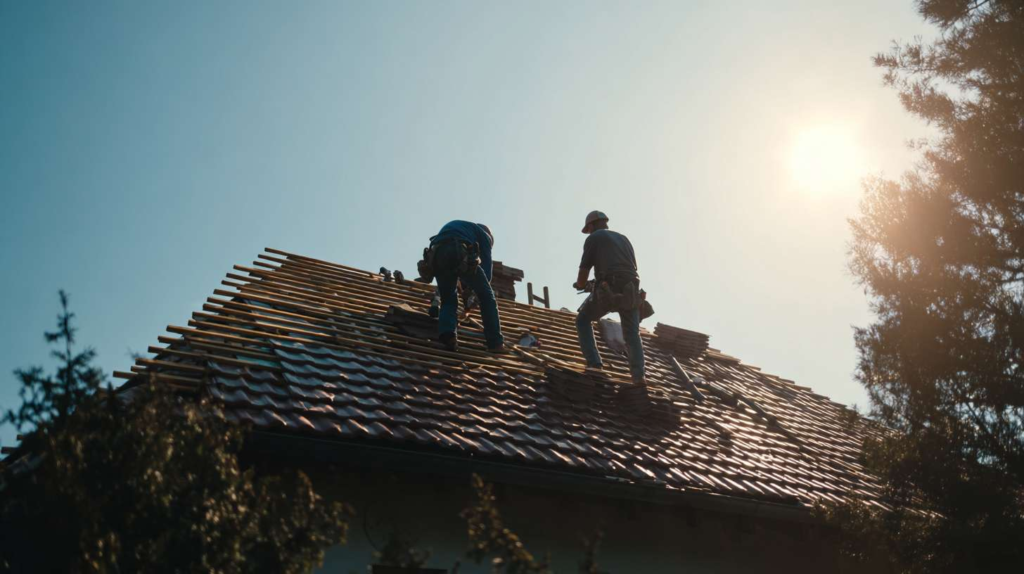
On a Queens roof at 7 a.m., the first thing I look at is where the water stayed. Ponding rings around drains tell me something about how this roof drains - and drainage behavior shapes which coating can actually perform here. A slow-draining roof with standing water needs a coating that tolerates submersion, not an acrylic that softens when it sits wet for two days straight. Coatings are protection layers. They are not automatic fixes, and they're not a substitute for a repair plan.
Should This Flat Roof Be Coated Now, Repaired First, or Evaluated for Replacement?
Follow the branches in order. Stop at the first "Yes."
Is the roof actively leaking inside?
YES → Inspect the membrane and check for trapped moisture before any coating goes down. Coating over an active leak path conceals the failure and accelerates damage.
NO → Continue to step 2.
Is there trapped moisture or soft/wet insulation below the membrane?
YES → Do not coat. Wet insulation won't dry under a coating. Repair or replace affected areas first - the roof system needs to be dry before protection makes sense.
NO → Continue to step 3.
Does water stand longer than 48 hours after rain?
YES → Coating choice must account for ponding tolerance. Drainage corrections may be needed alongside or before coating application.
NO → Continue to step 4.
Are seams, flashings, and penetrations stable?
NO → Repair all detail work first. A coating is only as strong as what it's bonded to.
YES → Coating may be a solid candidate - after proper prep and adhesion testing.
⚠ Don't Coat Over These Conditions
- Do not coat a wet system. Moisture trapped under a coating expands, blisters, and destroys adhesion from below - no matter how good the product is.
- Do not use a coating as a leak-stopper without completing repairs first. Coating is a maintenance and protection layer, not a structural fix.
- Do not assume white coating equals energy savings if drainage is wrong and adhesion hasn't been tested. Reflectivity is useless if the coating fails in year two.
Matching Materials to What the Surface Is Doing
How Acrylic, Silicone, Aluminum, and Polyurethane Behave Differently
Here's the part people do not love hearing: there is no single best flat roof coating material. The right answer depends on moisture history, ponding behavior, membrane type, UV exposure, traffic, and how your roof drains after a heavy August storm. I'm Marisol Vega, and with 22 years rescuing aging mixed-use flat roofs in Queens, the one thing I've never seen is a single coating type that's right for every building on every block. Anyone who says otherwise is selling a product, not reading a roof.
I learned this the hard way on a cold Roosevelt Avenue job. A pharmacist called me during a light December drizzle because another crew had rolled acrylic over a roof that never fully dried out after a wet fall. Cause: the surface looked passable, so they coated it anyway. Result: by the time I got there, the coating was lifting in long soft ribbons near the drain bowls, with freezing water pooling under peeled edges. Next step: full removal of the failed coating layer, moisture remediation, and a complete restart with the right system for a roof that sees slow drainage and low winter temperatures. The product wasn't wrong - the timing and surface prep were. That distinction costs real money when you miss it.
Queens mixed-use buildings add their own layer of complexity. A lot of the flat roofs we work on here have parapet walls that trap water at corners, rooftop HVAC and exhaust equipment that creates foot traffic wear paths and puncture risk, and scuppers that clog with debris faster than drains on a cleaner surface. Humid summers push moisture into seams. Freeze-thaw cycles through January and February work on any weak adhesion point left from the previous season. On a storefront block like the ones off Jamaica Avenue or Northern Boulevard, a coating that performs well in Phoenix or Miami can fail here by spring if it's not matched to these specific drainage and temperature realities.
Where Queens Weather Changes the Recommendation
| Coating Type | Best Fit | Struggles With | Drainage Tolerance | Typical Use Case in Queens |
|---|---|---|---|---|
| Acrylic | Dry, well-drained roofs with strong UV exposure | Ponding water, cold application temps, wet substrates | Low - softens when submerged for more than 24-48 hrs | Sloped or well-maintained roofs on low-rise residential buildings |
| Silicone | Roofs with consistent ponding, UV-heavy exposures | Foot traffic, dirt accumulation, recoating over itself | High - holds up well under standing water | Commercial flat roofs where drainage corrections aren't practical |
| Aluminum Coating | Older built-up roofs, reflective maintenance coatings | Ponding, seam flexibility, use as a primary waterproofer | Low - not designed for standing water situations | Interim maintenance on aged BUR roofs between repair cycles |
| Polyurethane | High-traffic roofs, areas needing impact resistance | UV degradation (needs topcoat), cost-sensitive budgets | Moderate to high - more flexible than acrylic under movement | Rooftop decks, equipment-heavy roofs, roofs with foot traffic wear |
Myths vs. Real Answers: What Building Owners Hear About Flat Roof Coatings
| Myth | Real Answer |
|---|---|
| Any white coating will fix a leaking roof. | White coating is a reflective surface protector. An active leak means water is already past the membrane - that needs a repair, not a color. |
| Silicone works on every flat roof. | Silicone handles ponding well, but it's a bad choice for heavy-traffic roofs and it's difficult to recoat later. Fit matters more than reputation. |
| Skipping prep saves money on the total job. | Skipping prep saves money on day one and costs two to three times more when the coating fails early and the surface needs full remediation before round two. |
| Coating and repairing are basically the same thing. | They're not. A coating protects a stable surface. A repair addresses structural failure. Doing one instead of the other is how roofs fail in year two instead of year ten. |
| If the roof looks dry, it is dry. | Surface appearance means nothing below the membrane. Trapped moisture in insulation doesn't show on top. A moisture scan or test core tells the real story. |
Reading Failure Points Before You Buy a System
If I asked you where this roof actually fails first, what would you point to? Most owners tap the middle of the field membrane - the big open stretch that's easiest to see. But most failures start somewhere else entirely: at seams where two sections meet and shift, at penetrations where pipes or curbs break the surface plane, at drain bowls where water concentrates and sits, at base flashings where the membrane meets the parapet, and at transitions where one material hands off to another. The field membrane is usually the last place you lose.
6 Evidence Points to Inspect Before Choosing a Flat Roof Coating System
-
💧
Ponding rings around drains - discoloration or debris lines that show where water sat and for how long after the last storm. -
🔓
Seam separation - open or raised lap seams where two membrane sections have pulled apart, allowing water entry below the surface. -
🫧
Blistering or trapped moisture - raised bubbles or soft spots under the membrane surface indicating moisture or gas is already trapped below. -
📐
Failing flashing corners - cracked, lifted, or separated flashing at parapet corners and wall transitions where movement stress concentrates. -
🎨
Coating peel or chalk from earlier work - signs that a previous coating lost adhesion, chalked out, or delaminated, which affects how the next application will bond. -
👣
Rooftop traffic wear paths - compressed or abraded membrane areas from repeated foot traffic to equipment, HVAC units, or rooftop access points.
Tap to Read the Likely Cause, the Risk, and the Next Step
Preparing the Roof So the Coating Can Actually Work
Repairs That Belong Before Coating
A coating is not forgiveness. I remember being on a six-family building in Elmhurst at 6:40 in the morning after one of those sticky August nights - the owner was completely sure a white coating would solve his leak and bring down his cooling bills. When I peeled back a bubbled section with my scraper, there was trapped moisture underneath, grey and soft, sitting right against the insulation board. That's not a prep problem you roll over. Before a flat roof coating goes down, the checklist includes cleaning the surface, confirming the substrate is dry, repairing every open seam, addressing flashing work at parapets and penetrations, reinforcing detail areas, and cutting out and replacing wet insulation sections. Every one of those steps earns the coating's performance. Skip one, and you've paid for a coating that's already compromised before the first rain hits.
Why Adhesion Testing Is Not Optional
Think of the roof like a lab experiment that already started before we arrived. Surface condition, moisture level, previous coating history, UV exposure, and drainage patterns are all data points - and the roof has been collecting that data for years. An adhesion test patch isn't a bureaucratic step; it's the read-out from the experiment. You apply a small test area, let it cure, and then check it near the zones most likely to fail: not the easy, sunny middle of the roof, but near the drains, along the seams, and in the shaded corners where the surface stays damp longest. Those spots tell you more in 48 hours than a product brochure will tell you in ten pages. Pay attention to what the roof is doing in its problem zones, and the coating decision usually answers itself.
Pre-Coating Workflow: The 6 Steps for a Serviceable Flat Roof
Inspect and Map Defects
Walk the entire roof surface and document seam condition, ponding areas, flashing status, penetrations, equipment footprints, and any prior coating work. Don't skip the parapet corners.
Moisture Check Suspect Areas
Use a moisture meter or nuclear gauge on soft spots, blistered areas, and zones that pond. Cut test cores if needed. A surface that looks dry can still have saturated insulation below.
Clean Surface and Remove Contaminants
Pressure wash or mechanically clean the surface to remove dirt, algae, chalked coating, loose material, and anything that would compromise adhesion. Let the surface dry completely before moving forward.
Repair Seams, Flashing, and Penetrations
Address all identified defects before coating. Re-adhere open seams, replace failed flashing, seal around pipe boots and curbs, and cut out and replace wet insulation sections. These repairs carry the coating's performance.
Perform Adhesion Test Patches
Apply small test areas near drains, seams, and shaded zones - the spots most likely to reveal adhesion problems. Let them cure fully and evaluate bond strength before committing to a full application.
Apply Coating With Detail Reinforcement
Apply the coating system per manufacturer specs and your conditions assessment. Embed reinforcement fabric at seams, flashings, drains, and penetration details - not just a brushed-over coat. These are the zones that work hardest.
Before You Call for a Coating Quote - Verify These 7 Things
-
✓
Age of the existing roof - A roof over 20 years with significant wear may be a replacement candidate, not a coating candidate. -
✓
Known leak history - Where did water show up inside, and under which conditions? Wind-driven rain vs. all storms tells a different story about entry points. -
✓
Last repair date - Knowing what was repaired, when, and by whom helps identify whether any work was done over existing moisture problems. -
✓
Areas that pond after rain - Note which drains are slow, where water rings appear, and how long standing water typically remains. -
✓
Previous coating history - If the roof has been coated before, what product was used? Compatibility between layers affects what can go on next. -
✓
Rooftop equipment and traffic - HVAC units, exhaust fans, and regular service access all affect membrane wear and coating durability in specific zones. -
✓
Interior stain patterns - Does water show up during wind-driven rain only, or after every storm? That distinction points to flashing failures vs. membrane failures.
Choosing the Right Plan for an Aging Queens Flat Roof
One Saturday just before sunset in Ridgewood, I walked a small apartment roof with a retired couple who had gotten three bids - and three completely different coating recommendations. One contractor wanted silicone everywhere. One said aluminum. One said no prep was needed at all. I drew chalk circles around the ponding areas and open seam splits, and that one visual cleared the whole confusion up. Different roof conditions need different coating logic, and when a contractor gives you the same answer before looking at the evidence, that's a red flag. Honestly, I get sharp with contractors who prescribe the same coating system for every roof they walk because that's not roof logic - that's a supply order dressed up as an inspection. The roof tells you what it needs. The job is to listen to it.
Here's the decision rule, plainly: a stable, dry, well-adhered roof that's been maintained can often gain real service life from the right roof coating for flat roof conditions - extended protection, UV defense, and a meaningful delay before a more costly intervention. A wet, unstable, or structurally compromised roof needs a repair strategy first. No coating buys time on a system that's already failing from below. If you're in Queens and you want a real conversation about what your roof actually needs - not a product pitch - Flat Masters is the right call. We evaluate the roof first and let the conditions guide the recommendation.
What a Product-First Bid Sounds Like
- Same coating recommended for every roof, every time
- Little or no discussion about moisture history or drainage
- No repair scope - coating is the whole plan
- No mention of adhesion testing or prep requirements
What a Roof-First Bid Sounds Like
- Discusses drainage behavior and ponding before naming a product
- Identifies membrane condition and moisture risk areas
- Includes a repair scope as part of the total plan
- Explains specifically why this coating fits this roof's conditions
Owner Questions About Coating Flat Roofs
A well-matched coating for flat roof conditions can genuinely extend your building's service life and push a major capital expense further down the road - but only when the roof underneath it is dry, stable, and properly prepped. If you're in Queens and want a straight answer about whether your roof is a coating candidate or needs something different first, reach out to Flat Masters for an evaluation that starts with your roof's actual condition, not a product recommendation. - Marisol Vega, Flat Masters