
Getting the Layers Right Is What Makes a Flat Roof Work - Here's the Correct Build-Up
Value and price are different things. More layers on a flat roof do not automatically mean more protection - and on many Queens flat roofs, those extra layers are exactly what shortens the system's life. This is a straightforward breakdown of what a correct build-up looks like, what each layer is actually supposed to do, and when adding another one is a mistake you'll be paying for two winters from now.
Why Extra Roofing Often Fails Faster
Three cuts with a utility knife usually tell me more than ten minutes of guessing. I remember being on a three-story building in Corona at 6:40 in the morning, with the roof still damp from overnight mist, and the owner swore we could just put "one more layer" over the existing system because his cousin did that in Brooklyn. I cut a small inspection square near the drain and found trapped moisture between old felts that smelled like a wet basement. That was the morning I told him, very calmly, that a roof can look flat and still be hiding a swamp. Each layer in a flat roofing system has a specific job - deck support, thermal control, vapor management, surface protection - and materials don't care about wishful thinking. They respond to conditions.
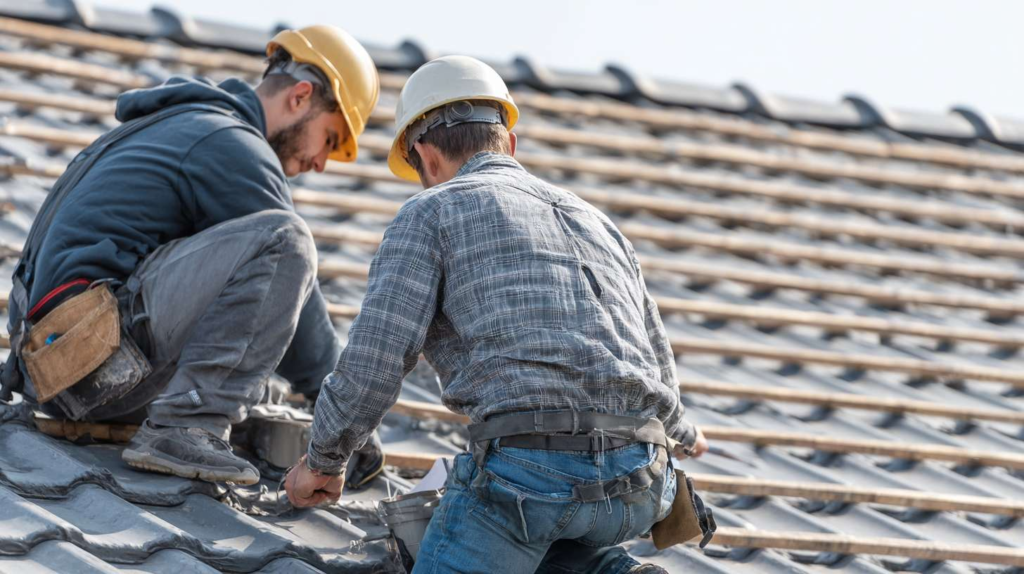
I'll say this plainly: a roof is not improved by hiding its mistakes. In most Queens recover situations I've seen, the problem isn't the top membrane - it's the buried moisture, the trapped movement, and an overloaded assembly that nobody looked at before slapping down another sheet. Covering failure is not maintenance. It's delay with interest, and the interest compounds fast once freeze-thaw cycles get involved.
| Myth | Field Reality |
|---|---|
| "More layers always mean better protection." | Added layers can trap moisture, stress seams, and overload the deck - creating the exact failure they were meant to prevent. |
| "If it isn't leaking everywhere, cover it and move on." | Hidden wet insulation keeps degrading the system from inside. No visible leak doesn't mean no damage. |
| "A recover is the same as a new roof." | A recover is entirely dependent on what sits underneath it. Its performance ceiling is set by the existing system's condition. |
| "Flat roofs should have as many layers as the budget allows." | Building codes and structural capacity matter far more than layer count. Two roofing generations is often already one too many. |
| "The top surface tells you everything." | Test cuts, probes, and moisture evaluation reveal the real story. A clean-looking surface can sit over completely failed insulation. |
⚠️ Before You Approve Another Layer
Installing over saturated insulation, soft deck areas, or an existing system that's already slipping can turn a modest recover budget into a full tear-off plus interior damage repair - and it usually happens within a few seasons, not a few decades. A verbal "it looks okay" is not a moisture report.
Layer by Layer: What a Correct Build-Up Is Supposed to Do
If you were standing next to me at the parapet, I'd ask you one thing first: what's already under here? That question isn't rhetorical - the right build-up starts by identifying deck type, moisture condition, existing layer count, and drainage path before a single material gets selected. I'm Rosa Velásquez, and with 19 years in flat roofing and a specialty in catching bad recover jobs on older Queens mixed-use buildings, the first thing I've learned is that the correct system on the wrong existing conditions still fails. The diagnosis comes before the design.
Think of a flat roof like a winter outfit - if the base layer is soaked, the nicer coat on top doesn't save you. Layer one, job one: the deck carries the load and gives everything above it a surface to attach to. Layer two, job two: vapor control manages moisture migration before it reaches your insulation. Layer three, job three: insulation handles thermal performance and protects the membrane from temperature swings. Layer four, job four: the cover board gives the membrane a stable, flat plane to bond to. Layer five, job five: the membrane is the waterproofing surface. Layer six, job six: flashing seals every penetration, edge, and transition where water tries to get in. And none of those jobs are optional. Materials don't care about wishful thinking - they respond to conditions.
Now the second part: understanding the difference between a full replacement build-up and a code-permitted recover. A complete tear-off and rebuild resets the entire assembly from deck up, removes hidden moisture, and lets you correct insulation R-values and drainage slopes. A recover installs a new membrane system over the existing one - faster and less expensive upfront, but it only works when the existing system is dry, firmly attached, structurally appropriate, and eligible under local code. Once those conditions aren't met, a recover doesn't save money. It borrows against the next repair.
| Layer Position | Typical Component | Job It Performs | What Goes Wrong If It Fails |
|---|---|---|---|
| 1 - Bottom | Structural deck (concrete, steel, or wood) | Carries all loads; provides the base for attachment | Soft deck means fasteners pull out, layers shift, and the whole system becomes unstable |
| 2 | Vapor retarder (where required) | Controls upward moisture migration from interior spaces | Moisture collects inside insulation, reducing R-value and triggering rot or corrosion below |
| 3 | Rigid insulation (polyiso common on Queens commercial) | Thermal performance; protects membrane from temperature extremes | Saturated insulation loses R-value fast; membrane above cycles with no thermal buffer and cracks |
| 4 | Cover board (HD polyiso, gypsum, or cementitious) | Provides a flat, stable bonding surface for the membrane | Without it, the membrane telegraphs insulation joints and develops stress points that lead to splits |
| 5 | Membrane (TPO, EPDM, or modified bitumen) | Primary waterproofing layer; keeps water out of the assembly | Seam failures, punctures, or lap shrinkage allow water entry into every layer below |
| 6 | Flashings (metal, membrane, or combo) | Seals transitions at parapets, drains, curbs, and penetrations | Most leaks trace back here, not the field membrane - flashing failure is the leading cause of wet ceilings |
| 7 - Top | Drainage details (drain bowls, tapered insulation, scuppers) | Moves water off the roof before it ponds and stresses seams | Ponding water accelerates membrane aging, adds structural load, and freezes into ice that lifts edges |
Note: Actual layer order can vary by system design and manufacturer specification, but the job each layer performs does not change.
- Removes all hidden moisture from the assembly
- Resets insulation R-value and layout from scratch
- Allows deck inspection and repair before rebuild
- Gives you a clean, fully warranted system
- Higher upfront cost - but no inherited problems
- Faster installation, lower initial cost
- Only appropriate when existing roof is dry and sound
- Must be code-compliant for your building and layer count
- Can inherit buried moisture and attachment problems
- Performance ceiling limited by what's already there
How Many Layers a Flat Roof Can Have Before Logic Runs Out
Here's the blunt truth most owners don't get until the leak reaches the ceiling tile. One August afternoon in Ridgewood, the sun was bouncing so hard off a white coating that I had to shade my eyes with my clipboard just to inspect the seams. The property owner had inherited the building from his aunt and had absolutely no idea there were already multiple roofing generations up there. When we checked the edge metal and probed the perimeter, I found three generations of roofing stacked like old winter coats - and the top one was slipping because nobody had respected what was underneath. Here's where the logic breaks down: most flat roofs should have one complete system doing its job well. Some recover situations, where the existing layer is genuinely dry and code-eligible, permit a second layer. But once you're looking at multiple generations of stacked material, inspection almost always confirms that another layer is the wrong move - not because of a rule, but because the assembly is already failing from the inside out.
If nobody has opened the roof, nobody knows the experiment yet.
Decision Tree: Another Layer or Tear-Off?
Stop and inspect before deciding anything. A verbal assessment is not a moisture report. Ask for cuts at drains, perimeters, and penetrations before any scope of work is approved.
Queens Roofs Hide Problems in Familiar Places
Parapets, Drains, and Curb Details That Expose a Bad Build-Up
Last February, on a corner building off Northern Boulevard, I saw this exact problem again. Queens mixed-use buildings - the three- and four-story kind running from Jackson Heights out toward Fresh Meadows - carry decades of patch history on their roofs, and the freeze-thaw cycles we get between December and March don't forgive lazy layering. Parapets collect water at transitions. Rooftop HVAC units create curb details that get buried and forgotten every time someone adds another membrane over the last one. Ponding near the interior drains becomes a season-by-season warranty on your next leak. These aren't unusual conditions. They're standard Queens conditions, and a build-up that doesn't account for them doesn't last.
That's the first mistake - assuming a new top surface fixed everything underneath. On that Astoria restaurant job, a restaurant owner followed me around on a windy Saturday asking why his roof leaked if it had been "redone" only four years earlier. I peeled back a section near the HVAC curb and showed him each piece one by one: new membrane on top, uneven cover board below it, failing insulation under that, and the original saturated material still sitting there doing nothing useful. He went dead quiet when it clicked that the problem wasn't the top layer - the whole build-up had been assembled like leftovers. What I check first on Queens roofs: perimeter fastening, edge metal height, drain bowl elevation, curb transition integrity, and any sign that one roofing generation is visibly slipping over the one below it.
Signs the Build-Up Under a Queens Flat Roof May Be Wrong
- ❌ Edge metal buried too low after added roofing layers - water now routes behind the drip edge
- ❌ Flashing heights at parapets are no longer code-compliant - covered by successive layers
- ❌ Soft or spongy spots when walking near interior drains - saturated insulation below
- ❌ Patched seams at parapet transitions that keep reopening no matter how many times they're sealed
- ❌ Uneven surface bumps or rocking near HVAC curbs - cover board compressed or missing underneath
- ❌ Thick coating applied over visible movement cracks - coating is hiding the symptom, not the cause
- ❌ Heavy ponding remains 48+ hours after a storm - drainage was compromised when layers raised the surface
- ❌ Visible stacked membrane terminations at the wall - multiple generations of roofing are present and likely in conflict
Open the Inspection Sequence
Before You Approve a Recover, Ask for These Answers
Think of a flat roof like a winter outfit - if the base layer is soaked, the nicer coat on top doesn't save you. Before signing off on a recover, any owner worth their property should be asking hard questions: how many existing layers have been confirmed, not estimated? Were moisture scans or test cuts actually performed, or is the recommendation based on a visual walkover? Do the flashings and edge heights still work with the added layer thickness? Is the proposed layering system manufacturer-compatible with what's already there? And here's the insider move: don't accept a verbal "it looks fine." Ask for photos of test cuts at the drain locations, perimeters, and penetrations. If a contractor hasn't opened the roof before quoting a recover, they're guessing - and you're paying for the guess.
That's the second part, and it's where smart property decisions get made. The right flat roof build-up is the one that matches the roof's real condition - not the one that sounds like the cheapest option today. Every time I've seen an owner choose a recover over a needed tear-off to save money upfront, that same roof has come back within three to five seasons requiring the tear-off anyway, plus the cost of repairing whatever moisture damage had been quietly accumulating underneath. The build-up matters more than the price point. That's the whole lesson.
✅ Before You Approve Another Flat Roof Layer - Verify These 7 Things
- Number of existing roofing layers confirmed by test cuts - not estimated
- Moisture condition tested with cuts or electronic scan at drains and perimeter
- Deck condition reviewed and confirmed sound before recover scope is set
- Insulation condition checked - dry, bonded, and thermally effective
- Flashing heights measured to confirm they remain code-compliant after added layer
- Drainage impacts evaluated - new surface height won't create ponding at drains or scuppers
- Code eligibility for recover confirmed under NYC Building Code for your roof type and layer count
Common Questions About Flat Roof Layers
The right flat roof isn't the one with the most material piled on top - it's the one with the correct build-up underneath, matched to the actual conditions of that specific building. If you're being handed a recover proposal for a Queens property and nobody has opened the roof yet, call Flat Masters before you sign anything. A real inspection costs far less than inheriting someone else's buried mistakes.