
Finishing the Edge of Shingles on a Low-Slope Roof Takes a Specific Technique
One done right versus three done partially - that's the real math on shingle edge failures in Queens. When you're finishing shingles on a flat roof transition, running tabs to the edge and calling it done isn't a finish detail; it's a liability waiting for the next rainstorm to expose it.
Where the shingle run has to stop behaving like a regular roof edge
At the bottom two courses, that's where the roof starts telling the truth. Finishing shingles on a flat roof isn't about making a clean cut at the boundary - it's a transition detail with its own logic, its own layering, and its own tolerance for water pressure. If that ending is off by even a few inches of overlap or a missed piece of edge metal, the whole instrument is out of tune before rain even arrives.
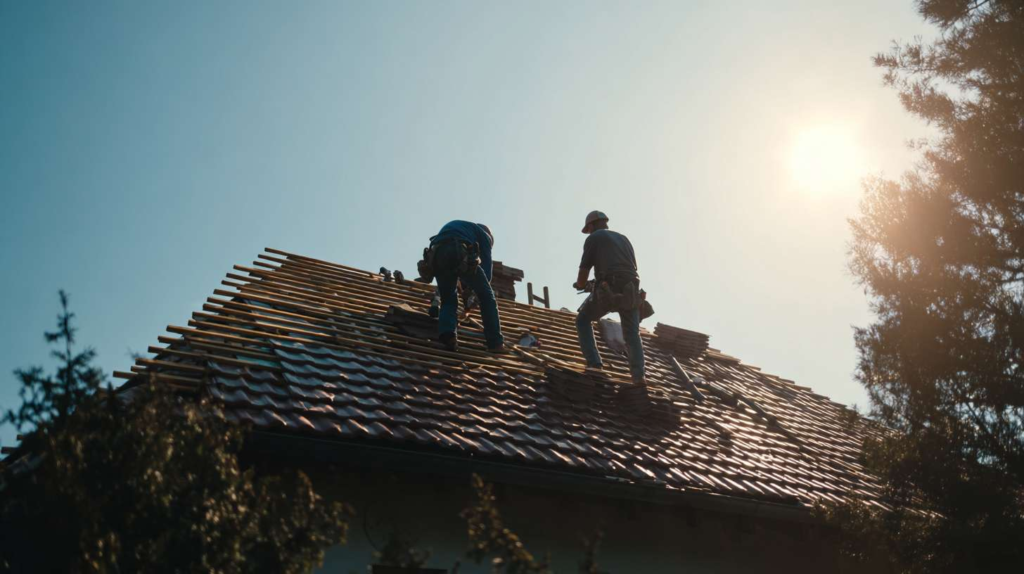
What the roof is saying next is this: water, capillary pull, and wind pressure all test those final courses before they test anything above them. Personally, this is the most underestimated failure point on mixed-slope residential roofs in Queens - the kind of detail that gets skipped because it looks fine from the ground, and nobody checks it until the ceiling shows a stain.
Shingles shed water effectively on adequate pitch. They are not designed to act as a sealed membrane once they terminate into a low-slope area. Three specific outcomes follow when they're treated that way:
- Curling - tab edges lift as the adhesive strip loses contact with an unsupported edge
- Blow-off - wind gets underneath the last courses and separates them from the substrate
- Backward water tracking - runoff moves upslope under the final courses through capillary action, reaching the decking before it's ever visible inside
Signals that the ending detail is already out of tune
Visual clues from the ground
I'm going to say this plain: the edge is where lazy work gets exposed first. From the sidewalk, you're looking for curled bottom tabs, dark tide-line staining below the transition, edge lift near corners, and drips or discoloration running into front walls or porch soffits. In Queens, this pattern shows up constantly on rowhouse fronts where the main roof pitches down into a low porch section, on rear kitchen extensions where a steep back slope terminates above a nearly flat addition, and on two-family entries where the upper shingles die into a low-slope landing roof that nobody thinks about until February.
Last winter in Maspeth, I peeled back a "new" shingle finish that was already acting ten years old. The tabs were cupping, there was a dark shadow line along the fascia, and when I lifted the last course, the felt underneath had a wet map on it shaped like the entire bottom edge. The shingles themselves weren't even a year old. The problem wasn't the material - it was how the job ended. The installer had treated the low-slope transition like a standard rake edge: cut, cement, done. No edge metal. No proper overlap into the flat section. Just confidence and a caulking gun.
If the edge sounds hollow, the waterproofing logic usually is too.
| What You Notice | Likely Finish Mistake | What It Usually Leads To | Typical Repair Scope |
|---|---|---|---|
| Tab curling at the lowest course | No edge metal or termination bar; tabs left unsupported | Wind lift, water entry behind fascia, rotting decking edge | Strip last 2-3 courses, add edge metal, re-lay with correct overlap |
| Staining on wall or siding below transition | Runoff aimed at wall instead of being directed away | Siding rot, interior wall moisture, paint failure | Rebuild edge geometry plus inspect adjacent siding and sheathing |
| Leak only during wind-driven rain | Sloppy termination at flat section, no proper overlap or seal | Intermittent water intrusion that's hard to trace; mold risk | Full transition detail inspection; likely rebuild of terminal zone |
| Visible cement blobs or patchy repairs at the edge | Cement used as primary waterproofing instead of correct layering | Repeated short-term repairs, cracking cement, ongoing leaks | Remove cement patches, assess substrate, install correct finish detail |
What shows up when the last tabs are lifted
- ❌ Exposed cement blobs at the edge - cement is a band-aid here, not a system
- ❌ Tabs extending into the low-slope runoff path without any termination detail beneath them
- ❌ Nail heads too close to the bottom of the final course - sitting directly in the water path
- ✅ Even, consistent cut line at the terminal edge - a good sign the installer planned the finish
- ❌ Metal edge missing or poorly lapped at the transition - one of the most common omissions on Queens porch roofs
- ❌ Runoff staining below the transition - water has already found the gap; it'll keep using it
How a proper finish sequence handles water before it handles appearance
The order of layers matters more than the neatness of the cut
If you were standing next to me on the ladder, I'd ask you one thing: where do you think the water wants to go? It wants to move downslope, find any gap at the transition, and track sideways under the last course before it ever drips into a visible spot. A proper finish sequence works with that direction - compatible underlayment or membrane on the low-slope section lapped correctly under the terminal shingle course, edge metal that extends the drainage path away from the fascia, and fastening that keeps every nail out of the zones where water pools or moves. That's why Marco Bellini, with 17 years focused on flat and low-slope transitions in Queens, pays more attention to the last visible courses than most crews pay to an entire front slope - because that's where the water makes its first real argument.
Here's the dead note in the song: shingles are not meant to pretend they're low-slope membrane. They work by shedding water quickly off adequate pitch, and the moment that pitch drops below what shingles are rated for, the whole system changes. And honestly, if a repair proposal only mentions cement - no overlap plan, no edge metal, no drainage path discussion, no talk of where the fasteners land - that's not a complete solution. That's a description of one afternoon's work that'll need repeating in eighteen months.
| Myth | Reality |
|---|---|
| "More cement makes it safer." | More cement hides the problem and traps moisture underneath. Cement cracks with thermal movement and makes the next repair harder to execute correctly. |
| "If it looks straight, it's done right." | A clean cut line tells you nothing about what's happening in the layers beneath it. The worst transitions often look perfectly neat from the ground. |
| "New shingles mean the edge is fine." | New material doesn't correct bad sequencing. A new shingle finish on an improperly prepared transition will fail on the same schedule as the one it replaced. |
| "Any drip edge works at a low-slope tie-in." | Standard drip edge profiles are designed for full-pitch rakes and eaves, not for low-slope transitions. The metal profile, overlap, and installation sequence all need to match the specific geometry of the junction. |
| "Leaks only show directly below the bad detail." | Water tracks along roof sheathing, rafters, and wall framing before it appears inside. A leak at the transition can show up several feet away from the actual entry point, making diagnosis harder and damage wider. |
Questions worth settling before anyone touches the transition
Think of it like tuning a piano after moving it upstairs - if the last adjustment is off, the whole thing sounds wrong no matter how clean the rest of it is. Before any work starts on a low-slope shingle edge, three things need clear answers: What material are the shingles terminating into, and is the overlap compatible with both surfaces? Where is runoff being directed once it leaves the shingle field - specifically, is it being moved away from fascia and wall lines or aimed right at them? And how is wind lift being prevented at the last courses, not just at mid-slope? Those aren't complicated questions, but a contractor who can't answer them specifically isn't describing a real repair plan.
One humid August afternoon in Jackson Heights, I got called by a landlord who said, "It only leaks when the rain comes sideways." That's a classic signal - the edge termination is lying to you in calm weather. The shingle run had ended sloppy at the flat section, and whoever did it had relied on cement like it was structural instead of using correct overlap and a proper termination method. I was kneeling on a sticky modified membrane with thunder rolling in from the west, thinking about how that edge had probably looked fine every dry week for two years. Sideways rain just asks the question the water eventually asks anyway. That detail answers the question the water asks, and a sloppy termination always answers wrong.
- 01Note the exact leak location inside the house - ceiling stain, wall stain, or around a fixture - and how it's positioned relative to where the rooflines change.
- 02Photograph the transition zone from the ground if it's safely visible - capture both the shingle edge and the flat or low-slope section below it.
- 03Note whether the leak happens specifically during wind-driven rain - that pattern almost always points to a termination problem rather than a field shingle failure.
- 04Check the lowest visible shingle course for curl, lift, or tab separation - even slight edge movement tells a lot about what's happening underneath.
- 05Record whether the affected area sits over a porch, rear extension, or a wall line - these locations have specific transition risks that affect both diagnosis and repair scope.
When repair is enough and when the ending detail has to be rebuilt
Now the roof tells you the next problem, and the question is how far it goes. After a cold November windstorm in Ridgewood, I was on a job where the customer kept insisting the roof was new - installed that spring. I lifted the last tab near the low-slope tie-in, and the nails were placed like someone had written invitation letters to water, sitting right in the lowest, wettest zone of the terminal course. Their old beagle kept following me around the perimeter and planting himself exactly at the weakest point of the transition, like even he knew something was off. The shingles themselves were fine. The decking was solid. The only thing that needed rebuilding was the last eighteen inches - the edge detail. That's a targeted repair, not a full replacement, and getting that distinction right is the difference between a fair job scope and an oversold one.
When the failure pattern is localized at the transition - curling at the last course, staining along one specific fascia line, leaks only under wind-driven conditions - the defect is concentrated and the correction can be too. Not every conversation about how to finish shingles on a flat roof ends with a full tear-off. Sometimes stripping two courses, resetting the edge detail correctly, and relaying with proper overlap is the whole answer. The middle of the roof isn't telling you anything. The edge is the one talking.
| Evaluation Area | Spot Repair of Final Courses | Full Transition Detail Rebuild |
|---|---|---|
| Cost | ✅ Lower upfront cost; limited material and labor scope | ⚠ Higher initial cost; justified when substrate or layering is compromised |
| Longevity | ⚠ Good if the underlying layers are sound; limited if hidden moisture exists | ✅ Long-term solution; new detail built to correct specifications from the substrate up |
| Appearance match | ⚠ Patch may not match aged shingle color; visible seam is possible | ✅ Rebuilt zone can be matched more cleanly; uniform finish across the transition |
| Risk of hidden moisture | ❌ Higher risk if layers aren't fully inspected; moisture may continue under repaired area | ✅ Full removal allows substrate inspection and drying before new detail is set |
| Confidence in wind-driven rain | ⚠ Adequate if done correctly; limited if transition geometry wasn't corrected | ✅ High confidence; drainage path, overlap, and metal termination all rebuilt to spec |
If you've got a low-slope shingle transition in Queens that's curling, staining, or leaking under wind-driven rain, call Flat Masters for a direct inspection - we'll tell you exactly what the edge is saying and what it takes to make it stop. One call, no guesswork, no overselling.