
Which Flat Roofing System Is Actually Best? Here's the Honest Side-by-Side
You're thinking about flat roofing systems and already getting three different answers from three different contractors - and honestly, that's not a coincidence. There is no single best flat roofing system in the abstract. There's only the best system for your building, given your drainage conditions, foot traffic, budget, maintenance habits, and the real life being lived under that roof.
Fit beats reputation when you are comparing flat roofing systems
Brand loyalty is the wrong starting point for any flat roof decision. The roofing industry has no shortage of solid products - what it has a shortage of is honest conversations about which product belongs on which building. A well-reviewed system installed on the wrong roof will underperform a mid-tier system installed on the right one every single time.
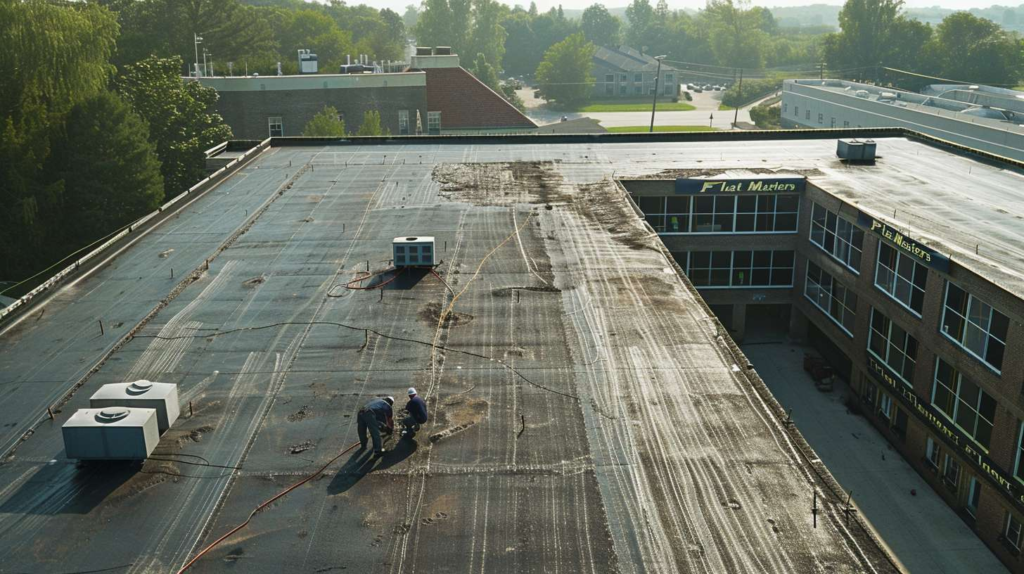
Before we compare flat roofing systems, what kind of abuse is this roof actually going to take? That's the question that filters everything else - weather exposure, foot traffic, awkward detailing around penetrations, how much disruption the occupants can stomach during the install or future repair, and how much attention the owner is realistically going to give it once it's done. I'm Tobias Finch, and with 13 years helping Queens owners compare flat roofing systems side by side based on actual roof behavior instead of generic "best" claims, I can tell you: system choice is exactly like choosing gear for a specific trip. The environment, the load, the exposure, and the failure consequences determine what goes in the bag - not the brand on the label.
Samples and spreadsheets are helpful only after the roof introduces its own conditions
Comparison without context is just organized guessing
On the hood of my truck, three samples can start a very honest conversation. One windy April afternoon in Astoria, I had exactly that - three membrane samples spread out on the hood while a homeowner asked me point-blank which flat roofing system was the best one. Fair question. But his roof had awkward penetrations that were going to require careful detailing, an uneven repair history that told me the substrate wasn't neutral ground, and a hard limit on future disruption because he worked nights and slept during the day. I watched one of those samples catch the wind and slide off the truck, and I thought: that's it, that's the whole lesson. The best flat roof system is the one that fits the actual roof and the actual life under it - not the one that looks best on a comparison chart in a showroom.
I still remember that spreadsheet missing the one column that mattered. It was a humid August evening in Bayside, and a customer had built a genuinely impressive color-coded spreadsheet comparing flat roof roofing systems across price, warranty, thickness, and a handful of other metrics. He'd done real homework. But the one thing missing? Drainage quality - which, on his specific roof, was going to be the most important variable in the whole decision. Queens roofs, and I say this having worked from Jackson Heights to Jamaica, are not neutral test cases. Mixed-use buildings with additions tacked on in different decades, small garages with awkward scupper positions, residential rooftops with HVAC penetrations nobody documented - these are the real-world conditions that make "best system" a meaningless phrase without the roof context behind it. We found the right answer that evening, but only after he accepted that product comparison without roof context is like comparing hiking boots without knowing where you're actually walking.
| Decision Filter | Why It Matters | What Kind of System Benefits |
|---|---|---|
| Drainage Forgiveness | Roofs with poor slope or slow drains create ponding. Not every membrane handles standing water equally - some degrade, blister, or separate faster under prolonged water contact. | Systems with higher ponding-water resistance and seamless applications reduce failure risk where drainage is a known weak point. |
| Penetration Friendliness | HVAC curbs, pipes, drains, and skylights are the most common leak points. A system that flashes and conforms well around complex geometry significantly reduces long-term failure risk. | Flexible, field-applied systems with strong adhesive or heat-weld capability tend to detail more reliably around crowded or oddly-shaped penetrations. |
| Traffic Tolerance | Foot traffic, equipment access, and mechanical loads physically stress the membrane surface. A system rated for occasional access performs differently under frequent servicing traffic. | Thicker membranes or systems with walk-pad provisions handle mechanical abuse better. Low-traffic roofs have more system flexibility. |
| Disruption During Work | Some systems require open flame, fumes, or significant staging. For occupied residential or active commercial buildings, the install method can be as important as the product itself. | Cold-applied or mechanically fastened systems reduce occupant disruption. Heat-applied or torched systems may require more scheduling coordination. |
| Repairability Later | How easy is it to find and fix a leak five years from now? Some systems are highly field-repairable; others require specialized materials or a return visit from the original installer. | Systems with widely available repair materials and straightforward patch methods lower your long-term service cost and response time when something does go wrong. |
| Maintenance Sensitivity | Some membranes require periodic inspection, cleaning, or recoating to perform at spec. Others are considerably more set-and-forget. Honest self-assessment here prevents early warranty issues. | Low-maintenance buildings benefit from durable, low-intervention systems. High-attention owners can get more out of systems that reward active care and regular inspection. |
- Choosing by brand reputation alone ignores whether that brand's product actually performs under your specific drainage, climate, and use conditions.
- Color-coded spreadsheets without a drainage column will get you to a confident-looking wrong answer. A roof with ponding problems changes the system ranking entirely.
- Recommendations that never ask about foot traffic can put a low-durability membrane on a roof that gets walked regularly - and the failure is predictable.
- Skipping the disruption conversation leads to install methods that create real problems for occupied spaces - fumes, noise, and scheduling conflicts that could have been planned around.
- Ignoring the hold period means some owners pay for a 30-year system on a property they're selling in five years, and others under-spec a roof they're planning to keep for two decades.
Use-case filters are what turn 'best' into 'best match'
Here's the blunt truth: the wrong good system still performs like a bad choice. A product with an excellent track record installed on a roof with mismatched drainage, traffic load, or detailing complexity doesn't get credit for its pedigree - it just fails earlier than it should. And the contractor who sold it to you based on reputation alone will have a hard time explaining why a "top-tier" system is already showing problems at year three.
Choosing a flat roof system is like packing for a trip - gear that's perfect on one route can be miserable on another. I spent years before roofing fitting climbers and backpackers at a specialty gear shop, and the most common mistake people made wasn't buying bad gear. It was buying good gear for the wrong conditions. A waterproof shell rated for high alpine works terribly in humid, low-elevation terrain where you're sweating constantly. Flat roofing is no different. Weather exposure, detailing complexity, rooftop activity, budget, and tolerance for future disruption shape the correct recommendation - and no single system wins across all those variables at once.
My take? "Best" is a lazy question unless the roof has introduced itself first. Early one morning in Ridgewood, I walked a mixed-use building with an owner who'd already been pitched three different "best" systems by three different companies. He was frustrated, and honestly, I didn't blame him. We walked that roof together while I asked about foot traffic, whether HVAC equipment got serviced up there regularly, where past leaks had shown up, and how long he planned to hold the property. By the time we came back downstairs, the conversation had shifted from "which one is best" to "which one is best for this building given everything I now know about it." That's the only version of "best" that actually matters. And here's an insider tip worth writing down: ask every contractor what roof condition or use case would make them rule a system out, not just which system they prefer. Elimination logic reveals more about a contractor's honesty than preference talk ever will.
| Why People Want One Winner | Why That Usually Backfires |
|---|---|
| It makes the decision feel simple and fast. | Simple decisions on complex roofs tend to produce expensive callbacks. |
| It removes the anxiety of comparing technical options without a roofing background. | The anxiety relief is false if the "winner" was never filtered for your drainage, traffic, or detailing conditions. |
| Brand confidence from reviews and word-of-mouth feels like solid evidence. | Reviews don't document the roof conditions under each job - a great result on one building type doesn't transfer automatically to yours. |
| It saves time in the comparison and bidding process. | Future repair frustration - and cost - more than erases that time savings when the mismatched system starts showing failure points. |
| A single "best" recommendation creates a feeling of confidence going into the project. | That confidence becomes false assurance if use-case filters - foot traffic, penetrations, occupancy, disruption tolerance - were never part of the conversation. |
- ✔How does this roof drain now? If a contractor doesn't ask this first, that's a red flag. Drainage quality shapes every other recommendation.
- ✔How much foot traffic will it get? HVAC servicing, rooftop access, or just the occasional inspection - frequency and load type change the durability spec.
- ✔How disruptive can the work be? Occupied buildings have real limits on fumes, noise, and scheduling. A good roofer accounts for this before specifying install method.
- ✔How many penetrations are we detailing around? Complex flashings are where most flat roofs eventually fail. A contractor who doesn't ask about this isn't thinking past installation day.
- ✔How much maintenance will the owner realistically do? Honest answer here changes the system recommendation. Some membranes reward attention; others are more forgiving of infrequent inspection.
- ✔How long is the property being held? A five-year hold and a twenty-year hold call for completely different value calculations on system cost and longevity.
- ✔What would make you reject this system here? This is the question most owners never think to ask - and it's the one that reveals whether a contractor is actually matching or just selling.
The honest side-by-side ends where hype starts and roof reality takes over
A recommendation should survive the conditions, not just the sales pitch
On the hood of my truck, three samples can start a very honest conversation - but the conversation only becomes useful once the roof has introduced its own conditions into it. A side-by-side comparison of flat roofing systems isn't a product race. It's a filtering exercise: drainage first, then detailing complexity, then traffic load, then future use. The sample that's still in the running after all four filters have been applied is the right recommendation. Not the one with the biggest marketing budget, not the one the last contractor happened to have in stock. The right one. That's the only side-by-side that actually protects the building.
| Myth | Fact |
|---|---|
| "There is one best flat roofing system for everyone." | The best system is always specific to drainage, use, geometry, and maintenance tolerance. No single product wins across every building type and condition. |
| "The most expensive system is automatically the best choice." | Price reflects material and spec level - not fit. A premium system installed on a roof it's mismatched to will fail faster than a mid-tier system chosen correctly. |
| "The least disruptive install is always the smartest choice." | Disruption tolerance matters, but it's one filter among several. Choosing a system purely for install convenience can mean compromising on durability, drainage performance, or long-term repairability. |
| "A garage roof is simple enough that any system works." | Small doesn't mean forgiving. Garage roofs frequently have poor drainage, tight flashing details, and limited access for repairs - all of which make system fit just as important as on a larger structure. |
| "Product comparison alone tells you enough." | Product specs describe what a system can do. They don't tell you whether it's right for your specific roof's drainage, penetrations, traffic, and use reality. That context is everything. |
What is the best flat roofing system?
There isn't one universal answer. The best flat roofing system is the one that survives your specific drainage conditions, handles your roof's traffic and detailing complexity, and fits your maintenance habits and budget. A contractor who gives you a single "best" answer without asking about those factors first is making an assumption, not a recommendation.
Which flat roof system handles foot traffic best?
Thicker membranes and systems designed with walk-pad provisions handle mechanical traffic more reliably. But "best for traffic" is still a relative term - frequency matters, load type matters, and whether the system was installed with traffic protection built in matters just as much as the membrane spec itself. Don't skip walk pads if equipment access is regular.
Does drainage quality change the right system choice?
Significantly. A roof with active ponding or slow drainage filters out systems that don't tolerate prolonged water contact well. Some membranes blister, delaminate, or degrade faster under standing water conditions. If drainage is a known issue on your roof, that has to be addressed before or alongside the system selection - not after installation.
How should I compare flat roofing systems without getting overwhelmed?
Run each system through your roof's actual use-case filters: drainage, penetrations, traffic, disruption tolerance, maintenance habits, and hold period. Eliminate systems that fail a filter rather than trying to rank them globally. The system left standing after your specific filters is a far more useful answer than any general "top three" list.
What should a roofer ask me before recommending one system over another?
At minimum: how the roof drains now, how much foot traffic it gets, how disruptive the work can be, how many penetrations need to be detailed, how much maintenance you'll realistically do, and how long you're holding the property. If a contractor skips most of those questions and jumps straight to a product pitch, they're recommending from inventory - not from your roof's reality.
If you want a side-by-side flat roofing recommendation based on your actual roof - not the loudest brand pitch in the market - give Flat Masters a call. We're in Queens, we know these roofs, and we'll run the filters honestly before we ever suggest a system. - Tobias Finch, Flat Masters