
Covering a Flat Flat Roof Properly Is More Than Just Laying Down a New Surface
Most patches solve the visible part, not the actual part. Covering a flat roof sounds like a straightforward upgrade-new material, fresh surface, problem gone. Except sometimes it isn't an upgrade at all. Sometimes it's a neater way to hide a problem that was already running the show underneath.
Recover Work Begins With the Base, Not the New Surface
Before you ask how to cover a flat roof, is the roof underneath even a candidate for being covered? That question matters more than the method. Substrate soundness, moisture condition, surface compatibility, and structural honesty all come before you even start comparing covering systems. I'm Nestor Quintero, and with 25 years guiding Queens homeowners through recover-versus-replace decisions on worn flat roofs where the old roof either earns a new top or does not, I've learned that skipping this question is how a $4,000 recover job turns into a $12,000 tear-off two winters later. Think of it this way: a pool table plays only as well as the slate and frame underneath it. You can put the finest cloth on the market over a warped frame, and the balls will still roll wrong. A flat roof works the same way. The new surface has to play true-and it can only do that if the base underneath is telling the truth.
→ No: Do not cover. Stop here. Recover is off the table until the moisture and structural issues are resolved or the roof is removed.
→ Yes: Pause and investigate. Targeted repair or full tear-off may be smarter depending on how widespread the damage is.
→ No: Wrong candidate for this approach. Material compatibility isn't negotiable-adhesion, weight, and thermal movement all depend on it.
→ Yes: Now the conversation about covering methods can begin. The base has earned it.
Soft Spots and Trapped Moisture Usually Ruin the "Just Cover It" Idea Before the Roll Ever Opens
The Roof Can Feel Fine Until Your Hand Tells on It
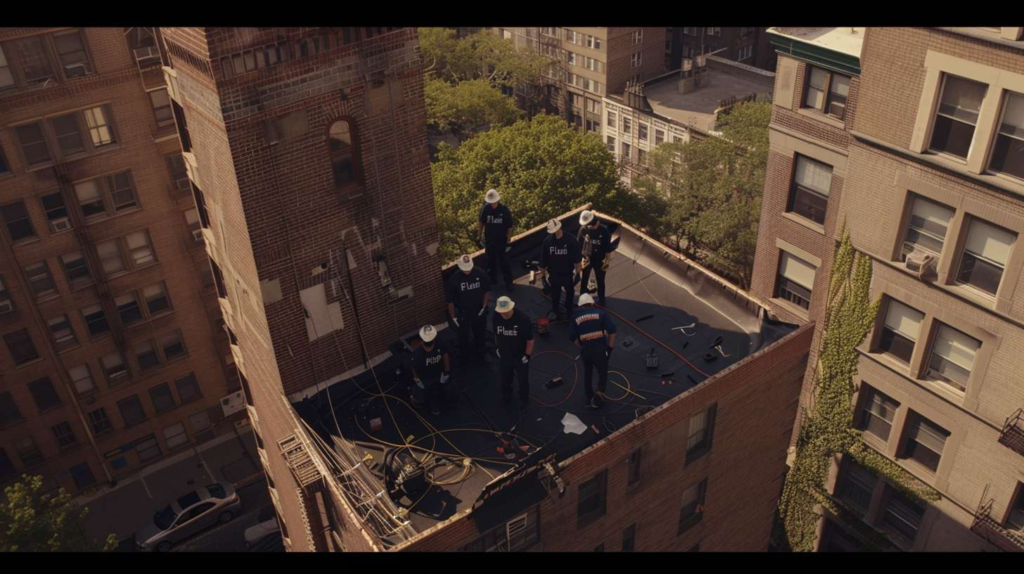
Palm on the surface, you can tell a lot before a tool ever comes out. One sticky June morning in Woodside, a homeowner asked how to cover a flat roof because his cousin told him the quickest route was just laying new material over the old surface. I got up there and found blistering, trapped moisture, and soft spots hiding under what looked like a mostly decent field. Near the rear corner, pressing my hand flat, there was that slight give that tells you the base is already lying to you. That was not a covering job. That was a decision point-and honestly, the faster we got to it, the less money went toward a fix that would've failed before the next summer.
I still remember that soft little give under my hand near the corner. In Queens, rear roofs on small residential extensions-think the two-story attached homes scattered through neighborhoods like Maspeth and Middle Village-carry a particular kind of wear history. Parapet-adjacent ponding, years of patch-over-patch, drainage edges that have been fighting a losing battle since the original install. From the yard they can look acceptable. Up close, they tell you a different story in about thirty seconds. Fine in theory, but what is it sitting on? That's the question that changes everything.
| What You Find Under Inspection | What It Means | What It Does to the Cover-Over Decision |
|---|---|---|
| Blistering | Moisture or gas is trapped between layers, separating the membrane from the substrate | Cover-over is risky. The new layer traps the existing blister and compounds the bond failure over time. |
| Trapped Moisture | Water has penetrated the membrane and is sitting in or under the existing system | Hard stop on recover until moisture is fully mapped and addressed. Covering it accelerates rot and substrate failure. |
| Soft Corner | Decking or insulation beneath the membrane has degraded or delaminated at the perimeter | Localized repair may qualify the area for recover, but widespread soft corners point toward partial or full tear-off. |
| Uneven Patch Transitions | Previous repairs have created raised or recessed areas that break the surface plane | Creates bridging and adhesion gaps in the new layer. Drainage problems and premature seam failure follow. |
| Ponding Near Parapet | Drainage slope is inadequate or blocked, allowing water to collect at the wall base | Covering without correcting the slope means ponding continues on the new surface. The same damage repeats faster. |
| Edge Fatigue | Membrane has pulled back, cracked, or lifted at the perimeter from thermal cycling and age | Wind uplift and water infiltration risk increase significantly. Edge conditions usually require tear-off logic, not cover-over. |
Covering a roof with hidden moisture, soft spots, or unstable transitions doesn't fix those conditions-it buries them. A fresh surface reads as "fixed" on a visual inspection, which means the real damage keeps working underneath while becoming harder to locate and far more expensive to undo. You're not buying time. You're buying a delay with interest.
Cheap Cover-Ups Fail Fastest Where the Old Roof Already Taught Water Bad Habits
Here's the blunt truth: a new top cannot rescue a dishonest base. Recover work fails where the old roof still controls what happens underneath-where water still finds the same paths, where seams still move the same way, where drainage still runs toward the same low corners it's been favoring for years. A new surface doesn't retrain any of that. It just gives the old behavior a nicer place to operate.
A flat roof recover is like re-felting a pool table-if the slate or frame underneath is wrong, the fresh surface only makes the defects play smoother. I spent years before roofing doing exactly that kind of work: pulling off old cloth, pressing my hands across the slate, feeling for low spots and seam gaps before a single piece of new felt went down. The principle never changed. A surface can only perform as well as what's holding it up. If the slate is cracked or the frame is racked, the new cloth just follows the flaw more cleanly. Same logic applies here, every single time.
My opinion? "Just cover it" is one of the most expensive phrases in roofing. I had a garage in Ridgewood where the owner wanted to know how to cover flat roof sections cheaply before putting the house on the market. Fair goal. Wrong moment for shortcuts. It was cold, around 8 a.m., and the frost made the old defects show more clearly than usual-raised seams standing out, edge fatigue visible along the back parapet, drainage wear that had obviously been there long enough to stain the fascia below. We talked honestly about what could be recovered, what needed removal, and why a new surface without a trustworthy substrate is just neat-looking denial. And here's the insider tip worth keeping: ask any roofer what the existing roof is doing wrong today. If they can't answer that question clearly, they're not ready to tell you how to cover it tomorrow.
- ✔Is the roof dry? Not "probably fine" or "looks okay"-actually dry, confirmed by inspection or moisture scan.
- ✔Is the substrate firm? Walk it. Press it. A roofer who skips this step hasn't earned an opinion on covering methods yet.
- ✔Are old seams or patches creating humps? Surface plane matters. Transition ridges under a new layer cause bridging, pooling, and premature failure.
- ✔What happens at the parapet? The parapet connection is where most recover failures start. If nobody's asking, that's a flag.
- ✔How is ponding being handled? A new membrane over a low spot is not a drainage solution. It's a waiting game.
- ✔Is the new material compatible with the existing system? Adhesion chemistry, weight loading, and thermal movement all depend on this answer.
- ✔What would make you refuse the recover? Any roofer worth hiring should have a clear answer. If they hesitate, they haven't thought it through.
A Recover Method Only Deserves Your Attention After the Roof Underneath Earns the Right to Carry One
Method Comes After Diagnosis, Not Before
Palm on the surface, you can tell a lot before a tool ever comes out. But that lesson lands differently when someone's already got materials stacked by the access hatch. A Sunnyside rear extension stays with me because the customer had already bought materials and was sure he only needed someone to install them. It was a windy October afternoon, and once I inspected the roof I found that previous patches had created uneven transitions and trapped water against one parapet-the kind of setup where every rain event was essentially pushing water into a corner that had no honest way out. He kept asking about covering methods. I kept bringing him back to the same answer: covering a flat roof starts with deciding whether the roof beneath can still carry a new top with any dignity. The materials sitting there didn't change what the base was telling us. They just made the conversation harder to have. Fine in theory, but what was it sitting on? That question mattered more than anything he'd already bought.
| Myth | Fact |
|---|---|
| A new surface is always an upgrade | A new surface is only an upgrade when the base beneath it is sound, dry, and compatible. Over a compromised substrate, it's a delay with a fresh coat on top. |
| If the field looks decent, it can probably be covered | Visual decency means very little. Trapped moisture, substrate softness, and drainage bias don't show on the surface-they show under your hand and under a probe. |
| Small roofs are easier to cover over | Small roofs often carry more patch history per square foot and tighter parapet conditions. They're not simpler-they're just cheaper to tear off when the recover goes wrong. |
| Bought materials mean the job is halfway decided | Materials on site don't change what the base requires. Buying first and diagnosing second is how recover jobs turn into expensive removals. |
| Recover methods matter more than roof condition | Roof condition is the only thing that matters first. Method selection is secondary-and meaningless if the base isn't honest enough to carry whatever method you pick. |
If you're trying to figure out how to cover a flat roof and want an honest answer on whether the base underneath actually deserves it-or whether a cleaner decision needs to happen first-call Flat Masters. We'll tell you what the roof is doing before we tell you what to put on top of it.