
A Double Garage With a Flat Roof - What to Expect Before You Build or Replace

A Double Garage With a Flat Roof – What to Expect Before You Build or Replace

A Double Garage With a Flat Roof - What to Expect Before You Build or Replace

Scale changes behavior before it changes the invoice

Imagine getting a quote for a double garage flat roof and expecting it to land at exactly twice your neighbor's single garage price - clean, simple, predictable. That's rarely how it works, and the reason isn't contractor math. A double garage flat roof isn't two single garages sitting side by side. Width changes how water moves, how the deck has to be supported, where edges wear out first, and how the whole job is scoped before a single measurement gets written down.

Before we talk about a double garage flat roof, what is this roof expected to carry and shed? Span width, runoff direction, edge loading, future storage or rooftop use, and maintenance access all alter the job - sometimes before anything is even torn off. I'm Rosa Benavides, and with 31 years specializing in wider garage flat roofs in Queens where drainage layout and support logic matter more than owners expect, I've learned to treat every double garage like what it actually is: a wide working platform with weather sitting on top of it, where weight spread and flow paths matter as much as square footage.
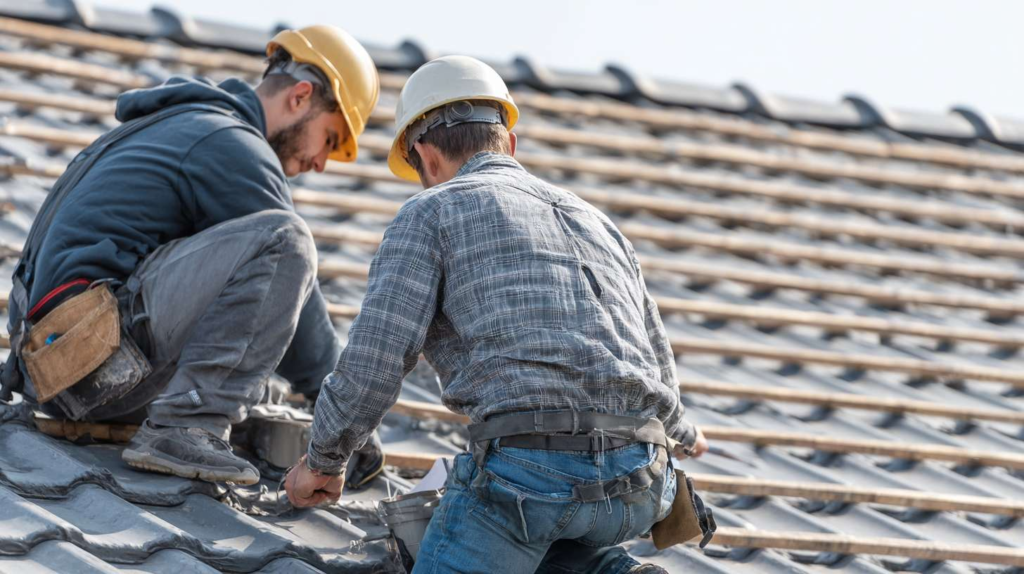
Modern double flat roof garage with clean lines, professional installation, and a sleek contemporary design.

Representative Double Garage Flat Roof Scenarios - Queens, NY
Scenario What's Included Representative Range Why the Number Changes
Basic flat roof double garage replacement Tear-off, new membrane, clean perimeter - straightforward access, no surprises $4,200 - $6,800 Membrane spec and drainage complexity shift this range fast
Replacement with perimeter wood repair Above plus fascia or edge board replacement on one or two sides $5,800 - $8,500 Extent of rot found at tear-off is unknown until the membrane is off
Replacement with deck moisture near one side Full replacement plus partial deck board replacement, drainage correction $7,000 - $11,500 How far moisture traveled under the old membrane drives the spread
New-build flat roof double garage - standard drainage Framing coordination, insulation, membrane, edge detail, basic drainage fall plan $6,500 - $10,000 Insulation spec and membrane grade are the primary cost levers
New-build with added design loads Above plus structural planning for storage wall, heavy edge feature, or future-use loading $9,500 - $15,000+ Additional framing coordination and edge detailing push this higher early in the design

Ranges reflect Queens, NY market conditions. Final scope is always confirmed after inspection or framing review - these are planning figures, not final bids.

4 Things That Get Overlooked First on a Double Garage Roof

① Center Drainage Behavior

On a wider roof, the center is the furthest point from any edge or drain. Water that finds a lazy path to the middle will sit there. That's not a cosmetic issue - it's structural loading and membrane stress over time.

② Support Layout

A double garage spans more width, which means center-span deflection becomes a real concern. If the framing wasn't sized for that span - especially on older structures - the deck will tell on itself eventually.

③ Edge Wear from Repeated Runoff

Runoff doesn't spread evenly. If drainage favors one edge consistently, that edge takes more water, more freeze-thaw stress, and more membrane wear than the other three sides combined.

④ Access and Maintenance Planning

A wider roof footprint means checking one corner from a ladder no longer tells you what's happening at the center or opposite edge. Maintenance access planning isn't a luxury - it's what keeps small problems from becoming expensive ones.

Ponding and slow drainage get more serious when the roof gets wider

The middle of the roof starts acting differently than owners expect

I still remember chalking the ponding outline while the owner stared at it. One bright April morning in Fresh Meadows, I was up on a flat roof double garage while the owner stood in the driveway comparing it to his old single garage like the job was just a bigger order of the same thing. Then I found the problem - a wide, lazy drainage pattern with water sitting in the center far longer than he'd noticed from the ground. I grabbed a piece of chalk and marked the ponding boundary so he could actually see its shape. That chalk line changed the whole conversation, because the shape of it made clear what square footage alone never would: width had turned a manageable roof into a slow-draining platform, and nobody had caught it yet.

On a wide garage roof, the middle matters more than people think. The wider the span, the further any center-point sits from an edge or drain, which means fall angles have to be deliberate and correct - not just "close enough." A sloppy or lazy drainage layout on a single garage might get away with itself for years. On a double, that same laziness creates a low point that collects water, stresses the membrane, and puts load exactly where the framing wasn't designed to hold it. Queens detached garages - especially on the wider suburban-style lots you see in Fresh Meadows and Whitestone - can hide this completely from street view. The roof looks fine. Walk across it after a rain, and you'll feel the problem underfoot before you see it.

How to Evaluate Drainage Logic on a Double Garage Flat Roof
1
Identify the intended fall direction

Confirm which direction the roof was designed to shed water toward, because on a double garage, that direction dictates every other decision about drainage layout.

2
Check center behavior after rain

Walk the center of the roof within 24 hours of rainfall and check whether water is exiting or sitting - standing water at the center of a double garage is a drainage failure, not normal behavior.

3
Locate all low points on the surface

Map where the roof's actual low points are, not just where they were planned to be - deck sag, patching history, and settling can shift them significantly over time.

4
Confirm the drain or edge exit path is clear and sized correctly

Check that the drain opening or drip edge is actually large enough and positioned correctly to handle the full volume a double garage roof sheds during a heavy Queens rainstorm.

5
Review whether future additions will interrupt runoff

If a storage wall, garden feature, or added lighting is planned near any edge, confirm now that those additions won't block or redirect the established water exit path - changing it later costs more than planning for it upfront.

What Owners Assume vs. What Actually Happens
❌ The Myth ✔ The Reality
"Twice the roof just means twice the material." Twice the width means a fundamentally different drainage challenge - fall angles, drain placement, and center-span loading all have to be rethought, not just scaled up.
"If water leaves eventually, the drainage is fine." Water that sits for 24-48 hours before exiting is loading the membrane and the deck, not just being slow. "Eventually" is a maintenance and structural problem dressed as patience.
"The edges tell you everything." Edges tell you where water ended up - they don't tell you what the center is doing. On a double garage, the center is where the real story lives.
"A garage roof doesn't need serious drainage planning." A double garage flat roof holds more water volume, spans more structural width, and creates more edge wear than any single garage. It needs more drainage planning, not less.

Support and deck condition deserve more attention on a wider roof than most owners give them

A double garage roof works like a loading dock - if the platform is wide and the flow is poor, backups start fast. A single garage deck carries its load across a relatively short span, so marginal framing or a softer board here and there doesn't announce itself right away. Double the width and the center-span deflection math changes. More area means more distributed load, more potential for the deck to move or sag between support points, and more stress concentrated at exactly the spots that are hardest to see from a ladder at the perimeter.

Here's the blunt truth: width creates its own headaches. I had a replacement estimate in Bayside on a windy October afternoon where the customer wanted the cheapest route for a flat roof double garage because "nobody lives in there." Fair observation, bad conclusion. Once I got up on that deck, the wider span made the framing layout and board condition matter more, not less - and when I found soft perimeter wood near one corner where runoff had been favoring the same edge for years, the conversation changed quickly. He ended up thanking me for not pricing it like a toy roof. The rot had been working its way inward from that drainage-stressed corner for at least two seasons.

My opinion? Bigger garage roofs get underestimated because they look simple from ground level. They're low, they're flat, they're "just a garage." But every estimator worth listening to knows that a wider roof has more places to surprise you - and the surprises are rarely cheap. Here's an insider move worth doing before you commit to any bid: ask the estimator point-blank what part of the roof is structurally most likely to surprise them - middle, edge, or perimeter corner - and why. If they hesitate or give you a vague answer, they're not thinking in wide-roof terms. The right answer is specific, and it tells you whether they've actually worked a double garage flat roof before or they're just multiplying a single-garage price by two.

What Can Change Scope on a Double Garage Roof - Beyond Square Footage
Condition or Factor Why It Matters More on a Wider Roof What It Changes
Center-span deflection Longer spans between supports allow more mid-deck movement under load - often invisible until the membrane splits or water finds a path Build and replacement planning
Perimeter wood deterioration More linear edge means more exposure; runoff-stressed edges dry out slowly, allowing rot to establish before it's visible from outside Replacement scope and cost
Old patch history Layered patches on a wider deck can hide moisture trapped between membranes - tear-off reveals this; estimates written before tear-off often miss it Replacement cost and timeline
Runoff favoring one side When drainage consistently exits one edge, that edge gets heavy wear, freeze-thaw stress, and accelerated membrane fatigue compared to the other three Maintenance planning and edge detail
Support layout complexity On older Queens garages, the original framing may not have anticipated current use - especially if storage or equipment has been added over time Build and replacement planning
Future use or load plans Storage walls, lighting conduit, or edge garden features add point loads and may redirect drainage - these need to be in the design conversation before framing, not after Build planning and long-term maintenance

⚠ Don't Let Anyone Price a Double Garage Like a Scaled-Up Small Roof

  • Quoting by footprint alone ignores drainage complexity, support layout, and span behavior - none of which scale linearly.
  • Ignoring center drainage on a wider roof is where long-term water damage quietly gets its start, often years before a leak shows up indoors.
  • Overlooking perimeter moisture damage on the "cheap" side of an estimate almost always results in a second visit before the first job has paid for itself.
  • Assuming a wider roof span behaves like a single garage is the most common - and most expensive - mistake in double garage flat roof work.

Future use turns a garage roof from a cover into a platform, and the design has to know that early

Storage walls, lighting, and edge plans affect maintenance later

Before we talk about a double garage flat roof, what is this roof expected to carry and shed? That question hits differently when you're standing next to foundation lines at dusk in Whitestone, explaining to a homeowner that his plan for storage racks, overhead lighting, and a future garden wall along the south edge of a new-build double garage has consequences for every decision that's about to go into the framing order. We were maybe thirty minutes from losing daylight, and I laid out the whole thing plainly: a double garage flat roof is essentially a wide working platform with weather on top - and the moment you add load-bearing features near the edges or run conduit across the deck, you're making drainage, framing, and maintenance access decisions whether you know it or not. We changed the plan before the order went in. The roof got proper edge detailing on the garden-wall side, a more deliberate fall angle away from the storage-rack zone, and access provisions that let a single person inspect the whole surface without needing scaffolding every time. It cost him nothing extra to adjust the design then. Adjusting it after framing would have cost him plenty.

Simple Cover vs. Working Platform: How the Design Differs
Design Point Simple Cover Mindset Working-Platform Mindset
Load Assumptions Basic dead load from roofing materials plus snow - nothing beyond that Accounts for future point loads from storage features, lighting, or edge additions before framing is finalized
Edge Detail Needs Standard drip edge, minimal treatment - designed to shed water without further features Edge detailing adjusted for planned features like garden walls or storage walls that will redirect or concentrate runoff
Maintenance Access Not considered - assumed to be minimal given "it's just a garage" Access path planned so the full surface can be inspected and serviced without scaffolding every visit
Drainage Protection Basic fall to one edge - sufficient for an uncomplicated roof with no obstructions Drainage fall designed around planned features so no future addition accidentally creates a dam or redirects flow to a vulnerable edge
Framing Implications Standard span framing - sized for current load only, not future-proofed Framing discussed with future load intent in mind - avoids costly structural upgrades after the build is complete
Long-Term Convenience Decisions made for lowest upfront cost - future maintenance or additions become retrofit problems Planning upfront reduces the cost of every service visit, addition, or drainage correction over the roof's full lifespan

Questions Owners Ask Before Building or Replacing a Flat Roof Double Garage
Is a double garage flat roof just a bigger version of a single one?

No - and that assumption is what gets owners into trouble. A double garage roof doesn't just have more area; it has more width, which changes center-span behavior, drainage fall requirements, and edge wear patterns in ways that don't apply to a single garage. The job has to be thought through differently from the start.
Why does width change drainage so much?

Because wider roofs put the center further from any exit point - drain or drip edge. A lazy drainage fall that works fine on a single garage becomes a ponding problem on a double, because water has more distance to travel and more opportunity to find a low spot and sit there. Fall angle, drain placement, and surface levelness all have to be more precise on a wider roof.
What affects double garage flat roof replacement cost most?

Deck condition at tear-off is the biggest variable - specifically perimeter wood rot and any moisture that's worked its way under the existing membrane. Beyond that, membrane spec, drainage corrections needed, and whether any structural repair is required all shift the number. Any quote written without a tear-off inspection is an educated guess, not a firm price.
Should future storage or wall plans be discussed before framing?

Yes - always before framing, not after. Storage racks, lighting, and edge features like garden walls add point loads and can redirect drainage. Adjusting for those details during design costs nothing compared to retrofitting them once the roof is built. This conversation should happen with both the builder and the roofer at the same time.
What does a roofer need to know before pricing a new flat roof double garage?

Span dimensions, intended drainage direction, planned framing layout, and whether any features are planned for the edges or roof surface. They also need to know the intended use of the garage - a workshop with heavy equipment has different load and drainage implications than a parking-only space. The more complete the picture upfront, the more accurate the price.

Ready to Plan or Replace Your Double Garage Flat Roof?

Call Flat Masters if you want your double garage flat roof planned or replaced like the wide-platform roof it actually is - not priced like a scaled-up single garage. We're based in Queens, NY, and we know the difference.

Call Flat Masters Today

Faq’s

Flat Roofing FAQs: Everything Queens, NY Homeowners Need to Know

How much does double garage flat roof replacement cost in Queens?
Pricing varies based on existing conditions and structural needs. Double garage roofs aren’t simply twice the cost of single garages due to material economies, but labor complexity often increases costs. Factors include structural upgrades, drainage requirements, and permit fees. Get a professional evaluation for accurate pricing.
Look for ponding water (dark spots with algae), membrane splits, interior leaks, or sagging areas. Double garage roofs face unique stress from wider spans and more surface area collecting water. Don’t wait – problems worsen quickly with freeze-thaw cycles. Professional inspection can identify issues before they become emergencies.
This isn’t a DIY project. Double garage roofs require structural calculations for the wider span, proper membrane welding, and complex drainage design. The 20-24 foot span creates different stress points than single garages. Professional expertise ensures proper installation that’ll last decades, not just a few years.
Timeline depends on structural conditions and weather. Straightforward replacements typically take 2-3 days, but projects requiring structural upgrades or drainage system improvements can take longer. Permit approvals may add time. Weather delays are common since membrane installation requires dry conditions.
Water infiltration gets exponentially worse once it starts, especially with Queens’ freeze-thaw cycles. Small membrane issues become major structural damage. Ponding water will eventually penetrate even good membranes. Early intervention through repair might work, but delays often force complete replacement at much higher cost.

Ask Question

Or

Opening Flat Roof Windows in NYC - Let the Air In, Keep the Rain Out

9 min read

Flat Roof Leaking Behind the Gutter? Here's What the Fix Costs

6 min read

Redoing a Flat Roof Is a Big Commitment - Here's What the Project Really Involves

16 min read

Turning Your Flat Roof Into a Deck - Here's What the Installation Actually Involves

18 min read

Professional Flat Roof Extension Services for Your Home

7 min read

Flat Roof Cladding That's Seen Better Days? Here's When to Replace It

12 min read

A Green Roof on a Flat Roof Does More Than Look Good - Here's What It Involves

15 min read

Building a Flat Roof Over Your Porch? Here's Everything You Need to Know

13 min read

How a Flat Roof Is Made Truly Waterproof - The Techniques That Hold Up Long-Term

18 min read

Your Flat Roof Doesn't Have to Just Sit There - Here's What You Can Do With It

17 min read

Your Felt Flat Roof Is Leaking - Here's How to Find and Fix It Properly

16 min read

Professional Flat Roof Glass Panels Installation & Repair Services

6 min read

Boarding Is the Foundation of a Good Flat Roof - Here's How to Lay It Right

15 min read

Expert Fibreglass Flat Roof Problems Solutions & Repairs

6 min read

Understanding Flat Roof Dormer Construction Details for Homeowners

9 min read

Professional Composite Decking on Flat Roof Installation Services

9 min read

Professional Flat Roofing Replacement Services You Can Trust

7 min read

Flat Roof Extension with a Balcony - Designed and Built in NYC

7 min read

That Flat Roof Over the Extension Could Become a Deck - Here's How to Get There

14 min read

Flat Roofs Aren't Just for Houses - Here's Every Type of Building That Uses Them

19 min read

Split Level Homes With Flat Roofs Are a Design Statement - When Done Right

13 min read

Silicone Flat Roof Coating in NYC - Long-Lasting Protection

6 min read

Garage Flat Roof Construction Isn't Complex - But There Are Details That Matter

16 min read

Are Flat Roofs Really More Expensive to Own? Here's the Honest Breakdown

13 min read

Felt Underlay on a Flat Roof - What It Does and Why Skipping It Is a Bad Idea

13 min read
blue circle

Get a FREE Roofing Quote Today!

Schedule Free Inspection