
Your Felt Flat Roof Is Leaking - Here's How to Find and Fix It Properly
If you're asking yourself the same question, know this first: the water stain on your ceiling is almost never sitting directly below the actual break in the felt. Water on a flat roof travels - along the deck, under laps, through insulation - before it finds a way inside, and that journey can move it several feet from where it started. This article walks you through how to trace the real source of a felt flat roof leak, decide how urgent your situation actually is, and understand what proper flat felt roof leak repair looks like when it's done right.
Why the Drip Inside Usually Lies About the Leak Source
If you're asking yourself the same question every Queens property owner asks after a rainstorm - "why is it wet over here?" - treat that stain the way you'd treat a wrong answer on a lab report. It's evidence, but it's not proof of origin. Water on a flat felt roof behaves like a slow, quiet experiment: it enters at one point, travels along the path of least resistance through decking layers and laps, and only announces itself inside your building once it's found a gap somewhere below. The stain is the last data point, not the first clue worth trusting.
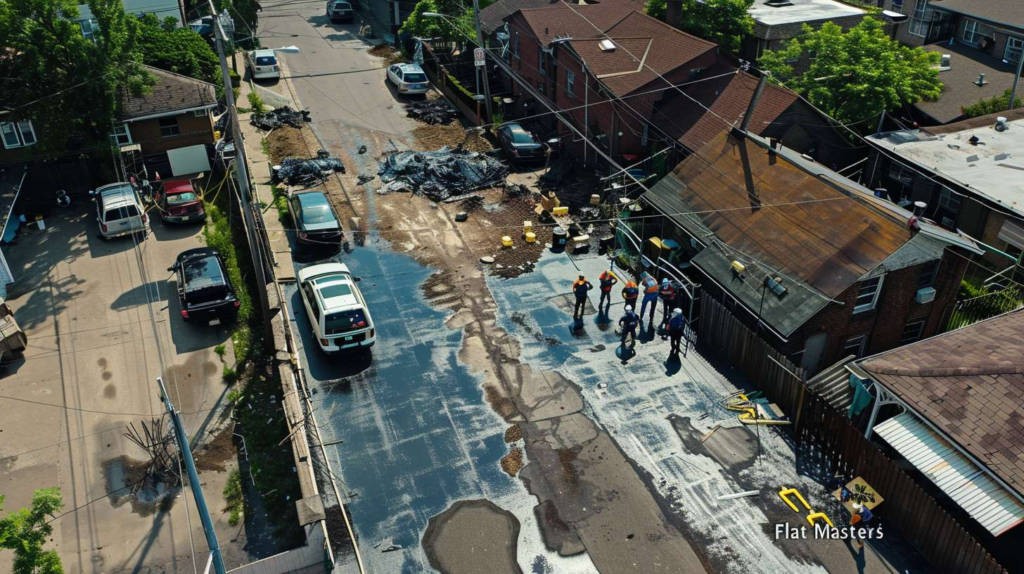
If I asked you where the water shows up, would you bet money on that spot? Because I've watched property owners do exactly that - and waste a repair call on the wrong six square feet. Water on a flat roof moves along decking grain, follows insulation seams, rides old lap edges, and pools around penetrations before it ever touches your ceiling. That's why I rely on tracing the uphill path first, not the downhill result. I'm Rosa Menendez, and with 19 years in flat roofing and a specialty in recurring felt-roof leak diagnosis across Queens, I'll tell you plainly: patching where the ceiling stain appears is one of the least useful ways to spend repair money. The stain tells you water got in. It does not tell you where.
Does This Leaking Felt Roof Need Containment, Targeted Repair, or Full Inspection?
Common Wrong Assumptions About Felt Flat Roof Leaks
| Myth | Reality |
|---|---|
| The stain on the ceiling marks exactly where the felt broke. | Water travels along decking and insulation before showing up inside. The entry point is often several feet uphill from the stain. |
| Roof cement fixes a felt roof leak. | Roof cement is a short-term sealant. Applied over wet or blistered felt, it traps moisture underneath and accelerates deterioration. |
| A blister in the felt just needs to be patched over. | A blister means moisture or air is already trapped beneath the membrane. Patching over it without addressing the cause guarantees a return call. |
| Dry weather means the leak problem is gone. | The felt's entry point doesn't close in dry weather. The moisture is likely sitting in your insulation or decking, waiting for the next rain to reveal itself again. |
| One repaired spot means the whole problem is solved. | Felt roofs age across the whole surface. One confirmed failure point usually means adjacent laps, edges, and flashings are under similar stress and should be assessed at the same time. |
Where Queens Felt Roofs Most Often Open Up After Rain
Seams, Laps, and Scuppers
Eight feet away is where I start believing the roof. I remember a February morning in Ridgewood, around 7:10 a.m., when a bakery owner called me in a panic because water was dripping onto the flour bins before they even opened for the day. The roof looked completely innocent from the ladder - no obvious holes, no dramatic cracks. But the actual split in the felt was hiding under a small ridge right behind a clogged scupper, eight feet from where the water hit the floor. That job reminded me, again, that flat felt roof leak repair starts with drainage first, not surface guessing. Queens buildings make this especially tricky: rowhouses in Richmond Hill, mixed-use storefront buildings along Jamaica Avenue, small multifamily properties in Woodhaven - they all carry decades of added vents, abandoned penetrations, patched parapet corners, and aging scuppers that nobody's touched since the Carter administration. Every one of those details is a variable in your leak equation.
Flashings at Vents and Edges
Here's the part homeowners never enjoy hearing. Felt doesn't usually fail in one dramatic hole you can point to and say "there it is." It opens slowly - a lap loses adhesion here, the felt shrinks back from a parapet edge there, an old repair traps moisture underneath and the surrounding material weakens. Wind lifts a small section near a vent base that nobody notices until three rainstorms later when the bedroom ceiling shows a ring. And every previous patch on that roof is its own variable, because bad patching can redirect water just as easily as a failed seam does.
The wet spot is the result; the failed detail is the cause.
Most Common Leak Points on Felt Flat Roofs in Queens
| Leak Location | What You'll Usually See | What It Commonly Means | Typical Proper Repair |
|---|---|---|---|
| Felt lap seams | Peeling or open edge lines across the field | Adhesion failure from age, heat cycling, or improper original installation | Clean, dry, and re-bond the lap with compatible felt adhesive; seal lap edge fully |
| Parapet wall flashing | Cracked or pulled-away metal or felt cap at the wall base | Thermal movement has separated the felt from the vertical surface over time | Strip failed flashing, clean substrate, install new base and cap flashing to code height |
| Clogged or damaged scuppers | Standing water pooling behind or around the scupper opening after rain | Backed-up water is forcing its way under the felt at the lowest membrane edge | Clear blockage, inspect felt surrounding scupper for saturation, re-seal perimeter felt detail |
| Vent or pipe penetrations | Cracked pitch pocket or open collar around vent base | Original felt boot has cracked or pulled away; water channels directly down the pipe | Remove failed collar, install proper pipe boot or pitch pocket sealed to surrounding felt field |
| Roof edge drip edge / gravel stop | Felt pulled back from metal edge or edge cap lifted by wind | Wind uplift or poor original termination is letting water wick back under the membrane | Secure or replace metal edge, re-embed felt over drip edge, seal termination properly |
| Previous patch failure | Shiny roof cement smear with cracks or an edge lifting at one side | Original patch was applied over wet or incompatible surface and has since separated | Remove failed patch material, assess substrate moisture, install compatible repair with full perimeter seal |
⚠ Warning: Don't Patch the Stain - Find the Detail
Smearing roof cement over the general area of a ceiling stain is one of the most common - and most expensive - mistakes made on felt flat roofs. It hides the symptom without addressing the source, and it usually locks moisture under a shiny black surface where it keeps working on your decking unseen.
- Don't walk on wet or blistered felt sections - you'll spread moisture and can break through a weakened membrane
- Don't ignore a clogged scupper or drain after a storm - standing water is actively pressing against every lap edge and seam nearby
- Don't assume a dry surface means a dry roof - moisture trapped in insulation doesn't evaporate; it waits for the next rain cycle
How a Real Repair Is Done on Leaking Felt Instead of Just Covered Over
When a Patch Is Enough
Blunt truth: felt doesn't fail all at once. That's actually good news, because it means a well-executed targeted repair on the right spot - the actual failed seam, flashing edge, or compromised lap - can stop the leak without tearing off the whole roof. But "well-executed" is doing a lot of work in that sentence. Proper repair logic runs like this: inspect the surrounding field before you touch anything, test seam integrity by hand along the uphill run, lift only what should be lifted, remove any failed patching material that's trapping moisture underneath, let the substrate dry as much as conditions allow, reinforce using a compatible felt repair method that bonds correctly to the existing system, seal every detail edge fully, and then restore the drainage path before you call it done. Skip any of those steps and you're not fixing the leak - you're postponing it.
When Wet Materials Underneath Change the Job
I once chased a leak across a 16-by-20 roof in Elmhurst where the owner had already had two patches applied by two different people. The ceiling stain looked like one problem. The roof told a different story - each patch had redirected water slightly, and the actual weak area turned out to be a lap failure near the back parapet that neither previous repair had gone near. The insider tip I always give: inspect uphill from the symptom and walk every penetration before you cut, patch, or seal a single thing. You'll save yourself a third callback. That same principle saved me on a Sunnyside rowhouse job where a homeowner's cousin had sealed what looked like a small blister with roof cement the week before. Under that shiny black smear, the felt was still wet and the membrane was lifting - the roof cement had covered the problem without solving it. I had to remove the patch material, dry what I could, and repair it properly from the substrate up. Covered is not fixed. Not on felt.
Proper Felt Roof Specific Leak Repair - Step by Step
-
1
Verify interior symptom and timing. Note exactly when the drip appears - during rain, after rain, or after wind-driven rain only. That timing tells you whether it's a direct breach, a drainage backup, or a wind-lap issue.
-
2
Map the likely uphill travel path. From the interior stain, locate the area on the roof that sits uphill and upwind. That zone - not the stain - is your starting inspection point.
-
3
Inspect drains, scuppers, and ponding areas. A blocked scupper or low spot holding water is often the first cause of lap and seam failure. Clear blockages before assessing membrane damage.
-
4
Test seams, flashings, and previous patches by hand. Press along every lap edge, lift flashing edges carefully, and probe any existing roof cement repairs for softness or lifting. This tells you how far the failed area actually extends.
-
5
Remove failed patch material and wet compromised surface as needed. Old roof cement that's sealing wet felt must come off. Saturated insulation under the deck may need to be dried or replaced before any new material goes down.
-
6
Install compatible felt repair and seal perimeter details. Use repair materials compatible with the existing felt system. Lap repairs need proper overlap and full adhesion at every edge. Flashings at vents, parapet bases, and drip edges get sealed as part of the same job - not as an afterthought.
-
7
Re-check drainage and monitor after next rain. Confirm all scuppers and drain paths are clear. Check the interior symptom area after the next rainfall. If water has stopped tracking, the repair held. If it hasn't, the travel path needs to be re-examined.
When You Can Wait a Day and When You Need a Roofer Now
A leaking felt roof behaves like a bad science fair experiment - messy, indirect, and full of false clues. Urgency depends on what the water is doing right now, not just where the stain showed up last week. Active interior dripping means the entry point is open and your ceiling assembly is absorbing moisture in real time. A ceiling bulge means that water is already pooled above you, and that's a structural and safety issue, not just a cosmetic one. Any water tracking near electrical fixtures is an immediate call - no waiting. I had a landlord in Astoria who was certain the leak was directly above a bedroom stain on his second floor, ready to book a repair on that exact spot. But it was a windy, wet Sunday, and the actual problem was eight feet away: a lifted lap in the felt near the base of an old vent where wind-driven rain had found the gap. The stain had nothing to do with the location of the failure. Wind-driven rain and a lifted detail near a penetration changed the whole diagnosis. That's why "it's leaking after hard wind" is not the same situation as "it drips during steady rain" - and why the timing you report when you call matters more than the room you call from.
✅ Before You Call - Have This Ready
Knowing these six things before you call speeds up the diagnosis and gets your repair scoped accurately on the first visit.
- When does the leak appear? During rain, after rain stops, or only after wind-driven rain?
- Exact room or area affected - ceiling, wall, corner, near a specific fixture?
- Is water actively dripping right now, or is this a stain from a past event?
- Was wind a factor when the leak was first noticed, or did it happen during steady rain?
- Any prior patching? How many times, and do you know what material was used?
- Did you see any drain or scupper overflow on the roof surface after the storm?
Questions Owners Ask Before Booking Felt Leak Repair
Not every leaking felt roof needs to be torn off and replaced - and that's not just something we say to close a sale. A single failed lap or deteriorated flashing detail on an otherwise sound felt surface is a repair, not a replacement. That said, when a felt roof has been patched three or four times in the same area, when underlying insulation is saturated, or when the membrane has shrunk back from multiple edges at once, the repair scope does grow. The honest answer is that you won't know until someone gets on the roof and actually checks what's under the visible surface - and that's exactly what a proper diagnosis is for.
Flat Felt Roof Leak Repair - FAQs for Queens Property Owners
4 Things to Remember Before You Schedule
Most Misleading Clue
Interior stain location - it tells you water got in, not where it entered.
Most Common Hidden Cause
Failed lap seam or clogged drainage point - both redirect water silently before it shows inside.
Best Immediate Action
Document timing, contain interior water, and note whether wind was a factor before the drip started.
Biggest Repair Mistake
Sealing over wet materials or old failed patching - covered is not fixed, and moisture underneath keeps working.
Stop chasing the stain and start tracing the actual path. If your felt flat roof has been patched before or the leak keeps coming back after rain, call Flat Masters for a proper Queens flat felt roof leak diagnosis - not another layer of cement over the wrong spot. We'll find where it's actually failing and fix that.