
Garage Flat Roof Construction Isn't Complex - But There Are Details That Matter

Garage Flat Roof Construction Isn’t Complex – But There Are Details That Matter

Garage Flat Roof Construction Isn't Complex - But There Are Details That Matter

Fast-forward to next year with nothing done. A garage flat roof is not difficult to build - but tiny framing and drainage choices decide whether it behaves like a roof or a shallow bathtub. And not gonna lie, "almost right" framing is the most expensive kind of wrong there is.

Start With the Roof's Report Card: Slope, Span, and Load

Three-quarters of an inch over a short run can save you a whole lot of dumb trouble. That's not an exaggeration - that's the classroom truth most people skip when they're excited to start building. Most flat roof failures don't begin at the membrane. They start underneath it, in the framing decisions made before a single roll of material hits the deck.
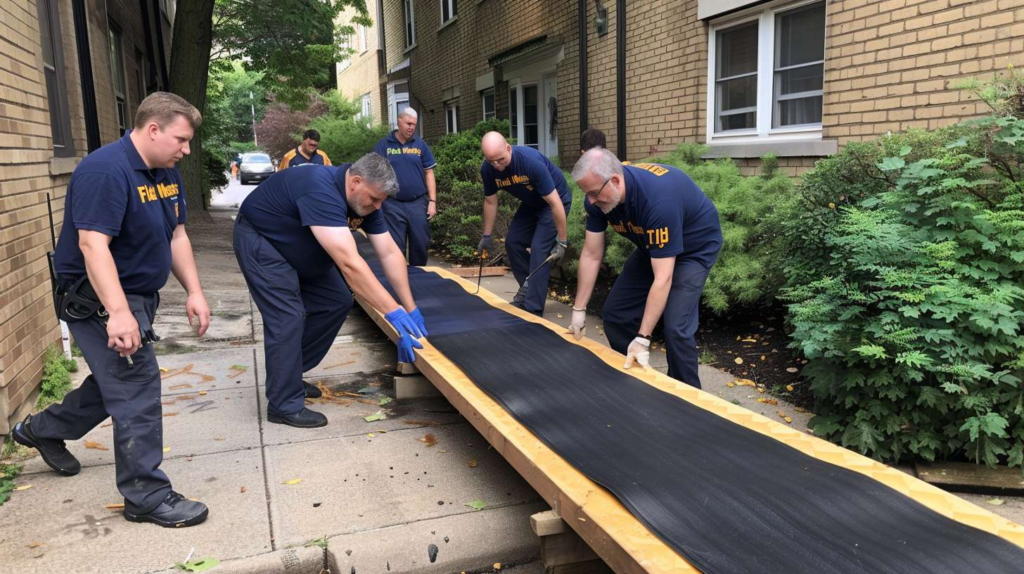
A modern flat garage roof with professional construction showing clean lines and durable materials, attached to a residential property.

Get your priorities in order: establish pitch first, confirm joist layout second, think through the load path third. That sequence matters. I'm Marta Velez, and I've been doing flat roofing in Queens, NY for 19 years - most of that time fixing garage roofs framed almost right, which is its own specialty. I remember being on a detached garage in Maspeth at 7:10 in the morning, frost still sitting on the neighboring fence, and the owner was proud because he and his brother had "finished the framing in one Saturday." Then I set my level down and watched it rock on three different joists. That job sticks with me because the membrane wasn't the problem at all - the skeleton underneath was teaching water where to sit. Good start, incomplete - and that takes us straight to drainage.

Flat Garage Roof Construction - Quick Facts for Queens Readers
Typical Detached Garage Challenge
Short runs tempt people to underbuild slope - the spans feel so small that a quarter-inch feels like plenty. It isn't.

Most Common Hidden Issue
Uneven framing creates low spots that don't show up until the first hard rain - and by then the deck is already under the membrane.

Best Planning Habit
Map where water exits before framing any edges. The exit point is a structural decision, not a finishing detail.

Climate Note
Queens freeze-thaw cycles punish minor ponding hard. Standing water expands, contracts, and works its way into every weak edge detail over a single winter.

Core Framing Checks Before Any Flat Garage Roof Sheathing Goes Down
Construction Detail Target Standard Why It Matters Common DIY Miss
Roof Slope Minimum ¼" per foot fall toward the drain or edge Any less and water stalls - membrane gets no help from gravity Assuming the ground level is level enough; it rarely is
Joist Alignment Crown side up, all crowns facing same direction, tops in consistent plane Inconsistent crowns create humps and dips that trap water between sheets Installing joists from a mixed stack without checking orientation
Joist Span Sized to code for dead + live load with no mid-span bounce Undersized joists deflect over time and create center low points Using the same lumber size as a floor joist without checking span tables
Decking Thickness Minimum ¾" plywood or OSB rated for roof sheathing; ⅝" is the floor Thin decking flexes under foot traffic and membrane installation, creating low spots Pulling leftover material from another project without checking the rating
Load Planning Roof load path confirmed through walls to foundation before framing Concentrated loads from HVAC or added storage get transferred incorrectly without this step Skipping load review on a detached garage because "it's just a garage"

Map the Water Exit Before You Fall in Love With the Layout

Scupper, Gutter, or Internal Drain: Pick One Path and Frame for It

If I asked you where the water leaves, could you point to it in five seconds? That's not a trick question - it's the test the whole roof has to pass. A drainage plan isn't an accessory detail you sort out after the frame is up. Detached garages in Queens have their own set of complications: tight side yards in Ridgewood, old alley edges in Maspeth where wind funnels debris from surrounding trees straight onto the roof, and original garage structures with parapet conditions that were never built for a modern drainage detail. One August afternoon in Ridgewood, right before a thunderstorm, I had a customer waving me over from his driveway saying, "It's just a little ponding." We climbed up, and the scupper was technically there, yes - but it had been framed so awkwardly that leaves and granules collected in front of it like a tiny beaver dam. We spent more time correcting the edge detail than replacing roofing material, and that's exactly why I never let people skip the boring construction talk.

Here's the part homeowners never find exciting, which is usually the part that matters. Edge build-up at the parapet or fascia needs to stay lower than the surrounding material - otherwise debris and standing water have nowhere logical to go. Scupper throat clearance is a real number, not a rough guess. And the water path has to stay downhill from wherever it starts to wherever it exits, without any interruption from framing that was built "out of order." That answer gets partial credit if you're just thinking about membrane type - the frame underneath either routes water out or it doesn't.

Drainage Path Decision Tree - Garage Flat Roof Construction

Where can water leave most directly?

Front edge available?
YES → Consider a gutter edge
⚠ Caution: Gutter must be sized and sloped - a flat gutter is just a trough that overflows.

Front blocked - side wall suitable for scupper?
YES → Frame scupper and collector head
⚠ Caution: Scupper location must be set before framing the edge, not after - retrofitting creates exactly the debris dam problem.

No edge option - can structure take an internal drain with maintenance access?
YES → Internal drain
⚠ Caution: Requires reliable maintenance access; a clogged internal drain on a small garage is a quiet disaster.

None of the above viable?
⛔ Redesign slope and edge before building.
⚠ Caution: Building without a confirmed exit point just moves the problem - it doesn't solve it.

⚠ Don't Frame Your Drain Location After the Deck Is Down

Retrofitting scuppers or cutting drain low points after the roof deck is installed almost always creates awkward patches, trapped debris channels, and weakened edge conditions. Water needs a planned route - not a negotiated one. Once framing is locked in, you're working around a problem instead of solving it.

📂 Open for the Boring Details That Save Roofs
How much slope is enough on a small garage roof?

The general standard is ¼" of fall per linear foot, minimum. On a short run - say a 12-foot garage - that's only 3 inches total drop from high to low point. That sounds like almost nothing, and that's exactly why people skip it. Even that small amount of deliberate pitch moves water toward the drain rather than letting it park on the membrane.

Why scupper placement fails at the edge

A scupper placed too high relative to the finished roof surface leaves a lip of material in front of it. Leaves, granules from modified bitumen, and sediment collect against that lip - especially on Queens garages where neighboring trees drop debris into confined spaces. The scupper becomes decorative. The water finds its own way, usually through a seam.

What ponding does during Queens freeze-thaw weather

Standing water on a flat roof in Queens doesn't just sit there - it freezes, expands, and works its way into any seam, lap, or edge detail with a flaw. A membrane that handles summer rain without complaint can fail by February if ponding was allowed to persist through November and December. Freeze-thaw cycles are a multiplier for every small framing mistake left unaddressed.

Build the Assembly to Match Real Insulation Depth, Not a Pretty Sketch

Bluntly, a flat roof built dead flat is just a leak on a delay. Beyond slope, the vertical space inside your assembly has to account for insulation, membrane support, and - depending on your configuration - ventilation. Those aren't optional layers you squeeze in at the end. I had a fresh timber frame garage flat roof job in Woodside where the homeowner wanted exposed interior beams because it looked clean and modern online. Fine idea, except the original plan left almost no room for the insulation thickness they actually needed. I was standing there at dusk with a tape measure and a headlamp, explaining that pretty roof sections don't care whether your garage sweats all winter - physics always sends the bill later. Many modern-looking plans are easy to copy, hard to understand. That's the part online searches don't show you.

A garage roof frame works a lot like a classroom project table - if one corner is off, every sloppy result gathers there. Timber framing, joist depth, sheathing, and your chosen insulation strategy all interact in the same vertical stack. You can't treat them independently. When I sit down with a homeowner and they're not sure where the water goes, I'll grab a coffee sleeve or a receipt and tap out the slope with a pencil so they can actually see the water movement instead of just taking my word for it. Tapered insulation can correct modest slope errors, but it has height limits and coordination requirements - it's not a free pass for framing that went in crooked. Interior condensation risk is real in any unventilated assembly, especially if the garage is heated or shares a wall with living space. Show your work at this stage, or the building inspector will.

Slope Framed Into Structure
  • Cleaner drainage planning - the path is decided before anything else is built
  • Requires early design commitment; changes after framing are expensive
  • Framing precision has no margin for error on short spans
  • Delivers the most reliable slope geometry over time

⚠ On small Queens garages, even a half-inch error in joist height at one end throws the entire plane off - which is how you get low spots that look right until it rains.

Slope Adjusted With Insulation Package
  • Offers correction flexibility if framing is modestly off-plane
  • Adds design coordination - insulation supplier needs accurate field measurements
  • Height limitations apply; tapered packages can't compensate for severe errors
  • Works well on re-roofing projects where re-framing isn't feasible

⚠ On detached garages with limited parapet height, tapered insulation eats into already-tight clearance and can conflict with scupper throat elevation.

Timber Frame Garage Flat Roof With Exposed Interior Beams - What You're Actually Signing Up For
Pros Cons
Clean, modern interior aesthetic that reads well in a finished garage or workspace Exposed beam depth directly limits how much insulation can sit above the deck - often not enough
Interior openness - no dropped ceiling or framed chase eating into headroom Condensation risk increases significantly if the roof assembly is under-insulated in a heated space
Structural spans can be longer per beam than standard joist framing, opening floor plan options Tighter detailing tolerances - any framing error is visible from below and harder to correct quietly
Durable, high-character framing that adds value to the structure over time Coordination with membrane contractor, insulation type, and vapor control layer must happen before framing, not after

Use a Build Sequence That Doesn't Leave the Important Parts to Luck

A Simple Order of Operations for Building a Flat Roof Garage

I was on a garage off 69th Street when this exact mistake showed up. The framing was done, the deck was down, and then - only then - did the crew start thinking about edge blocking and where the scupper needed to land. That sequencing problem turned a straightforward detail into a patchwork edge condition that made the membrane installation harder than it needed to be and left a drainage line that was, at best, awkward. People often know the parts of a roof. What they don't always know is the order those parts need to be built in. Buying materials is not the same as having a construction plan - that gets partial credit at best.

Physics gives the final exam, and it never accepts late homework.

How to Build a Garage Flat Roof - In the Correct Sequence
1
Confirm loads and span

This step exists because a garage roof carries dead load, live load, and potentially snow - and the joist size has to be chosen against actual span tables before anything else moves forward.

2
Establish pitch and water exit

This step exists because the drainage path defines where the low point of the frame needs to land - every other dimension on the roof is relative to that exit location.

3
Frame joists and edge conditions together

This step exists because edge blocking, fascia height, and scupper or gutter placement all interact with joist height - handling them separately is how you end up retrofitting details that should have been framed in from the start.

4
Verify plane with a level and stringline

This step exists because a level set down on three joists can rock - and that rocking tells you exactly where water will sit before the deck ever goes on.

5
Install decking and blocking

This step exists because blocking at the edges and deck seams provides the structural base the membrane needs - and missing it creates soft spots that fail under foot traffic and thermal movement.

6
Complete insulation and roofing assembly

This step exists because insulation type, vapor control placement, and membrane system selection all need to be coordinated with each other - not chosen independently from a supply house list.

7
Test drainage path and edge details before calling it done

This step exists because running a hose across the finished roof and watching where water moves - and where it hesitates - tells you more in two minutes than a visual inspection ever will.

✅ Before You Call a Roofer - Know These 6 Things

  • Attached or detached garage? - Affects load path, drainage options, and how edge conditions meet the main structure.

  • Approximate roof size? - Even a rough measurement (12x20, 20x24) determines span requirements and drainage volume planning.

  • Any known ponding spots? - If water already sits somewhere on an existing roof or slab, that tells a roofer immediately where the framing plane broke down.

  • Desired water exit location? - Front gutter, side scupper, alley edge - worth thinking about before a roofer arrives so the conversation starts at the design level.

  • Will interior beams stay exposed? - This changes the insulation strategy, condensation risk calculation, and the overall assembly depth available.

  • Does framing already exist? - An existing frame that needs to be worked around is a completely different conversation than a new build starting from the wall plates up.

Answer the Questions People Usually Ask After the Framing Is Already Wrong

Most homeowner questions arrive one step too late - after materials are chosen, or after the framing is set and someone's standing on the deck wondering why it doesn't look right. Better questions arrive before the first joist is cut. Good start, incomplete, if you've read this far and still haven't mapped your drainage exit. The answers below are designed for the questions worth asking early - not the ones you'd ask a roofer while staring at a finished mistake.

How much slope does a garage flat roof need?
The minimum standard is ¼" of fall per linear foot, moving toward the drain or edge. On a 16-foot garage, that's 4 inches of total drop - enough to keep water moving without requiring a dramatically pitched frame. Going below that minimum, even slightly, is where ponding starts. Some membrane systems recommend ½" per foot if you want extra margin against minor framing irregularities.
Can I build a flat roof garage with standard lumber sizes?
Yes, standard dimensional lumber works for most garage flat roof framing - but the size has to be selected against a span table for your specific joist spacing and load conditions, not guessed. A 2x8 that's fine at 12 feet on center at 16" spacing can fall short at 14 feet. Always verify against current span tables and your local NYC building code requirements before cutting anything.
Is a timber frame garage flat roof harder to insulate?
It can be, especially when exposed beams are part of the design intent. The beam depth limits how much insulation can sit above the deck before you hit parapet height or edge detail constraints. Rigid insulation above the deck is the usual solution, but it needs to be thick enough to keep the dew point outside the structural assembly - and that calculation needs to happen before framing, not after.
What causes ponding on a new garage roof?
Most new-roof ponding traces back to framing plane problems - joists that aren't consistently leveled, insufficient slope toward the drain, or edge conditions that sit higher than the roof field. Sometimes it's a combination of all three. A brand-new membrane does not fix a structural low point; it just covers it until the water finds its way in.
Should drainage go to a gutter or scupper?
That depends on site conditions - specifically, where there's room for water to discharge without creating a nuisance or directing flow toward a neighbor's property. Gutters work well when the front edge is accessible and the roof drains that direction. Scuppers are better when drainage needs to move through a parapet or side wall. Either way, the decision needs to be made before framing so the edge detail is built to support it.
Can a roofer fix poor framing without rebuilding everything?
Sometimes - tapered insulation can correct modest slope deficiencies without touching the frame, and sister joists can address localized low spots. But there are limits. If the joist plane is significantly off, or the edge conditions are fundamentally wrong, a full re-frame is the cleaner and cheaper long-term answer. A good roofer will tell you honestly which situation you're in, and at Flat Masters that's always the first conversation.

Common Myths About Building a Flat Roof Garage - Set Straight
Myth Fact
"Flat means level." A flat roof still needs deliberate slope - minimum ¼" per foot - toward a drain, scupper, or gutter. "Flat" describes the roof type, not the pitch. Level is a bathtub, not a roof.
"Membrane quality matters more than framing." The best membrane on the market can't compensate for a frame that channels water to the wrong place. Framing decisions define where water sits; the membrane just has to deal with what framing leaves behind.
"Small garages don't need detailed drainage planning." Short spans are actually where drainage gets skipped most often - and where underdone slope causes the most predictable problems. The smaller the roof, the less margin there is for a poorly placed low point.
"Exposed beams and good insulation always fit together easily." They can coexist, but they don't naturally cooperate. Exposed beam depth limits how much insulation sits above the deck, and condensation risk rises when that depth falls short of what the thermal calculation actually requires. It takes deliberate coordination, not just good intentions.

Faq’s

Flat Roofing FAQs: Everything Queens, NY Homeowners Need to Know

How long does flat garage roof construction actually take?
Most flat garage roof projects take 4-7 days for construction, but plan 6-10 weeks total including permits and inspections. Weather delays are common in Queens, especially during winter months. The article breaks down exact timelines for each phase.
Absolutely – a quality flat garage roof adds significant property value and provides decades of reliable service. EPDM roofs typically last 20-30 years with proper installation. The article explains cost breakdowns and what drives pricing up or down.
Not recommended – flat roofs require precise drainage slopes, proper membrane installation, and Queens building permits. Poor installation leads to costly water damage. Licensed contractors handle permits, inspections, and provide warranties you can’t get DIY.
Delaying roof replacement risks water damage to your garage structure, stored items, and potentially your home’s foundation. Emergency repairs cost 2-3x more than planned construction. The article covers warning signs to watch for.
EPDM ($3-$7/sq ft) works great for most Queens garages and handles our climate well. TPO costs more but reflects heat better. Modified bitumen offers superior puncture resistance. The article details pros and cons of each material.

Ask Question

Or

Which Flat Roofing System Is Best for a House? Here's the Homeowner's Guide

13 min read

Shingles on a Small Flat Roof - Here's What You Need to Know Before You Start

15 min read

Turning a Flat Roof Into a Patio Is One of the Most Rewarding Outdoor Upgrades

16 min read

A Sagging Flat Roof Isn't Just Ugly - It's a Structural Warning Sign

16 min read

Flat Roof Felt Cost - Honest Pricing, Free Estimate in NYC

6 min read

How Much Does It Cost to Felt a Flat Roof? The Numbers That Actually Matter

13 min read

Rubber Flat Roof Installation in NYC - The Right Material, Properly Installed

7 min read

Flat Roof Terrace Construction in NYC - Built for Life

10 min read

Flat Roof Leaking Right Now? Here's How to Tarp It Until We Arrive

7 min read

Warm Roof or Cold Roof? Here's Why Most People Choose Warm - and Why It's Smart

12 min read

How to Replace a Flat Roof: 5 Essential Steps for Homeowners

6 min read

Building a House with a Flat Roof - What You Need to Plan For

6 min read

Building a Single Garage With a Flat Roof? Here's What Makes It Right

16 min read

Which Roofing Felt Is Right for a Flat Roof? The Options Aren't All the Same

14 min read

Flat Roof Installation for NYC Residential Houses - Built to Code

9 min read

Professional Interior Flat Roof Drainage Systems Installation

6 min read

Flat Roofs Get a Bad Reputation - But Here Are the Things They Actually Do Well

15 min read

A Leak-Proof Flat Roof Isn't a Dream - It Just Takes the Right System

14 min read

Residential Flat Roof Materials - Installed by NYC Specialists

6 min read

What Does a Flat Roof Replacement Cost Per Square Foot? Real Figures Right Here

16 min read

What's the Real Purpose of Why Gravel on Flat Roof Systems?

6 min read

That Leak Near the Edge or Parapet Is Almost Always the Flashing - Here's Why

16 min read

Can You Actually Tarp a Flat Roof? Honest Answer: It Depends on a Few Things

16 min read

Need a Temporary Fix for a Leaking Flat Roof? Here's What Works Until the Pro Arrives

18 min read

Shingle Underlayment on a Low-Slope Roof - What You Need Is Different From Standard

16 min read
blue circle

Get a FREE Roofing Quote Today!

Schedule Free Inspection