
The Fascia on a Flat Roof Does More Than Look Neat - Here's What to Choose
I've talked to building owners in Queens who spent three weeks picking a fascia color and three minutes thinking about what was behind it. That's the backwards version of this decision, because the fascia board on a flat roof isn't trim-it's an edge component that controls where water goes, what the membrane terminates against, and how long everything under that roofline actually holds together.
Why Fascia Choice Changes the Whole Roof Edge
At the roof edge, I start with my knuckles before I start with my clipboard. The first thing I want to know about any flat roof fascia board is how the edge is behaving as a system-not how it looks from the sidewalk. System behavior is the real story here: when the edge traps water, flexes without relief, or hides rot behind a clean face, the whole roof assembly starts behaving badly. Flashings start pulling, membrane terminations lift, and water that should have run off starts running in instead. One bad fascia decision ripples outward faster than people expect.
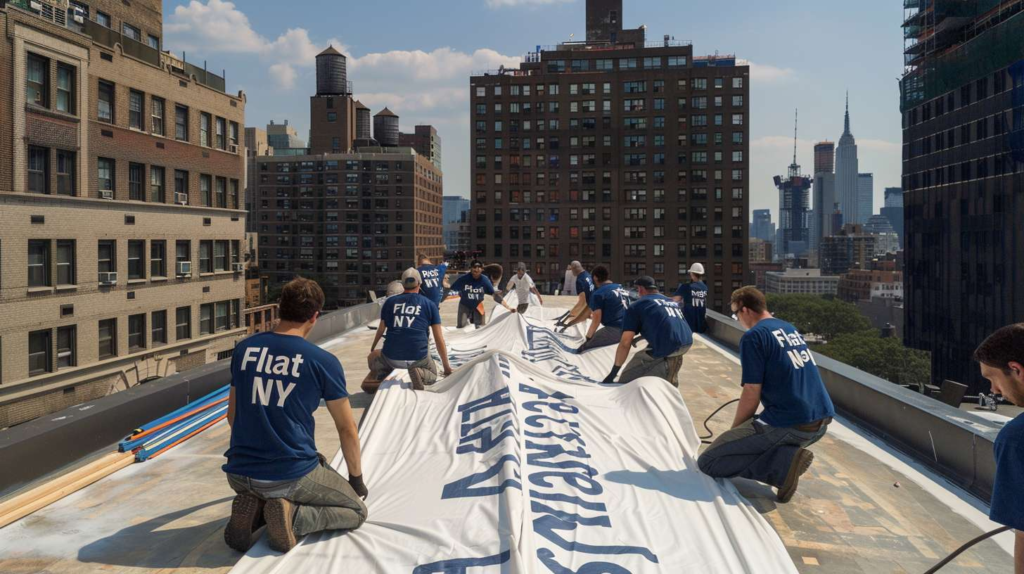
Here's the part people in Queens get backward: flat roof fascia board products get judged by appearance far too often, when the real criteria are substrate condition, attachment method, and drainage path. I'm Alicia Mendez, and I've spent 19 years in flat roofing specializing in diagnosing roof-edge failures on Queens low-slope buildings-and I can tell you that the best-looking edge I've ever seen hid the worst rot I've ever smelled. My honest preference: I would rather leave an ugly but structurally sound edge dry for a week than cover a wet, deteriorated edge with a polished metal face for a day. Appearance without dry backing isn't progress. It's paperwork you haven't filed yet.
| Myth | Real Answer |
|---|---|
| Fascia is just decorative trim. | Fascia on a flat roof is an edge-system component. It establishes the drainage terminus, supports membrane termination, and protects the top of the wall from water tracking behind the cladding. Treating it as trim means ignoring everything it actually does. |
| Aluminum wrap means the wood underneath is fine. | Aluminum wrap improves appearance and adds weather resistance at the face, but it creates a sealed environment where any moisture that gets in stays in. Wood behind aluminum wrap can rot completely while the exterior looks factory-fresh. Backing condition has to be checked independently. |
| Sealing every gap along the fascia is the right move. | Some gaps are intentional drainage and ventilation paths. Sealing them traps moisture behind the metal and against the substrate. The edge needs to breathe and drain, not be caulked shut. Knowing which gaps to seal and which to leave open requires understanding the edge design-not just a caulk gun. |
| Thicker metal alone solves rattling. | Rattling comes from loose fasteners, not thin metal. If the substrate has split or swelled, heavier gauge material will still pull loose. The fix is proper fastener pattern into solid backing-not just upgrading the profile weight. |
| Any carpenter can swap fascia without touching the roofing. | Flat roof fascia boards connect directly to the membrane termination. Pulling or reseating fascia without knowing where the membrane ends and how it's integrated will break the seal at the edge-which is where the majority of flat roof leaks originate. This work requires someone who understands both the edge metal and the membrane system behind it. |
⚠ Warning: Don't Install New Fascia Over Wet or Split Backing
Covering deteriorated wood with new metal wrapping or a formed fascia system does two damaging things at once: it hides the rot from inspection and it weakens every fastener in the assembly. The appearance improves the same day the new cover goes on. The failure underneath keeps progressing. By the time the edge starts showing problems again, the backing has degraded further, the fasteners have less to grip, and the repair scope is larger than it would have been if the substrate had been addressed first. Don't let a clean face be the reason you miss a structural problem.
Sorting Through Flat Roof Fascia Board Materials That Actually Belong Here
What Each Material Does Well
Think of the fascia like the cuff on a coat sleeve-small piece, constant punishment. The main flat roof fascia board materials you'll encounter in Queens are primed exterior wood, PVC and composite trim board, aluminum-wrapped wood, formed aluminum fascia systems, and steel fascia systems. Each one has a real use case and a real failure mode. Queens adds its own set of conditions on top of that: blocks where attached rowhouses funnel wind straight at one exposed edge, south-facing facades where summer heat bakes the metal to the point where expansion joints become non-negotiable, and the freeze-thaw cycles in January that pry open any unsealed lap joint and don't apologize about it.
I remember being on a two-family in Maspeth at 6:40 in the morning, coffee still too hot to drink, when the owner told me the "trim" was just cosmetic and could wait. I pressed on the fascia board on the flat roof and my thumb went halfway in because water had been sneaking behind aluminum wrap for years. That was the morning I started telling people the edge of a flat roof is where small denial turns into big invoices. The wrap looked fine from the sidewalk-zero blistering, no visible gaps, paint even looked decent. The backing was punky all the way through. That job changed how I approach aluminum-wrapped wood as a recommendation: it's only sound when the substrate behind it was verified dry at installation, and most of the time nobody checked.
Where Each One Gets Into Trouble
So what actually fits your building? The best fascia board for flat roof use depends on three things working together: whether the existing substrate is solid, whether the membrane termination is staying in place or being rebuilt, and whether the owner needs a repair product that fits over what's there or a full edge-metal system that starts clean. That third question matters more than most people admit, because a repair product installed on a degraded edge is just a reset clock.
| Product / Material | Best Use on a Flat Roof | Main Strength | Main Weakness | How It Handles Queens Weather | Repair or Replacement Fit |
|---|---|---|---|---|---|
| Primed exterior wood fascia | Low-slope residential with full edge rebuild and verified dry framing | Takes fasteners well, easy to cut and fit, accepted base for metal capping | Absorbs moisture if exposed; must be fully protected on flat roof applications | Vulnerable to freeze-thaw splitting if coating fails; needs maintenance cycle | Full replacement substrate - not a standalone finish product |
| PVC / composite fascia board | Residential flat roofs where paint maintenance is a burden and budget is moderate | Doesn't rot, holds paint better than wood, dimensionally stable in dry conditions | Expands significantly with heat; gaps open at joints in summer if not accounted for | Summer expansion on south-facing edges is a real issue - joint sizing matters | Good replacement fit when wood substrate is being swapped on a straightforward edge |
| Aluminum-wrapped wood fascia | Budget-sensitive repair on a sound, dry substrate with limited cosmetic damage | Fast to install, improves appearance immediately, low material cost | Conceals substrate from future inspection; any moisture entry stays trapped | Performs if backing stays dry; becomes a moisture trap if any joint fails | Repair fit only - and only when backing has been physically verified dry first |
| Formed aluminum fascia system | Commercial, mixed-use, and residential buildings where edge-metal integration with membrane termination is needed | Engineered for movement, includes proper termination profiles, inspectable connections | Higher material and install cost; requires skilled installation to maintain system integrity | Handles Queens thermal cycling well when properly lapped; doesn't trap moisture if installed correctly | Best full-replacement option when the edge is being rebuilt from backing out |
| Steel fascia system | Larger commercial buildings, high-wind exposures, roofs where edge integrity is load-bearing or structurally significant | High wind resistance, rigid profile, long service life in demanding conditions | Heavier, more complex to detail at corners; cost is higher; requires correct gauge for the application | Handles wind tunneling between Queens attached buildings well; thermal expansion must be accounted for at joints | Replacement system - rarely used on residential; appropriate for exposed commercial edges |
Reading the Edge Before You Buy Anything
What do I ask a building owner first? Three things: Is the wood behind the fascia still solid, or does it give when you press it? Is this edge supposed to let air or water out at the base, or is it a closed termination? And is the metal rattling because of wind load, or because the fasteners have already lost their purchase in swelled or split backing? Each of those answers sends you to a completely different product. Worth doing before anything else: tap along the face of the edge with your knuckle and listen. A solid, connected board gives a flat sound. A hollow or delaminated one gives you a different answer entirely-kind of a papery knock that tells you the backing has separated or gone soft. Your building will answer the question before any salesperson does.
If you skip the diagnosis and shop by color, the edge will teach you the expensive version later.
- Photo of the edge from street level: Capture the full fascia face so any visible buckling, rust streaking, or paint failure is documented before anything is touched.
- Photo from the roof if it's safe to access: A shot showing where the membrane meets the edge - whether it's terminating under a cap, into a reglet, or simply lapping over - tells a roofer more than any description over the phone.
- Note any staining under the coping or fascia face: Brown or gray streaking on the exterior wall below the edge line usually means water is getting behind the edge assembly, not just running off it.
- Check whether the metal rattles in wind: A rattle means a fastener has lost holding. Mark the location - corner, mid-span, or near a downspout - before calling, because location tells you what failed.
- Note whether a painter or handyman recently sealed the joints: Freshly caulked gaps can hide the original drainage path and make it harder to assess whether the edge is draining or trapping water. Flag this upfront.
- Check for leaks appearing near the parapet or top-floor ceiling: Water showing up at the interior perimeter while the field of the roof appears dry almost always points back to the edge termination - not the membrane itself.
Is the backing wood / substrate still solid?
✅ YES - Substrate is solid
Move to question 2.
Is the metal bent, loose, undersized, or separating at joints?
✅ YES → Replace the cover or fascia system. Substrate is sound - the product selection is the issue. Evaluate aluminum-wrapped wood, PVC composite, or a formed aluminum system based on exposure and budget.
❌ NO → Ask: Are leaks or stains appearing behind the edge?
- If yes: Inspect membrane termination and flashing integration before touching the fascia face.
- If no: Maintenance and monitoring. Document current condition and recheck seasonally.
❌ NO - Substrate is compromised, soft, or split
→ Stop. Do not select a fascia product yet. Open the edge assembly, remove deteriorated substrate, and rebuild the backing before any new product goes on. Choosing a material at this stage is premature - the substrate condition defines what can be properly attached and sealed.
Mistakes That Make a Neat Edge Fail Early
The "Sealed Shut" Problem
Bluntly, a pretty cover over bad wood is just delayed embarrassment. One July afternoon in Astoria, heat bouncing off the blacktop like an oven door was open, I was called after a painter had sealed every gap along the fascia board for flat roof ventilation details because he wanted it to look clean. By sunset, we were opening sections back up because trapped moisture had already started softening the substrate. That job is exactly why I tell customers neat-looking and correctly built are not always the same thing. The edge's system behavior had changed the moment those drainage paths were caulked shut - moisture that used to escape was now staying inside, and the substrate paid for that within a single summer season.
The "Looks Solid from the Sidewalk" Trap
One March gust in Ridgewood taught me this fast. An older landlord walked me around his building during a windy March inspection and insisted the rattling metal was "just Queens being windy." I took one loose corner of the flat roof fascia boards in my hand and the fastener backed out with almost no resistance because the wood behind it had split and swelled. He went quiet after that, and we ended up replacing the whole edge assembly before the next storm tore it off into the alley. What looked solid from the sidewalk - intact metal, no obvious rust - was being held by nothing. Loose metal, swollen split wood, and weak fastener holding don't fail in sequence. They compound each other in one event when the wind decides it's time.
- ❌ Covering rot without verifying substrate condition - fasteners have nothing to hold, failure is already scheduled
- ❌ Sealing drainage paths for a cleaner look - traps moisture against the backing and changes edge behavior immediately
- ❌ Mismatched metal thickness for the exposure - light gauge on a wind-exposed Queens rowhouse edge will flex loose at every joint
- ❌ Under-fastening at corners - corners carry the most movement stress and are where failure starts when the fastener count is low
- ❌ Ignoring movement at lap joints - joints that aren't sized for thermal expansion open in summer and admit water in winter
- ✅ Repainting the edge instead of probing it - paint buys time cosmetically but doesn't diagnose what the substrate is doing
- ❌ Replacing the trim without checking membrane termination - the membrane edge is where most flat roof perimeter leaks originate; fascia work that ignores it solves half the problem at best
Choosing the Product Match for Your Building in Queens
So what fits your building, then? For a small residential flat roof in Jackson Heights or Woodside where the backing is solid and the edge is cosmetically roughed up but not structurally compromised, PVC composite or properly installed aluminum-wrapped wood is a reasonable path - if, and only if, you've pressed on that substrate first. For a mixed-use storefront on a main commercial block, a formed aluminum fascia system that integrates properly with the membrane termination will outlast any cover product by years and actually handles the building movement that commercial blocks see. For an older multifamily with a history of edge movement and questionable repair patches, the right call is usually a full edge opening, new substrate, and an engineered metal system - because stacking repair products on a moving edge is a short-term answer to a long-term problem.
The right flat roof fascia board choice depends entirely on what the edge is doing right now, not what looks best in a product catalog. And honestly, you won't know what the edge is doing until someone gets close enough to read it - not just look at it. If you want that evaluation done properly, Flat Masters can inspect the fascia, backing condition, and edge metal together on your Queens building before any product decision gets made. That's exactly how this work should start.
| Situation | ✅ Likely Best Product Path | ❌ Usually a Poor Choice |
|---|---|---|
| Sound wood substrate needing a cosmetic and weather upgrade | PVC composite or aluminum-wrapped wood - fast, cost-effective, appropriate when backing is confirmed dry | Full edge-metal rebuild - unnecessary scope when the substrate is sound; adds cost without proportional benefit at this condition level |
| Deteriorated backing with loose or bowed metal | Full edge opening, substrate replacement, then formed aluminum fascia system that integrates cleanly with the membrane termination | Cover-only replacement - wrapping new aluminum over failed substrate resets the clock cosmetically while the real failure keeps progressing underneath |
| High-wind exposed edge on a larger or commercial roof | Engineered steel or formed aluminum fascia system with correct gauge for the exposure, proper fastener spacing, and movement accommodation at all joints | Aluminum-wrapped wood or light PVC - neither has the wind resistance or fastener holding needed for an exposed edge that sees real Queens wind channeling |
If you want someone to actually get close to your edge - tap it, probe it, read the membrane termination, and tell you exactly what product decision makes sense for that specific building - Flat Masters does those inspections across Queens. The edge will tell you what it needs. You just need someone there who knows how to listen.
- Alicia Mendez, Flat Masters, Queens, NY
