
Replacing Tar and Gravel With Something Better - Here's What Your Options Are
Practically speaking, the best replacement for a tar and gravel flat roof is almost never the one that looks the toughest from the sidewalk. It's the one that matches your drainage situation, your building's actual use, and what you're realistically going to maintain over the next 15 to 20 years in Queens.
Why the toughest-looking replacement is often the wrong experiment
On a 20-by-60 Queens rooftop, the math tells on you fast. Weight loads, ponding water, seam placement, odor during install, scupper flow, and how easy it is to get someone back up there for a repair - all of those variables change the outcome. Marisol Vega, with 19 years in flat roofing and a specialty in Queens replacement planning for aging built-up roofs, has watched owners pick the visually heaviest option and end up back on the phone two winters later. And honestly, adding another layer because the old system has "character" is not a strategy - it's delayed spending with worse timing. So that's lesson one before we get into the options themselves.
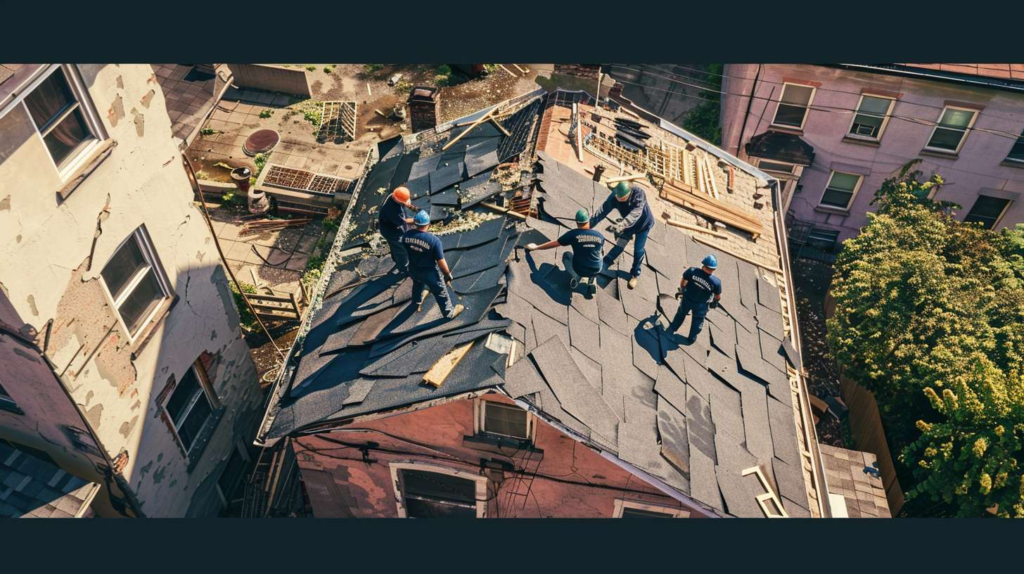
⚠ Don't Judge This Roof by Its Cover
A gravel-covered roof can look rugged while hiding trapped moisture, wet insulation, and soft deck sections. Do not pick the next system based on what looks heavier or tougher from the street. The gravel is cosmetic at this point - what's underneath is the whole story.
Decision Tree: Which Replacement Path After Tar and Gravel?
START: Is the deck/substrate still solid after inspection?
↓ Continue below based on your answer
❌ NO - Deck is compromised
Deck repairs come first. Coating is off the table entirely. Compare modified bitumen or single-ply only after structural repairs are complete.
✅ YES - Deck is solid
Move to the next question: drainage.
Does the roof have chronic ponding or weak drainage?
❌ YES - Chronic ponding
Favor PVC or a fully adhered system with drainage corrections built into the scope. A coating alone will not fix a slope problem - don't let anyone tell you otherwise.
✅ NO - Drainage is adequate
Move to next question: foot traffic.
Is there regular foot traffic - tenants, service techs, supers, parapet work?
❌ YES - Regular traffic
Lean modified bitumen or reinforced PVC depending on budget and penetration count. Traffic tolerance is non-negotiable here.
✅ NO - Minimal traffic
Move to next question: odor sensitivity.
Is low odor during installation a major concern for an occupied building?
❌ YES - Odor is a concern
Consider TPO or PVC depending on exposure conditions and detailing requirements. Both install with far less odor than torch-down methods.
✅ NO - Odor is manageable
Move to next question: puncture tolerance.
Do you need strong puncture tolerance over brochure appeal?
❌ YES - Puncture resistance is priority
Modified bitumen rises in the ranking. Its layered construction handles abuse that single-ply can't.
✅ NO - Standard conditions
Only if the substrate is genuinely excellent and leaks are isolated should you assess restoration/coating - and treat it as a controlled exception, not the default.
Options laid out like a real chart, not a sales pitch
Modified bitumen when durability matters more than trendiness
I'll say this plainly: gravel does not make a bad roof noble. One humid August morning in Elmhurst around 7:15 a.m., I was on a brownstone with a retired librarian who was genuinely attached to her 30-year-old tar and gravel roof because "it had character." We peeled back one section and found trapped moisture spreading wider than the interior stain suggested - and that was the moment I gave her the talk about why replacing tar and gravel flat roof systems is almost always smarter than trying to honor them like antiques. Queens buildings carry their own set of complications here: older multifamily roofs with parapet flashing that's been re-caulked six times, HVAC units dropped in without proper curbs, drainage scuppers that are half-blocked by debris from Jamaica Avenue foot traffic, and mixed-use occupancy that means complaints come from two directions at once.
PVC and TPO when heat welding and lighter assemblies make sense
Last fall, I had a landlord in Sunnyside ask me the wrong question first. He wanted to know which material was "best," and I had to slow him down because that question has no answer without context. The better question is: best under what conditions? I've started explaining this by drawing an imaginary chart in the air - columns labeled cost, lifespan, odor, and regret - and then walking through each system like it's an experiment with variables and predicted outcomes. Modified bitumen scores high on puncture resistance and lifespan but brings odor during torch application. PVC wins on chemical resistance and heat-welded seams but costs more upfront. TPO gives you a middle path with lower odor and decent reflectivity. And coating/restoration sits in its own corner: sometimes genuinely useful, often used as a delay tactic, and only honest when the substrate underneath is actually dry and stable.
If the roof stays wet, every brochure starts lying to you.
| Option | Best Fit Conditions | Main Strengths | Watch-Outs | Odor During Install | Typical Lifespan | Traffic Tolerance | Good After Tar & Gravel? |
|---|---|---|---|---|---|---|---|
| Modified Bitumen | Buildings with regular foot traffic, service access, or active HVAC work on roof | Excellent puncture resistance, multi-layer construction, proven in harsh NY winters | Torch-down application means fumes; not ideal over occupied businesses without scheduling | Moderate-High (torch) | 15-25 years | High | Yes - strong match for most Queens replacement scenarios |
| PVC | Buildings with rooftop HVAC, grease-producing kitchen exhausts, or drainage complexity | Heat-welded seams are strongest available, chemical/grease resistant, highly durable | Higher material cost; requires skilled installation to realize seam advantage | Low | 20-30 years | Good | Yes - especially on buildings with drainage issues or restaurant venting |
| TPO | Budget-conscious owners with good deck condition, moderate traffic, occupied building | Reflective surface reduces cooling costs, lower odor, lighter assembly, cost-effective | Not all TPO is equal - formulation quality varies widely by brand; verify warranty terms | Low | 15-20 years | Moderate | Yes - with caveats around traffic and UV exposure on southern exposures |
| Coating / Restoration | Only when deck is confirmed dry, leaks are truly isolated, and lifespan extension (not replacement) is the documented goal | Lower upfront cost, faster install, minimal disruption when legitimately applicable | Cannot fix wet insulation. Cannot correct bad slope. Frequently misapplied as a short-cut over failing systems. | Very Low | 5-10 years (when properly applied) | Low | Rarely - only as a controlled exception on genuinely sound substrates |
Reality Check: Coating vs. Full Replacement
✅ Pros of Coating/Restoration
- Lower upfront cost than full tear-off and replacement
- Less construction disruption for occupied buildings
- Faster install timeline when work window is tight
- Potentially adds useful life when substrate is genuinely dry and stable
- Reduces landfill waste by avoiding full tear-off
❌ Cons of Coating/Restoration
- Cannot fix wet insulation - traps moisture and accelerates deck damage
- Does not correct poor slope or drainage by any amount of wishful thinking
- Can hide soft deck spots if installed over an undiagnosed failing system
- Frequently used as a delay tactic that makes the eventual replacement more expensive
- Short effective lifespan means you may be back to full replacement within 5-7 years anyway
Signals that tell you replacement beats another patch cycle
What do you actually do up here besides ignore it until it leaks? That question sounds harsh, but roof use is genuinely the variable most owners forget to factor in. A super who checks the drain after every heavy rain is treating that roof differently than an absentee landlord who visits twice a year. Satellite techs, HVAC contractors, kids accessing upper terraces - all of that foot activity changes what the membrane needs to tolerate. One windy November afternoon in Ridgewood, I was looking at a small mixed-use building on Forest Avenue where the owner had three bids all over the map: one contractor wanted to reinstall new gravel, another pushed TPO without once asking about foot traffic from the HVAC contractor who came up monthly. I spent 40 minutes at that table explaining that the right replacement depends entirely on how the roof is actually used, not what brochure somebody pulled out of their truck. The owner went with modified bitumen, properly scoped, and hasn't called with a complaint since.
Here's the part nobody enjoys hearing. After a spring rain in Astoria, I got called to a six-family building where a handyman had coated over a failing tar and gravel roof without addressing the soft spots underneath. Standing near the scupper, you could feel the deck flex underfoot - a subtle but very real bounce that told the whole story before I even cut a test section. I told the superintendent directly: "This is not a roof problem anymore; this is a pretending problem." And that's why I'm direct when it comes to Tar and Gravel Flat Roof Replacement: soft areas near drains and scuppers, and interior stains that are wider than the visible roof opening above them, almost always mean the trapped moisture zone extends well beyond what anyone patched. Don't scope around it. Scope it. So that's lesson three, and it leads directly into what good prep actually looks like before you bring a single crew up.
| Myth | Fact |
|---|---|
| "If the roof isn't leaking inside, it's still fine." | Trapped moisture saturates insulation long before it reaches the ceiling. By the time you see a stain inside, the deck has often been wet for months. |
| "A coating is basically the same as replacement but cheaper." | A coating over a failing system is not a replacement - it's concealment. It delays the actual repair while often making it more expensive by trapping moisture longer. |
| "New gravel over the old system is a valid option." | Adding gravel over an aging built-up roof adds dead weight without fixing the underlying system. Queens buildings - especially older wood-frame multifamily structures - often can't absorb that extra load. |
| "Any qualified roofer can install any flat roof system." | PVC and TPO heat-welding requires specific training and equipment. A poorly welded seam fails faster than the system it replaced. Ask specifically about installer experience with the material being proposed. |
| "The longest warranty means the best system for my building." | Warranty length is a marketing figure unless you read the conditions. Ponding water exclusions, installation method requirements, and inspection schedules can void most commercial flat roof warranties without much notice. |
Preparation steps that save money before crews start tearing off
What to verify before asking for bids
A roof system is a lot like a lab setup - if the base is contaminated, the result is junk no matter how fancy the top layer is. When you're replacing tar and gravel flat roof systems, the bid should be built around what you actually found, not around what the contractor happened to be selling that week. That means deck condition, insulation plan, drainage corrections, full flashing scope, and what happens during install if the building is occupied. Skipping any one of those variables is how you end up with a beautiful new membrane sitting over a wet, soft deck that fails in three years.
Do you want the cheapest number, or the least expensive mistake? That's not rhetorical. Good prep means documenting your leak history with dates, noting which tenants or businesses are directly below the work area, flagging access restrictions like interior stairwells that only open during business hours, and identifying whether anyone below has odor or noise sensitivity that would rule out certain install methods. Get that information together before anyone comes to look at the roof. So that's lesson four - and with the groundwork laid, the questions owners ask next tend to get a lot more specific.
6-Step Assessment That Should Happen Before Any Membrane Goes Down
Questions owners keep asking once replacement gets real
There's no universal winner here - only a better match of variables to conditions, and the sooner you stop searching for the "best" material in the abstract and start asking what's best for your specific building's drainage, deck, traffic, and occupancy, the fewer surprises show up mid-project. A proper inspection beats guessing every single time, and Flat Masters has built its reputation in Queens on giving owners a straight read before they commit to anything.
Bottom-Line Decision Facts
Best Choice Depends On:
Drainage + foot traffic + confirmed deck condition. No single system wins without evaluating all three.
Coatings Only Work When:
The substrate is genuinely sound and dry - confirmed by core cuts, not visual inspection or optimism.
Foot Traffic Changes Everything:
Regular roof access moves modified bitumen and reinforced PVC up the ranking fast. Don't overlook this variable.
Queens Older Buildings Often Need:
Drainage corrections and full flashing replacement alongside the new membrane - not just a surface swap.
If the guessing is getting expensive - and it usually is by the time someone calls - Flat Masters will inspect the system, explain what we actually found, and walk you through which replacement option fits your building in Queens without oversimplifying it. Give us a call and let's look at what you're actually working with. - Marisol Vega, Flat Masters