
Which Flat Roofing Material Is Right for Your Job? Here's the Complete Guide

Which Flat Roofing Material Is Right for Your Job? Here’s the Complete Guide

Which Flat Roofing Material Is Right for Your Job? Here's the Complete Guide

Start With the Variables Before You Name the Material

Let's talk about what actually happens after a budget repair. The membrane everyone swears by at the supply house is not automatically the right call for your building - the best flat roofing material is almost always the one that fits your drainage pattern, your foot traffic reality, and your honest maintenance habits, not the one with the best brochure. Think of it like a lab experiment: change the drainage variable, and the right material can change with it. Change the traffic variable, and the answer changes again.

At 7 a.m. on a Queens roof, the puddles tell me more than the sales brochure ever will. Before you name a material, you need to name the field conditions - how much slope do you actually have, where are the drains or scuppers, how many penetrations are punching through the membrane, what do the parapets look like, and who is stepping onto this roof and how often. Start there, and the comparison gets a lot less confusing.
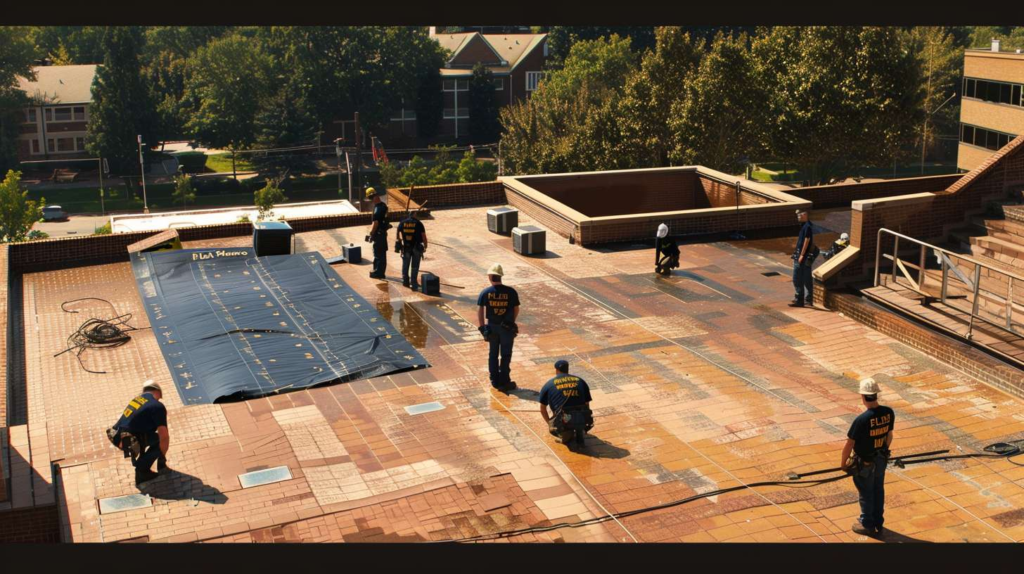
A flat commercial roof with EPDM rubber membrane being installed by workers on top of a modern business building.

Decision Tree: Choosing the Right Flat Roofing Material - One Variable at a Time

1
Is ponding water already an issue on this roof?
YES
Drainage correction must come first. No membrane performs well under chronic standing water. Prioritize drain regrading, scupper clearing, or tapered insulation before finalizing material choice. Systems like PVC tolerate incidental ponding better than others, but none are designed for neglected drainage.

NO
Good. Move to the traffic question below.

2
Will technicians, supers, or tenants walk this roof regularly?
YES
Favor systems with stronger puncture resistance - TPO and PVC both hold up well with proper walkway pad placement. Budget a dedicated traffic path into the scope from the start, not as an afterthought.

NO
Move to the budget horizon question.

3
Is the owner prioritizing lowest upfront cost or longest service life?
COST
Modified bitumen can enter the conversation here - provided installation quality is tight and seam work is done right. A low upfront number backed by poor detailing still costs more over time.

LIFE
Compare PVC, TPO, and EPDM directly. PVC leads on chemical resistance and seam strength. TPO is the current value-performance leader. EPDM is reliable long-term on simple roofs with minimal penetrations.

4
Is the building a restaurant, laundromat, or any property with grease, exhaust, or chemical exposure?
YES
Flag PVC for a serious look. Its chemical resistance is a real differentiator around exhaust stacks and HVAC discharge zones - not just a marketing point.

NO
Continue to insulation type, attachment method, and flashing complexity review with your contractor.

Map the Main Flat Roof Materials Against Real Queens Conditions

What Each System Is Really Good At

Here's my opinion, plain as day: a good material in the wrong assembly is still the wrong roof. Queens buildings span a wider range of conditions than most people outside the borough realize - small two-family homes in Ridgewood, mixed-use storefronts along Junction Boulevard, parapet-heavy rooflines in Astoria, HVAC-crowded commercial rooftops in Elmhurst, and rear-drain layouts that back up every time someone forgets to call for drain cleaning. I'm Rosa Mendez, with 22 years of flat roofing experience diagnosing leak-prone low-slope roofs across Queens, and what I can tell you is that TPO, PVC, EPDM, modified bitumen, and built-up roofing all have a home in this borough - none of them is universally correct.

I learned this the hard way on a sticky August service call in Astoria. A property manager had pulled me in front of two arguing board members - one wanted the cheapest number, the other wanted the longest service life - and neither one had looked down at the roof itself. The HVAC contractor had already chewed through half the existing walkway pads, and the membrane underneath was showing stress near every equipment curb. That afternoon made clear that the material debate was secondary. Foot traffic, service paths, and rooftop activity had already decided which systems could realistically survive on that building.

Where Owners Misread the Tradeoffs

Material Typical Best Fit Main Strength Main Weak Spot Traffic Tolerance Drainage Sensitivity Maintenance Expectation
TPO Commercial and mixed-use, energy-conscious owners Heat-welded seams, reflective surface, solid puncture resistance Formulation quality varies by brand; cheaper grades age inconsistently Moderate-High with walkway pads Moderate - seams hold ponding better than open-lap systems Annual seam and flashing inspections
PVC Restaurants, laundromats, any grease/chemical exposure Superior chemical resistance, strong welded seams, fire-rated options Higher upfront cost; plasticizer migration in older or off-brand products Moderate-High with proper pads Low - handles incidental ponding better than most Low maintenance if properly installed; biannual checks sufficient
EPDM Residential, simple low-traffic roofs, stable geometry Proven long-term durability, UV stability, flexible in cold temps Lap seams require adhesive; dark surface absorbs heat without coating Low - soft surface scratches and punctures under regular traffic Moderate - seam adhesive is vulnerable if water sits persistently Inspect lap seams and flashings every spring and fall
Modified Bitumen Smaller residential and light commercial; budget-constrained projects Familiar to many installers; repairability is straightforward Seams depend heavily on installer technique; UV degradation without coating Moderate - granule surface offers some protection High - poor drainage accelerates seam failure and blister formation Regular drain cleaning and seam checks; recoating cycle every 5-7 years
Built-Up Roofing (BUR) Large commercial, heavy-use rooftops, high puncture risk Multi-layer redundancy, excellent puncture resistance, proven track record Heavy, slow installation, harder to diagnose leaks through layers High - gravel surface handles traffic and equipment staging well Moderate - ballasted gravel can clog drains if poorly maintained Drain maintenance critical; surface inspection requires experience

Flat Roof Materials: Pros & Cons by Owner Priority
Material Pros Cons
TPO
  • Heat-welded seams outperform adhesive under ponding
  • Reflective white surface reduces cooling load
  • Strong puncture resistance with quality brands
  • Wide installer base in Queens market
  • Brand formulation inconsistency - not all TPO ages the same
  • UV degradation accelerates on lower-grade products
  • Installer skill level affects seam quality significantly
PVC
  • Best-in-class chemical and grease resistance
  • Strong welded seams with long track record
  • Fire-rated options available
  • Low maintenance cycle when installed correctly
  • Higher material cost than TPO or mod-bit
  • Plasticizer loss over time in aging membranes
  • Fewer experienced installers compared to TPO
EPDM
  • Decades of proven performance on residential roofs
  • Excellent cold-weather flexibility
  • UV stable without requiring a reflective coating
  • Cost-effective on simple, low-penetration layouts
  • Adhesive lap seams are a chronic weak point
  • Dark surface absorbs heat - adds cooling burden
  • Puncture-prone under regular foot traffic
  • Repair patches visible and prone to edge lifting
Modified Bitumen
  • Repairability is straightforward for experienced crews
  • Lower upfront cost on smaller jobs
  • Granule surface adds some UV and traffic protection
  • Familiar to a large pool of local installers
  • Seam quality is heavily installer-dependent
  • Ponding accelerates seam and blister failure
  • Requires periodic recoating to slow UV degradation
  • Coated surface masks seam fatigue - easy to miss
Built-Up (BUR)
  • Multi-layer redundancy is genuinely effective
  • Handles heavy traffic and equipment staging well
  • Gravel ballast adds thermal mass and puncture protection
  • Repairable without full tear-off in many cases
  • Heavy - not suitable for all structural loads
  • Leak source diagnosis is harder through multiple layers
  • Gravel can migrate and clog drains without maintenance
  • Slower and messier installation than single-ply systems

Pressure-Test Your Roof Assembly Instead of Falling for Labels

If I were standing with you by the hatch, the first thing I'd ask is: who's going to walk on this roof, and how often? That one question changes the shortlist more than almost anything else. An HVAC crew that services rooftop equipment twice a month needs a different membrane solution than a roof nobody touches between annual inspections. Don't skip this: inspect around service paths and equipment zones before you inspect open field membrane - that's where punctures, scuffs, and stress fractures cluster long before the undisturbed sections show any sign of wear. Drag paths, staging spots, and the area six inches off every curb are where the damage tells the real story first.

Now change one condition, and the answer changes with it.

🦺 High-Traffic Roof Priorities
  1. Puncture resistance - select membrane and mil thickness with foot traffic in mind
  2. Walkway design - dedicated pads from hatch to every equipment curb, no exceptions
  3. Seam protection near equipment - extra overlap or cover strip detail at curbs and penetrations
  4. Repair accessibility - choose a system your crew or a local contractor can patch quickly without specialty tools
🏠 Low-Traffic Roof Priorities
  1. Energy performance - reflective surface matters more when traffic isn't a factor
  2. Seam quality - welded seams preferred over adhesive laps for long unattended service life
  3. Drainage consistency - keep drains clear; low-traffic roofs are often also low-inspection roofs
  4. Maintenance simplicity - choose a system that's forgiving if inspections slip by a season

⚠ Warning: A Clean Surface Is Not a Healthy Roof

A recently coated or freshly patched flat roof can still have failed seams underneath, saturated insulation, weak base flashings, and unresolved ponding - and none of that shows up from ten feet away. Coating a roof refreshes the surface. It does not reset the assembly beneath it.

If the underlying structure is already failing, a coating buys time at best and masks the damage at worst. Before any new membrane goes down, the existing assembly - insulation moisture content, flashing terminations, drain integrity - needs an honest read.

Test the Failure Points Queens Owners Usually Miss

Why Leaks Often Show Up Far From the Actual Defect

Blunt truth - some roofing materials for flat roofs fail on paper only because nobody priced the maintenance honestly. A 25-year membrane with deferred drain cleaning and missed seam inspections will leak in year nine. A well-installed modified bitumen roof with disciplined semi-annual maintenance will outlast a premium single-ply that nobody ever looks at after install day. The brochure lifespan assumes you're cleaning drains after every major storm, catching edge metal that's starting to lift, and fixing small seam issues before they become wet insulation. That's not a small assumption.

Picking from a flat roofing materials list without looking at drainage is like grading a lab before you run the experiment. I remember standing on a torch-down roof in Ridgewood at 6:40 in the morning, coffee still too hot to drink, while a deli owner on Jamaica Avenue insisted his roof was "basically new" because it had been coated twelve months earlier. The surface looked clean. But the seams were fatigued, and the ponding around the rear drain said everything the coating had quietly covered up. That job is the reason I don't let drainage go undiscussed in any materials conversation. And the Elmhurst call I got after a Sunday thunderstorm made the same point from the other direction - the owner was certain the skylight was leaking because that's where the bedroom stain appeared. I cut a small test section near the parapet instead, and the water had traveled several feet along the substrate from a failed base flashing detail nobody had touched in years. Visible leak location and actual leak source are rarely the same address on a flat roof.

Myth vs. Fact: Common Assumptions About Roofing Materials for Flat Roofs
Myth Fact
The most expensive membrane is always the best choice. A premium membrane installed with poor flashing details, wrong insulation attachment, or inadequate drainage correction will fail early. Assembly quality and material selection work together - neither one saves the other.
A white roof automatically means lower long-term cost. Reflective membranes do reduce cooling loads, but energy savings depend on insulation R-value, building use, and HVAC efficiency. A white TPO on an under-insulated deck saves less than people assume - and costs money if seams fail due to poor installation.
Coating a roof makes it basically new. A coating refreshes UV protection and surface appearance. It does not repair tired seams, reverse insulation saturation, or fix base flashing failures. If the assembly underneath is failing, the coating is just a delay - and sometimes an expensive one.
A leak stain marks the exact source of failure. Water travels. It enters through a breach at the parapet or a failed flashing edge, migrates through the insulation layer, and appears as a stain several feet away - often at a low point, a ceiling fixture, or a wall corner that has nothing to do with the actual entry point.
Any flat roof material performs the same if installed neatly. Neat field membrane tells you very little. The failure points are always at seams, terminations, penetrations, and edge metal - details that require material-specific technique. A tidy-looking roof can still have seams that weren't welded to temperature spec or flashings that aren't properly embedded.

Maintenance Schedule That Protects Flat Roof Material Performance
Interval Task Why It Matters
After Major Storms Check drains and scuppers for blockage; visually inspect flashing at parapets and penetrations for stress or lifting Storm debris clogs drains fast. Ponding that develops overnight puts immediate pressure on seams and flashing terminations.
Spring Inspect seams across the entire field; check edge metal and counter-flashings; clear winter debris and test drainage flow Freeze-thaw cycles in Queens winters can open seam edges and lift edge metal. Spring is when those failures become leaks if missed.
Summer Review HVAC traffic paths and walkway pad condition; check membrane around equipment curbs for scuffing or displacement Summer is peak HVAC service season. Contractor traffic without a clear walkway path causes most warm-weather punctures and seam stress.
Fall Clear leaf and debris accumulation from drains and scuppers; re-test drainage flow before winter Blocked drains entering winter mean ice dams and standing water at the worst possible time - when membrane seams are least flexible.
After Any Contractor Work Walk the full service path; inspect for punctures, displaced walkway pads, or tools left near penetrations Roofing and mechanical contractors are the number one source of post-repair punctures. A five-minute inspection saves a water-damage insurance claim.

Use These Short Answers to Make the Final Call

Before you compare materials side by side, confirm the drainage pattern on your specific roof, identify who's walking it and how often, count the penetrations, look hard at the flashing complexity at parapets and edges, and be honest about your maintenance willingness. Run through those five variables first, and the right material usually narrows itself down without needing a long debate. That's how Flat Masters approaches every roof assessment - conditions first, materials second.

Frequently Asked Questions: Flat Roofing Materials in Queens

What is the most durable flat roofing material for a Queens commercial building?
PVC and TPO both deliver strong long-term performance on commercial buildings when installed correctly. PVC leads on chemical resistance and seam strength - worth it if the building has restaurant exhaust or rooftop chemical exposure. TPO is the more common commercial choice for value and energy performance. Built-up roofing is still the right call on heavy-traffic commercial rooftops where puncture redundancy matters more than energy efficiency.

Is TPO or modified bitumen better for a small mixed-use property?
It depends on drainage and traffic, not on the material by itself. If the roof has good drainage, limited foot traffic, and the owner wants a longer service life with less maintenance, TPO is usually the better long-term investment. If the budget is constrained and drainage is being corrected at the same time, a well-installed modified bitumen can perform well - provided the seam work is done right and drain maintenance is actually scheduled going forward.

Which flat roof material handles foot traffic best?
No membrane is designed to be a walking surface - that's what walkway pads are for. With proper pad installation, TPO and PVC both handle regular foot traffic well. Built-up roofing with a gravel ballast surface is genuinely the most forgiving under heavy or uncontrolled traffic. EPDM is the least forgiving; it's soft and shows wear around equipment zones faster than the others.

Can I keep my current insulation and just change the membrane?
Sometimes yes, sometimes no. If the existing insulation is dry, structurally sound, and the right R-value for current energy code, keeping it makes economic sense. But insulation that has absorbed moisture - even partially - needs to come out. Leaving wet insulation under a new membrane traps moisture, causes the deck below to deteriorate, and voids most manufacturer warranties. A moisture scan or core test before any re-roofing decision is worth the cost.

How do I know whether drainage problems make my material choice irrelevant?
If you have chronic ponding - water that sits 48 hours or more after rain - drainage correction is not optional. No membrane performs to spec under persistent standing water, and selecting a premium material without fixing the drainage is just a more expensive way to get the same leak. Drainage correction through regrading, tapered insulation, additional drains, or scupper upgrades has to come first. Then the material conversation is worth having.

✅ Before You Call for a Flat Roofing Material Recommendation - Verify These 6 Things
  • 1
    Where water ponds after rain - note which areas hold water for more than 24-48 hours and how close they are to drains or scuppers
  • 2
    Who accesses the roof regularly - HVAC techs, supers, tenants, delivery staging? How often and through which hatch or access point?
  • 3
    Age of the current roof - installation year if known, plus any known repair or recover history
  • 4
    Whether leaks appear near parapets or penetrations - interior stain location matters less than where the water is likely entering the assembly
  • 5
    Presence of restaurant exhaust or chemicals - any grease exhaust vents, laundry discharge, or chemical storage near HVAC equipment on or near the roof
  • 6
    Whether prior patches or coatings were applied - how recently, what product, and whether any seam work was included or just surface treatment

The right flat roofing material is always the one matched to your building's actual conditions - drainage, traffic, edge details, and maintenance reality - not the one that sounds best in a comparison article. Call Flat Masters for a roof-specific recommendation based on exactly those variables, not guesswork - we've been doing this work across Queens for a long time, and we'd rather give you the honest answer upfront than chase a leak two years from now.

Faq’s

Flat Roofing FAQs: Everything Queens, NY Homeowners Need to Know

How much should I expect to pay for a new commercial flat roof?
Most commercial flat roofs cost $8-12 per square foot installed, depending on material choice. EPDM runs $8-12, while premium PVC can reach $10+ per square foot. For a typical 5,000 sq ft building, budget $40,000-$60,000 total. Energy savings from cool roofs can offset higher upfront costs over time.
Consider your building’s specific needs: budget, energy efficiency goals, and expected lifespan. EPDM works great for most applications, TPO saves on cooling costs, while PVC handles chemical exposure. Our article breaks down each material’s strengths to help you choose the best option for your situation.
Delaying replacement leads to water damage, mold, structural issues, and much higher repair costs. A small leak can quickly become a $50,000+ problem affecting inventory, equipment, and business operations. Acting early saves money and prevents emergency situations that disrupt your business.
Commercial flat roofing requires specialized equipment, proper training, and licensing. Poor installation voids warranties and creates liability issues. Professional installation ensures proper seam welding, drainage, and building code compliance. The cost of fixing DIY mistakes often exceeds professional installation costs.
Most commercial flat roof installations take 3-7 days depending on size and weather. A typical 5,000 sq ft roof takes about 4-5 days with good weather. Complex buildings with lots of penetrations or multiple levels take longer. Weather delays are common, so plan accordingly during your busy season.

Ask Question

Or

Commercial Flat Roof Replacement Cost - Get Your Free Estimate

6 min read

What Causes Flat Roof Leaks? The Most Common Reasons Explained

5 min read

How Much Area Does Your Flat Roof Cover? Here's How to Measure It Accurately

13 min read

The Details Are What Make a Flat Roof Work - Here Are the Ones That Matter Most

17 min read

How to Slope a Flat Roof for Better Drainage - We Handle It All

9 min read

How to Remove Flat Roof Felt: Professional Step-by-Step Guide

5 min read

How to Fix a Flat Roof on a House: Expert Solutions & Tips

8 min read

How to Prevent Snow Buildup on Flat Roof: Expert Tips & Solutions

7 min read

Professional Flat Roof Plywood Replacement Services Near You

8 min read

What's the Average Flat Tile Roof Cost for Your Home?

7 min read

How to Keep Snow Off Flat Roof: 5 Essential Methods That Work

7 min read

The Details Are What Separate a Good Flat Roof From One That Fails in a Few Years

18 min read

Shingles Won't Lie Flat on a Low-Pitch Roof - And Here's Exactly Why

14 min read

There's More Than One Way to Drain a Flat Roof - And the Choice Matters a Lot

15 min read

What to Do When Your Flat Roof Blown Off During Storm Season

7 min read

Professional Rubber Flat Roof Coating Services Near You

6 min read

Hail Hit Your Flat Roof? Here's How to Check the Damage Before Calling Anyone

16 min read

Felting a Flat Roof Is a Skilled Job - Here's What a Proper Service Delivers

15 min read

Which Flat Roofing System Is Best for a House? Here's the Homeowner's Guide

13 min read

Building a Flat Roof for an Extension? Here's What the Build Really Involves

16 min read

That Flat Roof Over the Extension Could Become a Deck - Here's How to Get There

14 min read

Not All Flat Roof Companies Are Equal - Here's How to Tell the Good Ones Apart

13 min read

Which Roofing Felt Is Right for a Flat Roof? The Options Aren't All the Same

14 min read

Replacing Tar and Gravel With Something Better - Here's What Your Options Are

17 min read

Professional Flat Roof Summerhouse Installation & Repair Services

10 min read
blue circle

Get a FREE Roofing Quote Today!

Schedule Free Inspection