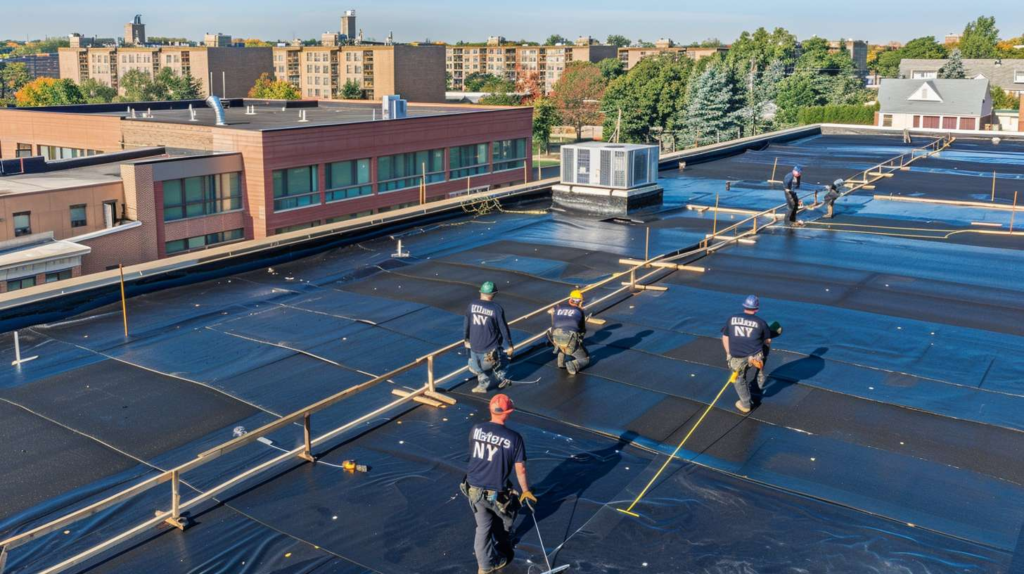
What Does Flat Roof Maintenance Actually Cost? And Is It Worth Paying For?
Annual maintenance is usually cheaper than one avoidable roof surprise
I honestly suspect the cause is different when owners push back on flat roof maintenance cost - it's not that they think roofs are invincible, it's that nobody's ever shown them the math side by side. A typical annual maintenance plan for a flat roof in Queens runs somewhere between $300 and $900 per year, depending on roof size and scope. One mid-sized neglect-driven repair - a blown seam, a blocked drain that ponded all winter, edge deterioration nobody caught - routinely lands between $1,200 and $3,500. That gap is the entire argument.
For most small-to-midsize roofs, here's the annual maintenance range worth knowing: two scheduled visits, drain clearing, seam inspection, edge checks, and a written condition report. What it usually does not include is active repair work - that's priced separately if something needs correction. I'm Bev Kline, and with 19 years helping Queens owners compare cheap visits, expensive surprises, and avoidable nonsense before the roof teaches the lesson again, those three columns are exactly how I think about every maintenance conversation. They keep the logic concrete: what you're paying for, what you're preventing, and what happens when you skip it.
Flat Roof Maintenance Cost: Typical Annual Scenarios
Preventive costs - not rescue costs. These ranges reflect routine care, not emergency response.
| Scenario |
Typical Maintenance Scope |
Annual Range |
What This Plan Is Trying to Prevent |
| Small residential flat roof |
One annual checkup, drain clearing, seam and edge scan |
$300 - $500 |
Missed early seam separation and ponding from clogged drains |
| Modest roof, two scheduled visits |
Spring and fall visits, debris removal, written condition report |
$500 - $750 |
Seasonal debris buildup causing drain backup and edge wear going undetected |
| Mixed-use roof with more detail points |
Two visits, penetration checks, equipment curb inspection, coating review |
$700 - $1,100 |
Rooftop equipment traffic wearing through surface details; seam fatigue around penetrations |
| Garage roof maintenance cycle |
Annual visit, edge and parapet check, drain or scupper clearing |
$250 - $450 |
Debris-driven ponding at edge; small leak turning into structural issue nobody catches |
| Maintenance + minor corrective touch-ups |
Routine visit plus small sealant corrections or minor membrane patches caught during inspection |
$750 - $1,400 |
A $200 seam correction during a visit versus a $2,000+ repair when that seam fails on its own schedule |
One Year of Maintenance vs. One Mid-Sized Neglect-Driven Repair
| Comparison Point |
Routine Maintenance Spend |
Reactive Repair Spend |
| Spend predictability |
Fixed annual range you can plan for |
Unknown until it shows up - usually at the worst time |
| Surprise factor |
Low - problems identified while they're small |
High - often discovered during rain, post-storm, or after interior damage |
| Interior-risk reduction |
Drains, seams, and edges checked before water finds a path inside |
Interior damage often already present by the time repair is triggered |
| Drain and seam care |
Cleared and inspected on schedule, not after failure |
Addressed only after ponding, backup, or visible separation |
| Documentation value |
Written condition reports build a roof history - useful for insurance and resale |
No history, no baseline - just a repair invoice and no context |
| Overall financial logic |
$300-$900/year to stay in control |
$1,200-$3,500+ per avoidable event |
Quiet roofs still leave clues before they leave bills
Most maintenance value lives in the problems that have not become dramatic yet
I still remember that landlord asking if maintenance was just a made-up fee. It was a cool September morning in Astoria, and to his credit, the roof looked fine from the ground. Then I got on it and found leaf buildup packed around two drains, a couple of seam issues just starting to lift at the edge, and foot-traffic wear near the HVAC equipment that hadn't become a leak yet - but absolutely would by March. I remember telling him, "You're not paying for cleaning. You're paying for catching the roof while it's still speaking quietly." He booked two visits a year from that point on.
Roof maintenance works like grocery-case service - ignore the quiet warning signs, and the expensive failure doesn't ask permission. Queens low-slope roofs deal with a specific combination of pressures: drain debris from street trees along streets like Skillman Avenue and throughout Woodside, rooftop equipment traffic from HVAC units that get serviced regularly but rarely inspected for the wear they leave on the membrane around them, and minor seam fatigue that only shows itself to someone who's actually up there looking before the trouble gets loud. The routine maintenance cost that feels optional in September tends to feel obvious in January when the ceiling is wet.
What Routine Maintenance Often Catches Before It Turns Into Repair Work
| Condition Caught Early |
What Maintenance Does |
What Neglect Tends to Turn It Into |
| Drain blockage |
Clear debris, check flow rate, inspect drain ring and clamping |
Ponding water that stresses the membrane and surrounding structure - often $800-$2,500 to fix properly |
| Beginning seam separation |
Identify early lift, apply sealant or re-weld while the seam is still in position |
Full seam failure and active interior leak - repair cost jumps to $1,500-$3,000+ depending on scope |
| Edge and parapet wear |
Check flashing terminations, coping, and edge metal for movement or separation |
Water tracking behind the edge detail and saturating the wall assembly - expensive and slow to dry out |
| Coating fatigue |
Flag areas where reflective or protective coating is thinning before the membrane is exposed |
UV degradation of the membrane itself - turns a recoat job into a full membrane replacement |
| Foot-traffic abrasion |
Document service paths near equipment, note surface wear, recommend walk pads where needed |
Membrane puncture or thinning that lets water in at the most-trafficked spot on the roof |
| Skylight or curb detail aging |
Inspect flashing and sealant at all penetrations - skylights, vents, pipe boots |
Leak path directly into interior at a penetration point, often misdiagnosed and repaired twice before it's actually solved |
⚠ Don't Wait for the Roof to Make It Obvious
Visible drama - a ceiling stain, standing water after rain, a bubbled section of membrane - is not the right trigger for action. By the time a flat roof announces itself that clearly, the problem has already been working quietly for weeks or months. Drains block gradually. Seams separate slowly. Edges lift a little at a time. The roof isn't hiding anything from you; it's just not loud about it. That's exactly why scheduled eyes on the roof matter - not after something goes wrong, but before the quiet problems decide to become expensive ones.
Emergency repair math is ugly because delay adds penalty pricing to the original problem
Before we argue about flat roof maintenance cost, what did the last surprise repair cost you? That's the fairest comparison point - not some hypothetical, but your actual emergency repair history. A mid-sized seam failure after a winter storm, a drain backup that soaked insulation, an edge issue that let water into a wall: any one of those typically costs more than two or three years of routine maintenance combined. The math isn't complicated. It's just easier to ignore when the roof is quiet.
Here's the blunt truth: deferred maintenance is just premium-priced maintenance later. I had a mixed-use owner in Ridgewood call me after a hard winter storm - he wanted to lay out one year of flat roof maintenance costs next to what he'd actually spent on emergency repairs over the previous two years. It was gray, windy, and the comparison was exactly as ugly as you'd expect. Two emergency calls, one interior remediation visit, and one repeat repair on the same drain area. Once I put those numbers in three columns - cheap visits, expensive surprises, avoidable nonsense - he could see immediately that he'd been financing avoidable surprises at emergency rates. That conversation is exactly why I think every owner deserves to see this pattern before the roof teaches it again.
My opinion? Maintenance sounds boring right up until the repair invoice shows up. That's not cynicism - that's just pattern recognition after 19 years. And here's the insider detail worth writing down: if you've spent money twice on the same roof area or detail, stop and ask whether you're paying for repeat rescue instead of routine preventive care. One emergency visit can be bad luck. Two in the same spot is a maintenance gap pretending to be a repair problem.
What Owners Get Wrong About Flat Roof Maintenance Costs
| Myth |
Fact |
| "Maintenance is just a contractor subscription fee." |
It's structured early-detection. The fee buys a trained set of eyes before small problems charge you full repair rates to fix them. |
| "If the roof isn't leaking now, maintenance can wait." |
Most of what maintenance catches has not leaked yet. Waiting for a leak means paying to fix the damage the leak caused, not just the seam that let it in. |
| "Emergency repair is more honest - you only pay when something's actually wrong." |
Emergency pricing is penalty pricing. You pay a premium for urgency, scope that's grown larger than it needed to be, and repairs that sometimes have to be redone because the root cause wasn't caught early. |
| "Small roofs like garages don't need maintenance." |
Small roofs have the same failure points as large ones - drains, seams, edges - just less square footage to spread the repair cost across. A $1,800 repair on a 400-square-foot garage roof hurts proportionally more, not less. |
| "One skipped season doesn't change much." |
In Queens, one missed winter prep means one freeze-thaw cycle working on an uncleared drain or an unchecked seam. That's often all it takes to move a small problem into the expensive column. |
When Maintenance Stops Being Optional and Starts Being Rescue Work
-
✔
Recurring leak in the same area - if you've patched the same spot twice, you're not maintaining; you're managing a failure that needs a real look.
-
✔
Debris-driven ponding - standing water that's still there 48 hours after rain means drainage is compromised and the membrane is under sustained stress.
-
✔
Repeated drain trouble - one blocked drain is seasonal debris; repeated blockages suggest a structural or slope issue that routine clearing alone won't solve.
-
✔
Edge softness or movement - if the edge flashing or coping shifts when you press it, water has already been working behind it longer than you'd like to know.
-
✔
Multiple emergency visits in two years - that's not bad luck; that's a roof that needed a maintenance plan 24 months ago and is now charging you emergency rates to compensate.
-
✔
Visible wear around details that should have been caught in routine care - cracked sealant at pipe boots, lifted membrane at curbs, or split flashings are all things a maintenance visit finds before they become leak investigations.
Small roofs are where false economy gets exposed fastest
A little garage still knows how to send a very adult repair bill
For most small-to-midsize roofs, here's the annual maintenance range worth knowing - and I'm not repeating that as filler, I'm repeating it because a garage roof in Sunnyside made it impossible for me to forget. The homeowner told me it was just a little garage, barely worth the maintenance fee. Then spring came, debris sat wet at the edge all winter, and a small issue turned into repair work that cost more than several routine visits stacked together would have. I still remember standing in the driveway next to a bag of mulch while I explained that maintenance isn't about preventing drama. It's about low-cost corrections while the roof still gives you the chance to make them. Small roofs don't get small repair bills. They just have fewer square feet to justify why the bill feels that large.
Open the Three Columns
💸 Cheap Visits
Cheap visits are scheduled maintenance inspections that find drain blockages, early seam movement, and surface wear while they're still inexpensive to address. Paying $300-$900 a year to stay in this column is the whole point of a maintenance plan - it's the only column where you control the timing and the cost.
This is where Flat Masters spends most of its time with clients, and honestly, it's the most boring column financially - which is exactly why it works.
🚨 Expensive Surprises
Expensive surprises are what happens when a seam that was quietly separating for six months finally fails in February, or a blocked drain ponds all winter and the membrane gives out before anyone notices. These are $1,200-$3,500+ repairs on problems that started cheap and got promoted.
The frustrating part isn't the cost - it's that every expensive surprise started as a cheap-visit item that nobody caught in time.
🗑️ Avoidable Nonsense
Avoidable nonsense is the category nobody wants to admit they're in - paying for the same repair twice, calling for emergency service on a problem that was visible at the last visit, or replacing a membrane years ahead of schedule because routine care never happened. It costs the most and delivers the least.
Every dollar spent on avoidable nonsense is a cheap-visit budget that got reassigned to the wrong column through inaction.
Frequently Asked Questions: Flat Roof Maintenance Cost
▶ What does flat roof maintenance cost in a typical year?
For most flat roofs in Queens, routine annual maintenance runs between $300 and $900, depending on roof size, number of visits, and how many detail points - drains, penetrations, edges - need to be checked. Roofs with rooftop equipment or multiple drainage points typically sit in the upper part of that range. Plans that include minor corrective touch-ups during the visit can reach $1,400, but that still compares favorably to a single emergency repair call.
▶ Is flat roof maintenance really worth paying for?
Yes - but not because visits are glamorous. They're worth paying for because the problems they catch cost $200 to fix during a maintenance call and $2,000+ to fix after they fail on their own timeline. The value isn't the visit. It's the early detection of drain blockages, seam movement, edge wear, and foot-traffic damage before any of those issues become emergency line items.
▶ How do I compare maintenance cost with repair cost honestly?
Pull your last two years of repair invoices and add them up. Then compare that number to what two years of a maintenance plan would have cost. If the repair total is higher - which it usually is - you've been financing avoidable problems at emergency rates. The honest comparison isn't maintenance versus nothing; it's maintenance versus your actual repair history.
▶ Why would a small garage roof need routine maintenance?
Because it has the same failure points as any flat roof - drains or scuppers that clog, seams that separate, and edges where water finds a path - just less square footage. A $1,500 repair on a 400-square-foot garage roof isn't proportionally smaller than a repair on a larger roof. The maintenance cost is lower for a small roof, which makes skipping it an even worse financial decision relative to what a single repair costs.
▶ What signs mean maintenance has already turned into rescue work?
Watch for: a recurring leak in the same spot, standing water 48+ hours after rain, repeated drain issues across multiple seasons, edge softness or movement, more than one emergency repair call in two years, or visible wear at penetrations and details that should have been caught during routine care. Any one of those is a signal that the roof has graduated from maintenance territory into rescue territory - and rescue is always the more expensive zip code.
If you'd rather keep your roof in the cheap-visits column than wait for it to graduate into expensive surprises, call Flat Masters and let's put together a maintenance plan that actually makes sense for your building. We're here in Queens, and the math is a lot easier before the roof makes it urgent.
- Bev Kline, Flat Masters