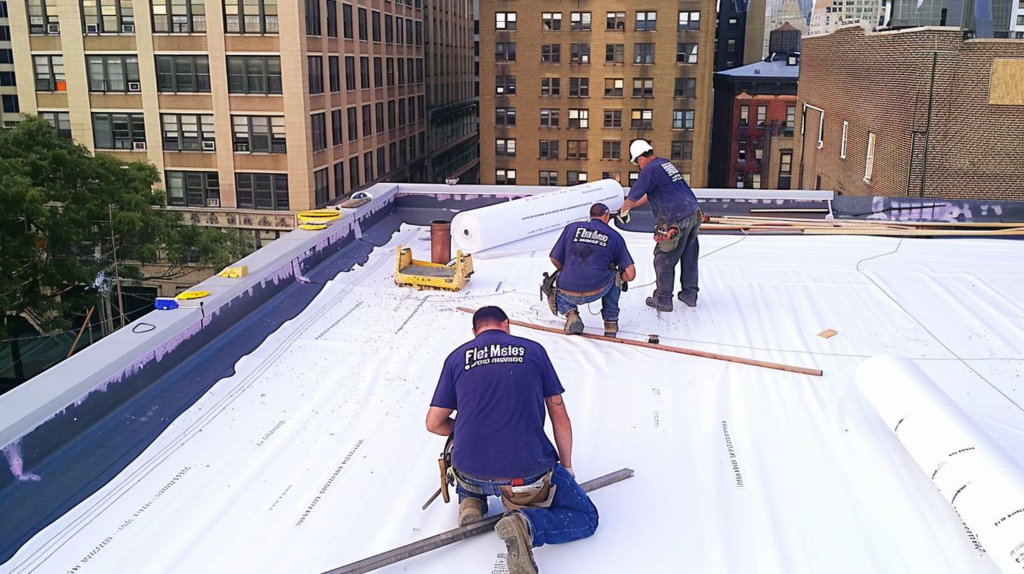
Building Up on a Flat Roof - What's Involved in Adding a Second Storey
You're not here for a sales pitch. Usually, when people ask "can you build on a flat roof," the answer is already being decided by something they can't see from the sidewalk: the joists, the wall framing, the foundation depth, the drainage setup, and whether that roof sits over the original house or a rear extension someone bolted on in 1987. The membrane - the part everyone points at - is almost never the gatekeeper.
What decides the project before design even starts
Start with the joists, not your Pinterest board. Think of it this way: put a baking tray flat on your hands, then pile dinner plates on top. The tray stays level right up until your wrists give out - and from above, nothing looks wrong until everything does. That's how load transfer works on a flat roof. The surface can look perfectly fine while the framing below it is already working at its limit. Building a second floor on a flat roof isn't a question about the roof's appearance; it's a question about what the structure underneath was designed to carry and what it's actually carrying right now.
I still remember standing on a two-family in Sunnyside at 7:15 in the morning, steam rising off the black roof after a cold night, while the owner pointed at his perfectly flat ceiling and said, "See? Solid as a rock." Ten minutes later, after I showed him where the joists had been sistered badly in the 90s, he went quiet. A flat ceiling tells you almost nothing. Old alterations, patchwork framing, walls removed without proper headers - none of that shows up in a visual scan. That was the day I started telling people that the roof membrane is almost never the main story. The framing under it is.
Can You Build a Second Floor on Your Flat Roof? A Simple Framework
1
Is the property legally allowed to add height or floor area at this Queens location?
No → Stop here. Consult a zoning attorney or architect before spending a dollar on design.
Yes → Move to Step 2.
↓
2
Does a structural engineer confirm the current framing and foundations can carry added loads - or can they be upgraded?
No → Major structural redesign likely needed. Project may be possible but costs rise sharply.
Yes → Move to Step 3.
↓
3
Is the flat roof over the main structure or over a later extension or rear add-on?
Extension → Elevated caution. Extension framing often wasn't built to carry a habitable level above it.
Main structure → Stronger baseline - still requires engineering. Move to Step 4.
↓
4
Can drainage, parapets, and temporary weatherproofing be managed during construction?
No → Redesign the construction plan before cutting into anything.
Yes → Project may be feasible pending permits and budget. Time to bring in the right team.
⚠ Don't mistake a walkable flat roof for a build-ready structure
Being able to stand on a flat roof, park an HVAC unit on it, or see zero ceiling cracks inside the building does not mean the structure can carry a second storey. Those things confirm the surface holds incidental loads - not that the framing system was designed for a new floor above it.
Hidden issues that won't announce themselves include: undersized or sistered joists, altered or removed bearing walls, shallow or compromised foundations, and extension roofs that were framed for light roof loads only - never for a habitable level above.
Load path, walls, and foundations: the part nobody sees from the street
Why the roof deck is not the same thing as structural capacity
On a roof in Elmhurst, this is usually where the conversation changes. Load path sounds like jargon, but it's just a question: when new weight lands on the new floor, where does it go? It travels from the new floor into joists or beams, then down into walls or columns, then into the foundation below grade. Every link in that chain has to be capable of handling what's above it - and this is where, as Marlene Velez with 19 years in flat roofing and structural coordination around Queens, I start looking past the membrane and straight at the load path. In Queens specifically, you're often dealing with older brick and masonry homes, mixed-era rear additions that were built by whoever was available at the time, and narrow lots where the foundation footprint doesn't leave much room for creative reinforcement. Block by block, what looks like a straightforward two-family can hide decades of patchwork decisions.
It works a lot like overloading a cheap bookshelf - fine, until suddenly not fine. You keep adding weight and nothing looks wrong until the shelf bows or the bracket pulls from the wall. Many rear extension roofs in Queens were framed for exactly one purpose: keeping rain out of a single story below. They were never meant to hold a full living level, its furniture, its occupants, and the new structural framing above. Assuming they can handle it without investigation isn't optimism; it's an expensive bet.
| Building Part |
What Gets Checked |
Possible Finding |
What It Usually Means |
| Roof Joists / Framing |
Size, span, spacing, and condition; signs of sistering or rot |
Undersized members or prior repairs using mismatched lumber |
New framing or full replacement likely required before building above |
| Bearing Walls |
Location, continuity from floor to floor, and any prior removals |
Wall removed without proper header or load redirect |
Load path is interrupted; structural correction needed before adding weight above |
| Foundation |
Depth, material (poured concrete vs. rubble/stone), and visible cracking |
Shallow footings or rubble foundation not rated for additional stories |
May require underpinning or significant reinforcement - a major cost driver |
| Columns / Posts |
Size, material, and whether they sit on proper footings |
Wood posts resting on concrete without anchor, or undersized steel |
New columns or footing pads required; may affect first-floor layout |
| Parapets |
Height, condition, flashing integrity, and tie-in to roof structure |
Low parapets that won't meet code once a second floor is added |
Parapets may need to be raised or rebuilt; affects drainage and flashing design |
| Drainage / Drains |
Drain locations, scupper condition, and roof slope toward outlets |
Single drain with no overflow; drains in locations incompatible with new framing |
Drainage plan must be completely rethought before construction begins |
▼ Documents and site clues that speed up the answer
What an engineer or architect may ask for before giving a real answer
- Original building plans - if they exist, they'll show original framing, spans, and intended loads
- Age of the house and any addition - pre-1940s masonry behaves very differently from a 1970s wood-frame extension
- Evidence of prior alterations - patched ceilings, mismatched floor levels, walls that end mid-span
- Basement or crawl space access - foundation material and depth are easiest to read from below
- Photos of parapets, scuppers, and roof drains - their condition and location affect the entire construction approach
- Signs of ceiling sag or interior cracking - not always structural, but always worth flagging before adding load above
- Whether the roof covers the original footprint or an addition - this single fact changes the scope of the structural investigation significantly
When the existing flat roof sits over an extension, the risk changes
One August afternoon in Jackson Heights, I was consulting on a flat roof extension for a family who wanted to add space for their growing household. Thunder was rolling in from the west, and the husband kept asking about skylights while I was focused on the parapet height and old patchwork drains. We got chased off by rain before the consult ended, and that job taught me how often people picture the new bedrooms and finishes before anyone has proven the original extension can carry more than a roofer and a ladder. The insider tip here is worth writing down: ask specifically whether the extension was built as habitable structure with proper bearing support, or whether it was just a rear add-on with lighter framing. The answer will tell you more than any visual inspection of the roof surface.
Here's the blunt part: building on top of a flat roof over the main house is a different proposition than building on top of a flat roof extension. Over the main structure, you're at least starting with framing that was sized to carry living loads across multiple levels. Over a rear add-on, you're often working with framing that was only ever intended to carry itself and a light roof load. That distinction drives reinforcement scope, cost, and timeline in ways that can surprise even experienced contractors.
Over the Main Structure
- Load path more likely to be continuous from roof to foundation
- Better alignment with existing bearing walls below
- Original framing sized for habitable loads - though age and alterations still matter
- Engineering still required - don't skip the investigation
- Generally fewer surprises in terms of framing scope
Over a Rear Extension / Add-On
- Framing frequently undersized - built for roof load only, not habitable floors
- Foundations under extensions are often shallower and less robust
- Drainage and parapet configurations often improvised at time of build
- Load path may not connect cleanly to the main structure's bearing system
- More extensive reinforcement work is the norm, not the exception
| Myth |
Reality |
| "Flat means easy to build on" |
Flat describes the roof geometry, not the structural readiness below it. A flat surface tells you nothing about joist size, foundation depth, or load capacity. |
| "If roofers walk it, it can hold a room" |
A roofer and their tools weigh a few hundred pounds spread across many points. A second storey adds tens of thousands of pounds concentrated into walls and columns. These are not comparable loads. |
| "The roof membrane is the main issue" |
The membrane is a waterproofing layer. It has nothing to do with structural capacity. Replacing or removing it is a relatively small part of the project. |
| "An old extension can just be strengthened from above" |
Reinforcement usually has to happen at the framing level and below - not just at the roof surface. Adding weight on top while hoping the structure below catches up is not a plan. |
| "Permits come after the design is picked" |
Zoning and permit constraints should shape the design from the start. Finding out your chosen design isn't allowed after you've paid for drawings is an expensive way to learn this. |
Sequence matters more than most homeowners expect
The order that keeps the project legal, dry, and less chaotic
If the crew starts cutting into the roof before the load path is settled on paper, the project is already sliding sideways.
I had a call in Maspeth at dusk - literally dusk, work lights already on the site - from an architect whose crew had opened part of the existing roof before anyone had confirmed how the load path would transfer down to the first-floor walls. The homeowner was furious, the exposed plywood was getting slick, and everyone suddenly needed a "quick roofing opinion." There was nothing quick about it. And honestly, that's not a horror story unique to one job; it's what happens when engineering, roofing, and permitting get treated as separate conversations instead of one coordinated sequence. The fastest way to make building a second floor on a flat roof more expensive is to let those three things drift apart. This isn't a roofing upgrade with extra steps - it's a structural project that happens to start at the roofline.
Best-Practice Order for Adding a Second Storey Over a Flat Roof
Zoning and Allowable Height / Floor Area Check
Confirm what NYC zoning allows at your specific address. FAR limits, height restrictions, and setback rules all affect whether the project is legal before a single drawing is made.
Structural Investigation of Framing and Foundations
A licensed structural engineer examines joists, bearing walls, columns, and foundation. This is the step that tells you what you're actually working with - not what you hope is there.
Concept Design Aligned to Structural Reality
Design happens after - not before - you know what the structure can support. Skylights, room layouts, and stair placement should all respond to what the engineering found, not the other way around.
Permit Drawings and DOB Approvals
Permitted drawings go to NYC DOB before any physical work begins. This process takes time - factoring it into your schedule from day one prevents the project from going sideways at the job site.
Temporary Roof Protection and Selective Opening Plan
Before any membrane gets cut, a weatherproofing plan needs to be in place. Tarps, temporary drainage, and a phased opening sequence protect the structure and the people living below it.
Structural Reinforcement and New Framing
This is the core construction phase: upgrading or replacing joists, adding columns or beams, reinforcing bearing walls, and erecting the new floor system. Everything from this point forward depends on getting this phase right.
Final Roofing, Drainage, Insulation, and Enclosure Details
New roof membrane, updated drainage, proper insulation, flashing at all transitions, and the full weathertight envelope. This is where the flat roofing work lives - and why having roofing and structural coordination in the same conversation from the start matters so much.
Before You Call: What to Have Ready
Gathering these before you talk to any contractor or engineer will cut a 30-minute conversation down to 10 - and get you a more useful answer faster.
- ✓ Property address - needed immediately for a zoning check
- ✓ Age of the house - pre-war masonry vs. postwar wood frame vs. newer construction each has different implications
- ✓ Whether the flat roof covers the original structure or an addition - this one fact changes the whole conversation
- ✓ Any old plans - even partial or faded ones are useful; check with DOB BIS online for filed drawings
- ✓ Photos of the roof surface, parapets, and drains - taken in good light, from multiple angles
- ✓ Any visible ceiling sag, interior cracking, or soft spots on the roof surface - note where they are, not just that they exist
- ✓ Whether you know of prior additions or wall removals - even vague recollections from neighbors or sellers are worth mentioning
Questions Queens homeowners usually ask before moving forward
If you were standing next to me with a coffee in your hand, I'd ask you one question first: are you trying to confirm possibility, budget, or design idea? Because those are three different conversations, and mixing them up early is like choosing a mug before you know whether you're making espresso or a full pot. Feasibility - the structural and zoning reality of your specific building - has to come before finishes, fixtures, or floor plans. Get the honest answer on what's possible first. Everything else follows from there.
Common Questions About Building on a Flat Roof in Queens
Can you build a second floor on a flat roof in Queens?
Yes - but "can you" depends entirely on your specific building, not flat roofs as a category. Zoning has to allow the added height and floor area, the structure has to be capable of carrying new loads (or be upgraded to do so), and permits have to be pulled before work starts. Some Queens properties clear all three hurdles without major issues. Others hit one early and require a redesigned approach. There's no blanket answer; there's only your address and your building.
Is building on top of a flat roof extension harder than over the main house?
Usually, yes - and often by a significant margin. Rear extensions in Queens were frequently built with lighter framing that was never intended to carry a habitable level above them. The load path is less predictable, foundation conditions under extensions tend to be shallower, and drainage setups are often improvised. That doesn't make it impossible, but it does mean the structural investigation needs to be more thorough and the reinforcement scope is typically larger.
Does the old roof get removed completely?
Not always all at once - and that's actually a critical planning point. The membrane and insulation system will likely need to come off the area being built over, but the sequencing of that removal has to be coordinated with structural work and temporary waterproofing. You don't want the entire roof surface open to weather while framing changes are being made below. A phased opening plan is part of a well-run project, not an afterthought.
Who decides if the structure can handle the weight?
A licensed structural engineer - not a roofer, not a general contractor, and not a visual inspection. The engineer will review framing members, bearing walls, column and beam connections, and foundation conditions, then produce stamped drawings that reflect what's actually there and what needs to change. That report is what permits and construction are based on. Don't skip it or try to shortcut around it.
Will I need permits and zoning review?
Yes, every time. Adding a second storey - whether over a flat roof or any other configuration - triggers NYC DOB review, structural permit filings, and zoning compliance checks. In many Queens neighborhoods, adding floor area also triggers a review of FAR (Floor Area Ratio) allowances and height limits. Any contractor who tells you this can be done without permits is telling you something you don't want to hear later when you're trying to sell or refinance the property.
Can people stay in the home during the work?
It depends on the scope and the phase of construction. During structural reinforcement and the period when the roof system is open, staying in the home is uncomfortable at best and unsafe at worst. A good project plan will identify which phases require temporary relocation and which don't. Don't make that assumption at the start - have the conversation with your contractor and engineer early so there are no surprises mid-project.
If you're weighing whether building a second floor on a flat roof in Queens is realistic for your property, call Flat Masters for a straight-talk feasibility conversation - one that starts with your structure, your roof conditions, and what the next honest step actually looks like. We're not going to tell you it's possible before we know it is. - Marlene Velez, Flat Masters