
How Often Does a Flat Roof Actually Need Recoating? Honest Answer Inside
Watch what happens after the next event instead of during it. That one shift in thinking changes everything about how you approach flat roof coating frequency - because the calendar on your wall has never once climbed up onto a Queens low-slope roof and checked how the surface actually held up after a summer storm worked it over.
Condition beats calendar when you are deciding whether it is time to recoat
Recoating schedules handed down like folklore - "every three years, every five years, just do it" - rarely account for what the coating has actually been through. Two roofs on the same block can age completely differently depending on foot traffic, drain placement, and how the sun and wind hit the field. The coating's performance after real weather exposure is a far more honest measure than any date circled on a maintenance sheet.
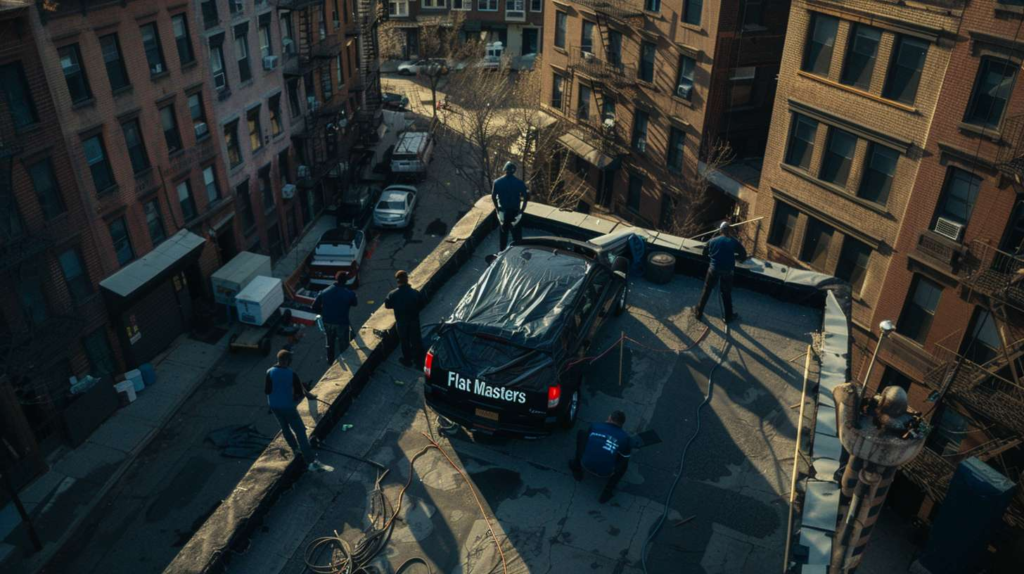
Before we decide how often should a flat roof be coated, what did the last weather cycle reveal? That question reframes the whole conversation, because a roof should be read after the stress has passed - once chalking, wear, seal fatigue, and traffic marks can be seen clearly, not while rain is still moving across the surface. I'm Felipe Mora, and I've spent 10 years assessing coating timing on Queens low-slope roofs by reading exactly what the surface looked like after weather and use had finished with it. That after-the-event evidence - what scuffed, what chalked, what stayed sealed, what looked quietly tired - tells you more in one walk-through than any generic coating schedule ever will.
Has the roof dried out after recent weather so you can actually read the surface?
Is the coating still performing evenly across the open field?
Are edges, penetrations, and service paths aging faster than the field?
Is there noticeable chalking, traffic scuffing, or inconsistent coating color across zones?
The roof tells the truth after the storm, not while everybody is still reacting to it
Dry weather is when the coating starts confessing
I still remember that owner wanting an answer while the roof was still wet. It was a July morning after a nasty overnight thunderstorm in Elmhurst, and he was standing up there with me wanting a definitive recoat answer before the puddles had even started to shrink. I told him to wait. Two days later, the roof dried and started telling the truth: chalking had appeared across the service path near the rooftop HVAC unit, the coating around both drains looked thin and fatigued, and the wear patterns you'd only see on a dry surface stood out clearly. That job is the clearest example I know for why flat roof coating frequency is easier to judge after the stress has passed.
Forty-eight hours after the storm is often more useful than the storm itself. Queens low-slope roofs are particularly good at hiding their problems under water - and then revealing them in sharp detail once everything dries out. After a heavy summer storm, drain approaches show their age, traffic scuffs become visible as the surface dulls, edges that looked sealed start to show separation, and any zone where the coating has grown thin loses its uniform color. That's the post-event site review that actually tells you where you stand on a recoat schedule.
- Wait for full drying - don't start your assessment until the surface is genuinely dry and pooling has cleared.
- Inspect field consistency - walk the open area and note any chalking, dull zones, or thinning that wasn't there during the last inspection.
- Inspect drains and drain approaches - check the coating around every drain for breakdown, softening, or wear that shows the coating is giving out under constant water exposure.
- Inspect edges and penetrations - look at perimeter edges, pipe flashings, curb wraps, and any detail where the coating terminates for seal fatigue or separation.
- Compare worn zones against performing zones - if the difference between best and worst areas on the same roof is significant, that gap drives your recoating scope and timing.
Neighbors and old habits give terrible maintenance advice when the roof is behaving differently than theirs
A coating schedule is a bit like post-event cleanup - you don't judge the setup by the noise during the show, you judge it by what looks worn after everyone leaves. One owner telling you they recoat "every few years" gives you exactly zero useful information unless you know their roof's sun exposure, how much foot traffic it gets, what the coating system is, and whether their drains are in the same shape as yours. Copying that schedule is like borrowing someone else's grocery list because you heard they eat well.
Here's the blunt truth: recoating too early wastes money, and recoating too late wastes roof. I walked a small warehouse in Maspeth on a windy October afternoon - the owner had heard his neighbor recoated every few years "just in case," and he wanted to know if he was behind schedule. His field was still performing decently, with consistent coating color and no major wear showing. But his edges and penetrations were quietly aging faster than anything else up there. That visit stuck with me because the answer wasn't "yes, recoat" or "no, wait" - it was "your edges need attention now and your field can wait, and those are two different conversations."
My opinion? Calendar-only coating advice is lazy maintenance. It skips the part where someone actually looks at the roof and reads what's happening. And here's the insider tip worth keeping: before any recoating recommendation means anything, ask which zones are aging fastest. The right answer might be a full recoat cycle, but it might also be targeted repairs at edges and penetrations that buy the field another season or two without unnecessary expense. - Felipe Mora, Flat Masters
| Point of Comparison | Calendar Habit | Condition-Driven Plan |
|---|---|---|
| Money Spent | Often spent before the roof actually needs it | Spent when evidence supports it - not a moment sooner |
| Risk of Premature Work | High - work done on a coating that still had useful life | Low - timing is confirmed by real wear evidence |
| Risk of Delayed Failure | Still possible - a fixed date may miss actual early failure signs | Lower - inspections catch wear before it becomes damage |
| Treatment of Edges & Drains | Often ignored until the scheduled full recoat comes around | Addressed on their own timeline, which is usually sooner than the field |
| Usefulness for Different Roof Types | Weak - ignores that different systems, exposures, and uses age at different rates | Strong - adapts to what the specific roof is actually showing |
| Confidence in Timing | Based on a guess or someone else's experience | Based on what the coating is doing right now, on this roof |
| Myth | Fact |
|---|---|
| "Every roof should be recoated on the same schedule." | Roofs age based on exposure, system type, traffic, and drainage - not a universal clock. |
| "If the neighbor recoated, I probably should too." | Your neighbor's roof is not your roof. Their wear pattern, drainage, and foot traffic almost certainly differ from yours. |
| "Field appearance tells the whole story." | Edges, drains, and penetrations regularly fail before the field shows any visible wear. Check them first. |
| "If it survived the storm, the coating is definitely fine." | Surviving a storm and performing well are different things. Wear that will matter later often shows up only after the roof dries. |
| "Recoating more often is always safer." | Premature recoating wastes money and can add unnecessary material thickness that creates its own problems over time. |
A roof that still works in the field may still be telling you to pay attention at the edges
Recoating decisions often start as edge decisions
Forty-eight hours after the storm is often more useful than the storm itself - and that truth gets sharper the moment you stop looking at the middle of the roof and start looking at where it ends. I had a garage roof in Ridgewood where the customer had been told recoating was basically annual upkeep. It was early spring, cool and bright, and we walked it together after a wet week. The open field was holding - consistent color, no obvious chalking, nothing alarming. But at the parapet edges and around the cluster of pipe penetrations near the rear of the building, the coating was starting to lose its consistency. He asked me what I consider one of the best questions I get: "So what am I looking for after weather, exactly?" That question is the whole game. Once an owner starts reading the roof instead of the calendar, the maintenance conversation gets a lot more honest - and a lot less expensive.
| Roof Zone | What Healthy Aging Looks Like | What Early Trouble Looks Like | What It May Mean for Recoating |
|---|---|---|---|
| Open Field | Even color, consistent surface texture, no visible thinning | Chalking, uneven sheen, dull zones appearing post-weather | Field trouble usually means a broader recoat is due; it's the last zone to go |
| Service Path | Minor wear visible but coating still continuous and sealing | Scuff marks that stay visible after drying; thinning along the walking route | May need targeted repair or walk-pad installation before a full recoat cycle |
| Drain Area | Coating transitions smoothly into drain collar; no soft spots around the opening | Soft or spongy coating near the drain; staining pattern that suggests water is sitting longer than it should | Drain-area breakdown often drives recoating timing ahead of the field's schedule |
| Edge Perimeter | Termination is adhered, sealed, and shows no lifting or cracking | Lifting at perimeter edge; visible cracking or brittleness at the termination point | Edge failure is frequently the first trigger for recoat or repair, ahead of everything else |
| Penetration Clusters | Flashings are sealed, coating wraps details cleanly, no visible gaps | Separation at pipe boots or curb wraps; coating pulling away from the flashing detail | Penetration failures are high-risk leak points - address these specifically, not just as part of a blanket recoat |
| Shaded / Slow-Drying Area | Surface dries at its own pace but shows consistent coating when it does dry out | Persistent moisture, algae growth, or coating that looks permanently damp and discolored | Slower drying zones can mask problems - they deserve specific post-weather attention and may need a different product or treatment approach |
How often should a flat roof be coated?
There's no universal answer that serves every roof honestly. A well-applied coating on a low-traffic roof in stable condition might go 5-10 years before it genuinely needs recoating. A high-traffic roof with drain issues and heavy summer sun exposure could be looking at a shorter cycle. The only real answer comes from reading the roof after weather, not from a brochure schedule.
How often should you coat a flat roof if it still looks decent?
"Looks decent" in the field doesn't mean edges and drains look decent too. Don't base your answer on a quick glance at the open roof - do a proper post-weather inspection of every zone. If edges and penetrations are still sealed and the field is consistent, tighten your inspection cycle and revisit after the next weather event before spending money.
What signs tell me the roof needs a recoat soon?
Chalking after dry weather, lifting or cracking at edges, coating breakdown near drains, seal loss around penetrations, and traffic scuffs that stay visible are all signs worth acting on. One or two of those showing up in a minor way might point toward targeted repairs. Several showing up across multiple zones is a stronger signal that a broader recoating scope makes sense.
Why do drains and edges matter more than the field sometimes?
Because they take more stress. Drains sit under constant water movement; edges deal with thermal expansion and wind uplift; penetrations are detail-work that can fail independently of everything else. The field is usually the last zone to show real wear. If you only look there, you'll miss the zones that actually drive your recoat timeline.
What should a roofer show me before recommending a recoat?
They should walk you through specific wear evidence - not a general feeling that "it's about time." Ask to see the edge and drain conditions, where the coating is losing consistency, and whether targeted repairs could address the real problems without a full recoat. A roofer who can't point to specific zones and explain what they're seeing isn't giving you a recommendation - they're giving you a sales pitch.
So here's the question worth sitting with: do you want a calendar answer, or do you want a roof answer? If you'd rather base your coating schedule on what the last weather cycle actually revealed - not what your neighbor did or what some generic guide says - call Flat Masters for a condition-based coating assessment. We'll read the surface, check the zones that actually drive timing, and give you a straight answer about where your roof stands right now.