
Replacing a Flat Roof on a Home - From First Survey to Final Finished Surface

Replacing a Flat Roof on a Home – From First Survey to Final Finished Surface

Replacing a Flat Roof on a Home - From First Survey to Final Finished Surface

Say the stain appeared after the storm. That water mark on your ceiling is not where the problem started - it's where a much longer story finally ran out of places to hide. In this guide, I'm walking you through the full residential flat roof replacement process: how to read the real damage, what the replacement sequence looks like step by step, and what actually moves the cost on Queens homes.

Why the Interior Stain Is Usually the Last Clue

Say the stain appeared after the storm. Water on a flat roof doesn't fall straight down and knock a hole through your ceiling. It follows a map - entering at one edge, soaking into insulation layers, traveling along the deck, and surfacing somewhere it can finally find a gap. On attached Queens homes, that route can run from a failed parapet cap on the left side of the building straight through to a bedroom wall on the right. What you see on the ceiling is the end of the journey, not the starting point.
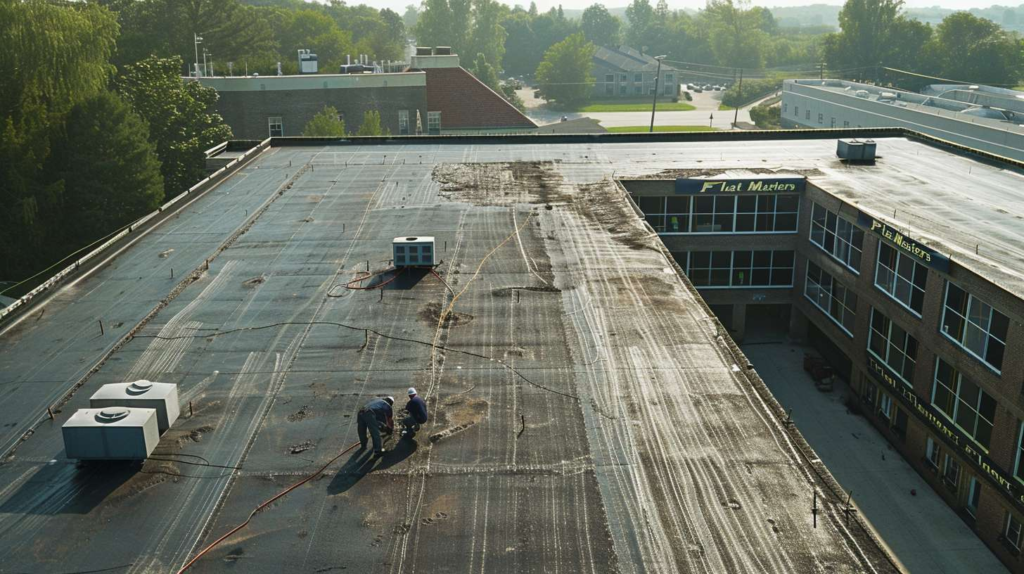
Experienced contractor installing a new flat roof on a residential building, showcasing professional replacement services.

On a Queens row house, the first place I look is almost never the place the bucket is sitting. I'm Doreen Velez, and as someone with 27 years in flat roofing and a habit of tracing moisture paths on older attached homes, I've learned that the stain is a confession letter written weeks after the crime. I remember standing on a two-family in Ridgewood at 6:40 in the morning, coffee still too hot to drink, while the owner kept pointing at one bedroom stain like that was the whole problem. I peeled back a failed patch near the rear drain and found wet insulation spread out like a soaked sponge - almost twelve feet wider than the stain inside had suggested. What people think is the leak location matters most. What the roof is actually doing is following a longer map, and the two are rarely the same address.

Myth What the Roof Is Actually Doing
"The leak is right above the stain." Water enters at one point, travels laterally through insulation or along the deck, and exits wherever it finds a gap - often 5 to 15 feet away from the interior stain on attached Queens row houses.
"A patch over the crack will fix it." Patching one visible opening seals that entry point. It doesn't address saturated insulation or failed seams that are already channeling water elsewhere - those keep working even after the patch looks tidy.
"The stain is small, so the damage is small." Ceiling stain size reflects where water accumulated enough to drip, not how far moisture has spread above. Wet insulation routinely covers multiples of the interior mark area before it's ever visible.
"Flat means level - water drains off on its own." A properly designed flat roof has tapered slope directing water to drains or scuppers. When that taper is lost - through membrane sag, added layers, or settled deck - water ponds and works through the system from below.
"The silver coating looks fresh, so the roof still has years left." Aluminum roof coating can be applied over an aging membrane and will look uniform and clean for a season. It masks surface age but does nothing for failed seams, compressed insulation, or failing edge metal underneath.

Follow the Water Map - What Hidden Moisture Spreads Through Before You See a Ceiling Mark
1. Field Membrane
The membrane is the top surface - EPDM, TPO, modified bitumen, or built-up. When a seam or puncture opens, water enters here first. But the membrane is rarely where damage stays. Water slips under the surface layer quickly, especially on Queens homes where old patchwork has created ridges and gaps that guide water inward rather than toward drains. The ceiling stain that appears two weeks later started here - often quietly, during a rain you didn't even think twice about.

2. Insulation Layer
Once moisture passes the membrane, it hits insulation - polyiso board, fiberboard, or old perlite on vintage roofs. Insulation holds water like a sponge and spreads it outward in all directions, following the path of least resistance. Because wet insulation isn't visible until it's tested or removed, a homeowner can have two to three times the saturated area they'd expect based on the stain location alone. Wet insulation also loses R-value fast, which you'll eventually notice in heating bills before you notice on the roof.

3. Roof Deck
The deck - typically plywood or wood board sheathing on residential homes in Queens - is the structural layer that everything else sits on. Once moisture penetrates through wet insulation and reaches the deck, wood begins to degrade, rot, and lose load-bearing capacity. Soft spots underfoot, bouncy sections near drains, and dark staining on the underside of the deck are all signs that water has been camping out here for a while. By the time a deck section is soft, it's been wet for months, not days.

4. Parapet Walls & Edge Details
On attached Queens homes, parapets are shared walls between properties. Water that enters at a failed coping cap or deteriorated counter-flashing doesn't announce itself - it runs down behind the parapet, under the edge metal, and into the deck or wall cavity below. These edge failures are the most common source of delayed stains on row houses, precisely because the water entry point is vertical while the stain appears on a horizontal ceiling surface. Nobody looks up at the parapet when the bucket's in the bedroom.

Mapping the Roof Before Anyone Talks Price

The Survey Points That Decide Repair Versus Replacement

If you were standing next to me, I'd ask you one question first: where does the water leave this roof? That question drives the whole survey. I start at drains and scuppers - are they clear, are they set at the right height relative to the membrane, and is there any depression or reverse slope that holds water back? Then I walk seams and membrane transitions. Then parapets, flashing terminations, and any skylight or HVAC curb penetrations. On Queens row houses, tight lot lines mean neighboring roof heights can redirect water flow against your parapet. Rear additions - and almost every block in Woodhaven or Ozone Park has them - often have a different membrane age and drainage path than the main roof, and that transition point is a regular failure zone. Attached houses also share parapet walls that can wick moisture from a neighbor's poorly flashed edge into your deck without your roof doing anything obviously wrong.

Give me a utility knife, a moisture meter, and ten quiet minutes, and I can usually tell whether you need repair or full replacement. Test cuts at suspicious areas tell me immediately whether insulation is wet. A moisture meter run across the field membrane finds hidden saturation that looks bone-dry on the surface - I've used the Tramex Roof and Wall Scanner on jobs where the membrane looked clean enough to eat off of and found wet insulation under 60% of the field. Soft deck sections are felt, not just seen. Edge metal that moves when pushed is a replacement indicator on its own. And if I pull up a corner and find two or three existing roofing layers underneath - which is common on homes that haven't had a full tear-off since the '80s - that alone shifts the recommendation toward full replacement. Any price discussed before this survey is a guess dressed up as a number.

Pre-Replacement Roof Survey on a Queens Home - 6-Step Process
1
Interior Leak Pattern Review
Walk the interior with the homeowner. Note stain locations, water trails on ceilings and walls, and any musty odor zones. Map these against the roof layout above to identify possible travel paths before ever getting on the roof.

2
Drainage Path Check
Locate all drains and scuppers. Check for blockages, proper membrane termination at the drain bowl, and whether ponding areas exist around them. On attached homes, check if neighboring roof runoff is directed onto your surface.

3
Surface Membrane Inspection
Walk the full field of the membrane. Look for open seams, alligatoring, blistering, cracked flashings, failed patches, and any signs of coating applied to mask deterioration. Note the number of visible layers at exposed edges.

4
Test Cuts & Moisture Reading
Make small cuts at ponding zones, stain points, and suspicious seam areas. Check insulation moisture content. Use a moisture meter across the field surface to map wet areas that aren't visible on top. This step defines the actual replacement scope.

5
Perimeter & Flashing Inspection
Probe edge metal, coping caps, parapet counter-flashing, and all penetration flashings. Push and flex metal to test adhesion. On row houses, inspect both shared parapet walls. Failed edge details are routinely the primary water entry point even when the field membrane looks intact.

6
Replacement Recommendation with Scope Boundaries
Based on all findings, define repair vs. full replacement, identify scope boundaries (full roof or section), and document all conditions in writing with photos - including what may be discovered after tear-off that could expand scope. This is the only point at which pricing becomes a real estimate.

Before You Call for a Flat Roof Replacement Estimate - Gather This First
  • ✔
    Approximate roof size - a rough measurement in square feet helps any contractor give a ballpark before arrival and prevents wasted visits.
  • ✔
    Age of the current roof - if you know it. Check old permits, closing documents, or ask neighbors who had similar work done.
  • ✔
    Number of previous roofing layers - if visible at the roof edge, count them. Multiple layers affect tear-off cost and may require additional permits in NYC.
  • ✔
    Photos of interior stains - take clear shots of every water mark, trail, or discoloration on ceilings and walls, with a rough note of which room they're in.
  • ✔
    Notes on ponding or drain backup - does water sit on the roof after rain? Are drains slow? Has any area pooled repeatedly? This tells a contractor a lot before they step foot on the surface.
  • ✔
    Whether the home is attached, semi-attached, or detached - this changes drainage options, parapet access, debris removal logistics, and sometimes how flashing is handled at shared walls.

What a Full Residential Flat Roof Replacement Actually Includes

Here's the blunt version: a trustworthy replacement goes in this order - full tear-off down to the deck, deck inspection for rot and soft sections, wood replacement where needed, insulation installation or tapered build-up to re-establish positive drainage, new membrane installation, flashing at all transitions and penetrations, edge metal and coping coordination at parapets, drain or scupper detail work, finished surface, and full cleanup including debris removal from the property. That's not a longer way of saying "new roof." Each of those steps is a checkpoint. During a windy October tear-off in Middle Village, I worked on a house with three previous roofing jobs still sitting on the deck in layers - and every layer told a different bad decision. The daughter of the homeowner was taking notes because she didn't trust contractors, which honestly I respected. By the end, she told me I was the first person who had walked through that exact sequence - survey, tear-off, deck inspection, insulation, membrane, flashing, finish - without turning it into a sales pitch. That sequence is not optional. Skipping or shortcutting any stage leaves part of the water map unread.

Patch Only - What It Can Do
  • Seal a single identified opening in the membrane surface temporarily
  • Stop an active drip at a known entry point through the season
  • Buy time on a roof where the rest of the system is in serviceable condition
  • Reduce interior water intrusion while a full replacement is being planned and financed
  • Address a single drain detail or flashing termination that failed in isolation
Full Replacement - What It Addresses
  • Removes all existing wet insulation and failed layers that carry hidden moisture
  • Exposes and repairs rotted or soft deck sections before new materials are installed
  • Resets drainage slope with tapered insulation where ponding has developed
  • Installs new edge metal, coping, and parapet flashing as a continuous system
  • Resets the entire water-management system - membrane, insulation, deck, and perimeter - from a clean starting point

Stage What Happens What Can Change the Scope What the Homeowner Should Ask to See
1. Tear-Off All existing membrane layers and insulation removed down to the deck surface More layers than expected; bonded materials that require additional labor to remove cleanly Photos of the exposed deck before any new material goes down
2. Deck Inspection Every section of exposed decking is walked, probed, and visually checked for rot, delamination, or soft spots Widespread moisture damage requiring significant board or plywood replacement Written or photo documentation of any deck sections flagged for replacement
3. Deck Repair Rotted or compromised sections replaced with new plywood or board sheathing, properly fastened Structural framing damage discovered during deck replacement; fire-stopping or blocking requirements Before-and-after photos of repaired sections with material grade noted
4. Insulation New insulation installed - flat or tapered - to meet code R-value requirements and restore proper slope toward drains NYC energy code requirements; custom taper needed to correct drainage problems from prior installations Insulation type, thickness, and R-value specified in the written estimate before work begins
5. Membrane Installation New membrane system installed over insulation - EPDM, TPO, or modified bitumen depending on slope, use, and specification Penetrations requiring custom flashings; unusual parapet heights or transitions between roof sections Membrane manufacturer, seam method, and warranty terms in writing
6. Flashing & Edge Metal All perimeter metal, coping caps, counter-flashing at parapets, and penetration flashings installed as a continuous system Masonry parapet repairs needed before metal can be set; shared parapet conditions on attached homes Photos of all flashing laps and termination points before covered by membrane edge
7. Drain Details & Final Finish Drain bowls re-set or replaced as needed, membrane integrated at each drain, surface inspected, site cleaned, and debris removed Drain relocation required to correct slope; scupper rebuilding at parapet wall Final inspection walkthrough with photos and written confirmation of drainage flow direction

Cost Scenarios for Queens Homes and What Moves the Number

Why "How Much to Replace a Flat Roof on a House" Has No One-Number Answer

At 7 a.m. on more roofs than I can count, I've seen the same mistake waiting under a neat-looking patch. One August afternoon in Astoria, the sun was brutal enough that the silver coating on the old roof was throwing light in my eyes, and the homeowner wanted "just the bad section" replaced to save money. He had a number in his head from a quick call the week before, and it felt reasonable. Once we opened the field membrane, the wood at the parapet edge crumbled under my glove because water had been sneaking in from a metal cap detail nobody had looked at closely in years. I had to show him, piece by piece, why a partial residential flat roof replacement at the quoted scope would have been a temporary lie - and why the real job was going to cost more than the low estimate, though still less than what it would cost to do it twice.

A flat roof doesn't fail like a popped tire; it fails like a science project nobody monitored. The cost drivers on a Queens home break down into these variables: square footage of the replacement area, number of existing layers to tear off (more layers, more labor and disposal cost), extent of wet insulation that needs to come out, amount of deck replacement needed after tear-off, drain work or scupper rebuilding, parapet and flashing complexity, and access logistics - because hauling debris off a rear extension on a tight lot in Richmond Hill or Middle Village is not the same job as a clean front-facing roof with direct dumpster access. Permits and NYC DOB requirements add a layer on top when structural work is involved or when the job triggers energy code compliance for insulation R-value. None of these are surprises if the survey is done properly. All of them are surprises if someone gave you a number over the phone.

The cheapest number on paper is often the one that leaves the wet map underneath untouched.

Residential Flat Roof Replacement Cost Scenarios - Queens, NY
Scenario Typical Roof Condition Estimated Price Range Main Cost Drivers
Garage or rear extension roof Small surface, single layer, good deck condition, one drain $3,500 - $7,000 Size, access, membrane type, flashing at wall transition
Standard row house - clean tear-off Single existing layer, dry insulation, deck in good condition $8,000 - $14,000 Roof size, parapet length, drain count, membrane system selected
Row house with wet insulation replacement Saturated insulation boards across partial or full field, deck largely sound $12,000 - $20,000 Extent of wet insulation, disposal, new insulation type and R-value, any required taper
Attached home with deck repair & parapet rebuild Soft deck sections, rotted parapet framing or masonry issues, failed coping and counter-flashing $18,000 - $30,000+ Deck board replacement volume, parapet masonry work, new coping system, access logistics
Multi-layer tear-off with drainage corrections Three or more existing layers, major ponding zones, drain re-setting or scupper rebuilding required $22,000 - $40,000+ Demolition labor, waste disposal, tapered insulation system, drain relocation, full flashing and edge rebuild

All ranges are estimates for Queens, NY based on current material and labor conditions. Exact scope and pricing depend on survey findings. Numbers above assume standard market conditions and do not account for permit fees, which vary by job type and DOB requirements.

Fast Pricing Realities
Price Moves Fastest When...

Deck damage is discovered after tear-off. Wood replacement is priced per section and can add $500-$2,500+ depending on how much is compromised - a fact that belongs in every estimate's allowance section, not as a surprise change order.

Partial Replacement Risk...

Is highest when the remaining field membrane and new section don't share the same drainage path. Seam transitions between new and old material are a common re-failure point within 12-18 months if not properly detailed.

Most Overlooked Cost Factor...

Access and debris logistics. On tight Queens lots with no driveway, debris must be carried through the home or lifted over a fence. That labor cost is real and belongs in your estimate - not discovered on install day.

Best Time to Ask for Scope Photos...

Immediately after tear-off, before any new material goes on. That's the only moment the full deck condition, insulation damage, and existing drain placement are all visible at once. Ask for them in writing before signing the contract.

âš  Watch for Estimates That Leave These Out

A low-bid flat roof estimate can look like a bargain until the change orders start. Before you sign anything, check whether the written estimate specifically addresses:

  • Tear-off depth - does it specify all layers removed to deck, or is it vague about how many layers are included?
  • Deck inspection language - is there a stated process for evaluating deck condition after tear-off, or does it jump straight to membrane?
  • Insulation replacement allowances - what is the per-board or per-square-foot allowance for wet insulation found on removal?
  • Flashing scope - are all penetrations, parapet counter-flashings, and edge metal replacements explicitly included, or is "flashing as needed" the only language?
  • Drain and scupper detail descriptions - does the estimate state whether drains are being re-set, inspected, or replaced, and at what cost trigger?

If these items aren't written into the scope, they become contractor discretion after the job starts - and discretion costs more than a line item.

Questions Worth Asking Before You Approve the Job

The questions you ask before signing aren't about memorizing technical terms - they're about confirming the contractor can read the water map correctly, not just quote you a membrane. Personally, I trust contractors who describe what they expect to find after tear-off more than those who tell you everything will be simple before opening the roof. A contractor who says "we might find wet insulation in the field near the rear drain, and here's how we'd handle that and price it" has been on roofs before. One who promises a clean, straightforward job on an attached Queens home that hasn't had a full replacement since the '90s is describing the job they want, not the roof in front of them. Ask what they expect to find. Ask how they handle surprises after tear-off. Ask to see photos. And ask what's written into the estimate versus what's left to "as needed" language - because that's where the real scope lives, and that's what Flat Masters puts in writing before any work begins.

Homeowner Questions About Replacing a Flat Roof on a House
1. How do I know I need full replacement instead of repair?
If moisture testing shows saturated insulation across a significant portion of the field, if the deck has soft or rotted sections, if there are multiple existing roofing layers, or if perimeter flashings and edge metal have failed, repair is a temporary measure at best. A single localized failure on an otherwise sound, younger roof is a repair candidate. A pattern of failures, widespread wet material, or a roof over 15-20 years old with no full replacement history points strongly toward full replacement.

2. How long does residential flat roof replacement take?
Most standard Queens row house flat roofs are replaced in one to three days for the primary field work. Deck repairs, custom drain work, masonry parapet repairs, or complex flashing details can extend the timeline. Weather holds are also real - membrane installation shouldn't happen on wet decks or in freezing conditions. Your contractor should give you a realistic schedule that accounts for contingencies, not a one-day promise that disappears if any hidden condition surfaces.

3. Will you remove all old layers?
A proper replacement removes all existing layers down to the structural deck. Roofing over existing material saves short-term labor cost but adds weight to the structure, hides conditions that need to be corrected, and often voids manufacturer warranties on the new membrane. NYC building code limits the number of roofing layers permitted - ask your contractor to confirm full tear-off and to document the layers removed with photos before new material is installed.

4. What happens if bad wood is found after tear-off?
Rotted or soft deck sections need to be replaced before insulation and membrane can go on - there's no way around it. The question is how it's handled in your contract. A trustworthy estimate includes an allowance or per-sheet pricing for deck replacement discovered on tear-off, so you're not hit with a surprise change order. Ask for this in writing before signing. After tear-off, any damaged sections should be photographed and approved by you before replacement begins.

5. Can the roof be replaced without changing interior ceilings?
Yes. Flat roof replacement is an above-the-deck operation and does not require opening or altering interior ceilings. However, if the deck itself is structurally damaged and requires major framing work, interior access may occasionally be needed. Ceiling stain remediation - painting, plastering - is a separate trade from roofing and typically the homeowner's responsibility after the roof is confirmed watertight and any deck repairs are complete.

6. What should be written into the estimate before I sign?
At minimum: full tear-off scope with layer specification, deck inspection process and replacement pricing method, insulation type and R-value, membrane system and manufacturer, flashing and edge metal scope for all parapets and penetrations, drain or scupper work description, photo documentation after tear-off, and cleanup/disposal terms. Anything described verbally but absent from the written estimate should be added before you sign - because the written document is the job, not the conversation.

Before Signing a Replacement Contract - Ask and Confirm These 7 Items
  • ✓
    Tear-off scope - confirm in writing that all layers will be removed to the structural deck, and that the number of existing layers is documented before work starts.
  • ✓
    Deck replacement pricing method - ask for a per-sheet or per-square-foot allowance for deck board replacement discovered after tear-off, and confirm it's in the written estimate.
  • ✓
    Insulation type and thickness - the estimate should state the insulation system (polyiso, EPS, tapered, flat) and the R-value being installed. "New insulation" without specification is not enough.
  • ✓
    Membrane system - confirm the membrane type (EPDM, TPO, modified bitumen), manufacturer, seam method, and whether a manufacturer warranty is included.
  • ✓
    Flashing and edge metal details - parapet counter-flashing, coping caps, penetration flashings, and drip edge must each be listed, not bundled into vague "flashing included" language.
  • ✓
    Drain and scupper work - ask whether existing drains are being re-set, inspected and cleared, or replaced, and confirm what triggers a drain replacement recommendation in the field.
  • ✓
    Photo documentation after tear-off - make it a stated requirement in the contract that you receive photos of the exposed deck condition before any new material is installed. This protects you and confirms the scope.

If you're in Queens and want an honest assessment of what your flat roof actually needs - not a number pulled from thin air - call Flat Masters for a survey that explains the water path, the real scope, and the price before anyone picks up a tool. That's where the right job starts.

Faq’s

Flat Roofing FAQs: Everything Queens, NY Homeowners Need to Know

How long does a flat roof replacement actually take?
Most residential flat roof replacements in Queens take 3-5 working days, but weather is the biggest factor. We can’t install membrane in rain or high winds. Spring and fall offer the best conditions, though we work year-round when possible.
When done properly, a quality flat roof replacement lasts 20-25 years versus constant repairs every 2-3 years. The upfront cost of $12,000-35,000 actually saves money long-term compared to repeated emergency fixes and water damage.
If your roof needs repairs more than once every few years, replacement is usually more cost-effective. Multiple layers of old roofing, deck damage, or drainage issues mean patches won’t solve the underlying problems.
Delaying replacement often means higher costs later. Water damage spreads to structural elements, insulation, and interior spaces. Emergency repairs during leaks cost 2-3 times more than planned replacements, plus you deal with property damage.
Look for specialists with specific flat roof experience, not general roofers. Ask to see recent residential flat roof projects, verify licensing and insurance, and get detailed explanations of their process including drainage and insulation work.

Ask Question

Or

How Much Does It Cost to Refelt a Flat Roof? Here's What You Should Expect to Pay

17 min read

Flat Roof Ventilation - Designed and Installed to NYC Building Code

8 min read

Residential Flat Roof Repair in NYC - Fast Assessment, Real Fix

9 min read

What's the Average Flat Roof Truss Cost for Your Project?

5 min read

Expert Flat Roof Rafter Replacement Services Near You

8 min read

Flat Roof Costs Per Square Metre - What's Realistic and What's a Red Flag

13 min read

What's the Best Felt for Flat Roof Installation Guide

6 min read

Flat Roof Leaking Down a Wall? Here's What the Repair Will Cost

6 min read

What's the Average Flat Roof Raising Cost in Your Area?

7 min read

Flat Roofs and Trusses - Here's What's Actually Holding Your Roof Up There

17 min read

Asphalt Shingles on a Flat Roof - They Might Not Be What You Think They Are

16 min read

Mixing a Flat Roof With a Pitched One Looks Stunning - If the Junction Is Right

12 min read

How Much Does It Cost to Felt a Flat Roof? The Numbers That Actually Matter

13 min read

Fiberglass Is the Flat Roofing Solution That Keeps Coming Up - Here's Why

15 min read

How to Calculate Snow Load on Flat Roof: Expert Guide

5 min read

Getting Edges and Corners Right Is What Separates a Good Felt Job From a Leaking One

14 min read

Professional Flat Roof Carport Construction Services Near You

6 min read

Flat Roofs Get Mixed Reviews - Here's the Honest Pros and Cons From Someone Who Knows

17 min read

Professional Flat Roof Glass Panels Installation & Repair Services

6 min read

Adding a Peak to a Flat Roof Changes Everything - Here's What the Project Involves

14 min read

Flat Roof Inspection in NYC - Know What You're Working With

5 min read

How to Work Out Exactly How Much Material You Need for a Flat Roof

13 min read

How Much Does Flat Roof Repair Cost Per Square Foot? Here Are the Real Figures

14 min read

Interior Drain on Your Flat Roof Leaking? Here's Where the Problem Usually Is

13 min read

Flat Roof Framing Done Right - Talk to Our NYC Specialists

6 min read
Flat Roof Replacement near Addisleigh Park, Queens Flat Roof Replacement near Arverne, Queens Flat Roof Replacement near Astoria, Queens Flat Roof Replacement near Auburndale, Queens Flat Roof Replacement near Bay Terrace, Queens Flat Roof Replacement near Bayside, Queens Flat Roof Replacement near Bayswater, Queens Flat Roof Replacement near Beechhurst, Queens Flat Roof Replacement near Belle Harbor, Queens Flat Roof Replacement near Bellerose, Queens Flat Roof Replacement near Breezy Point, Queens Flat Roof Replacement near Briarwood, Queens Flat Roof Replacement near Broad Channel, Queens Flat Roof Replacement near Broadway-Flushing, Queens Flat Roof Replacement near Cambria Heights, Queens Flat Roof Replacement near Chinatown, Queens Flat Roof Replacement near College Point, Queens Flat Roof Replacement near Corona, Queens Flat Roof Replacement near Douglaston, Queens Flat Roof Replacement near East Elmhurst, Queens Flat Roof Replacement near Edgemere, Queens Flat Roof Replacement near Elmhurst, Queens Flat Roof Replacement near Far Rockaway, Queens Flat Roof Replacement near Floral Park, Queens Flat Roof Replacement near Flushing, Queens Flat Roof Replacement near Forest Hills, Queens Flat Roof Replacement near Fresh Meadows, Queens Flat Roof Replacement near Fresh Pond, Queens Flat Roof Replacement near Glen Oaks, Queens Flat Roof Replacement near Glendale, Queens Flat Roof Replacement near Hammels, Queens Flat Roof Replacement near Hillside, Queens Flat Roof Replacement near Hollis, Queens Flat Roof Replacement near Holliswood, Queens Flat Roof Replacement near Howard Beach, Queens Flat Roof Replacement near Jackson Heights, Queens Flat Roof Replacement near Jamaica Estates, Queens Flat Roof Replacement near Jamaica Hills, Queens Flat Roof Replacement near Jamaica, Queens Flat Roof Replacement near Kew Gardens Hills, Queens Flat Roof Replacement near Kew Gardens, Queens Flat Roof Replacement near Koreatown, Queens Flat Roof Replacement near Laurelton, Queens Flat Roof Replacement near Locust Manor, Queens Flat Roof Replacement near Long Island City, Queens Flat Roof Replacement near Maspeth, Queens Flat Roof Replacement near Meadowmere, Queens Flat Roof Replacement near Middle Village, Queens Flat Roof Replacement near Neponsit, Queens Flat Roof Replacement near Ozone Park, Queens Flat Roof Replacement near Pomonok, Queens Flat Roof Replacement near Queens Village, Queens Flat Roof Replacement near Queensboro Hill, Queens Flat Roof Replacement near Rego Park, Queens Flat Roof Replacement near Richmond Hill, Queens Flat Roof Replacement near Ridgewood, Queens Flat Roof Replacement near Rockaway Beach, Queens Flat Roof Replacement near Rockaway Park, Queens Flat Roof Replacement near Rockaway, Queens Flat Roof Replacement near Rosedale, Queens Flat Roof Replacement near Roxbury, Queens Flat Roof Replacement near Seaside, Queens Flat Roof Replacement near South Jamaica, Queens Flat Roof Replacement near South Ozone Park, Queens Flat Roof Replacement near Springfield Gardens, Queens Flat Roof Replacement near St. Albans, Queens Flat Roof Replacement near Sunnyside Gardens, Queens Flat Roof Replacement near Sunnyside, Queens Flat Roof Replacement near The Hole, Queens Flat Roof Replacement near Whitestone, Queens Flat Roof Replacement near Willets Point, Queens Flat Roof Replacement near Woodhaven, Queens Flat Roof Replacement near Woodside, Queens Flat Roof Replacement near Wyckoff Heights, Queens
blue circle

Get a FREE Roofing Quote Today!

Schedule Free Inspection