
Converting a Flat Roof to a Pitched One Is a Big Job - Here's What It Takes
Not everyone gets the diagnosis right the first time. Converting a flat roof to a sloped roof can absolutely be the right move - but only when you understand that it's a major structural and exterior redesign, not a simple roofing upgrade. The shape on top is the last thing that should be decided, and it's usually the first thing people want to talk about.
Profile Changes Are Structural Decisions Long Before They Become Visual Ones
A roof conversion doesn't begin at the ridge - it begins in the framing, the wall connections, the drainage routes, and the load math. Before a single piece of lumber changes angle, every one of those systems has already voted on whether this project is smart, expensive-but-right, or expensive-and-wrong. The visible line you're imagining is the last chapter of a story that starts several floors below it.
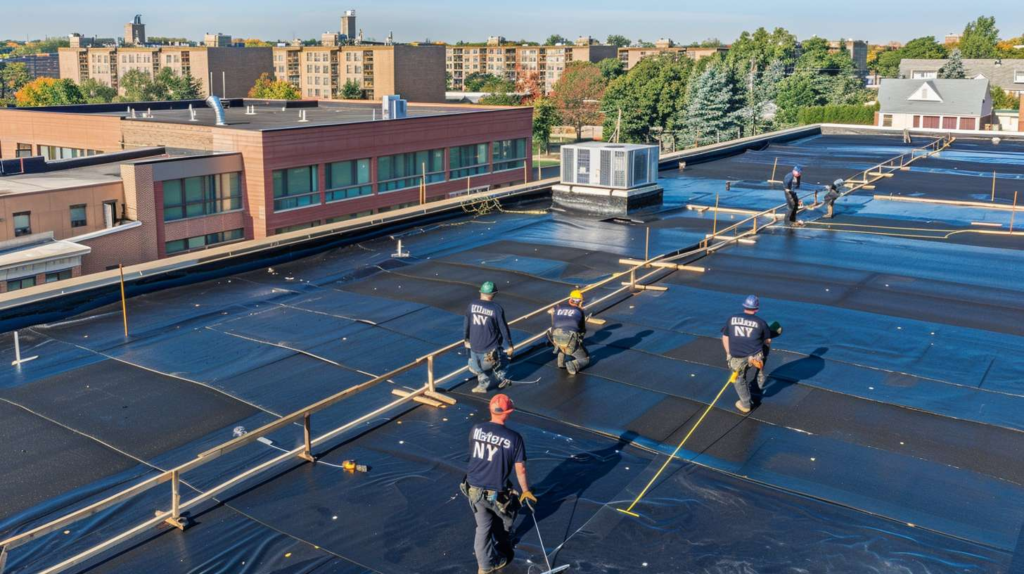
Before you ask how to change a flat roof to a sloped roof, what problem are you actually trying to solve? That question matters more than any product or pitch angle. Some people are really dealing with a drainage mistake, a flashing failure, or a decade of deferred maintenance on a flat roof that was never properly detailed - not a roof-shape problem. I'm Rory Sweeney, and with 27 years guiding Queens owners through roof-shape conversions, I've learned that this decision truly belongs at the level of structure, load, drainage, and exterior profile - not aesthetics. Frame the project in side view and section first. The visible line changes, yes - but so do the hidden loads, the edges, and the proportions of the whole house behind it.
Leak Frustration Often Pushes Owners Toward Conversion Before Anyone Proves the Flat Roof Was the Actual Problem
A Wrong Diagnosis Can Create a Very Expensive Right-Looking Project
I still remember holding up a level in that driveway while the whole conversation changed. It was a cold March morning in Forest Hills - a homeowner called me out because he wanted to replace his flat roof with a sloped roof after years of repeat leak repairs. Completely fair reason to be frustrated. But once I got on that roof, the problem was obvious: drainage had been poorly configured from the start, and the flashing at every edge was letting water in long before it even reached the field of the membrane. The roof wasn't failing because it was flat. It was failing because nobody had ever installed or maintained the details correctly. Changing the shape would have cost a significant amount of money and solved exactly none of that.
In side view, the job gets honest fast. Across Queens - the rear additions in Elmhurst, the extended sections off older two-families near Junction Boulevard, the low-slope sections tucked behind parapet walls all over the borough - flat roofs get blamed constantly for problems that really came from neglected drains, improperly lapped edges, or original installs that cut corners on the transitions. The roof shape isn't the culprit. The details are. And if you convert the shape without fixing the underlying conditions that created the failure, you'll spend serious money and still have a wet ceiling.
Shape change as a reflex is one of the most costly mistakes in residential roofing. If the failure came from bad drainage, weak detailing, or years of ignored maintenance, a new roof pitch won't fix it - it'll just put an expensive new frame on top of an unresolved problem. The leak returns. The bill does too.
Framing, Loads, Walls, and Drainage All Vote on Whether Conversion Is Smart or Foolish
Converting a roof shape is like changing the frame on a house portrait - the picture shifts, but so do the edges, proportions, and support behind it. The ridge line is only the visible part. Every element beneath and beside it changes with the decision: framing angles, wall tie-in heights, how loads travel down into the structure, where water exits, what happens to exterior siding, and how the new profile reads against the neighboring rooflines. You can't pull on one end of that chain without the rest of it moving.
Here's the blunt truth: this is not a cosmetic project. I had a job in Ridgewood where the owner was set on changing his flat roof to a sloped roof because his brother-in-law told him pitched roofs are "always better." That's exactly how expensive myths get built into houses. It was a windy October afternoon, and once we got into the structure, the neighboring sightlines, and how the new framing would need to tie into his existing masonry walls, the conversation got very serious very fast. He walked in thinking he was buying a different-looking roof. He walked out understanding he was considering a full rebuild of the top of his house. That project stuck with me - because the moment he actually saw the scope on paper, the conversion made sense for entirely different reasons than the one he started with.
My opinion? People use roof-shape changes to solve problems they haven't correctly identified. The conversion itself isn't the issue - when the diagnosis is right, a complete roof conversion is absolutely the correct call, and Flat Masters has handled enough of them in Queens to know what that looks like. But here's what I tell every client: ask any contractor to show you the side view, the new load path, and the new drainage route before you sign anything. If they only talk about what the roof will look like from the street and skip the rest, they're not explaining the real job. They're selling you the easy part of a hard conversation.
- ✓What problem is this conversion actually solving? If the answer is vague, the scope will be too.
- ✓How does the new load travel? Any contractor who can't answer this hasn't reviewed your structure.
- ✓Where does water leave the roof now - and after? A new pitch means a completely new drainage plan.
- ✓What walls and finishes change? Siding, fascia, parapets, and flashings all need to be in the conversation.
- ✓What happens to height and profile? In Queens, even a few feet of added height can trigger zoning questions.
- ✓What permits and structural review are required? A real conversion needs real documentation - not just a handshake.
- ✓What would make you advise against this conversion? If a contractor won't answer this one, find a different contractor.
The Shape on Top Is the Easiest Part to Admire and the Last Part That Should Be Decided
By the Time the Roof Line Looks Settled, Half the Real Work Should Already Be Solved on Paper
In side view, the job gets honest fast - and nowhere did that prove truer than on a Jamaica addition project I worked on after the clients had bought a property with a tired rear section bolted onto the back of an older house. They called Flat Masters wanting to know how to make a flat roof into a sloped roof, and they figured we'd spend most of the meeting talking about framing angles and ridge heights. We didn't. I spent the better half of that meeting on load paths - specifically how the addition's walls were tied to the main house and whether they could carry a new angled load without reinforcement. Then we got into exterior transitions, because the new profile would have butted awkwardly against the original roofline and created a drainage trap between them. Then drainage rerouting, because every downspout location had to shift. At some point I ended up sketching the conversion in side view on a piece of drywall scrap while rain tapped on the van roof outside. That sketch - not the ridge line they walked in imagining - was the moment they understood what the decision actually was. The visible roof line is only the final line of a much longer conversation.
What is changing structurally?
The framing, load path, ridge configuration, and wall tie-ins are all different once the pitch changes - not one of those is cosmetic. If a contractor talks about your new roof without drawing the new load path, they haven't actually reviewed your structure yet.
What is changing for drainage and wall tie-ins?
Internal drains go away, gutters and downspouts move, and wherever the new roof meets the old wall is a new flashing problem waiting to be designed correctly. Every one of those transitions needs to be on paper before anyone picks up a circular saw.
What would make this conversion unnecessary or overkill?
If the real problem is drainage design or flashing failure, a properly rebuilt flat roof solves it at a fraction of the cost and disruption. A conversion earns its price tag when the goal is genuinely a new profile, better long-term shedding, and the structure actually supports it - not when it's being sold as the only way to stop a leak.
How do you change a flat roof to a sloped roof?
When is it smarter to fix the flat roof instead of converting it?
Why is a conversion considered a major redesign?
What parts of the house are affected besides the roof?
What should a contractor show me before I believe the conversion makes sense?
Do you actually need a new roof shape - or do you need a more honest diagnosis of what your current roof is doing wrong? Those are very different projects with very different price tags. Call Flat Masters before a major conversion gets sold to you as a straightforward fix. We'll show you the side view first.
- Rory Sweeney, Flat Masters, Queens, NY