
Waterproofing a Flat Roof Right the First Time Is the Only Way to Do It
Spring reveals things. The ceiling stain that showed up in February almost never marks where the roof actually failed - water on a flat roof travels, sometimes several feet, before it finds a gap and drops. This article explains how to waterproof a flat roof correctly by following the full water path first, not the stain on the drywall below it.
Leaks Travel Before They Show Up
At 7 a.m., a roof tells the truth faster than the owner does. The mistake most people make is treating flat roof waterproofing like a plug-the-hole problem - find the drip, seal the spot, done. But a flat roof is a system, and chasing the ceiling stain is like running a bad experiment where you've already picked the wrong observation point, logged the wrong variable, and called the wrong result a conclusion. The roof doesn't care what the ceiling told you.
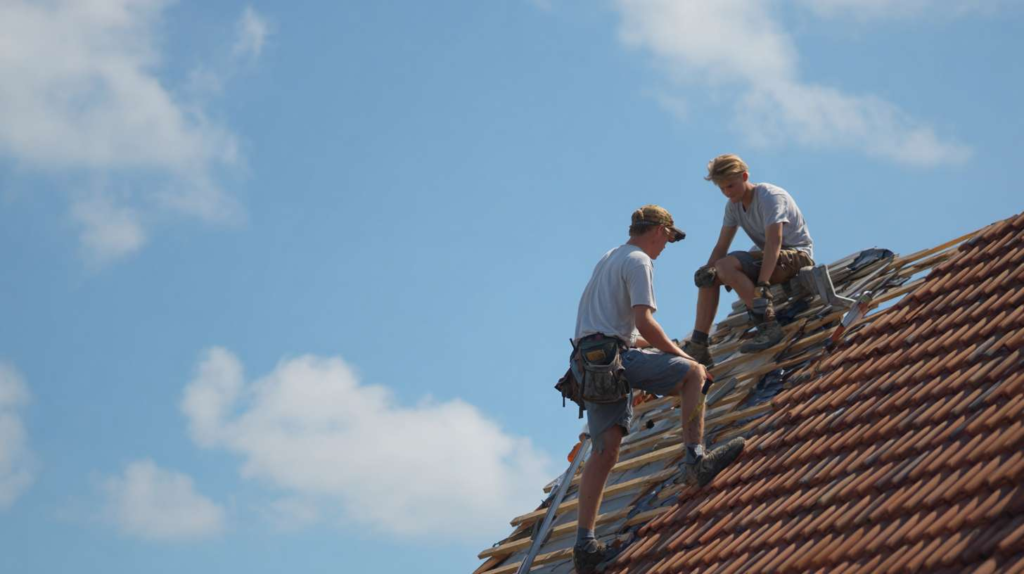
Queens flat roofs hide movement in predictable places: seams, penetrations, drain bowls, and parapet edges - and those spots are rarely directly above the interior damage. Rosa Mendez, with 27 years in flat roofing and a specialty in tracing repeat leaks on low-slope roofs, has seen that pattern on everything from two-family rowhouses in Woodside to six-story buildings off Jamaica Avenue. Honestly, she'll say it plainly: she distrusts any recommendation that starts with a coating before anyone has proven the roof is dry and stable underneath it. Coatings get oversold on roofs that were never dry or structurally settled enough to receive them, and the result is a roof that looks sealed and isn't.
⚠ Warning: Never Apply Waterproofing Over a Wet Substrate
Applying any waterproof flat roof system - coating, membrane, or modified cap sheet - over trapped moisture causes blistering within weeks, adhesion loss that spreads under the surface, floating membranes that look intact from above, hidden deck rot that doesn't show until there's structural compromise, and accelerated seam failure at every edge. The roof will look sealed on the day of application and lie to you for exactly as long as it takes the moisture to work back out.
Diagnosis Comes Before Any Membrane or Coating
What has to be checked before anyone says the roof is ready
Here's the part people never want to hear. Proper diagnosis for how to waterproof a flat roof starts long before a product is selected. The list includes: verified surface dryness, slope behavior and drainage pattern, seam condition at laps and T-joints, flashing terminations at every parapet and curb, penetration integrity at pipes and HVAC supports, compatibility between any existing repair materials and proposed new ones, and core signs of insulation saturation below the membrane. One April morning in Astoria, around 6:15, I was on a six-family roof with my coffee still too hot to drink and found a brand-new coating floating in sheets - somebody had trapped moisture underneath it the week before. The owner kept saying "but it looked sealed," and I remember peeling it back with a flat bar and telling him, "Looking sealed and being waterproof are not cousins." Queens rooftops compound this problem specifically: the freeze-thaw cycles between January and March open seams that looked fine in October, and the sideways summer storms that roll through Flushing and Corona push water into parapet gaps that gravity-fed testing would never catch.
That sounds logical, but here's where it goes wrong: a clean-looking surface gets treated as a sound surface, and that's how a crew ends up applying a $4,000 coating system on a roof that was already failing at three seams no one bothered to probe. Waterproofing a flat roof on modified bitumen means checking lap seam adhesion and blister formation across the field. EPDM roofs need seam tape integrity and termination bar condition evaluated separately. TPO and PVC require checking heat-welded seams for incomplete fusion - a failure mode that won't show until the next thermal cycle. Older built-up roofs need core samples or at minimum a firm probe test across the field to rule out saturated felts before anyone applies anything on top.
Hidden moisture underneath a membrane makes every repair that follows dishonest.
Modified Bitumen
What fails first: Lap seams lose adhesion as the bitumen becomes brittle, especially on south-facing roofs with heavy UV exposure. Blister fields in the cap sheet are common on roofs that were torched over damp base sheets.
Commonly misused products: Elastomeric coatings are frequently applied over open seams and blisters - they bridge the surface but don't restore adhesion below it.
Proper prep: Probe every seam for softness or lift. Cut and remove blister sections. Re-torch or mechanically fasten open laps with compatible modified bitumen flashing strips before any coating goes down.
EPDM
What fails first: Seam tape delamination and termination bar separation at the perimeter. On older systems, the field membrane itself shrinks, creating tension that pulls flashing off walls.
Commonly misused products: Lap caulk applied over open seams without removing the old tape - it cures rigid and cracks within one freeze-thaw cycle.
Proper prep: Clean seam areas thoroughly, remove failed tape, and apply fresh EPDM seam tape with proper roller pressure. Termination bars must be refastened and re-caulked at the top edge with appropriate sealant.
TPO / PVC
What fails first: Incomplete heat-weld fusion at seams - the membrane looks joined but the weld only penetrated part of the lap. It holds until thermal expansion stresses pull it apart.
Commonly misused products: Lap sealant over TPO seams as a substitute for proper heat welding. TPO sealants are for detailing only - they don't replace a structural weld.
Proper prep: Probe-test existing welds with a blunt seam probe. Any seam that separates with moderate pressure needs to be cut back and re-welded with a proper hot-air gun at the correct temperature range for the membrane thickness.
Built-Up Roof (BUR)
What fails first: Interply felt saturation and alligatoring of the flood coat. Once water enters the felt layers, the whole assembly becomes a sponge that holds moisture between rains.
Commonly misused products: Aluminum reflective coatings applied over alligatored surfaces without felt repair - they look great in photos and fail within a season at every crack in the flood coat.
Proper prep: Core sample or firm probe test across the field to map wet zones. Remove and replace saturated felt sections. Rebuild flood coat with compatible asphalt before any reflective or elastomeric coating is considered.
Methods That Actually Make a Flat Roof Waterproof
I remember one building off Northern Boulevard where a property manager had already paid for two drain cleanings and one coating job - and the stockpot the tenant handed me on a Sunday was still full of brown ceiling water. What caused it wasn't the drain they were all staring at. It was a seam failure three feet uphill where ponding had been sitting so long the membrane simply gave up. The drain was open. The roof was still failing. Once you understand that, the real options for waterproofing flat roof systems become clear: targeted seam repair and rebuild, flashing strip-and-replace, partial membrane replacement over the failed zone, a reinforced coating system applied over a verified dry and prepped surface, or full reroof when the substrate has deteriorated past the point where surface work is honest. Here's the insider truth on repeat leaks - the right call is often to cut out the unstable field section around the failure and rebuild it from the deck up, not pile another layer on top of a zone that's already told you three times it's done.
If you were standing next to me on this roof, I'd ask you one thing: are you trying to get through one more storm season, or do you want ten years of dry ceilings? That single question changes everything about which method belongs on this specific roof. Running a patch-and-coat cycle on a failing assembly is like changing the color of a beaker while the bad reaction inside it keeps going. The chemistry doesn't care what the outside looks like. Neither does water.
-
1
Trace the full water path from the interior stain back across the roof assembly to the actual point of entry - not the closest drain or the most obvious patch. -
2
Verify membrane and substrate dryness using a moisture meter or probe test across the field, with extra attention to ponding zones, drain collars, and any area that feels soft underfoot. -
3
Remove all failed material - lifted seams, saturated insulation, incompatible patch products, cracked caulk - until the work area is clean, stable, and confirmed dry. -
4
Repair all seams and rebuild all flashing terminations with products compatible with the existing roof system before touching the field membrane. -
5
Address any drainage deficiency - drain collar re-flashing, slope correction, or scupper clearing - so that water moves off the finished waterproofing system instead of sitting on it. -
6
Install the compatible waterproofing system - membrane, reinforced coating, or cap sheet - and test every detail edge, penetration, and drain collar before calling the work complete.
Shortcuts Usually Cost More on Queens Buildings
When repair is still reasonable and when replacement is the honest answer
Bluntly, a patch is not a waterproofing plan. I did a flashlight inspection on a co-op roof in Sunnyside once - they didn't want to disrupt afternoon deliveries, so we went at dusk - and by the beam of my light I found six different repair materials on one small section of that roof: tar, aluminum coating, patch fabric, caulk, elastomeric goo, and one piece of what looked like it had been cut from window flashing. I told the board that roof looked like a substitute teacher ran the lesson with no plan. Every one of those materials had a different expansion rate, a different adhesion chemistry, and a different failure timeline. The false seals those layers created didn't stop water - they just redirected it somewhere harder to find, which on older multi-family buildings in Queens that have passed through many repair crews, is how a small problem quietly becomes a deck replacement.
A flat roof works a lot like a lab experiment - skip one condition, and the result lies to you. A contractor who recommends another coating without first proving the roof is dry and the seams are sound is changing the label on the reagent bottle without fixing what's reacting inside it. There's a point - and I'm Rosa Mendez, I've been tracing these failures in Queens for going on 28 years now - where the professional answer is no to another surface treatment and yes to section replacement or full reroof. That's not a sales pitch. That's what the evidence on the roof says when the roof has run out of forgiveness for deferred work.
Questions Owners Should Ask Before Approving Waterproofing Work
Every estimate for flat roof waterproofing is either a test of whether the contractor understands the specific roof system in front of them - or a sales presentation for a bucket of product they had on the truck anyway. The checklist below isn't meant to make you suspicious of every roofer. It's meant to separate the ones who've actually walked your roof and traced the water path from the ones who showed up, looked at the ceiling stain, and quoted a coating before they asked a single question. At Flat Masters, that's the kind of estimate we won't give you.