
Calculating Flat Roof Slope Sounds Technical - Here's How It Actually Works
Until the diagnosis is right, the problem will repeat. Flat roof slope calculations only make sense if you first identify the true high point, low point, and drainage outlet the roof is supposed to serve - because a number without a reference point is just noise. The math confirms what the roof is supposed to do; it doesn't decide it for you.
Measure the path first and the math second
Before you use a flat roof slope calculator, what exactly are you measuring between? That question matters more than the formula. The calculator can only confirm reality if the measurement line you've chosen actually follows the roof's drainage intention - and here's the thing, a lot of people skip that verification entirely. I'm Iris Delgado, with 9 years helping Queens homeowners make sense of flat roof fall, gradient, and drainage behavior by reading the roof before punching in numbers. Think of it like an image that needs its landmarks marked before interpretation is even possible: high side, low side, outlet, and drainage direction. Identify all four first, and the math stops being intimidating.
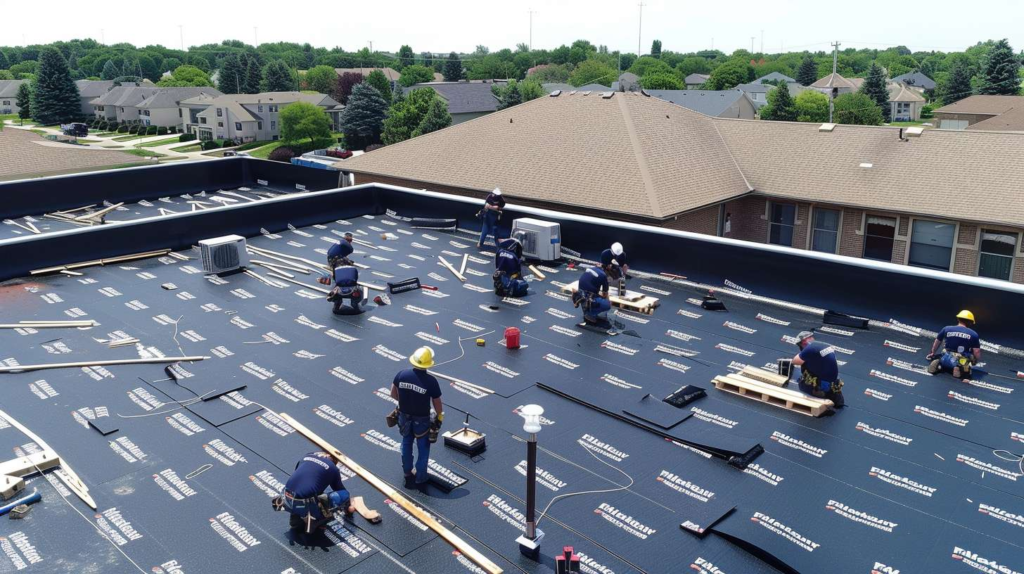
The Correct Order for Calculating Flat Roof Fall
-
1
Identify the outlet - find the exact point where water is designed to leave the roof surface. -
2
Mark the high point - locate the elevated edge or ridge that sits farthest from that outlet. -
3
Confirm the true low path - trace the actual drainage route the surface intends water to follow. -
4
Measure the run - take the horizontal distance between the meaningful high and low points, not arbitrary edges. -
5
Calculate the fall ratio or slope - divide the vertical fall by the horizontal run and compare against the required minimum standard.
What a Slope Calculator Cannot Do for You
Fact 01
It cannot choose the right measurement line - that decision requires a physical read of the actual roof surface.
Fact 02
It cannot fix wrong outlet assumptions - if you've identified the drain incorrectly, the ratio simply confirms the error.
Fact 03
It cannot explain bad finished behavior on its own - a result that looks correct on paper still needs a real-world drainage check.
Fact 04
It cannot replace a visual drainage check - dry tide marks, debris lines, and ponding evidence still outrank any printed number.
The outlet is the anchor point because every useful number depends on where water is supposed to leave
Wrong outlet, wrong answer
Start with the outlet, not the equation. I got a call at 7:15 a.m. from a contractor in Ridgewood who was frustrated because his flat roof fall ratio calculator result didn't seem to match what the finished roof was actually doing after rain. His instinct was good - something was off. But the calculator wasn't broken. The input assumptions were. Once I checked the real outlet location against where the build-up thicknesses had shifted the finished surface, the roof's behavior made complete sense. That call stays with me because it's a clean example of how tools are only as honest as the measurements you feed them.
Reading roof fall is a lot like reading an image scan - you need the right landmarks before the numbers tell the truth. In Queens, small roofs with offset drains are everywhere, and the outlet logic on a paper plan often doesn't survive contact with a layered build-up or a drain that was relocated during a previous repair. I've seen this pattern repeat on roofs along 71st Avenue in Forest Hills just as often as in Ridgewood: the intended path on the original drawings and the actual path on the finished roof are two different things. Identify the real outlet, measure to the real high point, then calculate - that sequence doesn't change regardless of the roof's age or size.
Are You Feeding the Flat Roof Slope Calculator the Right Information?
⚠ The Specific Mistake That Makes Slope Calculators Look "Wrong"
- Measuring from the wrong drain - if you've anchored your calculation to an outlet that isn't actually handling your section of roof, every number that follows is confirming the wrong picture.
- Ignoring finished thickness changes - each additional layer of build-up shifts the effective surface fall, sometimes enough to create flat spots or even reverse fall in a small section.
- Assuming the intended path on the original plan matches the actual path on the finished roof - it frequently doesn't, especially on Queens residential roofs with multiple repair histories.
A small number over a long run can still create a very real water path
I still remember that owner staring at the chalk arrows like the roof had finally started speaking. It was a gray March afternoon in Rego Park, and he'd already tried a flat roof slope calculator online before I arrived. The problem was he kept saying the numbers didn't look big enough to matter. That's a common reaction - a fall of one inch over eighty inches reads like almost nothing until you visualize eighty inches of water all being pushed in the same direction. I measured the run, marked the high side in chalk the same way I used to trace landmarks on a scan, and walked him through how to calculate flat roof fall as a physical picture rather than a formula. The moment he saw how a small fall over distance becomes a committed water path, the whole thing stopped feeling abstract.
A roof surface works a lot like a skate ramp - tiny changes in line create big changes in movement. A quarter-inch of fall per foot is the typical residential minimum, and over a fifteen-foot run that's only 3.75 inches of total drop. That sounds small. But water doesn't need a cliff; it needs direction. The geometry of a skate ramp works the same way: a gentle, consistent grade keeps everything moving. Inconsistency is where problems start, not shallowness. A roof that has 1:80 fall - roughly 1.5% - running cleanly toward a properly placed outlet will outperform a roof with a steeper but interrupted path every single time.
My opinion? People get intimidated by slope math because nobody shows them the picture first. The formula is secondary; the visual is primary. And here's the insider move worth doing before you trust any number from a flat roof fall ratio calculator: compare the calculated fall against actual dry tide marks or runoff debris lines on the surface. Those marks are the roof's own record of where water went last time it rained. If the chalk-mapped drainage path and the tide marks agree, the math checks out. If they point in different directions, the math is confirming the wrong thing and you need to go back to step one.
| Term | What It Means | What It Looks Like on the Roof |
|---|---|---|
| High Point | The elevated edge or crown of the roof surface where water begins its journey toward the outlet. | The side where pooling never occurs and debris tends to spread from after wind events. |
| Low Point | The lowest section of the surface - ideally located directly at or just before the drain or scupper. | Where you'll find tide marks, soft debris accumulation, or the drain bowl sitting slightly below the membrane surface. |
| Run | The horizontal distance between the high point and the low point, measured along the drainage path. | The distance you'd measure walking in a straight line from your chalk high-side mark to the outlet. |
| Fall | The total vertical drop between the high point and the low point across the measured run. | The number a level and tape measure reveal when you check the difference in height across the run. |
| Ratio | Fall divided by run, expressed as a proportion - for example, 1:80 means one unit of fall for every 80 units of run. | A number on paper that confirms the roof's geometry - it should match what the tide marks and debris lines already show. |
| Finished Behavior | What the roof actually does after rain - where water goes, how fast, and whether it reaches the outlet as intended. | Dry tide marks, debris drift patterns, ponding locations, and drain bowl relationships all visible after the next rainfall. |
Physical Clues That Confirm - or Challenge - the Slope Math
-
✔
Dry tide marks - the light mineral deposits left by evaporating water show exactly where and how far water reached after the last rain. -
✔
Debris lines - fine grit and membrane granules collect along the lowest path water traveled, marking the real drainage channel. -
✔
Drift direction of a small object - a marble or small amount of water released at the high point will follow the actual fall line, not the intended one. -
✔
Ponding location - standing water sitting away from the outlet confirms either insufficient fall, an interrupted path, or the wrong measurement line. -
✔
Drain bowl relationship - the drain bowl should sit visibly recessed from the surrounding membrane; a flush or raised bowl signals a drainage problem regardless of the calculated ratio. -
✔
Water favoring the wrong edge - runoff consistently heading toward a wall or parapet instead of the outlet tells you the real low point and the intended low point don't match.
A calculator result is only worth trusting after the finished roof passes the behavior test
Math confirms reality; it does not replace it
Start with the outlet, not the equation - and this time, that's not beginner advice. It's the final filter. A windy late-October morning in Astoria showed me exactly why: the owner had a printed sheet from a fall on a flat roof calculator, and he assumed the ponding issue had already been solved on paper. He'd done his homework. But when I used colored chalk to map the actual water route while the dry tide marks from the last rain were still visible on the surface, the real drainage story was completely different. The finished roof was sending water sideways toward the parapet rather than toward the outlet, because a previous repair had thickened one section just enough to flatten - and subtly reverse - the intended path. No calculator catches that. The roof's own behavior does.
🔍 Open the Reality Check: Questions to Ask When the Roof Behavior Disagrees with the Calculator
Did we mark the right high and low points?
Go back to the roof and re-confirm the high point with a level - don't rely on visual assessment alone, because subtle build-up changes are easy to miss by eye. If the high point has shifted even a few inches due to layering, the entire measurement line needs to be redrawn before any ratio means anything.
Did the finished roof change the intended line?
Every repair layer, taper strip, and flashing build-up modifies the surface geometry from what the original design intended. Compare the as-built thickness at several points along the drainage path and check whether any section has effectively been leveled or tilted by accumulated material.
What visible evidence outranks the paper result?
Dry tide marks, debris drift lines, and ponding locations are the roof's own record of where water actually traveled - and that record outranks any printed ratio. If visual evidence and the calculator disagree, trust the evidence and re-examine the input assumptions, not the formula.
Flat Roof Slope Calculator - Common Questions
What is the fall on a flat roof calculator actually measuring?
How do you calculate flat roof fall?
Why can the ratio look right but the roof still pond?
What angle should a flat roof be in practical terms?
What should I verify before trusting a flat roof fall ratio calculator result?
Do you want a neat ratio on paper, or a roof that actually drains the next time it rains? Those are two different outcomes - and only one of them keeps your building dry. Call Flat Masters for a slope assessment that starts where it's supposed to: at the real landmarks, on the real roof, in Queens. - Iris Delgado, Flat Masters