
What Does Flat Roof Damage Actually Look Like? Here's How to Spot the Signs
That stain on your ceiling? It's already old news. Flat roof damage almost never announces itself cleanly - by the time you spot something from the ground or notice a drip inside, moisture has usually been traveling under the membrane for weeks, sometimes longer. The surface can look nearly normal while the real problem runs quiet underneath, exactly like a short circuit building behind a wall before anything sparks.
Surface Clues That Mean More Than They Seem
On a Queens roof, the first thing I look at is where the water wants to sit. Ponding water, slight bubbling along seams, gravel that's migrated toward one low corner, a flashing edge that's lifted just a hair - these are the early visual tells that most property owners walk right past. Think of your flat roof like an electrical system: the visible symptom up top is just the warning light. The actual fault is already traveling somewhere underneath where you can't see it without getting up there and knowing what you're pressing on.
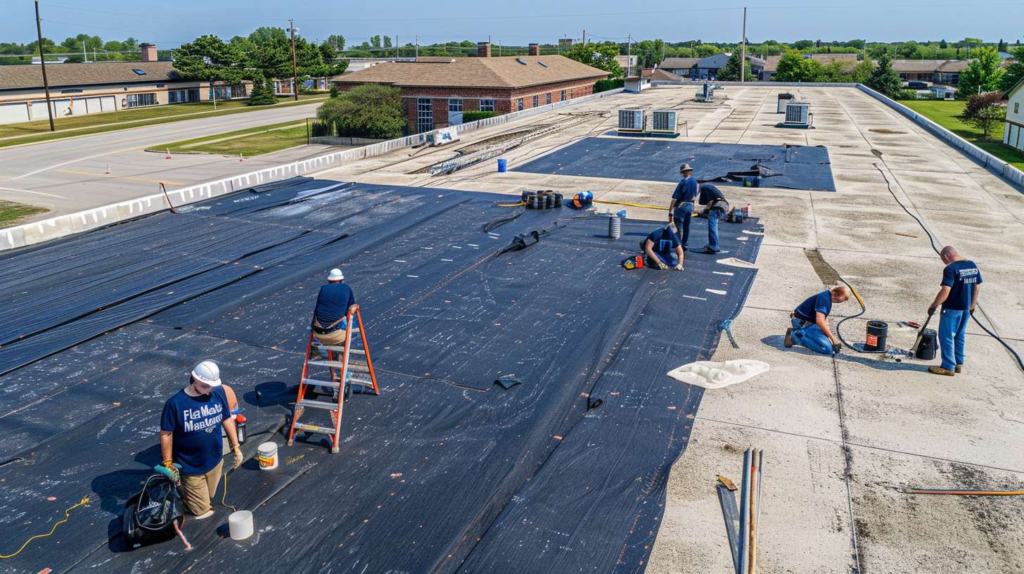
I was on a three-family in Maspeth at 6:40 in the morning after one of those sticky August nights, and the owner kept pointing at a water stain over the hallway light like that was the whole problem. I walked the roof and found a blister the size of a dinner plate near an old satellite mount - and when I pressed it, warm trapped water shifted underneath like a waterbed. That stain inside was just the messenger. And honestly, that's my standing opinion: interior stains are often the least useful clue because they show up after the damaged flat roof has already been lying about how fine it is for a while. Owners lose time treating the stain like the whole story when it's really just the last thing that happened.
| What You See | What It Can Mean Underneath | How Urgent It Is |
|---|---|---|
| Ponding water | Compressed or saturated insulation; drainage failure pulling membrane down | High - address within days |
| Blistering on membrane | Trapped moisture or gas between layers; adhesion failing beneath the surface | Medium-High - inspect now |
| Open or lifted seam | Active water entry point; insulation likely already wet at that seam | High - call immediately |
| Gravel washed into low spot | Water channeling and pooling consistently; membrane stress at that location | Medium - monitor and schedule |
| Surface cracking near flashing | Flashing seal failing; water entering at the roof-to-wall transition | High - don't wait on this one |
Small Signs Queens Property Owners Should Never Shrug Off
- 💧 Bubbles in the membrane - even small ones. Moisture or gas is already trapped under there.
- 👣 Soft spots underfoot - a healthy roof feels solid. If it gives, the insulation below is likely compromised.
- 📐 Wrinkled or lifted flashing - that gap, however small, is an open invitation every time it rains sideways.
- 🔁 Repeating ceiling stain - if it comes back after drying out, the entry point is still active.
- 🤢 Mildew odor on the top floor - that sour smell usually means moisture has been sitting somewhere long enough to get comfortable.
- 🪨 Unexplained gravel drift - gravel doesn't move by itself. If it's piling toward one corner, water is moving it there.
Why Water Rarely Stays Where You Think It Started
How parapets, drains, and old penetrations mislead owners
If I asked you where the leak is, you'd probably point inside - and that's usually late. Water on a flat roof doesn't drop straight down like people assume. It travels laterally, sometimes several feet, following the path of least resistance under the membrane before it finally finds a way through to your ceiling. That's what makes flat roofs in Queens particularly tricky: you've got older mixed-use buildings with parapet walls that have been patched, re-patched, and painted over for decades, plus a whole graveyard of old penetrations from antennas, satellite mounts, and signs that were bolted through the membrane and never properly sealed when the hardware came down. Every one of those old holes is a candidate. Every one.
I remember a windy November afternoon in Sunnyside when a deli owner told me, "It's only a little bubbling, don't upsell me." I'm Vincent "Vinnie Tape" Morello - 19 years tracing leaks on flat roofs across Queens, especially these older mixed-use buildings where the roof history reads like a mystery novel - and I've heard that line more times than I can count. The roof looked harmless from the ladder, but once I got up there, I saw the flashing at the parapet had pulled just enough to let water work its way in every time the wind drove rain sideways. By the time we opened it up, the insulation was dark, sour-smelling, and mashed down like wet cardboard. What the deli owner saw as "a little bubbling" was the roof's way of saying it had already been holding water for a while.
Places Owners Blame vs. Places Water Actually Gets In
Silent Damage Patterns Beneath an Almost Normal Roof
A roof membrane can lie to you the same way a polished car hood hides engine trouble. A damaged flat roof can still look mostly intact from a few feet away - no gaping holes, no obvious collapse - while the insulation underneath is compressed and soaked, seams are slowly letting go, and moisture is spreading quietly in every direction it can find. Here's the insider tip that doesn't get said enough: pay attention to where the gravel, coating, or surface dirt has shifted toward the low spots. That migration isn't random. It quietly maps where water has been moving and pooling repeatedly, and it often points directly at hidden saturation that a quick visual scan would completely miss. Tap the surface with your knuckles - solid tells the truth, soft lies.
| ❌ Myth | ✅ Fact |
|---|---|
| If there's no visible hole, the roof is fine. | Flat roof membranes fail at seams, flashings, and penetrations - not just holes. The surface can look intact while moisture is already spreading below. |
| Bubbling is just cosmetic - it'll dry out. | Blisters mean trapped moisture or gas is already compromising adhesion. They don't dry out - they grow, eventually crack, and become active entry points. |
| A ceiling stain shows you exactly where the leak is. | Water travels laterally under the membrane before dropping through. The stain location and the roof entry point are rarely in the same place. |
| One dry day means the problem passed. | Saturated insulation stays wet for a long time after rain stops. The damage is still active even when your ceiling looks dry again. |
| Only old roofs get hidden moisture problems. | Poor installation, foot traffic, and wind-driven rain can compromise a roof within a few years. Age is a factor, not the only one. |
When a Subtle Roof Problem Becomes a Real Repair Emergency
Soft spots, seam splits, and odors that should change your timeline
Here's the part building owners usually don't love hearing. Soft areas underfoot, active seam separation, recurring interior drips, or that sour wet-insulation smell - those aren't "keep an eye on it" situations anymore. Those are schedule it now situations. The gap between "watch and wait" and "this just got expensive" on a flat roof is smaller than people think, and hidden moisture doesn't take days off while you're figuring out your schedule.
Now forget what it looks like from the sidewalk.
I had one in Sunnyside where the roof looked almost respectable until I stepped on it. But the job I keep coming back to happened in Jackson Heights on a Saturday right before sunset - a landlord called because tenants said they heard dripping but nobody could see active water anywhere. I found the damaged flat roof section by following a trail of fine gravel that had washed into a low spot near the back of the building, right where the membrane was starting to split open at a seam. No dramatic hole, no obvious failure, nothing that would catch your eye from the rooftop edge. Just quiet damage doing exactly what quiet damage does - spreading. That's the job I still mention when someone tells me their roof "looks fine." Flat roof damage often gets loud only after it's already been quiet for months.
⚠️ Don't Make It Worse Before Help Arrives
Stabbing or puncturing a blister to "let it drain" tears the membrane and creates a new entry point. Smearing roof cement over a wet seam doesn't seal it - it traps moisture underneath and sets up a larger failure later. And don't assume the visible interior stain marks the source; patching the ceiling without fixing the roof just delays the next drip.
Hidden saturation can turn a patch attempt into a bigger tear or push moisture deeper into the insulation layer. A proper inspection finds the real source. A blind patch finds it again six months later - usually after it's gotten worse.
Questions Owners Ask After They Notice Something Off
Blunt truth: a flat roof almost never fails all at once. It's a process - usually a slow one - and most of the damage happens in the space between "I should probably look at that" and actually looking at it. Catching flat roof damage early isn't just about saving money on the repair, though it does. It's about the difference between replacing a section of membrane and replacing soaked insulation, rotted decking, and membrane across half the roof. The questions below are the ones we hear most from Queens building owners who noticed something and weren't sure what to do next. - Vinnie Tape, Flat Masters
Flat Roof Damage - Practical Questions Answered
📋 Before You Call a Flat Roofing Company - Note These Things First
Having this info ready makes the first conversation faster and more useful for everyone.
- ✓ Where the interior symptom appeared - ceiling, wall, around a fixture, near a partition. Be specific.
- ✓ When it shows up - only during rain, after rain stops, randomly, or constantly.
- ✓ Whether recent wind-driven rain occurred - sideways rain hits parapets and flashings differently than straight-down rain.
- ✓ Whether the roof has old mounts, patches, or hardware - satellite dishes, antenna bases, old HVAC curbs, or anything that was bolted through the membrane.
- ✓ Whether any rooftop area feels soft underfoot - if you can safely access the roof, note any spots that give when you step on them.
- ✓ Whether you have photos - pictures of puddles, blisters, seam gaps, or the interior stain. Even a phone shot helps narrow down where to look first.
If you're seeing any of these warning signs on a damaged flat roof in Queens, don't let it sit until the next hard rain makes the decision for you. Call Flat Masters for a real inspection - one where someone actually gets on the roof, taps the surface, and tells you what's actually happening underneath before hidden moisture turns a manageable repair into a full rebuild.