Flat Roof Coatings Vary a Lot in Quality - Here Are the Ones That Actually Work
Let's start with the thing most people miss. The best flat roof coating is rarely the one with the biggest advertising budget or the brightest white finish - it's the one that actually matches your roof's condition, drainage behavior, and contamination exposure. This article sorts real-performing options from expensive mismatches, so you stop chasing product labels and start asking the right questions.
Why the top-rated coating can still be the wrong one
My blunt opinion: a "best flat roof coating" list is nearly useless if it ignores the cause-and-effect chain that decides whether any coating survives. Roof condition drives adhesion. Adhesion drives durability. Durability decides whether the coating was worth doing at all. Skip that chain and you're just picking a color. The most advertised product on a Queens building with chronic ponding and a contaminated modified bitumen surface isn't a solution - it's a delay with a warranty attached to it.
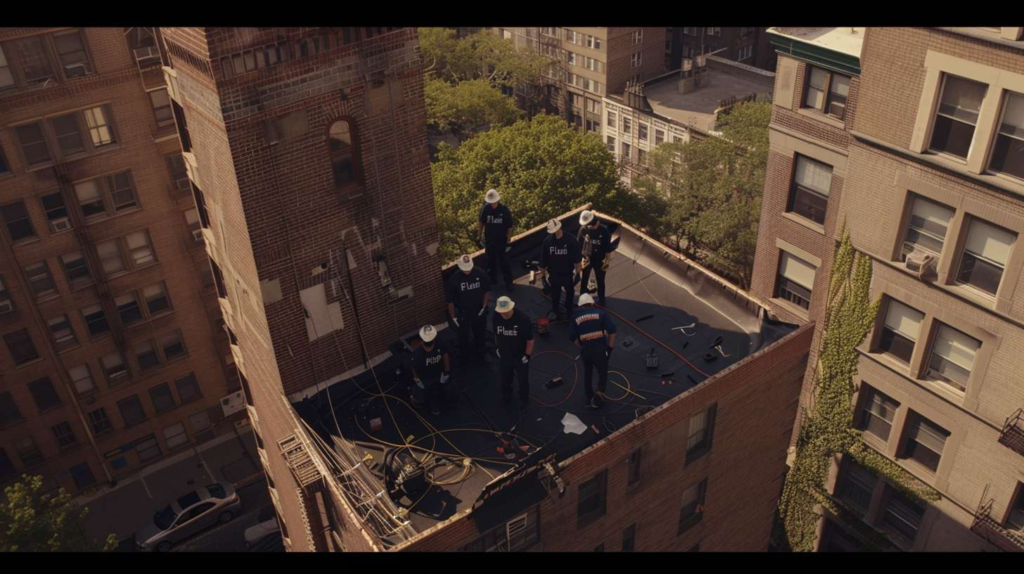
Now that we know what failed, here's what actually matters. I'm Marisol Vega - I've spent 19 years focused on flat-roof diagnostics and recovery work across Queens pre-war multifamily buildings - and I remember standing on a six-family in Elmhurst at 6:40 in the morning, coffee still too hot to drink, looking at a bright white coating that had been sold as a miracle product. It had rained overnight. I pressed one finger near a drain sump and the coating slid sideways in a sheet. The owner kept saying, "But it was the premium one." That was the moment I started telling people premium labels mean nothing if the chemistry doesn't match the roof.
| Myth | Real Answer |
|---|---|
| White coating always means better protection | Reflectivity helps with heat gain, but white means nothing if the coating doesn't bond to your membrane type. Substrate compatibility, not color, determines whether it survives the first winter. |
| Silicone solves ponding on every roof | Silicone tolerates standing water - but only on a clean, structurally sound, properly prepared surface. Apply it over contamination or soft spots and it delaminates just like anything else. |
| A thicker coat fixes bad prep | Thickness amplifies what's underneath, it doesn't fix it. Coat over a dirty or degraded surface and you've just added weight and cost to a failure that was already in progress. |
| Premium product names guarantee premium results | Product quality is only one variable. Drainage pattern, seam condition, contamination exposure, and surface prep each carry equal or greater weight. Mismatched premium coatings fail faster than correctly matched mid-range systems. |
| Any flat roof can be recoated the same way | TPO, EPDM, modified bitumen, and built-up roofs each have different adhesion requirements. Coating system design has to start with the membrane - not the product on sale this month. |
⚠ Warning: Coating a Failing Roof Is Not a Repair Strategy
If there's wet insulation under the membrane, loose or open seams, trapped moisture, grease contamination, or active structural movement - coating over it turns the product into a cosmetic delay, not a fix. That blister you sealed last spring is still expanding underneath the new coating. A bad coating over a bad substrate is expensive denial, and it usually costs more to undo than the original repair would have.
Which coating chemistry works best under specific roof conditions
On a Queens roof at 8 a.m., the first clue is never the color - it's where the water still sits. The real screening factors are ponding duration, membrane type, seam condition, and what lands on the roof from the surrounding environment. Queens throws a lot at flat roofs: older pre-war multifamily buildings in Elmhurst and Jackson Heights with decades of patch-over-patch modified bitumen, restaurant exhaust grease settling across rooftop surfaces on commercial strips near Steinway Street in Astoria, and mixed-use buildings in Ridgewood where the roof takes mechanical abuse from HVAC equipment and foot traffic. The coating conversation has to start there, not at the product shelf.
Acrylic elastomeric coatings do real work when UV reflectivity is the main goal and the drainage is decent - meaning water doesn't sit for more than a couple of hours after rain. They cost less than silicone systems and apply well over clean, sound modified bitumen or smooth-surface built-up roofs. But they disappoint badly in chronic ponding situations. One August afternoon in Ridgewood, I was inspecting a deli roof where the building owner only wanted "the cheapest reflective option." My infrared gun was reading surface temperatures high enough to make the rooftop HVAC cabinet shimmer. The previous reflective acrylic coating had turned chalky, brittle, and split around every seam patch. I peeled up a loose edge and showed him three distinct layers from three different application years - like tree rings of bad decisions. The coating wasn't cheap. The prep was.
Silicone performs well when ponding is a confirmed, ongoing reality and the surface is genuinely clean and structurally stable. It doesn't wash off, and it handles standing water better than any acrylic. Polyurethane systems - particularly aliphatic formulations - hold up well under mechanical abuse, foot traffic, and direct UV exposure without yellowing. Aromatic base coats paired with aliphatic topcoats split the durability and cost difference for roofs that get moderate traffic and some UV exposure. Asphalt-aluminum coatings earn their place on older built-up roofing where reflectivity is secondary and you just need a tough, adhesion-friendly barrier. And here's the insider tip most coating salespeople skip: always ask what contamination lands on the roof every week - not just what membrane is underneath. Grease, soot from nearby exhaust, old patching compounds, and even pigeon activity change adhesion outcomes dramatically. That question alone will tell you whether the coating you're buying has any realistic shot at lasting.
| Coating Type | Best Use Case | Main Strength | Main Weakness | Handles Ponding? | Typical Queens Fit |
|---|---|---|---|---|---|
| Acrylic Elastomeric | Sound roofs with good drainage, UV reflectivity priority | High reflectivity, lower cost, easy recoat | Degrades quickly under chronic standing water; chalks over time | No | Pre-war Jackson Heights multifamily with clean mod-bit and working drains |
| Silicone | Confirmed ponding roofs with clean, structurally sound surfaces | Best water immersion resistance; doesn't wash away | Extremely sensitive to contamination during application; difficult to recoat with other chemistries | Yes | Flat Elmhurst rooftop with confirmed slow drainage and intact seams |
| Aliphatic Polyurethane | High foot traffic, UV exposure, mechanical abuse zones | Excellent abrasion resistance; UV stable; doesn't yellow | Higher cost; requires precise surface prep and moisture control during application | Limited | Ridgewood mixed-use rooftop with HVAC maintenance traffic |
| Aromatic Base + Aliphatic Topcoat | Roofs needing durability with cost control; moderate traffic | Balances cost and UV protection; strong adhesion when prepped correctly | Aromatic base yellows if topcoat fails; two-coat system increases labor | Limited | Commercial strip buildings in Astoria with moderate foot access |
| Aluminum/Asphalt Coating | Older built-up roofing (BUR); heat reduction on dark surfaces | Strong adhesion to aged asphalt; cost-effective; good thermal reflection | Not compatible with most single-ply membranes; limited elongation | No | Aging BUR roofs on older Queens multifamily buildings |
| SEBS / Rubberized Coating | Modified bitumen or BUR with movement concerns; seam flexibility needed | High elongation; accommodates thermal movement; good adhesion to asphalt substrates | Less UV stable than silicone; may need topcoat for long-term reflectivity | Moderate | Pre-war multifamily in Jackson Heights with seasonal movement and patched seams |
Is there standing water 48 hours after rain?
YES - Ponding confirmed
Is the surface cleanable and structurally sound?
YES → Silicone coating or reinforced coating system after thorough prep and contamination removal
NO → Repair or replacement required before any coating is considered
NO - Drainage is acceptable
Is UV reflectivity the top priority?
YES → Acrylic elastomeric if membrane is compatible and surface is clean and sound
NO →
Is the roof exposed to traffic, grease, or mechanical abuse?
YES → Aliphatic polyurethane or specialty system
NO → Membrane-specific selection after adhesion testing
This tree is a starting framework. Adhesion testing and a full roof diagnostic are always required before final product selection.
How coating failures begin long before anyone notices leaks again
The uncomfortable truth is that coatings fail quietly before they fail dramatically. Here's the sequence no one draws out for you: dirty surface leads to weak bond, weak bond leads to edge lift, edge lift lets water migrate underneath, and then you get blistering, peeling, or split seams - usually right before or during the first hard winter rain. During a windy November service call in Astoria, a co-op board president told me their last contractor had promised a silicone coating would "solve everything forever." I walked the roof with her while sleet was starting to sting sideways, and we found greasy residue from restaurant exhaust settled across a wide section near the parapet. That coating hadn't failed because silicone is bad - it failed because nobody cleaned the contamination, and nobody explained to the board that coatings are systems, not magic paint. She stopped taking notes mid-walk and said, "So this was doomed before it dried?" Exactly.
Now that we know how failure starts, here's what to actually check before buying anything. Look at the seam edges - are they lifting or feathering? Press on low spots - is there any softness that suggests wet insulation beneath? Check parapet flashings and penetrations for cracking. Look for discoloration that could signal grease or biological growth affecting adhesion. If you see pinholes, chalking, or evidence of prior patch-over-patch work, those aren't cosmetic details - they're the beginning of the failure sequence, not the middle of it. Any coating decision that skips this diagnostic step is working blind.
What to verify before paying for any coating proposal in Queens
Questions that separate a real roof assessment from a paint estimate
Before you sign anything, look at the proposal carefully and ask whether it mentions moisture testing, adhesion verification, seam treatment, drain and scupper condition, and surface cleaning method. If it just says "apply coating" and gives you a square footage price, that's a paint estimate - not a roofing assessment. You'll want to know whether the contractor plans to test for wet insulation before they ever open a bucket. Ask how they're handling seams and penetrations, because that's where 80% of failures start. Ask what cleaning process they're using and how long the surface needs to cure before coating goes down. If those questions get vague answers, that's your answer.
If your estimate never mentions moisture, what exactly are you paying them to evaluate?
What owners and property managers should have ready before requesting a quote:
- Identify your membrane type - TPO, EPDM, modified bitumen, BUR, or built-up gravel. If you don't know, the contractor should determine this before recommending anything.
- Note where water ponds - mark the low spots on a rough sketch or photograph them 24-48 hours after a rainfall. This directly impacts product selection.
- Photograph drains and scuppers - document current condition, whether drains are clogged, slow, or missing guards. Drainage is the single biggest variable in coating longevity.
- List your leak history - locations, approximate dates, whether leaks are active or repaired, and what repairs were made. Patterns reveal where the roof is actually failing.
- Note rooftop grease or exhaust sources - restaurant ventilation, HVAC condensate discharge, or neighboring building exhaust that lands on your roof all affect adhesion and must be disclosed.
- Gather past coating application dates - if you have records from previous coating work, including product names or contractors, bring them. Incompatible coating chemistry layers are a real problem.
- Ask whether wet insulation is suspected - if the roof has had active leaks, there's a real chance the insulation beneath the membrane is holding moisture. This must be tested before coating, not assumed away.
- Confirm the quote includes prep, seam treatment, and detail work - not just product application. If prep and seam reinforcement aren't in the scope, the coating budget is incomplete.
If a Queens flat roof has already cycled through one or two coating failures, the next step isn't another coating - it's a real diagnostic. Flat Masters inspects the roof condition, drainage pattern, and surface contamination before anyone on our team recommends a product, because that's the only way a coating recommendation is worth anything at all.