
A Flat Dormer Adds Space Without Adding Drama - Here's What the Build Involves

A Flat Dormer Adds Space Without Adding Drama – Here’s What the Build Involves

A Flat Dormer Adds Space Without Adding Drama - Here's What the Build Involves

What a Flat Dormer Really Changes Above and Below the Roofline

Compare the two estimates side by side - and nine times out of ten, the homeowner is weighing window styles, siding trim, and exterior finishes while the roof geometry underneath is already making the real decisions. A flat dormer isn't primarily a box you bolt onto a roofline. It's a drainage reroute, a structural load shift, and an interior headroom negotiation that happens to also look like a box when you're standing on the sidewalk. The exterior shape is the last thing that matters.

A flat dormer roof is a system of edges, seams, and slope corrections - and every one of those transitions is a place where water either moves confidently toward a drain or sits and thinks about where to go next. Once you add insulation depth, rafter framing, and a finished ceiling layer, the flat roof dormer inside shrinks noticeably from what the drawings suggested. So that gives us the real issue: most dormer conversations start at the window and should start at the drain.
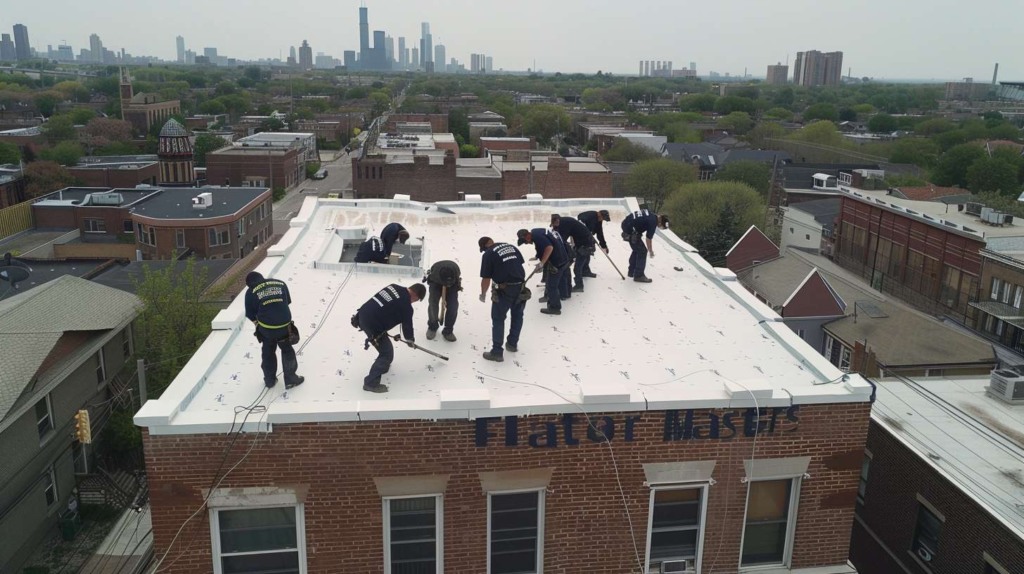
A craftsman installing a flat dormer roof on a residential home, showing precise construction techniques.

What You Think You're Buying vs. What the Build Actually Requires
Looks Like a Simple Box
Actually Means Roof Re-engineering

Exterior shape added to roofline
Drainage paths must be redesigned from scratch

New window in the facade
Header sizing and framing geometry changes required

Added square footage on paper
Headroom vs. insulation tradeoff cuts usable space

Flat top surface that looks level
Tapered slope planning is non-negotiable

Finished room ready for furniture
Waterproof transition detailing at every joint

Quick Orientation - Queens Homeowners
Best First Question: Where does the water go? Ask this before you discuss anything else.
Most Overlooked Issue: Finished ceiling height after insulation and framing - the room will feel shorter than the drawings show.
Critical Detail: Transition flashing where the old roof surface meets the new dormer walls - this seam leaks first when rushed.
Typical Queens Planning Concern: Matching new dormer conditions to existing roof membranes on attached or close-set homes with limited side access.

Why the Drainage Geometry Decides Whether the Dormer Behaves

At the front edge of the roof, the truth usually shows up first.

I remember standing on a house in Maspeth at 6:40 in the morning, coffee balanced on an upside-down bucket, looking at a brand-new flat dormer roof that had ponding before the plumber's van even arrived. The homeowner kept insisting the leak was probably the window - it never is just the window. The real issue was that the framer had left a dead-flat section with nowhere for the water to go. That job is the reason I now talk about slope before I talk about finishes, and it's the same reason Marta Zielińska, with 19 years in flat roofing and a specialty in drainage problem-solving on Queens roof systems, asks to see the drain locations on day one. The front edge of a flat dormer roof is where tapered corrections, scupper alignments, and membrane transitions all converge - and that convergence will either be planned or it will be discovered during the next rainstorm.

Water follows geometry. It doesn't care about the siding color or the window brand - it follows lines, corners, and low points whether the crew respected those paths or not. In Queens, attached homes along streets like 69th Avenue in Maspeth or dense blocks in Ridgewood create additional wrinkles: parapets that redirect water unpredictably, neighboring rooflines that limit your drainage options, and tight sightlines that make access for repairs genuinely difficult after the fact. A dormer on a flat roof that doesn't account for all of those conditions isn't unfinished - it's just not finished failing yet. Sort the geometry first, and everything else becomes straightforward.

Roof Condition What the Builder Must Rework What Can Go Wrong If Skipped Best Practice
Dead-flat existing surface Tapered insulation or framing to create positive slope Standing water at dormer base, membrane fatigue Minimum ¼" per foot slope toward drain
Drain or scupper offset from dormer Redirect drainage path without creating new low points Ponding between new and old sections Map all low points before framing begins
Existing membrane in mixed condition Decide strip-and-replace vs. overlay before tying in dormer New dormer fails because old membrane fails beneath it Inspect existing layers before any framing
Parapet walls on one or more sides Integrate dormer flashing with parapet cap and counterflashing Water enters at parapet-dormer junction Layered counterflashing, not caulk
Dormer wall-to-roof transition Base flashing, step flashing, and wall tie-in in correct sequence Leak at the most complex and hardest-to-repair junction Sequence flashing before any cladding is installed

⚠ Don't Call It "Basically Level"

Dead-flat sections at the dormer face are not a minor detail - they're a leak waiting on a calendar. Mixed materials meeting at a single corner without layered flashing transitions, or relying on caulk to seal what should be integrated counterflashing, are among the most predictable failure points on any flat dormer roof.

If you see ponding on a newly built flat dormer right after rain, that is not a cosmetic break-in issue. It's a drainage geometry problem, and it doesn't self-correct. Address it before the membrane and interior finishes are complete - not after drywall goes in.

Inside the Room, the Ceiling Line Tells the Truth

I learned this on a sweaty Ridgewood afternoon...

One August afternoon in Ridgewood, during that sticky weather where even the tape measure feels tired, I walked a couple through what the flat roof dormer inside would actually feel like when finished. They were focused on the exterior - window size, trim details - but once I showed them how insulation thickness, rafter depth, and the finished ceiling layer changed the actual headroom they'd be living under, the whole conversation shifted. The gain in vertical space was real, but they'd been expecting a full standing room that would've required either a taller framed face or thinner insulation than their heating bill could afford. We redesigned the dormer face that same evening, sketching it out on a scrap of underlayment on the tailgate, and the result was a better room because we caught the ceiling line problem before the framing crew arrived.

Renderings are notoriously generous with ceilings - and honestly, that's a feature of the software, not a bug they're in a hurry to fix. The flat roof dormer inside will feel different from the exterior drawings because floor-to-ceiling measurements don't account for the knee-wall zones at the perimeter, where the dormer face meets the original roof slope. HVAC runs and vent chases can steal another two or three inches in spots that weren't flagged on the plan. The insider tip that's worth repeating: don't measure total square footage added - measure usable standing area and the finished ceiling line at the center of the room, because that's what determines whether the space functions the way you pictured it.

If water has to think, the room below eventually pays for it.

Dormer Priority Decision Guide
Start here: "What bothers you more in the current upper floor?"
→ "Low headroom near the center of the space"
Prioritize vertical gain. Commission a detailed interior section drawing before finalizing dormer face height. Headroom drives frame height - locking the design before this study often causes a costly mid-build revision.

→ "Cramped floor area but decent standing room already"
Prioritize dormer width and furniture layout. A wider dormer face expands usable floor area at the perimeter. Work with your builder on furniture placement against the knee-wall zones before the framing is set.

→ "Recurring roof issues already exist up there"
Fix roof geometry first, then finalize dormer shape. Building a dormer onto a roof with drainage or membrane problems doesn't reset those problems - it conceals them until the next rain. The existing roof needs a clean bill before any dormer framing begins.

→ "Honestly, I need more headroom, more floor area, and a solid roof"
Expect tradeoffs and plan for redesign iterations. All three goals are achievable together, but each one pulls in a slightly different direction. Budget time - not just money - for a design phase that stress-tests each priority before finalizing.

Open This Before You Approve Final Drawings
Finished ceiling drop from structure and insulation
The structural rafter or joist depth, plus rigid or batt insulation thickness, plus the ceiling finish layer (drywall or otherwise) will reduce your rough headroom by anywhere from 8 to 14 inches depending on your insulation R-value target and framing depth. Know the finished ceiling height before you approve - not after drywall is in.
Where knee-wall or low-edge zones still remain
A flat dormer face doesn't automatically eliminate the perimeter knee-wall zone on the interior. The transition from the dormer face to the original roof slope can still leave low areas along the sides of the room. These zones affect furniture placement, storage, and how the room feels to move through.
How window height changes furniture placement
Window sill height directly affects what you can put in front of it. A sill that's too low reads as a design feature on the exterior but limits where beds, desks, or built-ins can sit on the interior. Confirm window rough opening height against your intended furniture plan before locking the dormer face dimensions.
Why HVAC and vent routing can steal inches you thought you had
Mini-split lines, bathroom exhaust duct, or supply/return air routing all need somewhere to go in a newly finished dormer room. These are rarely shown in architectural drawings and often get run through the only available cavity - which might be the ceiling. Coordinate HVAC rough-in with the framing plan, not after drywall is ordered.

Before You Approve the Build, Ask These Uncomfortable Questions

What do I ask a homeowner before anything else? Whether this dormer is solving a headroom problem, a layout problem, a resale problem, or just a "the room looks small" problem - because each of those has a different right answer and a different budget tolerance. Then I ask whether the existing flat roof has enough life left to be built onto without the new dormer inheriting old problems wrapped in new materials. And then I ask whether they're paying for proper transition detailing or for cosmetic speed. Blunt truth: a flat dormer can be neat or cheap, but rarely both. The checklist below is the fastest way to figure out which conversation you're actually in before you pick up the phone.

Before You Call About a Flat Dormer in Queens - Verify These 7 Things
1
Age and condition of the existing roof membrane - if it's near end of life, the dormer goes on top of a problem.

2
Where current drains or scuppers are located relative to your proposed dormer footprint.

3
Whether the interior ceiling below the proposed dormer zone is already finished - demolition access affects sequencing and cost.

4
Whether structural drawings or engineering plans exist for the home - especially relevant for attached homes in Queens.

5
Whether neighboring houses or fences limit equipment and access on the sides of the roof.

6
Whether your priority is more standing height or more usable floor area - these pull the design in different directions.

7
Whether any prior leaks occurred near the zone where the dormer is planned - this almost always changes the scope of the build.

Common Questions About Flat Dormer Builds
Is a flat dormer a bad idea on a flat roof house?
Not at all - but it's not a casual addition either. A flat dormer on a flat roof is a sensible pairing when the drainage geometry is worked out carefully. The problem isn't the combination; it's when the builder treats it like a simple box addition and skips the slope and flashing planning. Done right, it's clean and durable.
How much slope should a flat dormer roof really have?
The minimum for positive drainage is ¼ inch per foot - and that's a floor, not a target. On a dormer face where water has less run distance to reach a drain, you want that slope consistent across the whole surface, including at the corners. Tapered insulation boards are the most reliable way to hit it without relying on the framing crew to nail the geometry perfectly.
Will the room feel much bigger inside?
It will feel meaningfully better - but not as big as the exterior drawings suggest. Insulation depth, finished ceiling layers, and perimeter knee-wall zones reduce the apparent gain. The actual improvement is most noticeable at the center of the room where headroom increases. Measure the finished ceiling height and usable standing area before the design is locked.
Can a new dormer be tied into an older flat roof safely?
Yes, but the existing roof condition has to be assessed honestly first. If the membrane is at or near end of life, it makes no sense to tie a new dormer into it and hope for the best. The existing system needs to be in sound condition - or replaced at the time of the dormer build - so the new and old sections behave as one waterproofed surface.
What detail leaks first when the work is rushed?
The wall-to-roof transition at the dormer base - almost every time. This is where the vertical dormer wall meets the flat roof plane, and it requires base flashing installed in the right sequence before any cladding goes on. When that sequence gets skipped or caulked over, water finds the gap within a season or two. The corner where two different materials meet is the second most common failure point.

Where Rushed Dormers Fail in Queens and What a Clean Build Sequence Looks Like

Here's my unpopular opinion: the pretty part is the easy part.

I had a Sunday emergency call in Astoria after a thunderstorm where a dormer on a flat roof had been built fast and flashed like an afterthought. The owner's father met me at the hatch in house slippers, and within five minutes I found three different materials - EPDM, modified bitumen, and something that looked like it came off a hardware store shelf - meeting at one corner like strangers forced into the same elevator. That's a condition you see regularly in Queens: varied reroof layers from different decades, patchwork repairs done by whoever was available at the time, and tight access on attached homes in Astoria, Ridgewood, and Maspeth that made it easy for each crew to do the minimum at the edges and move on. The leak wasn't at the window. It was at the most complex junction on the roof, where nobody had planned a flashing sequence because everyone assumed somebody else had.

A bad dormer is like putting a shoebox on a dinner tray and wondering why everything slides.

A clean build has a logic to it that you can follow like boxes and arrows on a sketch - and every water path has an obvious, unambiguous direction from the first day. You start by inspecting the existing roof and framing for condition and load capacity. Then you map all drainage paths and low points before touching a single rafter. You frame the dormer with slope intention built in, not corrected for afterward. Substrate and tapered correction go in next, establishing the geometry that water will follow for the next twenty years. Then membrane and wall flashing are executed in sequence - base flashing before cladding, counterflashing before trim, every layer overlapping in the direction water travels. Windows, siding, and interior finishes come last, and only after the waterproofing has been walked and confirmed. If that sequence gets compressed or reordered, you're not building a dormer - you're building a future leak map. If you'd like someone to look at your existing roof and tell you honestly whether it can handle a dormer without creating that map, give Flat Masters a call and we'll start with the roof, not the renderings.

Best-Practice Build Sequence - Flat Dormer Without Leak Points
1
Inspect Existing Roof and Framing
Assess membrane condition, framing integrity, and load capacity. Identify how many existing roof layers are present and whether they need to be stripped before the dormer is tied in.

2
Map Drainage and Low Points
Locate all existing drains, scuppers, and low-point zones. Determine how the new dormer footprint intersects with current drainage paths and plan corrections before framing begins.

3
Frame Dormer with Planned Slope Transitions
Build the dormer frame with slope intent designed in - not assumed. Headers, rafters, and ledger connections are sized for both structural load and drainage geometry at the same time.

4
Install Sheathing, Substrate, and Tapered Correction
Lay sheathing across the dormer deck, then install tapered insulation boards to achieve consistent positive slope toward the drain. This is where drainage geometry is locked in permanently.

5
Execute Membrane Plus Wall and Base Flashing in Sequence
Membrane is installed and fully sealed before any flashing work begins. Base flashing at the dormer walls, step flashing at side transitions, and counterflashing at parapets are installed in the correct overlap sequence - never reversed.

6
Complete Windows, Cladding, and Interior Only After Waterproofing Passes
Windows, exterior siding, and interior finishes are the last phase - full stop. No drywall goes in until the waterproofing layer has been inspected and confirmed. This sequence protects the interior work from being redone.

Myth Fact
"Flat means perfectly level" A flat dormer roof must maintain positive drainage slope - minimum ¼" per foot. Dead-level is a ponding problem, not a design feature.
"Leaks mostly come from the dormer window" The wall-to-roof transition and material corners fail far more often than the window itself. Windows get blamed because the water shows up inside near them - not because they're the source.
"Inside space is easy to predict from exterior drawings" Exterior drawings don't show insulation depth, rafter thickness, finish layers, or HVAC routing. The finished ceiling line and usable standing area are always smaller than the exterior elevation suggests.
"Any roofer or framer can sort out the transitions later" Flashing transitions have to be planned and executed in sequence during the build - not corrected afterward. "We'll figure it out at the end" is how corners get caulked instead of properly flashed.
"New siding makes the dormer look finished so the hard part is done" New siding covers the exterior - it doesn't validate the waterproofing underneath it. A dormer can look completely finished and still have a flashing gap that won't reveal itself until the next heavy rain.

A flat dormer done right is a genuinely useful addition to a Queens home - more headroom, better light, real usable space, and a roof that doesn't require an apology every time it rains. The difference between that outcome and the one that ends with a Sunday emergency call comes down to whether the geometry was respected from the start. If you want a straightforward evaluation of whether your existing flat roof can handle a dormer without creating problems you'll be chasing for years, call Flat Masters - we start with the roof, and the rest of the conversation follows from there.

Faq’s

Flat Roofing FAQs: Everything Queens, NY Homeowners Need to Know

How much does a flat dormer really cost in Queens?
Flat dormer installation typically runs $8,000-$25,000 depending on size and complexity. The price includes permits, materials, and labor, but interior finishing can add significantly to the total. Most homeowners see it as a smart investment that adds both living space and home value.
Most Queens homes built with solid construction can handle the additional load, but a professional structural inspection is essential. We evaluate your existing roof joists and ensure they can support the dormer weight plus snow loads during New York winters.
Flat dormer installation requires expertise in structural framing, roofing, waterproofing, and permits. DIY attempts often lead to costly water damage, structural issues, and code violations. The complexity and safety risks make professional installation worth the investment.
Most flat dormer projects take 5-8 days depending on size and weather conditions. This includes cutting the roof opening, framing, weatherproofing, and basic finishing. Permit approval adds 4-6 weeks to the timeline, but we handle all paperwork for you.
Small roof problems often become major issues before dormer installation. It’s better to address everything during the dormer project since we’ll be working on your roof structure anyway. Waiting could mean paying for repairs twice or dealing with water damage.

Ask Question

Or

How to Install Flat Roof: 5 Essential Steps for Success

7 min read

All the Flat Roofing Materials Compared - What Each One Actually Delivers

12 min read

What's the Average Flat Roof Snow Removal Cost for Your Home?

4 min read

Flat Roof Skylight Leaking? We Find the Source and Fix It Right

6 min read

Purlins in a Flat Roof? Here's What They Do and Why They Really Matter

13 min read

Flat Roof Fascia Detail - Installed and Repaired by NYC Specialists

7 min read

Which Flat Roof is Best? Your 2026 Guide to Top Options

7 min read

Expert Residential Flat Roof Inspection Services Near You

9 min read

What Flat Roofing Really Costs - And Why the Cheapest Quote Is Often the Costliest

14 min read

Fiberglass for a Flat Roof? Here's Why It's Become the Go-To Choice for Many

14 min read

Flat Roof Specifications Aren't Just Paperwork - They're What Keeps It Watertight

13 min read

How Is a Flat Roof Actually Built? Here's the Complete Build Process Explained

17 min read

How Much Does It Cost to Felt a Flat Roof? The Numbers That Actually Matter

13 min read

Single Storey Flat Roof Extension - How Much Will It Cost You?

4 min read

Flat Roof Drainage Systems - Installed and Repaired Right

7 min read

Standing Water on Your Flat Roof After Rain? That's a Problem You Can Fix

13 min read

Professional Gutters for Flat Roof Homes Installation & Repair

5 min read

How to Make a Flat Roof House Look Better: 5 Design Solutions

7 min read

Adding a Skylight to a Flat Roof? Here's What It Will Actually Cost You

13 min read

Deck Mounted Skylight Installation on Flat Roofs - NYC Specialists

8 min read

Wind Doesn't Just Blow Things Around - Here's What It Actually Does to a Flat Roof

15 min read

Silicone Flat Roof Coating in NYC - Long-Lasting Protection

6 min read

Flat Roof Skylight Windows - Installed and Repaired by NYC Pros

7 min read

Understanding Flat Roof Requirements for Shingles in Your Area

6 min read

Flat Roof Structural Calculations Done by Licensed NYC Engineers

12 min read
blue circle

Get a FREE Roofing Quote Today!

Schedule Free Inspection