
Rubber Roofing Has Changed Flat Roofs Forever - Here's Why It's So Popular Now
Look, rubber roofing didn't become popular because some contractor decided it was trendy - it became popular because flat-roof owners across Queens got completely exhausted watching the same failures repeat themselves across every patch, every repair call, and every short-lived replacement. This article gives you a plain-English breakdown of what rubber roofing systems for flat roofs actually solve, and where you still need to be careful before you commit to anything.
Why Owners Finally Stopped Repeating the Same Flat Roof Mistakes
Cheap repeat patches trap moisture. Trapped moisture stresses seams. Stressed seams open up during the next temperature swing, and then you've got a leak - and another bill. That cause-and-effect chain is exactly why rubber flat roofing systems started gaining real traction: not because of marketing, but because the old approach kept producing the same predictable outcome. Owners weren't frustrated with flat roofs. They were frustrated with being sold the same band-aid over and over.
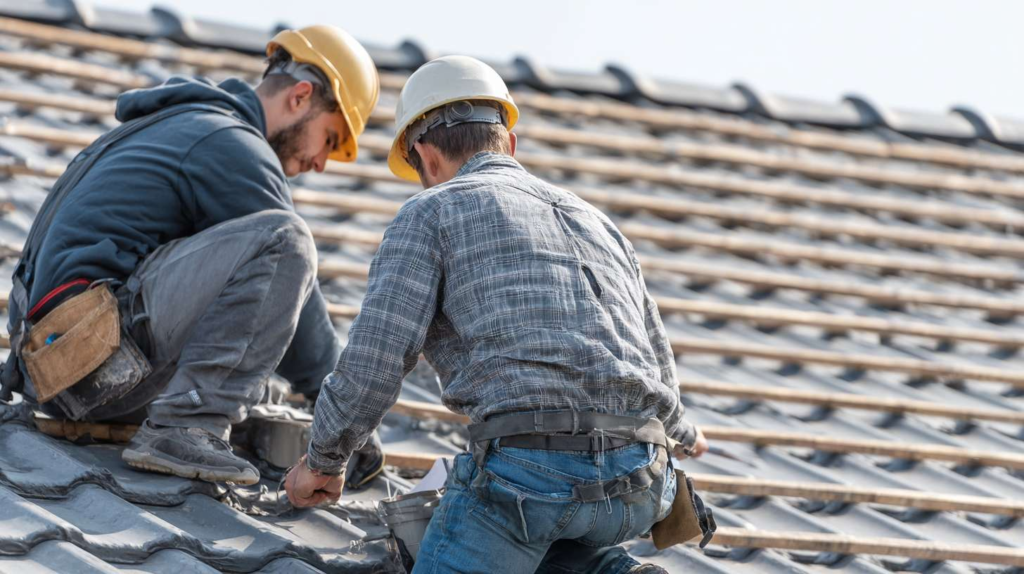
Seventeen years in, I can usually tell what kind of roof story I'm about to hear before I even step off the ladder. I remember being on a two-family in Elmhurst at about 6:40 in the morning, with that gray, damp kind of summer air that tells you the roof has been holding heat all night. The owner kept saying he just wanted "something cheap again," and I walked him through where the old patched surface had turned into a little map of repeated mistakes - each patch slightly misaligned, each one trapping a little more moisture underneath. I'm Alicia Moreno, and I've been specializing in low-slope membrane diagnosis across Queens for 17 years. Roofs like that Elmhurst two-family are what shifted my thinking early: the problem was never one bad repair. It was the assumption that the next patch would finally hold.
How Rubber Roofing Handles the Boring Problems That Actually Ruin Roofs
Here's the plain answer: rubber caught on because it solves boring problems extremely well. Movement, seam integrity, drainage coordination, weather exposure - none of that is exciting, but all of it is what determines whether a flat roof lasts or doesn't. That leads to the next problem: owners focus on the material name and miss the system around it. And that's where owners get fooled - a great membrane installed over a bad drainage plan is still a bad roof.
Water Movement Matters More Than Marketing
If you were standing next to me on your roof, the first thing I'd ask is where water likes to sit after a storm. Not where your drain is. Where water actually goes. On low-slope roofs, those two things aren't always the same. Ponding water is patient - it sits on a membrane, works into any imperfection at a seam or edge, and over time it wins. I walked a low-slope roof over a bakery near Ridgewood a few winters back, right after a wet March sleet. Every detail flaw was practically waving at me. The owner was convinced the leak was over the prep room because that's where the ceiling stain was - but the actual failure had been traveling from a drain area that had been badly built years earlier. Good rubber flat roofing systems can't compensate for water that has nowhere to go. Drainage planning is the roof, not an afterthought.
Seams, Edges, and Penetrations Decide the Outcome
Blunt truth: most flat roof trouble starts long before the leak reaches your ceiling, and it almost always starts at a seam, a curb edge, a flashing transition, or a perimeter detail - not in the middle of a field of clean membrane. On Queens roofs specifically, I see this pattern repeat across co-op buildings with parapets, attached two- and three-families with shared walls, and mixed-use buildings where HVAC equipment punches through the roof in three different spots. Every one of those roof types has its own version of the same weak points: the parapet base flashing, the drain collar, the pipe boot, the wall-to-roof transition. A rubber roofing system that's carefully detailed at every one of those points can last 20-plus years. One that's rushed through those exact spots will be calling you for help within three.
⚠ Good Material Cannot Rescue Bad Execution
Even high-quality rubber roofing for flat roofs will underperform if drains are poorly positioned, insulation is uneven or already saturated, flashing is rushed, or old wet layers are buried under the new system. The membrane is one part of a system - and any weak link in that system will eventually express itself as a leak.
Worth knowing: the location of an interior stain almost never marks the exact entry point on a flat roof. A careful evaluation of drains, edges, and penetrations - not just the area above the stain - is how real diagnosis works.
What Makes One Rubber Flat Roofing System a Smart Choice and Another a Headache
Back on a windy roof in Forest Hills, I had a customer ask me the exact question this article is answering. She met me up there with a folding chair, a thermos, and six pages of handwritten questions - and she wanted to know why everyone suddenly recommended rubber roofing for flat roof homes when twenty years ago nobody brought it up. I sat on an upside-down bucket and walked her through the real answer: it's not about the product name, it's about the variables the system depends on - membrane quality, attachment method, substrate condition, drainage design, and installer discipline. I told her plainly that I'd rather explain to an owner that their roof is a poor candidate for a quick rubber overlay than sell a shortcut that produces a bigger bill eighteen months from now. That's not a sales pitch; that's just what the job actually requires. And the single best question you can ask any roofer before hiring them isn't "Which brand do you use?" - it's "How are you handling drains, edges, and penetrations on my specific roof?"
Questions to Settle Before You Commit to Rubber Roofing in Queens
A flat roof is a little like a classroom lab table - if one corner is off, the whole experiment gets messy fast. Substrate condition, insulation evenness, drain placement, and perimeter detail are all connected variables. Change one without accounting for the others and you'll end up chasing a symptom instead of fixing a system. That's not a knock on rubber roofing; it's just the reality of any flat roof material applied to a building that already has a history.
Before you compare proposals, do you know whether your current roof is a candidate for repair, recover, or full replacement?
What Should a Real Proposal Explain?
▸ Substrate Prep and Moisture Handling
A legitimate proposal should state whether existing layers will be removed or overlaid and explain how moisture in the current deck will be identified and addressed. If a proposal skips this entirely, that's a flag - burying wet insulation under new rubber is one of the most common ways a new roof fails prematurely.
▸ Drain and Taper Plan
The proposal should describe how water will move off the roof - whether existing drains are adequate, whether tapered insulation is being used to address low spots, and how drain collars and sumps will be detailed. A proposal that says nothing about drainage on a flat roof is an incomplete proposal.
▸ Flashing and Perimeter Detail Scope
Every wall base, parapet cap, pipe penetration, curb, and edge termination should be accounted for explicitly - not just "flashing as needed." The detail work is where systems succeed or fail, and vague language in this section usually means vague execution on the roof.
▸ Maintenance and Inspection Recommendations
A quality contractor should tell you what to watch for, how often the roof should be checked, and what a normal maintenance visit covers. If no one explains post-installation care, you'll likely be back in three years wondering what happened - even on a well-installed system.
Common Questions About Rubber Roofing for Flat Roofs in Queens
Is rubber roofing good for every flat roof?
No - and any contractor who says otherwise without first evaluating your deck is skipping an important step. Rubber roofing for flat roofs works very well on roofs with sound substrates, manageable drainage, and intact structure. Roofs with saturated insulation, multiple failing layers, or significant structural issues often need more intervention before a membrane is the right answer.
How long can rubber flat roofing last?
A well-installed rubber flat roofing system with regular inspection can realistically last 20 to 30 years. That range depends on installation quality, drainage design, how the details were built, and whether small issues get addressed before they escalate. The membrane itself is only part of the equation.
Can a leak be fixed without replacing the whole roof?
Often yes - if the leak is caught early, the surrounding membrane is in good condition, and the failure is at a specific detail rather than systemic deterioration. Rubber flat roofing is relatively repairable at isolated failure points. The key is accurate diagnosis first, because patching the wrong location while the actual entry point stays open won't solve anything.
Why do quotes vary so much for rubber roofing for flat roof buildings?
Because the scope varies - sometimes dramatically. A quote that skips full tear-off, uses thinner membrane, leaves existing wet insulation in place, or glosses over flashing details will come in lower than one that addresses all of those things properly. When you're comparing proposals, look at what's actually included, not just the bottom-line number.
The right rubber roof isn't just a product you pick - it's a system you build correctly from substrate to seam, and Flat Masters is ready to give your Queens flat roof the honest evaluation it deserves. Call us today and let's look at what your roof actually needs, not just what's easy to sell.