Torch-On Felt Is One of the Best Systems Around - If You Know What You're Doing
Control is the whole game with torch-on felt - control over the heat, the timing, and the surface underneath. This guide covers not just how to torch on felt a flat roof step by step, but why each variable matters enough to cost you the entire membrane if you treat it like a suggestion.
Torch-On Felt Only Performs When the Conditions Are Controlled
My opinion, and I've earned it: torch-on felt is one of the best flat-roof systems available, and also one of the fastest ways to waste a few thousand dollars if you go in undisciplined. Think of it less like a construction task and more like a controlled experiment. Change the inputs - rush the prep, misjudge the flame, install over a damp substrate - and the outcome changes with it, predictably, and not in your favor. The roof doesn't hold grudges, but it does keep score.
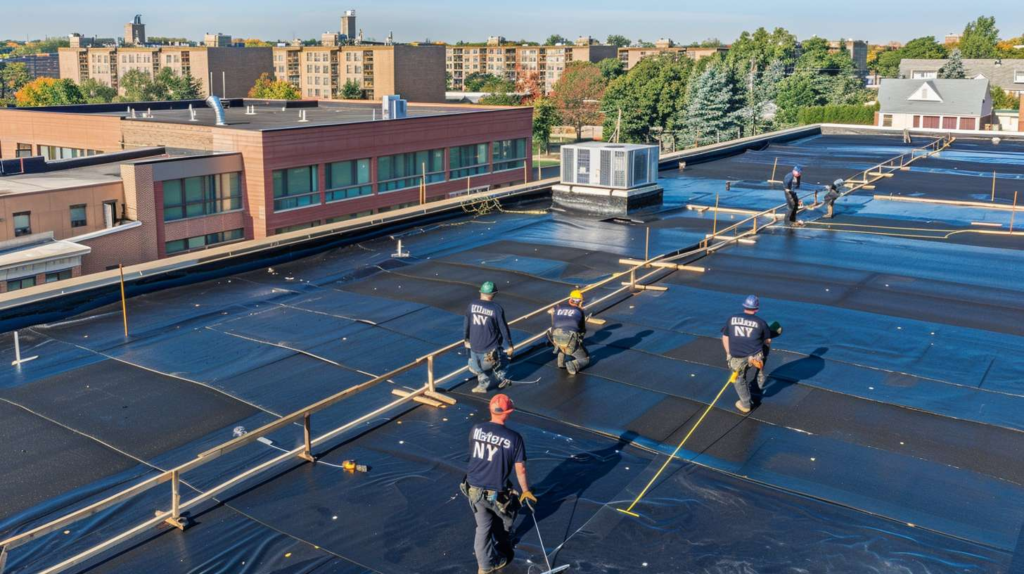
What you're about to read isn't a pep talk about how to felt a flat roof torch-on style in an afternoon. It's an honest breakdown of what each step actually controls, why skipping prep creates a membrane that looks sealed and isn't, and where most torch-on failures really start - which is almost never the material itself.
| Myth | Fact |
|---|---|
| More flame means a better bond. | Excess heat scorches the bitumen surface instead of activating it. A controlled, even pass creates adhesion; a blast creates a burnt skin that looks bonded and isn't. |
| Minor dampness just burns off. | Moisture doesn't escape cleanly under a membrane. It converts to vapor and gets trapped, creating blisters within days. The deck must be genuinely dry, not "mostly dry." |
| Wrinkles flatten under the next layer. | Wrinkles locked into the base sheet create stress points that open under thermal expansion. The next layer just covers the problem, not the cause. |
| Any handyman can roll while another torches. | The helper controls alignment and tension. If they drift or move too fast, the torcher is chasing a crooked line with a flame - which ends badly. Both roles require training. |
| If it looks sealed today, it'll stay sealed. | A neat finish only means the top surface is smooth. The seam bond below is what matters, and under-bonded laps don't announce themselves until the first hot July or hard freeze. |
⚠ Why Torch-On Felt Is One of the Least Forgiving DIY Methods
- Open flame on a residential roof means fire risk is real - especially near wood parapets, blocking, and old felt that's bone dry.
- Hidden moisture in the deck doesn't show itself during install. It shows itself as a blister two weeks later.
- Membrane scorching happens in seconds of inattention and creates weak sections that look fine from standing height.
- Fire risk at penetrations and parapets is highest because the torch angle changes, heat concentrates, and surrounding materials are often older and drier.
- False confidence from closed-looking seams is the single most dangerous outcome of a rushed job. Under-bonded laps feel solid to the hand and fail in the heat.
Before Any Flame Comes Out, Set the Roof Up to Accept the Membrane
Surface Conditions That Are Acceptable
I was on a two-family in Maspeth at 6:40 in the morning, frost still sitting on the old cap sheet, and the owner kept asking if we could "just warm it through with the torch." I told him no three times, because the membrane doesn't care about your breakfast schedule. Frost on a Queens row building in October or November isn't cosmetic - it's a moisture problem, and torching over it traps that moisture directly under the new sheet. I'm Marta Zielińska, and I've spent 19 years in flat roofing across this borough with a specialty in repairing failed torch-on seam work - and the repair calls I dread most are the ones where I can trace the failure back to a morning someone was in a hurry. By noon that day in Maspeth, the sun had done the work for us, and that roof bonded beautifully instead of trapping a blister under every lap.
Here's the blunt truth about prep: it's not cleanup. Prep is bond insurance, and every step either increases or decreases the chance the membrane sticks correctly. The deck needs to be structurally sound and genuinely dry, not damp-but-close. Existing membrane needs to be fully removed or confirmed as an approved base. Drains need to be mapped before a single roll goes down. Any surface that needs primer - and most do - should be primed and cured. Rolls should be positioned for alignment before the torch ever gets lit. The sequence matters, and changing it doesn't make you efficient; it makes you the reason someone else gets a repair call.
Tools and Materials That Must Be Ready First
✔ Pre-Install Verification Checklist: Torch-On Felt on a Flat Roof
- Roof deck is completely dry - confirmed by touch and time, not assumption.
- Existing membrane has been fully removed, or base layer has been formally approved for overlay.
- Drain locations mapped and cleared; no debris blocking flow paths.
- Parapet edges inspected and sound - no crumbling mortar, loose cap, or deteriorated flashing.
- Weather window confirmed: no rain in forecast, temperature above 40°F, wind manageable.
- Fire extinguisher on the roof and within reach before ignition.
- Torch and regulator tested at ground level - no leaks, correct pressure, igniter working.
- Rolls acclimated to ambient temperature - cold rolls don't unwind or bond correctly.
- Layout lines snapped/chalked so every sheet has a straight reference before installation starts.
- Helper briefed on movement, speed, and stop signals - not winging it once the flame is on.
| Variable | What Good Looks Like | What Goes Wrong If Ignored |
|---|---|---|
| Deck Moisture | Visually dry, no cold-to-touch dampness, no frost, confirmed after sun exposure | Blisters form within days; trapped vapor has nowhere to go |
| Existing Base | Removed down to clean substrate, or approved base layer confirmed flat and sound | New membrane bonds to a failing old surface; fails at the same spots |
| Surface Priming | Primer applied where required, fully dried before membrane goes down | Adhesion at edges and laps is inconsistent; peeling in year one |
| Layout Lines | Chalk lines snapped across full roof length before any roll is positioned | Sheets drift off parallel; correction mid-install causes wrinkles and misaligned laps |
| Drain Clearance | Drain bowls cleared, clamping rings accessible, sumps noted for sheet overlap planning | Membrane crowded around drain, ponding accelerated, premature seal failure |
| Roll Acclimation | Rolls stored at roof level or in a warm space for at least two hours before install | Cold rolls crack at the core, unwind stiffly, and resist even heat activation |
Run the Installation Sequence Slowly Enough to Keep It Straight and Bonded
If I asked you what the flame is actually doing, would you know? Not melting the sheet. Not heating the roof. It's activating the bitumen on the underside of the membrane just enough to make it flow into the substrate and bond. That's it. The moment the flame becomes about speed or coverage area instead of that specific activation, you've already started failing. A steady, controlled pass - substrate and underside simultaneously, advancing the roll as you go - is what creates the flat, bonded sheet. The torch is a precision instrument that happens to look aggressive. Treat it accordingly.
At the seam, everything tells on you.
During a windy Saturday in Ridgewood, a landlord insisted his handyman could help by rolling material ahead of me while I torched. That lasted about four minutes - until he stepped too far, wrinkled the sheet near a drain sump, and gave me a perfect live demonstration of why alignment on torch-on felt is not a casual suggestion when you're working around a change in the roof plane. A wrinkle near a drain sump is not cosmetic. It's a stress point, a pooling point, and eventually a failure point. I still mention that roof when I explain why the slow part of torch-on installation is usually the part that keeps the ceiling dry.
Here's the insider rule, and it's field-tested: watch the bead. A consistent 3/8-inch bleed-out of bitumen along the lap edge tells you the bond is there. No bleed-out means under-heating. A wide, messy bleed-out means you're overheating and possibly scorching the layer below. And if the alignment starts to drift - stop immediately. Reposition. Don't try to correct a crooked line with extra flame. That's how you get a sealed-looking disaster that opens up at every lap by mid-August.
Step-by-Step: How to Torch On Felt a Flat Roof
Walk the full roof surface. Press down on any soft areas. If the deck flexes, it needs repair before anything else happens. Confirm no frost, no standing damp, no recently rained-on surface. This step cannot be skipped or shortened.
If a base sheet (typically a polyester-reinforced SBS base) is required, install it mechanically or by partial torch before the cap sheet goes down. Confirm it's flat, fastened correctly at edges, and primed where the cap sheet needs extra adhesion.
Chalk lines across the full roof give every sheet a reference. Unroll each sheet dry, position it on the line, then re-roll it tightly for torching. This tells you the layout works before the flame comes on - and catches width conflicts near drains and edges early.
Water flows downhill, so installation goes uphill - shingled so each upper sheet overlaps the lower. The first sheet sets the direction for every sheet that follows. Get it straight, get it on the line, and hold that standard for the entire field. Learning how to put torch on felt on a flat roof correctly starts here.
The torch flame sweeps in a controlled arc - substrate surface, then sheet underside, then back. The roll advances as the bitumen activates, not before. Keep movement slow and steady. If you're moving fast, you're under-bonding. This is the core of how to felt a flat roof torch-on correctly.
Side laps (typically 3 inches) and end laps (typically 6 inches) need consistent bitumen bleed-out along the full edge - roughly 3/8 inch. Press laps firmly with a gloved hand or roller immediately after torching. A lap that's allowed to cool before pressing won't bond fully.
This is where most torch-on roofs fail. Drains need collars and proper membrane integration - not just a cut-and-press. Penetrations need boots or pitch pockets sealed correctly. Parapet terminations need counter-flashing and correct overlap. Rushing details here cancels good field work.
Walk every lap. Press any section that feels cool or uneven. Check termination bars and edge metal for tight seal. A fishmouthed edge found now takes two minutes to fix. Found six months from now, it means a leak, a repair call, and an unhappy property owner.
Seams, Drains, and July Heat Are Where Bad Work Gets Exposed
What Early Failure Looks Like
One August afternoon in Jackson Heights, I got called to inspect a torch-on roof another crew had finished maybe ten days earlier. The blisters were already showing - not one or two, but a pattern across the field, and when I cut one open, the story was clear: rushed bleed-out on one section, overheated and scorched on the next. The two conditions were side by side under a sheet that looked perfectly uniform from the surface. The property owner was a retired violin teacher, very calm about the whole thing, and somehow that made it more embarrassing for the original installer than if she had screamed. Ten days. That's how fast a bad torch-on job announces itself in a Queens summer.
A roof that looks neat on install day is not a finished roof - it's an untested one. Thermal cycling is the real inspector. Queens summers push surface temperatures above 150°F on a dark cap sheet, and that expansion and contraction will find every under-bonded lap, every skipped primer section, every seam that had the right look but not the right bond. The method always gets revealed eventually. A careful installer knows this and treats it as motivation to get the seams right the first time, not something to cross fingers about after the crew packs up.
Queens Property Owners Should Treat Torch-On Felt as a Skilled Service, Not a Weekend Shortcut
Queens roofs aren't simple. The attached row buildings in neighborhoods like Woodhaven and Corona, the mixed-age housing stock with three layers of old cap sheet already on the deck, the drain placements that were clearly decided by someone who never saw rain - these are the conditions a real torch-on crew has to navigate, not a baseline they can ignore. And with every shoulder season comes the same pressure: get it done before the weather turns. That urgency is exactly when shortcuts happen and exactly when they shouldn't. When you're evaluating a contractor for a torch-on job, don't open with price. Ask how they handle a damp morning. Ask how they confirm seam bond before leaving the roof. Ask who details the drains and what that process looks like. Ask whether they do a final walk. The answers tell you more than any quote.
| ✅ Pros for Queens Properties | ⚠ Cons to Weigh First |
|---|---|
| Extremely durable when correctly installed - 20+ year lifespan is realistic on a maintained roof | Open-flame installation is not suitable for DIY; fire risk is real and serious on older wood-framed row buildings |
| Excellent UV resistance and thermal performance - handles Queens summers without softening or slipping | Highly sensitive to install conditions; moisture, cold, and rushing all produce failures that aren't visible until weeks later |
| Compatible with the low-slope geometry common on Queens attached homes and small commercial buildings | Requires skilled crew with specific torch training - not every general roofer has the discipline for seam control |
| Seamless look once properly installed; granulated cap sheet options add additional weather and foot-traffic protection | More expensive upfront than peel-and-stick alternatives - the trade-off is longevity and performance, not cost savings |
| Works well on roofs with multiple penetrations when detailed correctly - pipes, HVAC curbs, and parapet walls all achievable | Detailing around drains and penetrations is where most failures originate - requires genuine expertise, not approximation |
| Strong performance track record when paired with quality base sheet and proper primer on the specific deck types common in Queens | Queens building stock includes many patch-over histories that complicate substrate prep - proper evaluation adds time that rushed installers skip |
November is the deadline. If you want a torch-on felt roof installed or inspected the right way - prep verified, seams confirmed, drains detailed, and no guessing after the crew leaves - call Flat Masters for a Queens roof evaluation. We work across the borough and we don't skip the walk.
- Marta Zielińska, Flat Masters, Queens, NY