
Working With a Flat Roof Specialist vs a General Roofer - The Difference Matters
Why the hire choice changes the outcome
Enough with the upselling. If you have a flat roof in Queens, hire a flat roof specialist - not a general roofer who treats every roof system like the same animal, because the diagnostic approach, the failure points they recognize, and the repairs they recommend are genuinely different, and that difference shows up in your leak, your insulation, and your wallet. This article gives you a plain-English breakdown of why flat roofing specialists produce different outcomes when it comes to tracing water, reading drainage, and calling the right repair the first time.
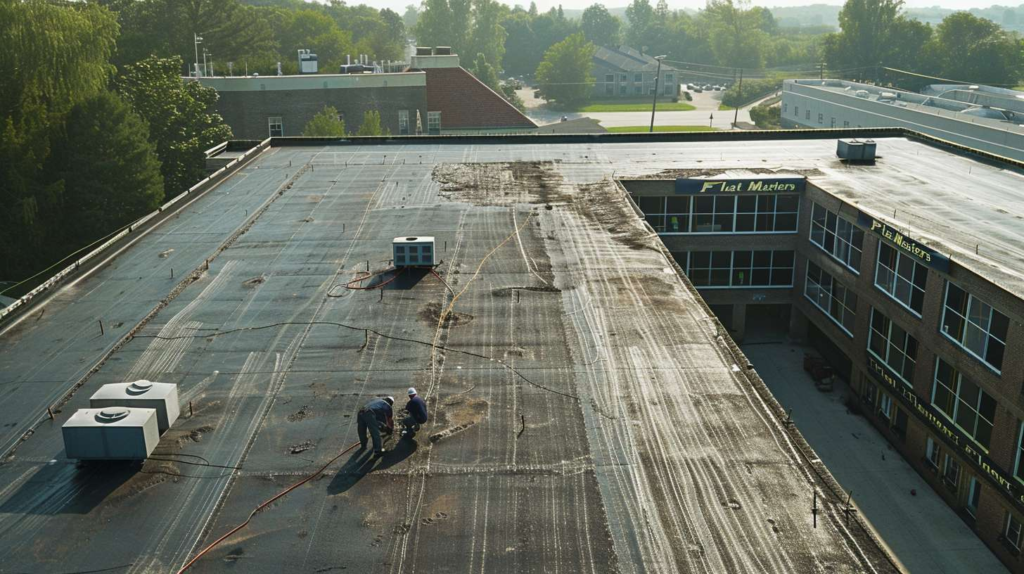
At 7:15 in sleet on a Rego Park roof, the truth shows up fast. A property manager handed me an invoice - three "repairs" from a general roofer, same leak, same corner, same ceiling stain inside. I went upstairs, peeled back one section near the drain off Woodhaven Boulevard, and there it was: wet insulation spreading well past the patched seam, soaked maybe two feet in every direction from a drain that had never been properly checked. The general roofer kept sealing the surface. The water kept moving underneath. That sounds reasonable. It isn't. A patch applied without understanding how water travels on a flat system isn't a fix - it's a delay.
| Decision Point | Flat Roof Specialist | General Roofer |
|---|---|---|
| Diagnosis Method | Traces water entry point, travel path, and trapped layer before recommending anything | Often addresses the visible stain or surface crack as the assumed source |
| Common Failure Points Recognized | Membrane laps, terminations, insulation saturation, drain edges, parapet walls, bulkheads | Surface cracks, visible gaps, exposed seams - failure points shared with sloped systems |
| Repair Planning | Scopes by system layer: membrane, insulation, deck - repair matches the actual failure path | Repair often sized to the visible damage, not the moisture spread beneath it |
| Drainage Understanding | Checks ponding zones, inside drain condition, slope behavior, and parapet scuppers as part of standard review | May clear an obvious clog but rarely ties drainage behavior to membrane stress or leak origin |
| Material Compatibility | Matches repair materials to existing membrane type (TPO, EPDM, modified bitumen, BUR) to avoid adhesion failure | May apply sealants or patches incompatible with the existing system, causing delamination later |
| Likelihood of Repeat Callbacks | Lower - repair addresses root cause and moisture spread, not just the surface symptom | Higher - surface patch may hold temporarily while subsurface damage continues expanding |
Quick Facts - Choosing Who Touches Your Flat Roof
Paying twice - once for the patch, then again for the real repair that should have been done first.
Wet insulation that spreads silently past the visible seam - often two to four feet in every direction before anyone notices.
Drains, ponding zones, parapet walls, and bulkheads are everywhere on Queens flat roofs - and each one is a failure point a general roofer may not evaluate.
Ask how they trace water travel before recommending a fix. If they can't answer that specifically, keep looking.
Where general roofing habits go wrong on flat systems
Here's my blunt opinion: broad roofing experience is not the same thing as flat-roof diagnostic skill, and if you own a flat roof on a co-op in Astoria, a mixed-use building in Jackson Heights, or a row house in Ridgewood or Rego Park, that distinction is the whole ballgame. General roofers are trained on slope - on how gravity moves water to an edge, how shingles layer, how ridge caps seal. Flat systems fail sideways, not downward, and that's a completely different set of mental models. I'm Marisol Vega, and as someone with 19 years diagnosing and repairing low-slope membrane systems specifically in Queens, I've watched that knowledge gap cost property owners thousands of dollars in repeated partial repairs that only addressed the symptoms.
I've stood over too many wet insulation cuts to pretend otherwise. One July afternoon in Astoria, heat bouncing off the membrane, a homeowner told me the last contractor "does all kinds of roofs, so roofing is roofing, right?" I said no. Because that contractor had applied the wrong flashing detail around a bulkhead using the same approach you'd use on a sloped surface, and water had been traveling sideways inside the assembly for months without anyone knowing where it started. The homeowner wasn't paying for lack of effort - he was paying for someone who didn't know how flat systems actually fail.
The sideways-water problem
On a flat roof, the stain on your ceiling is almost never directly beneath the failure point. Water enters at a seam, a termination bar, a flashing edge - then travels horizontally through the insulation before it finds somewhere to drop. That's not a quirk. That's physics on a low-slope system, and if your contractor doesn't start the inspection knowing that, they'll chase stains instead of sources every time.
| Myth | Reality on a Flat Roof |
|---|---|
| "Roofing is roofing." | Flat and sloped roofs fail differently. Slope moves water to an edge; flat roofs trap it, pond it, and route it sideways through layers. The diagnostic logic is entirely different. |
| "If the leak stopped for now, the repair worked." | A temporary dry spell doesn't mean the insulation isn't still wet or that moisture hasn't migrated. Surface patches can hold through dry weeks while subsurface damage keeps spreading. |
| "The visible crack is always the source." | On a flat roof, the entry point is often feet away from where water eventually shows up. Sealing the crack without tracing the path leaves the real failure point open. |
| "Any licensed roofer can handle a flat roof." | Licensing covers basic trade competency, not system-specific expertise. Flat membrane systems - TPO, EPDM, modified bitumen, BUR - each have distinct failure modes, material requirements, and repair protocols. |
| "Flashing details are basically the same on all roofs." | They're not. Flat roof flashings at parapets, bulkheads, and penetrations carry water load differently and require termination details specific to membrane type and movement. Sloped-roof flashing habits applied here cause exactly the kind of sideways leak that goes undetected for months. |
⚠ Hiring Risk: The Fast Patch
When a contractor goes straight for the obvious spot without checking drainage flow, membrane lap condition, insulation saturation, and how termination details are holding - they're buying you days or weeks, not a real fix. The water still has a path in. The insulation is still wet. The repair just bought enough time for you to stop worrying, which is exactly when the damage quietly gets worse. A patch is a tool, not a diagnosis.
Questions that expose whether you're getting diagnosis or guessing
Let me ask you what I ask every owner: does your contractor know where the water got in, how it traveled, and what layer it soaked before it showed up on your ceiling? Those three things - entry, path, trap - are the whole diagnostic chain on a flat system. If a roofer can't walk you through all three before recommending a repair, they're still guessing at the source, and you'll be calling someone again in six weeks. The questions below aren't meant to trip anyone up; they're just a simple test of whether the person you're about to hire thinks in systems or just in surfaces.
Before You Call - 7 Questions to Ask Any Flat Roof Contractor
- What membrane system do I have, and how old is it?
- How do you confirm the actual leak path - not just the stain location?
- Do you inspect drains and check for ponding zones as part of your assessment?
- Will you check whether the insulation beneath the membrane has absorbed moisture?
- How do you handle parapet walls and bulkhead flashing details specific to this roof type?
- Do you document what you find with photos before and after the work?
- What findings would push you toward repair versus section replacement versus full replacement?
Do You Need a Flat Roof Specialist?
What a specialist actually does before recommending repair or replacement
The unglamorous truth is this. Good flat-roof work starts with inspection logic, not a product you're about to be sold. Before any material gets touched, a flat roofing specialist should be able to tell you the age and type of your membrane, where drainage is or isn't working, which seams and termination details are under stress, and whether moisture has moved beneath the surface. That sequence isn't optional. It's the whole reason the repair recommendation means anything at all.
If the pathway is wrong, the repair will be wrong.
A flat roof is a system, not a surface
A flat roof is less like shingles and more like a lunch tray - if it doesn't drain right, everything spreads. I had a Sunday evening call in Ridgewood, maybe 6:30 after a hard thunderstorm, from a bakery owner with water dripping into his rear prep area near Fresh Pond Road. A general roofer had already sealed an obvious crack near the front edge. The ceiling was still dripping. When I got on the roof and started tracing, the entry point came back to ponding water pooling around a clogged inside drain - and deteriorated membrane laps farther in that had been failing long before the storm hit. The visible crack wasn't the problem; it was just the closest thing that looked like a problem. And here's the thing: the fix had to match the actual path. Water entered at the drain flashing edge, saturated the insulation inward, and found a low point near the prep area ceiling. If water enters there, travels there, and gets trapped there - then sealing the front crack does exactly nothing. The repair scope had to address the drain, the lap condition, and the moisture extent. That's not a complicated idea. It's just cause and effect, and it only works if you trace the whole chain first.
What a Flat Roof Specialist Should Do on the First Serious Inspection
What a Real Diagnosis Should Include
If you've got a flat roof in Queens that's been patched more than once, or you've gotten three different opinions and none of them made sense, call Flat Masters for a real flat-roof diagnosis - not another generic patch job.