There's More Than One Way to Cover a Flat Roof - Here Are All Your Options
Start With What the Existing Roof Is Telling You
I'm not the kind of professional who tells you everything's fine. The so-called best flat roof covering is often the wrong one when nobody has checked the assembly, the drainage pattern, or how the building is actually used - and here's the thing, water always tells the truth about all three, whether the contractor does or not.
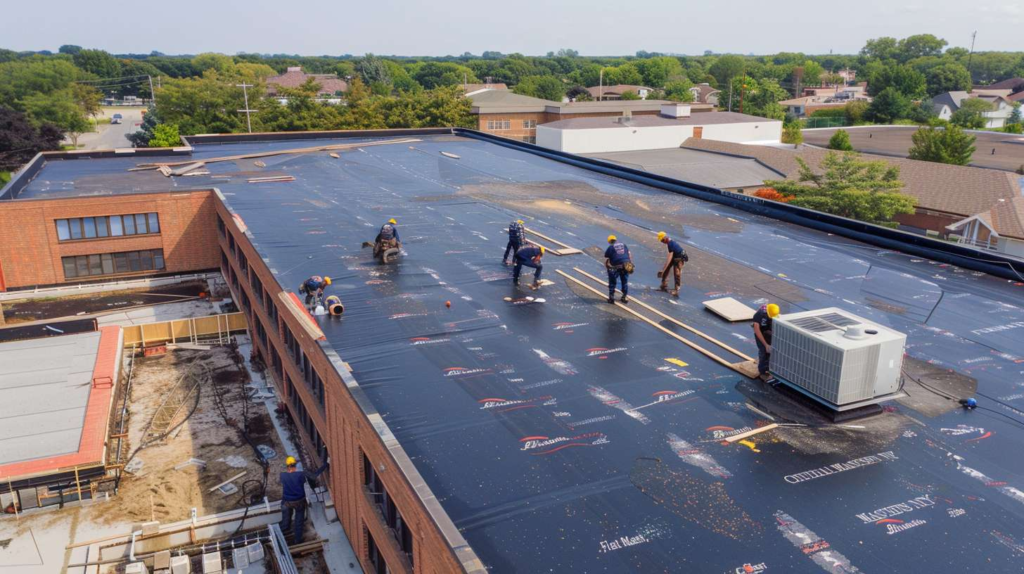
At 7 a.m. on a Queens roof, the seams tell on everybody. Before I ever name a material, I'm checking three things: whether the insulation underneath is dry or holding moisture, how water actually moves - or doesn't - across the field and toward the drains, and whether the roof is carrying equipment, foot traffic, or tenants directly below who can't have torches and fumes on a Tuesday morning. Those answers give me a quick verdict on where a roof stands: passes for overlay or coating, borderline and worth a closer look, or fails the basic criteria for any cover option at all.
Yes → Continue to Step 2
No → Continue to Step 3
Yes → Continue to Step 4
No → Modified bitumen, BUR, or single-ply comparison all remain on the table.
Compare the Main Materials Without the Sales Gloss
Here's my blunt opinion: not every flat roof needs the fanciest system. Some roofs need a restoration coating applied over a sound, dry substrate. Some need a recover membrane because the weathering surface is gone but the base is still solid. And some need a full tear-off because the substrate has already failed and there's nothing left worth bonding to. I'm Darlene Russo - I've been in flat roofing for 27 years, specializing in older row buildings and mixed-use properties in Queens - and the most common mistake I see isn't choosing the wrong product. It's choosing a product before anyone's asked the right questions about what's underneath it.
I once peeled back a corner in Woodside and learned more in ten seconds than the paperwork told me. The owner had called three other contractors. Two said total tear-off. One said slap a coating on it. None of them had done a cut test. I remember a similar morning on a two-family in Ridgewood - frost still sitting on the silver coating, the owner convinced he needed a total tear-off because his cousin told him bubbles in the cap sheet meant the roof was finished. I cut one test section, showed him the insulation was completely dry underneath, and we ended up going through recovery options right there with my coffee steaming through my gloves. Bubbling and surface wear don't automatically mean the worst answer. The cut and the substrate condition do.
Here's how I frame it when people ask me about flat roofing options: coatings pass when the deck is dry, the surface is stable, and drainage is functional. Membranes pass when you need a fresh weathering surface, stronger seam reliability, and longer service life. Built-up roofing is durable and time-tested, but the torch work and fumes make it the wrong pick for occupied buildings. Modified bitumen is practical and widely used in Queens, but it's condition-sensitive - put it over a compromised substrate and you're just buying time with someone else's money.
| Option | Best Used When | Poor Choice When | Seam / Surface Behavior | Typical Disruption | Queens Verdict |
|---|---|---|---|---|---|
| Acrylic Coating | Roof is dry, drains well, and needs UV protection or minor crack sealing | Chronic ponding; wet or soft insulation below | No seams; seamless but thin - depends heavily on surface prep | Low; no open flame, minimal odor | Passes on dry, maintained roofs. Borderline on aging substrates. |
| Silicone Coating | Some ponding is unavoidable; existing roof is structurally sound | Dirty or oily surfaces; traffic areas; incompatible existing coatings | Seamless; holds up in ponding better than acrylic but attracts dirt | Low; cold-applied, no torch | Passes where minor ponding exists and tear-off isn't viable. Fails over wet insulation. |
| Aluminum / Silver Coating | Temporary reflectivity refresh on a roof that's otherwise sound | As a leak repair strategy; on saturated or severely degraded roofs | Fibrated or non-fibrated; cracks easily in cold Queens winters | Very low; brush or roller applied | Borderline at best. Cosmetic. Not a leak solution. |
| Modified Bitumen | Recover or replacement on a dry, structurally stable deck; good drainage | Occupied buildings where torch odor is unacceptable; wet substrate | Lapped seams; torch- or cold-applied; durable when installed correctly | Moderate to high; open flame or hot work typically required | Passes on sound substrates. Widely used in Queens for good reason. |
| TPO / PVC Single-Ply | New or recover system; occupied buildings needing low disruption; chemical exposure (grease) | Budget-constrained jobs where corners get cut on membrane weight or seaming | Heat-welded seams; strong when done right; vulnerable to poor weld technique | Low to moderate; no open flame | Passes on most building types in Queens. Best choice for mixed-use and restaurant rooftops. |
| Built-Up Roofing (BUR) | Full replacement on unoccupied or commercial buildings; high-traffic roofs needing durability | Occupied residential; buildings where fumes and torch work aren't possible | Multi-ply; no single seam reliance; very durable but heavy | High; hot mop or torch; strong odor | Passes for durability. Fails for occupied or low-disruption installs. |
When Coatings Are a Real Option
Fluid-applied coatings earn their place on roofs that are structurally sound, properly draining, and showing surface wear rather than systemic failure. They're a legitimate tool - not a shortcut - when the conditions call for them. The problem is they get recommended regardless of conditions, which is how a $4,000 coating job becomes a $14,000 tear-off two winters later.
When Membranes Make More Sense
A membrane recover or replacement is the right call when the existing weathering surface is gone, when seam reliability matters, or when the building's use demands a system with a real track record under tough conditions. And honestly, for most Queens properties I see - older two-families on 104th Avenue, mixed-use buildings near Jamaica Avenue, row houses with equipment bolted to the deck - a membrane is what actually holds up.
| Approach | Pros | Cons |
|---|---|---|
| Fluid-Applied Coating |
|
|
| Membrane Recover System |
|
|
Notice the Roof Conditions That Knock Certain Options Out
If you were standing next to me, the first thing I'd ask is: where does the water sit after a hard rain? One July afternoon in Astoria, I had a restaurant owner follow me around the roof while the exhaust fans were rattling like shopping carts. He wanted the cheapest possible cover because he was opening a new location in ten days - but half the roof had ponding deep enough to reflect the sky. I told him a coating over that surface would be like putting lipstick on a wet sponge, and we went through membrane choices one by one until he understood why some flat roof options are repairs, and some are just postponements with a receipt. That's Queens in a nutshell: exhaust-heavy mixed-use buildings, old parapets that have been caulked so many times they've lost their original profile, drain bowls that have been patched over instead of replaced. These conditions don't care what product name somebody said with confidence.
Let's not kid ourselves - some roofing options for flat roofs are only "options" because somebody wants a lower bid. Here's the insider move that separates a real evaluation from a sales call: before you approve any cover-it recommendation, ask for moisture testing, core cuts at multiple locations, and a written drain correction plan. Water always tells the truth. If the contractor can't show you what the roof is actually holding, you don't have enough information to make a decision. Verdict pattern: a roof that passes moisture testing, has clean core cuts, and drains within 48 hours is a candidate. Borderline means one of those three is uncertain. Fails means you skip the coating conversation and talk about what it actually takes to fix it.
Do not accept a coating or overlay recommendation when any of the following are present:
- Chronic ponding water that sits longer than 48 hours after rain
- Saturated insulation confirmed or suspected beneath the existing membrane
- Active interior leaks with no confirmed source or unresolved penetration failure
- Loose or delaminated substrate - no coating bonds to a surface that's already giving up
- Multiple hidden roof layers that exceed code limits or create incompatible interfaces
- Incompatible existing materials - not all coatings adhere to all membranes
- ✅ Dry test cuts - insulation is not holding moisture
- ✅ Intact attachment - membrane is not lifting, bubbling catastrophically, or delaminated
- ✅ Manageable flashing work - parapets and penetrations are repairable, not failed
- ✅ Functional drainage path - water moves to drains within 48 hours
- ❌ Soft insulation - spongy underfoot or wet on cut test
- ❌ Trapped moisture - confirmed by infrared scan or core sample
- ❌ Deep recurring ponding - not a drainage quirk, a structural slope problem
- ❌ Widespread incompatible patchwork - multiple material generations with no compatible interface
Use a Practical Elimination Method for Queens Buildings
A flat roof is like a science lab table: if the surface, slope, and chemistry are off, the experiment goes sideways. The way I eliminate options by building type isn't about steering anyone toward a product - it's about being honest about what each roof will actually tolerate. Row houses and two-families need drainage and flashing honesty before anything else; the roof might look tired, but if it drains and the deck is dry, there's often more life in it than the surface suggests. Mixed-use properties with rooftop equipment need durability around penetrations - a system that can't handle the foot traffic from HVAC techs three times a year isn't worth the warranty paper it's printed on. Institutional buildings - schools, churches, community spaces - often ask for life extension, but they can hide incompatible layers from decades of deferred maintenance that make a simple recover impossible.
I got called to a church annex in Elmhurst after a surprise Sunday storm, and whoever had worked on that roof before had layered materials that had no business being married to each other. The trustee kept asking, "Can't you just cover the flat roof and give us a few more years?" I was standing there at dusk with wet prayer flyers stuck to the drain screen, explaining that yes, there are several flat roofing options - but not all of them belong on a roof that can't drain properly and has three generations of incompatible systems underneath. Age, prior overlays, parapet condition, and rooftop equipment often matter more than any brochure claim. That job is still the one I think about when someone asks for the best flat roofing options without asking what's underneath. Flat Masters has sorted out plenty of roofs like that one, and the answer is almost never the one the previous contractor left behind.
1
Older Row House or Two-Family
Likely conditions: One or two existing roof layers, aging modified bitumen or BUR, older parapets with repointing needs, standard interior drains often partially blocked.
Options that often pass: Modified bitumen recover (if substrate is dry), TPO single-ply overlay, acrylic or silicone coating on sound surfaces with confirmed drainage.
Borderline: Silicone coating where minor ponding exists but insulation is confirmed dry.
What usually causes failure: Blocked interior drains that were never corrected before the new system went on - the roof fails at the same drain bowl it always did.
2
Mixed-Use Building with Rooftop Equipment
Likely conditions: HVAC units, exhaust fans, and conduit penetrations creating multiple field interruptions; grease exposure near restaurant exhausts; frequent foot traffic from mechanical contractors.
Options that often pass: TPO or PVC single-ply - grease-resistant, heat-weldable around penetrations, handles traffic with proper walk pads.
Borderline: Modified bitumen if there's no grease exposure and installation timing can avoid occupied hours.
What usually causes failure: Coatings applied around poorly flashed penetrations - the perimeter of every HVAC curb becomes a water entry point within a season.
3
Annex, School, or Worship Space with Budget Pressure
Likely conditions: Multiple prior roof layers from years of deferred maintenance, inconsistent flashing work, limited capital for full replacement, occupied during installation.
Options that often pass: TPO single-ply recover if layer count and moisture tests allow; targeted tear-off with TPO replacement where layers are excessive.
Borderline: Coating if the budget is constrained and tests confirm the roof is dry - with clear expectations about service life.
What usually causes failure: Skipping the core cut and layer count, then discovering on tear-off day that the roof has four incompatible systems underneath - budget and timeline both blow up.
Answer the Questions Owners Usually Ask After Hearing the Truth
A roof can look affordable on paper and still fail in the rain.
By now you should be judging flat roof coverage options by what the roof actually is - not by whatever product name got said with the most confidence in a sales call. The condition, the drainage, and how the building is used narrow the field fast. Everything after that is material selection, and that's the easy part.