
Fiberglass Is the Flat Roofing Solution That Keeps Coming Up - Here's Why
I've sat in living rooms like yours. And what I've noticed, sitting across from Queens homeowners with a damp ceiling above them and a stack of repair invoices on the table, is that fiberglass keeps coming up - not because it's the latest thing, but because the same stubborn flat-roof failures keep defeating cheaper systems, and eventually people get tired of being surprised by the same leak. This article explains that pattern in plain language, so you can make a smarter decision the next time someone hands you an estimate.
Why Fiberglass Keeps Winning the Same Roofing Argument
I've sat in living rooms like yours. The homeowner is frustrated, there's a familiar water stain on the ceiling, and the question on the table is: why does this keep happening? The surprising part isn't that the roof failed - it's that fiberglass isn't some trendy new material people discovered last year. It keeps resurfacing as the answer because the same leak patterns - failed seams, lifted edges, moisture trapped under patches - keep defeating whatever cheaper system was put down first.
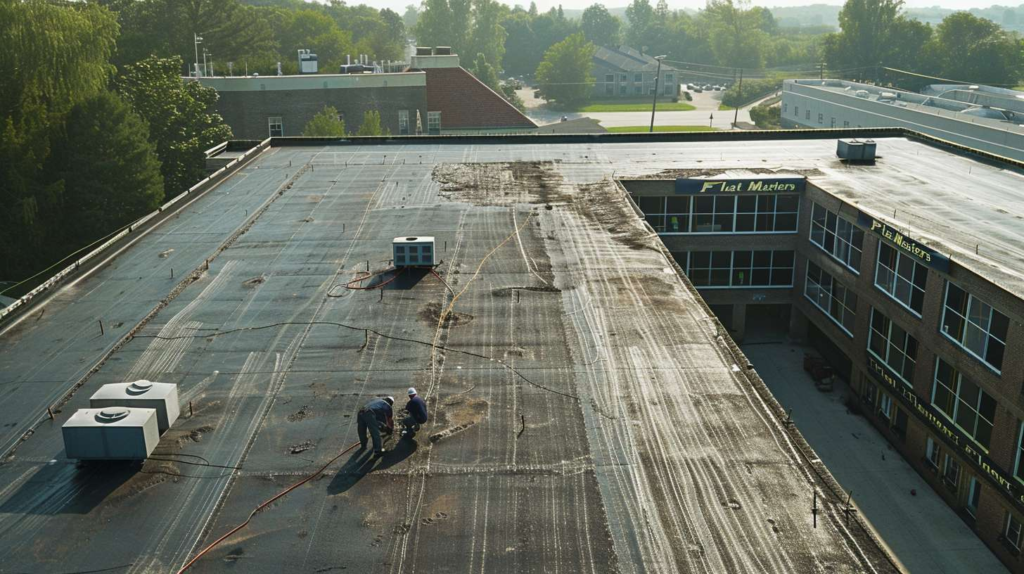
Three callbacks for one leak is usually where my patience ends. Think of it like a lab experiment: if the material choice is weak, or the detail work is skipped, the result doesn't disappear - it just shows up later, on your ceiling, usually on the coldest or wettest night of the year. Honestly, I respect a tight budget. But what I can't stand - and I've told people this directly - is paying for the same repair three times, because that's where cheap stops being cheap and starts being expensive. Now, what does that tell us?
| Myth | Real Answer |
|---|---|
| "Fiberglass is only for specialty roofs." | Fiberglass reinforcement is well-suited to the flat, detail-heavy roofs common across Queens - attached homes, two-families, and buildings with multiple penetrations all benefit from its seamless, reinforced surface. |
| "It's too rigid for city buildings." | Applied correctly, fiberglass conforms to the contours of parapet walls, curbs, and uneven surfaces. Rigidity is a benefit at edges and transitions - exactly where softer membranes tend to lift or crack first. |
| "Patching gives basically the same result." | A patch addresses one visible spot. Fiberglass flat roofing solutions create a continuous, bonded surface - no exposed seams, no new weak points sitting right next to the old one. |
| "All flat roofing systems fail the same way." | They don't. Seamed systems fail at seams. Patched systems fail at patch edges. Fiberglass eliminates both by forming a monolithic layer, which changes where - and how often - failure points appear. |
| "If the roof looks okay from the sidewalk, it's probably fine." | Hidden moisture intrusion under a surface that looks intact is one of the most common findings on Queens flat roofs. By the time damage is visible from street level, the substrate has often been compromised for months. |
Where Queens Flat Roofs Usually Start Failing
Edges, penetrations, and transitions are the first test points
On a Queens roof, the edges tell the story first. The attached homes along streets like 71st Avenue, the aging two-families in Woodside, the buildings with three layers of old membrane stacked on top of each other - they all share the same vulnerability. Parapet walls, rooftop vents, and the transitions between roofing planes are where water finds its way in, especially during the kind of wind-driven rain that hits sideways off the Jamaica Bay corridor. I'm Marisol Vega, and I've spent 19 years in flat roofing with a specific focus on diagnosing repeat leak points on Queens flat roofs - and in that time, the edges and penetrations have been the culprit more times than I can count, long before the surface itself gives out.
One windy March morning in Ridgewood, I was called to a two-family where the landlord insisted the leak only happened "during weird rain." That's almost always code for wind-driven water sneaking in at a detail failure - an edge that's slightly lifted, a transition that was never sealed properly the first time around. He had tenants on the top floor and no patience left after years of stop-start repairs. We finished that fiberglass job with gusts pushing coffee cups across the parapet, and the complaints stopped cold. That gives you the result: fix the detail, fix the edge integrity, and the "weird rain" stops being an excuse.
| Roof Area | Typical Failure | Why It Repeats | How Fiberglass Helps |
|---|---|---|---|
| Perimeter Edge | Membrane lifts or separates from edge flashing, allowing water to wick under the surface | Patching the top doesn't re-bond the edge below; water re-enters the same path | Fiberglass bonds directly to edge details, forming a continuous sealed termination |
| Vent Curb | Flashing around the curb cracks or separates, especially after freeze-thaw cycles | Standard patches shrink and pull away from the curb base over time | Fiberglass wraps the curb in a seamless layer, eliminating the gap where movement causes separation |
| Parapet Transition | The angle where the flat deck meets the parapet wall cracks under thermal movement | Most patch materials can't flex enough at this joint to survive multiple seasons | A properly applied fiberglass system ties the deck and wall together with a reinforced fillet, handling movement without cracking |
| Previous Patch Zone | The edge of an old patch becomes a new entry point as adhesion fails over time | Each new patch creates another seam edge - the problem multiplies rather than resolves | Fiberglass applied over a properly prepped surface eliminates the patch-edge seam entirely |
| Low-Slope Ponding Area | Standing water accelerates membrane breakdown and exposes existing weak spots | Surface patches in ponding zones soften and separate faster than the rest of the roof | Fiberglass withstands prolonged water contact better than most patch materials, buying time until drainage is corrected |
⚠ Don't Keep Patching Over a Problem You Haven't Found Yet
Repeated patching on top of a wet or weakened substrate doesn't just delay the fix - it traps moisture beneath the new layer, where it spreads invisibly through the deck. By the time it surfaces again, the damage zone is usually wider and deeper than the original leak point. The next repair becomes more invasive, more disruptive, and significantly more expensive. If the same spot has been patched more than once, the patch isn't the answer anymore.
How to Tell When Fiberglass Is a Real Solution and Not a Sales Pitch
I learned this the sweaty way one August in Elmhurst - and it clicked fully on a July evening in Astoria, around 6:40, still bright out but the roof was giving off stored heat like a griddle. The homeowner had a rolled roofing patch job done twice in two summers, and he kept asking me why the same corner failed first every single time. When I peeled back the edge, I showed him exactly why: trapped moisture had been sitting under the surface since the first repair, and every new layer just sealed it in tighter. Fiberglass made sense there not because it was the premium option on the menu - it made sense because he needed a fully reinforced, seamless answer, not another bandage applied to a substrate that was already wet. And here's the insider part worth keeping: when the same corner fails first, stop looking only at the top surface. Ask what's happening underneath that corner and at the nearest edge detail - that's where the real story usually lives.
✔ Patch may be reasonable
For isolated, fresh damage with no prior repairs, no trapped moisture, and no edge/detail compromise.
→ Ask for a fiberglass flat roofing solution assessment
When repeat failures, trapped moisture, or detail complexity are confirmed - a full assessment is the right next step.
▶ Substrate Condition
A contractor should probe or sound the deck for soft spots, delamination, or compression, especially around prior patch zones.
Any wet, rotted, or structurally compromised decking needs to be addressed before any new surface system goes down - fiberglass or otherwise.
Skipping substrate evaluation is the single most common reason a new roof installation fails prematurely.
▶ Moisture Detection
A non-invasive moisture scan (infrared or capacitance meter) can identify wet areas hidden under the surface that visual inspection misses entirely.
Trapped moisture under a new installation leads to adhesion failure and, in fiberglass systems, blistering - which is why this step isn't optional.
If a contractor doesn't mention moisture detection before recommending any full system, that's a gap worth pressing on.
▶ Edge & Detail Integrity
Every parapet base, vent curb, drain collar, and perimeter edge should be physically inspected - not just visually scanned from standing height.
Lifted or cracked terminations at these points are the most common undiagnosed source of repeat leaks on Queens flat roofs.
A solid recommendation should include a specific plan for each detail area - not just the flat field of the roof.
▶ Compatibility With Existing Roof Build-Up
Fiberglass bonds differently depending on what's underneath it - existing membranes, modified bitumen layers, or old gravel surfaces each require different prep approaches.
A contractor should identify the existing system by layer, not just by appearance, before specifying a fiberglass application.
In some cases, partial tear-off is necessary for a fiberglass system to perform correctly - a thorough build-up review makes that call clear upfront, not after installation.
The Trade-Offs Homeowners Should Actually Compare
Lower invoice today versus fewer headaches over time
If I were sitting at your kitchen table, I'd ask one thing: do you want the lowest invoice or the fewest headaches? Those aren't always the same answer, and I'm not going to pretend they are. Fiberglass flat roofing solutions tend to come up when a roof has real detail complexity - parapet walls, multiple penetrations, a history of callbacks - because that's where a seamless, reinforced system changes the outcome in a measurable way. For a simple, isolated nick on an otherwise healthy surface, it may be more than you need. But when the roof has a pattern, it earns its place on the estimate.
Here's the blunt version nobody in a sales brochure says: a cheap fix is only cheap if it stays fixed.
What practical buyers ask before signing anything
A flat roof behaves a lot like a lunchbox lid - fine until one weak corner starts letting everything in, and then suddenly nothing stays dry. I got a Sunday call from a bakery owner near Forest Hills after a night storm, and I was there before 8 a.m. because he was genuinely worried about water near his prep area before opening. His surface looked intact from the sidewalk - no obvious damage, nothing alarming from the street. But once I walked it, I found hairline cracking across the field and weak transitions around a vent curb that had probably been slowly failing for two seasons. Fiberglass wasn't the dramatic option that morning - it was the calm, practical one, and I told him that plainly while standing there with the smell of bread rising up from the exhaust. Use the wrong material, ignore moisture, or trust a weak detail, and the result shows up indoors later. That's not a sales line. That's just how roofs work.
| Comparison Point | Repeat Patching | Fiberglass System |
|---|---|---|
| Upfront Cost | Lower per visit | Higher initial investment; covers a complete system |
| Seam Exposure | Every patch creates a new seam edge - more patches, more exposure points | Seamless application eliminates patch-edge vulnerability entirely |
| Recurring Leak Zones | Not designed for it - addresses surface symptoms, not root causes | Reinforced system addresses the structural causes of repeat failure |
| Edges & Details | Patch materials rarely bond well at curbs, parapets, and edge terminations | Fiberglass wraps and seals detail areas as part of the system - not an afterthought |
| Repair Interruptions | High - same areas likely return every 1-2 seasons | Significantly reduced when installed correctly on a prepared substrate |
| Long-Term Peace of Mind | Low - recurring issues erode confidence in the roof | High - system addresses the pattern, not just the latest spot |
| Pros of Fiberglass for Queens Flat Roofs | Cons to Understand Before You Commit |
|---|---|
| ✔ Reinforced surface handles foot traffic, wind uplift, and thermal movement better than standard patch materials | ✘ Not every roof is a candidate without proper prep - a compromised deck changes the scope and cost |
| ✔ Seamless waterproofing removes the seam-edge vulnerability that causes most repeat failures | ✘ Improper installation eliminates the performance benefit - contractor quality is not optional here |
| ✔ Strong detail performance at curbs, parapets, transitions, and drain collars - the exact places other systems fail | ✘ Upfront cost is higher than a spot patch, which can feel like sticker shock if you're comparing line items rather than outcomes |
| ✔ Reduces repeat callbacks significantly when installed on a properly prepared, dry substrate | ✘ Substrate condition is a hard prerequisite - wet, soft, or delaminated decking must be resolved first |
| ✔ Solid fit for leak-prone transitions on the kind of detail-heavy flat roofs common across Queens neighborhoods | ✘ Homeowner expectations must match actual roof condition - fiberglass is not a substitute for necessary structural repairs |
Questions Worth Asking Before You Choose a Flat-Roof Fix
Do you want another estimate, or do you want an actual diagnosis? Those are two different things, and the difference usually shows up six months later. A contractor who explains your roof like a system - where the moisture enters, why the detail failed, what the substrate looks like underneath - is giving you something you can evaluate. The right professional should walk you through the cause and the expected outcome, not just the price.
☑ Before You Call About Fiberglass Flat Roofing Solutions - Have This Ready
- Where does the leak show up inside? - ceiling stain, wall dampness, or near a specific fixture?
- Has this same area been repaired before? - once, twice, or more? How long ago?
- How old is the roof? - even an approximate age helps narrow the likely system underneath.
- Where are the vents, parapets, drains, or skylights? - note their locations relative to where the leak appears inside.
- Does the leak happen only during wind-driven rain? - or does it also appear after straight-down rainfall?
- Do you have photos of prior patch work? - even a phone snapshot helps a contractor understand what they're walking into.
▶ Is fiberglass better than just patching my flat roof?
▶ Can fiberglass go over an existing flat roof?
▶ How long does a fiberglass flat roof solution usually last?
▶ Does fiberglass help on roofs with lots of vents and edges?
▶ Is fiberglass worth it for a small Queens rowhouse roof?
If the same spot keeps coming back after every rain and you're running out of patience for temporary answers, call Flat Masters for an honest assessment of whether fiberglass flat roofing solutions fit your Queens roof. We'll tell you what we find - not just what sounds good on an estimate. - Marisol Vega, Flat Masters