Not All Roofing Felt Is the Same - Here's How to Tell the Good From the Basic

Not All Roofing Felt Is the Same – Here’s How to Tell the Good From the Basic

Not All Roofing Felt Is the Same - Here's How to Tell the Good From the Basic

What Separates a Real Roofing Felt Upgrade From a Cheap Lookalike

I wish more people asked this question before it got expensive. Two rolls of roofing felt can look nearly identical sitting on the ground, but once Queens heat, damp, freeze-thaw swings, and ponding start working on them, they perform miles apart - and this article is a plain-English breakdown of exactly how to tell the difference between stronger flat roofing felt types and the basic stuff nobody brags about on an invoice.

Here's my opinion, and I'm not dressing it up: bargain felt almost always fails in the hidden layer first, and after 27 years in flat roofing, Tony "Tape Measure" Rinaldi can usually tell within minutes whether the hidden layer has any real body to it. Think of it like a sandwich - the cap sheet is the top layer everyone sees, but if the bread underneath is flimsy, the whole thing gets sloppy fast. That's not a marketing line. That's what I pull out of loose edges on roofs from Astoria to Ridgewood every spring.
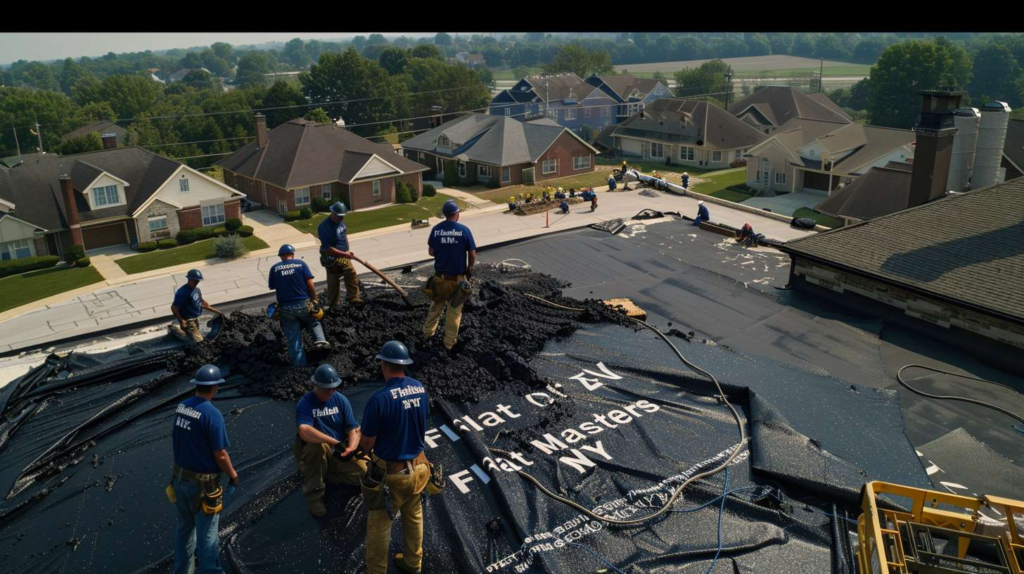
Different types of roofing felt materials displayed side by side, showing various textures and thicknesses used for flat roof installation.

Felt Type What It's Made To Do How It Feels In Hand How It Handles Moisture & Heat Where It Commonly Shows Up Best Use Case
Basic Organic Felt (#15 or #30) Temporary moisture barrier, short-term underlayment Light, papery, tears easily at the edge Absorbs moisture quickly; softens and wrinkles in Queens summer heat Budget re-roofs, temporary repairs, old attached homes in Sunnyside and Woodhaven Dry climates, sloped roofs - not flat or low-slope in NY
Fiberglass-Reinforced Felt Dimensionally stable base layer resistant to tearing Stiffer than organic, doesn't stretch when pulled Better moisture resistance; holds shape better under ponding conditions Mid-grade flat roof systems, interply layers in BUR applications Good all-around for Queens two- and three-family flat roofs where budget is a factor
Polyester-Reinforced Felt High tensile strength base sheet, handles thermal movement Noticeably heavier, more body, doesn't crumble at the edge Handles repeated wet-dry and freeze-thaw cycles without losing integrity Modified bitumen systems, high-performance flat roofs, commercial buildings in Queens Best choice for ponding-prone roofs and roofs near parapets with movement
Premium SBS-Compatible Felt Underlayment Engineered base sheet for use under SBS modified bitumen cap sheets Dense, flexible, returns to shape after being bent Designed to work with the elasticity of SBS above it; won't fight the membrane in heat Full roof replacements, new construction, quality re-roofs across Queens The right call when the top layer is a torch-applied or self-adhered SBS system

Translation Guide: What Labels Actually Tell You
Organic vs. Fiberglass vs. Polyester
Organic means the mat is made from cellulose fiber (basically recycled paper and wood pulp) saturated with asphalt. It feels soft and absorbs moisture like a sponge over time - not great news on a flat roof that sees Queens rain and humidity. Fiberglass uses a glass fiber mat that doesn't absorb water, holds its shape better, and resists fire. Polyester is the heavy hitter - stronger, stretchier, and better at surviving thermal movement near parapets and penetrations. Don't assume the thicker-looking roll is polyester. It might just be heavier organic, and that's not the same upgrade.
Saturated Felt
"Saturated felt" means the mat has been soaked through with asphalt during manufacturing. The quality of that saturation matters enormously. A well-saturated sheet holds moisture out. A poorly saturated one drinks it in. You can't see saturation quality from the outside of a roll - and a contractor who doesn't know the difference between well-saturated and barely-saturated material probably isn't telling you either. If someone says "standard saturated felt," that's a prompt to ask which one and at what weight.
Base Sheet vs. Interply
A base sheet is the first layer applied directly to the roof deck - it needs to bond well, resist moisture wicking, and handle the mechanical stress of everything built over it. An interply sheet goes between layers in a built-up roofing system, adding thickness and adhesion surface area. They're not interchangeable. Using an interply product as a base sheet is one of those shortcuts that looks fine on day one and argues with you on day 400. Ask which role each material is filling before work starts.
Torch / Smooth / Cap Compatibility
Not every felt is designed to sit under every cap sheet. Torch-applied systems use open-flame application, which means the base layer needs to tolerate intense, direct heat without shrinking or delaminating. Smooth-surface membranes need a compatible underlayment that bonds cleanly. Cap sheets - the granulated top layers - are paired with base sheets engineered to match their movement and adhesion chemistry. Mixing incompatible products is another thing that looks fine until the seams start separating in August. Thicker-looking base material is not automatically compatible with the membrane going over it.

Where Basic Felt Starts Failing Once Queens Weather Gets a Vote

The Wet-Zone Test Around Drains and Low Spots

At 8 feet from the drain, the roof usually starts telling on itself. I was on a two-family in Sunnyside at 7:10 in the morning after a damp April night, and the owner kept pointing at the top surface like that was the whole roof. I peeled back one loose edge with my hook blade and the felt underneath looked thirsty - dry, brittle, barely any body to it. That's the pattern on low-slope attached homes from Sunnyside to Ridgewood to Astoria: clogged drains after tree debris, spring nights where the roof stays wet way longer than anyone realizes, and felt that was marginal on day one turning into wet cardboard by season two.

Blunt truth - basic felt is cheap in the same way cheap sneakers are cheap. They look fine in the box. The problem shows up three months in when you're walking on wet pavement. The myth that all black rolls are basically interchangeable is exactly how people end up paying for two roofs in six years. Lighter organic felt softens, wrinkles, and drinks moisture. Near parapets and pipe penetrations - anywhere there's movement or standing water - it loses strength fastest, and it does it quietly, underneath the cap sheet where nobody looks until a ceiling tile gives out.

Myth What Actually Happens On The Roof
"All felt is basically the same." Organic, fiberglass, and polyester felt behave completely differently under moisture and heat. A lightweight organic roll fails near drain areas in 2-3 Queens winters. A polyester-reinforced sheet in the same spot can last the life of the membrane above it.
"Thicker-looking means better quality." A heavier organic felt can still absorb moisture and lose structural integrity. Reinforcement type - not visible thickness - is the real indicator of performance. Some polyester sheets look thinner and outperform bulkier organic rolls by a wide margin.
"New roof bubbles are always an installation problem." Bubbling often starts below the cap sheet. When basic felt traps moisture or fails to adhere evenly, it creates pressure pockets that push up through the membrane. Blaming the installer is common. Blaming the felt is more often accurate.
"Ponding only hurts the top layer." Ponding water eventually finds seams and penetrates. Once it reaches a lightweight base felt, that material weakens, loses adhesion, and begins to deteriorate - and the top membrane above it starts moving without a stable foundation beneath it.
"Felt choice matters less than the cap sheet." A premium cap sheet over a weak base layer is like a good roof put up on a bad deck. The hidden felt is the foundation the whole system rests on. It decides how well the top layer bonds, how it handles movement, and how long the full assembly lasts.

If the felt underneath acts like wet cardboard, the fancy top layer is just wearing a tuxedo to a flood.

⚠️ Watch Out: Signs a Contractor May Be Using the Cheapest Felt Without Telling You
  • Vague invoice language - words like "install roofing materials as needed" or "standard underlayment" without naming a product, a weight, or a reinforcement type tell you nothing about what's going back on your roof.
  • Won't name the felt type or reinforcement - a contractor who gets evasive or dismissive when you ask whether the felt is organic, fiberglass, or polyester is not a good sign. That's a basic material question and there's no good reason to dodge it.
  • Only talks about the top surface warranty - cap sheet warranties don't cover what happens to the base layers underneath. If the pitch starts and ends at "the membrane has a 15-year warranty," ask what's protecting the felt beneath it.
  • Dismisses ponding areas as normal - some ponding on a flat roof is common in Queens, but a contractor who shrugs it off without discussing what material is going in those wet zones isn't thinking about long-term performance. They're thinking about the fastest close.

How I Judge Felt Quality Before I Trust Anything Built Over It

What I Check by Touch, Bend, and Seam Behavior

If you were standing next to me, I'd ask you one thing first: does this roof have ponding, edge wrinkling, or bubbling near seams - and where exactly? That answer tells me where to look before I touch anything. I remember a windy Saturday in Middle Village when a retired bus driver followed me around asking why I kept squeezing the material between my fingers before I said anything. I told him I can learn a lot from a roof by feel - same way he said he could tell a bad brake pedal before the warning light came on. Sure enough, that felt was the lightweight kind, and the wrinkles near the parapet weren't normal settling. They were the first sign the base materials were too basic for the job. Here's the insider read: when you gently flex a sample or exposed edge, better felt has real body and springs back. Basic felt gives a papery, brittle response - and that response is the roof telling on itself before any lab test is needed. Don't start peeling at your own roof to find out. That's what a professional inspection is for.

Think of the roof like a deli sandwich nobody sees cross-sectioned. The cap sheet is the top bread - it handles sun, rain, foot traffic, and UV. The felt layers underneath are the bread on the bottom and between the fillings. When moisture gets in and heat expands everything, the filling moves. If the bottom bread is soft and falling apart, it doesn't matter how well the top holds together - the whole sandwich collapses from the inside. Good felt holds that stack together when the filling swells. Lightweight felt goes limp and lets everything shift. That's why I always say: tell me what the roof is built on, and I'll tell you how long it's going to last.

Field Method: How a Pro Evaluates Existing Felt Quality During a Flat Roof Inspection
1
Map the wettest and hottest zones first.

Look at where water pools after rain and where the sun hits longest. On Queens flat roofs, that's usually the center and within a few feet of the drains. Those zones tell you where the felt is under the most stress - and where it'll fail first if it's the lightweight kind.

2
Inspect edges and transitions before anything else.

Parapet walls, pipe flashings, HVAC curbs - these are where thermal movement puts the most pressure on the felt layer. Wrinkles, fish-mouths, or lifted edges at transitions are not cosmetic. They're the base layers showing you they've already moved or failed to hold.

3
Check seam memory and wrinkling patterns.

Good felt seams stay flat after application. If seams are raised, wavy, or have started to telegraph through the cap sheet above, that's a sign the base material has shifted or softened. Seam failure usually starts below - not at the top.

4
Test exposed material body where appropriate.

Where a loose edge or existing opening allows access, a pro will flex the exposed felt between fingers to assess body, resilience, and saturation condition. Brittle, papery, or crumbling response means the material has degraded - or was never high quality to start. This is a professional inspection step, not a DIY exercise.

5
Compare findings to the roof system above it.

The felt findings get matched against what the cap sheet or membrane above is doing. If the top layer is performing but the felt is compromised, the clock is running. If both are struggling, the inspection is telling you a full system replacement is the only real fix - not another patch job.

Quick Field Tells: Stronger Felt vs. Basic Felt
  • Reinforced mat with real body - flexes and returns to shape instead of cracking or going limp when bent at the edge
  • Consistent flexibility in cold - doesn't stiffen up and crack when temps drop, which means it's protecting seams through Queens winters
  • Clean, tight edge integrity - edges don't fray, crumble, or fuzz when cut or stressed at transitions and laps
  • Papery, brittle response to flex - snaps or crinkles instead of bending, which means the saturation has given out or was never strong to begin with
  • Edge fraying or mat fuzzing under stress - sign of low-grade mat construction that won't hold up at seams, parapets, or around drain rings
  • Wrinkling or bubbling near drain areas - felt that can't handle repeated moisture cycling loses dimensional stability and starts moving, dragging the layers above it along

One Bad Material Choice Can Make a New Roof Age Like Milk

I remember one roof off Northern Boulevard where the sun exposed every lie. It was August, around 3:30 in the afternoon, and I was inspecting a flat roof another crew had finished maybe eight months earlier. My kneepads were sticking to the surface, and every seam was telling on them. They'd used a bargain-grade felt in the ponding area near the main drain, and once that section stayed wet through a couple of Queens winters - freeze, thaw, wet, dry, repeat - the whole system had started acting like wet cardboard under a boot. The cap sheet above it looked rough, and the owner was ready to blame the top layer. But that membrane didn't fail on its own. The weak felt underneath it sped the whole collapse up, and nobody had bothered to tell the owner what was actually going in during the original job.

That's the move worth making before any work starts: ask exactly what felt type is going on, what reinforcement it carries, and whether it's actually compatible with the membrane being installed above it. A contractor who knows the system and stands behind the work will answer that without getting evasive. If the response is "standard materials" or "whatever the code requires," that's your cue to push harder - or find someone who doesn't hide behind vague language when a direct question gets asked. At Flat Masters, we name every material on the invoice because the material choice is the job, not an afterthought.

❌ Basic Proposal Language
  • "Install roofing felt as needed."
  • "Standard underlayment materials."
  • "Per code minimum requirements."
  • "One layer of felt, new cap sheet."
  • No mention of reinforcement, weight, or compatibility.
  • Warranty covers top membrane only - nothing below.

This language tells you nothing about what's actually being installed or whether it's right for your roof's specific conditions.

✅ Better Proposal Language
  • "Install one ply of polyester-reinforced base sheet, mechanically fastened to deck."
  • "Base sheet: fiberglass-reinforced ASTM D4601, Type II, torch-compatible."
  • "Interply and base sheet selected for compatibility with SBS cap sheet above."
  • "Ponding zones at drain to receive reinforced base sheet per manufacturer spec."
  • Warranty covers full system, base layers included.

This tells you what's going on, why, and how it's matched to the rest of the system - which is what a real roofing proposal looks like.

Before You Call Anyone: 7 Things to Verify for a Felt-Based Flat Roof Job in Queens
  • Ask for the felt type by name - organic, fiberglass-reinforced, or polyester-reinforced. "Standard felt" is not an answer.
  • Confirm reinforcement type explicitly - don't assume. The word "felt" covers everything from basic #15 organic to high-performance polyester mat.
  • Identify where ponding occurs on your roof - before the contractor arrives, know your wet zones. That info changes what material should go where.
  • Ask what's going at drains and parapets - those are the highest-stress areas. They deserve a specific answer, not "same as the rest."
  • Ask what the felt is paired with above it - base sheet compatibility with the cap sheet or membrane is not optional. Mismatched products fight each other in heat.
  • Get all material specs in writing on the invoice - verbal promises don't show up when something fails two winters later. Named materials in writing do.
  • Ask what would make a partial patch a bad idea - if a contractor can't tell you when patching stops making sense and a full layer replacement is needed, that's a gap in their knowledge you don't want to pay for.

Questions Homeowners Ask When They Realize Felt Isn't Just 'Black Paper'

Once people find out there's more going on under that cap sheet than one interchangeable black roll, the questions get good fast. Here are the ones that come up most often - answered straight, without the usual runaround.

Is heavier felt always better?
Not even close. A heavy organic felt absorbs more moisture than a lighter fiberglass-reinforced sheet and fails faster in Queens ponding conditions. Weight matters less than what the mat is made of and how well it's saturated. A #30 organic felt can be outperformed by a properly reinforced fiberglass sheet that weighs less. Ask about reinforcement type first - weight is the last number worth obsessing over.
Can a good cap sheet make up for cheap felt underneath?
No. And I've seen this play out too many times in Queens to be polite about it. A premium SBS cap sheet over a weak base layer will still blister, lift seams, and lose adhesion - because the foundation it's bonded to isn't stable. The cap sheet warranty won't cover base layer failure either. You paid for protection above and got nothing below it.
What felt type holds up better around ponding areas?
Polyester-reinforced felt is the call for chronic ponding zones - near drains, low spots, and anywhere the roof holds water after a rain. It handles repeated wet-dry cycling without losing tensile strength or dimensional stability the way organic felt does. In ponding areas on Queens flat roofs, organic felt is essentially on borrowed time from day one.
Can you tell felt quality without tearing up the whole roof?
Sometimes, yes - at loose edges, open transitions, or areas where the cap sheet has already lifted, an experienced roofer can assess the body, flexibility, and saturation condition of the felt without a full tear-off. What you're looking for is response to flex, edge integrity, and whether the material crumbles or holds together. A thermal scan can also hint at moisture trapped in the base layers. That's not a DIY read - but it's a legit diagnostic step before committing to a full replacement.
What should be written on my estimate if the contractor is using decent materials?
You want to see the felt type named (organic, fiberglass-reinforced, polyester-reinforced), the ASTM designation if applicable, the layer role (base sheet, interply), and confirmation that it's compatible with whatever membrane is going over it. If the estimate just says "install underlayment" or "standard base layer," ask for specifics in writing before signing anything. A contractor confident in their material choices won't hesitate to put the names on paper.

If you want someone to look past the top surface and tell you exactly what your roof is actually built on - no runaround, no vague invoice language - call Flat Masters for a straight inspection and a plain-English answer. We work across Queens and we're not interested in wasting your time.

Faq’s

Flat Roofing FAQs: Everything Queens, NY Homeowners Need to Know

How long do different flat roofing felt types actually last?
Different felt types vary significantly in lifespan. Basic BUR systems last 15-20 years, while premium SBS modified bitumen can last 25-30 years. The key is proper installation and regular maintenance – even the best materials fail quickly with poor workmanship.
Flat roofing felt installation requires specialized equipment, proper temperature conditions, and professional expertise. DIY attempts often lead to leaks, safety hazards, and voided warranties. The cost of fixing failed DIY installations typically exceeds professional installation costs.
Delaying replacement leads to exponentially higher costs. Small leaks become structural damage, mold issues, and interior destruction. A $15,000 roof replacement can become a $50,000+ project once water damages the building structure and contents.
Your choice depends on climate, building use, and budget. Queens weather demands flexible SBS systems for most applications. High-traffic commercial roofs need heavier BUR systems. A professional assessment considers your specific conditions and long-term costs.
Basic BUR systems cost $4-7 per square foot, modified bitumen runs $6-10, and premium systems reach $12-15. Add $2-4 for tear-off of existing materials. Remember: the cheapest option often costs more long-term due to frequent repairs and early replacement.

Ask Question

Or

A Flat Roof Isn't Actually Flat - And the 'Fall' Is What Keeps It Working

15 min read

Flat Roof Domes - Installed and Repaired by NYC Specialists

7 min read

How to Work Out Exactly How Much Material You Need for a Flat Roof

13 min read

Let's Be Honest About Flat Roofs - Here Are the Downsides Nobody Talks About

14 min read

What's the Flat Roof Average Pricing for Your Home Project?

5 min read

Flat Roof Tiles Replacement in NYC - Fresh Surface, Long-Lasting Results

9 min read

Cold Roof or Warm Roof - and Why the Wrong Choice Can Cause Real Problems

14 min read

Can My Tiny House Have a Flat Roof? Expert Roofing Solutions

7 min read

Professional Flat Roof Rooflights Installation & Repair Services

6 min read

Flat Roof Skylights - Professional Installation & Repair in NYC

6 min read

Garden Rooms with Flat Roofs - Built and Installed by NYC Experts

6 min read

Flat Roofs Aren't Just for Houses - Here's Every Type of Building That Uses Them

19 min read

Torch On Felt Flat Roof Installation - Done by NYC Certified Pros

7 min read

How Often Does a Flat Roof Actually Need Recoating? Honest Answer Inside

13 min read

Getting the Layers Right Is What Makes a Flat Roof Work - Here's the Correct Build-Up

14 min read

Professional Flat Roof Carport Construction Services Near You

6 min read

Boarding Is the Foundation of a Good Flat Roof - Here's How to Lay It Right

15 min read

Building Trusses for a Flat Roof - Here's What the Structural Work Really Involves

17 min read

Can You Have Flat Roof in Snow? Expert Solutions & Safety Tips

7 min read

All the Flat Roofing Materials Compared - What Each One Actually Delivers

12 min read

Everything You Need to Know About Flat Roof Costs - Before You Call Anyone

17 min read

Should You Remove Snow from Flat Roof? Expert Winter Roofing Guide

5 min read

TPO Roofing Is One of the Best Flat Roof Systems Around - Here's Why It's Chosen

13 min read

Flat Roof Drainage Systems - Installed and Repaired Right

7 min read

Expert Weathering Slate Flat Roof Repair and Installation Services

6 min read
blue circle

Get a FREE Roofing Quote Today!

Schedule Free Inspection