That Flat Roof Could Be a Garden - Here's What a Green Roof Conversion Involves

That Flat Roof Could Be a Garden – Here’s What a Green Roof Conversion Involves

That Flat Roof Could Be a Garden - Here's What a Green Roof Conversion Involves

Weight, Water, and the Reality Check Before Any Rooftop Garden

Something went wrong in that repair. That's usually the first thing I'm thinking when I hear a building owner say they want to convert their flat roof to a green roof - not because the idea is bad, but because the hardest part has nothing to do with plants. The real question is whether the existing flat roof can safely carry dead load, saturated load, and moving water before a single tray of sedum goes anywhere near that deck.

On a Queens rowhouse, the first number I care about isn't square footage - it's load. A flat roof green roof plan begins with a structural review, a full membrane condition assessment, and drainage mapping - long before anyone talks about aesthetics or plant species. I'm Marisol Vega, and I've spent 19 years in flat roofing, with a specialty in older Queens rowhouses and mixed-use flat roof green roof conversions where the bones of the building shape every decision I make on that roof.
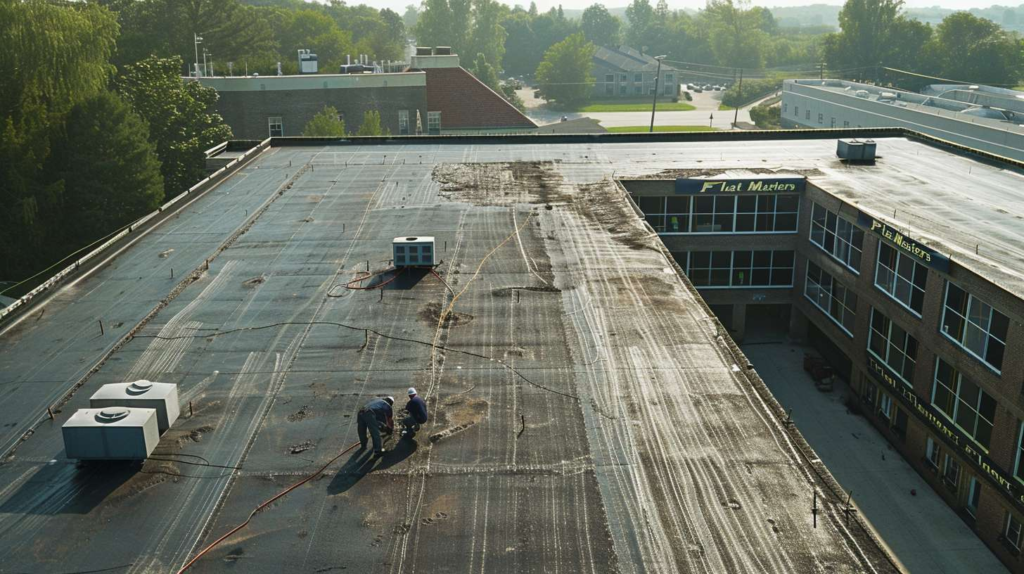
A green roof garden installed on a flat commercial building with lush plants and walkways, showcasing professional conversion services.

Think of every roof as a layered experiment. Water, weight, and roots always reveal which layer was rushed, wrongly matched, or skipped entirely - and they don't give you a warning before they do. That sounds reasonable, but here's where roofs behave differently: unlike a planting bed in a backyard, there's no forgiveness built in. A mistake in the fourth layer doesn't stay in the fourth layer. It travels, and it shows up in the wrong place at the worst time.

4 Core Realities of Converting a Flat Roof to Green Roof Use
First Check
Structural capacity review - before anything else touches that roof.

Most Common Hidden Issue
Poor drainage or chronic ponding that the current membrane is already fighting.

System Must Include
Root barrier + drainage layer + waterproofing protection - all three, in the right order.

Queens Building Type Concern
Older rowhouse and mixed-use roofs often need significant prep work before any vegetation system is appropriate.

System Factor What Gets Checked Why It Matters Before Plants
Structure Deck type, span, age, and live/dead load capacity confirmed against saturated assembly weight Saturated green roof media can weigh 10-25 lbs per square foot - a number the original deck was never designed around
Membrane Condition Age, seam integrity, any patches or prior repairs, compatibility with root barriers and protection mats A failing membrane under soil and drainage layers becomes nearly impossible to access - and very expensive to fix after the fact
Drainage Layout Number and location of drains or scuppers, slope direction, overflow path, and any chronic ponding zones Green roof assemblies slow water movement by design - if drainage is already compromised, adding a system makes ponding significantly worse
Access / Maintenance Path Hatch size, parapet height, safe walking zones, and access to drains once vegetation is in place A green roof flat system needs ongoing inspection - if you can't safely reach the drains through the planting, the design is already wrong

Layers That Make a Flat Living Roof Work Instead of Leak

What Each Layer Is Supposed to Do

A roof assembly works a lot like a cafeteria tray stack - every layer has to sit right or the whole thing shifts. The proper sequence goes: deck, membrane, protection layer, root barrier where the assembly requires it, drainage layer, filter fabric, engineered growth media, then plants. Each one has a job, and none of them are optional. I was called to an Astoria roof one August afternoon, after a thunderstorm had rolled through and left everything steaming, where a handyman had already set random planter boxes directly on top of a membrane. The owner genuinely thought he had a green roof on flat roof setup in place. What he actually had was trapped moisture sitting underneath planters that blocked drainage entirely, and roots beginning to press in places they had no business going. Planters on a deck and a designed flat living roof system are two completely different things - one is furniture, the other is engineering.

Roots don't cause the first failure by themselves. They expose it. Weak seam detailing, blocked drains, membranes without proper protection - roots just find those problems and make them impossible to ignore. In Queens, where summer storms can drop two inches of rain in forty minutes and the humidity after a July storm turns low-slope roofs in Astoria, Ridgewood, and Sunnyside into slow-draining steam trays, you don't get weeks to figure out where a drainage mistake is hiding. You get days. Sometimes less.

Garden Flat Roof Conversion: Layer Assembly Order
1
Inspect the Deck
Confirm structural capacity and identify any rot, deflection, or deterioration before adding any load.

2
Repair or Replace the Membrane
Address any failed seams, patches, or end-of-life waterproofing - this layer must be reliable before everything else goes on top of it.

3
Install a Protection Course
A protection mat shields the membrane from puncture during installation and from ongoing mechanical stress above.

4
Add Root Barrier Where Required
Not every assembly needs a separate root barrier, but when it does, this layer stops root intrusion from reaching and compromising the membrane.

5
Place the Drainage Layer
Allows excess water to move toward drains rather than sit in the media - this is the layer most often undersized or poorly planned.

6
Add Filter Fabric
Keeps fine particles in the growth media from migrating into and clogging the drainage layer below.

7
Install Engineered Growth Media
Lightweight, engineered substrate - not garden soil - calibrated for depth, drainage rate, and load contribution at saturation.

8
Plant or Place Extensive Tray / Modular System
The visible layer finally goes in - trays, plugs, or pre-vegetated mats selected for the roof's actual weight budget and sun exposure.

Tap Each Layer to See What Failure It Prevents
🔵 Membrane
Without a sound membrane, water penetrates the deck from day one. Every other layer on top just delays the moment you find water damage inside the building. This is the layer that cannot be patched around - if it's compromised, it has to be addressed before anything else is installed.
🔵 Protection Mat
Skip the protection course and installation foot traffic alone can puncture a TPO or modified bitumen membrane. After installation, shifting drainage panels and root activity continue applying stress. The protection mat is cheap insurance against something that becomes very expensive to diagnose and fix under a planted system.
🔵 Root Barrier
When the assembly requires one and it's missing, roots follow moisture - straight down into seams and through any vulnerable detail. The damage isn't immediate, which makes it harder to catch. By the time you're finding water inside the building, the membrane may already be compromised at multiple points.
🔵 Drainage Layer
Without adequate drainage below the media, water pools in the growing substrate and stays there. Saturated media is dramatically heavier than dry media - a roof engineered for an extensive green roof system at design weight can be significantly overloaded by chronic saturation. The drainage layer is what keeps the weight assumption honest.
🔵 Filter Fabric
Filter fabric missing means fine particles from the growth media migrate down into the drainage layer over time. The drainage layer clogs, water backs up, media stays saturated, and the whole drainage premise of the assembly fails quietly. This is a two-dollar fix during installation that costs serious money to correct after the fact.
🔵 Growth Media
Using standard topsoil instead of engineered lightweight media blows the load calculation immediately - regular soil at saturation can weigh two to three times more than a properly specified green roof substrate. Plants may thrive in it for a season while the deck is silently being overloaded. The growth media is where budget shortcuts show up on the structural report.

Queens Roofs Usually Fail the Green Roof Test in Predictable Ways

Last July, I pulled back one corner of a membrane and learned everything I needed to know. I was on a three-family in Ridgewood at 6:40 in the morning, still holding my coffee, when the owner told me she wanted a garden flat roof "by summer" - her upstairs tenant had been posting rooftop herb photos from a place in Bushwick and she was ready to compete. What I found when I got up there was ponding sitting around one undersized drain and two patched seams from some emergency repair that nobody had documented. The dream was completely fine. The roof underneath it was not ready to carry that dream yet, and the right thing to do - the only honest thing - was to say that clearly before she spent money on soil and trays.

Here's the blunt truth most people don't hear until late: some roofs should not become gardens without major prep work, and there's a real difference between "not yet" and "not ever." A drainage correction, a membrane replacement, or even a structural reinforcement might be exactly what separates a roof that's ready from one that isn't. I'd rather tell an owner "not yet" on a Tuesday morning than watch them pay twice after a rushed conversion goes wrong six months later. That opinion isn't pessimism - it's what 19 years of climbing onto roofs in this borough actually teaches you.

Myth What Actually Happens on the Roof
"Plants are the main challenge." Plants are the last decision. Structure, waterproofing, drainage, and root protection have to be solved first - the planting is straightforward once those four are right.
"Planter boxes mean I already have a green roof." Planters sitting on a membrane are furniture, not a system. They block drainage, trap moisture, and give roots nowhere engineered to go - which is exactly the wrong starting point for a designed flat living roof.
"Any flat roof can hold a light garden." Even a lightweight extensive system adds significant saturated load. Older rowhouse decks in Queens were not designed with that weight in mind - "light" is relative, and only an engineer's review can confirm what "light enough" actually means for your specific structure.
"If it doesn't leak today, it's ready." A membrane that's holding water out under current conditions may fail completely under the prolonged moisture exposure a green roof creates. "Not leaking" means it's passing today's test, not tomorrow's.
"Drainage mats solve a bad slope." Drainage mats move water more efficiently but they can't create slope that doesn't exist. A roof with chronic ponding due to inadequate pitch needs that corrected at the deck or tapered insulation level - not papered over with a drainage mat.

âš  Signs a Flat Roof Is Not Ready for Immediate Green Roof Conversion
  • Ponding water still present 48 hours after rain
  • Visible patched seams from prior emergency repairs
  • Soft spots underfoot when walking the deck surface
  • Blocked or restricted drains and scuppers
  • Mystery layers from previous repairs with no documentation
  • Visible edge deterioration, cracking, or open flashing details
  • No structural review or engineering sign-off on record

Ask This Before You Budget for Soil, Trays, or Plantings

The Engineer-First Decision Point

If you were standing next to me on the ladder, I'd ask you one question: where is the water supposed to go? Budget conversations are premature until the drainage path, overflow protection, and maintenance access are mapped out and confirmed. And here's the insider tip I give every owner before they start getting excited about product brochures or plant lists: ask specifically for the saturated-weight assumptions in writing, and ask what the overflow path looks like when a drain is partially blocked. A contractor who can't answer both of those questions clearly isn't ready to design your system.

A pretty planting plan cannot negotiate with gravity.

Should You Convert Your Flat Roof to a Green Roof - Now, Later, or After Major Work?

START: Do you have a structural review or engineer sign-off on current load capacity?
NO → Get a structural review first. No green roof design should begin without confirmed load capacity - full stop.
YES → Continue to drainage check below.

Does the roof drain correctly with no chronic ponding after 48 hours?
NO → Fix drainage and membrane issues before any design work begins. Adding a green roof to a ponding roof compounds the problem.
YES → Continue to membrane condition check below.

Is the membrane in reliable condition with known age and documented details?
NO → Replace or upgrade the roof system first. Installing a green roof over a mystery membrane means paying twice when it fails under the assembly.
YES → You're ready to choose an extensive or modular system and build a realistic maintenance plan.

✅ All three checks pass? Now the conversation about plants, trays, and design can actually start.

📋 Before You Call About a Green Roof Conversion - Gather These First
  1. Roof age - year installed or last full replacement if known
  2. Repair history - any patches, emergency repairs, or prior contractor work
  3. Photos after rain - taken 24-48 hours after a storm showing drain areas and field
  4. Drain locations - how many, where they sit, and whether any are currently slow or blocked
  5. Building type and use - rowhouse, co-op, mixed-use, number of stories
  6. Any prior engineering documents - structural drawings, load reports, or prior assessments

From Co-op Meetings to Rowhouses, the Best Green Roof Plans Start with Restraint

I'm gonna be honest - the moment that changed how I explain green roof conversions forever happened at a co-op board meeting in Sunnyside, around 8 p.m., fluorescent lights buzzing overhead, someone asking about the timeline for getting herbs on their rooftop by spring. One resident kept describing a flat living roof as "just mulch and plants." I had section samples in a tote bag, and I passed them around the room one by one. Once people actually held the weight of a small saturated assembly in their hands - felt it, not just heard about it - the questions changed completely. It went from "Can we do it next month?" to "What does the engineer need first?" That's the conversation worth having. A garden flat roof can absolutely work in Queens, on rowhouses, on co-ops, on mixed-use buildings along streets like Northern Boulevard or Jamaica Avenue - but only when the roof earns it first, layer by layer.

Flat Roof Green Roof Conversions - Owner Questions Answered
Can an older Queens rowhouse support a green roof?
Some can, some can't without reinforcement. The only way to know is a structural review by an engineer who looks at your specific deck type, span, and condition. Older rowhouses in Ridgewood, Woodside, and similar neighborhoods were built with a lot of variation - don't assume either way without the numbers in writing.
Do I need to replace the membrane first?
Not always, but often yes. If the membrane has unknown age, visible patches, or seam issues, replacing it before a green roof goes on top is almost always cheaper than repairing it after. You won't have easy access to the membrane once drainage layers and media are installed above it.
What's the difference between trays and a fully built-in system?
Modular trays are pre-planted units placed on the roof - easier to install, easier to lift for membrane access, and adjustable. A built-in system is installed layer by layer directly on the roof and is generally more permanent and lower-profile. Trays are often the better choice for Queens buildings where future membrane access matters. Built-in systems make sense when the roof has a long expected life and the structural review supports a more robust assembly.
Will a green roof stop all drainage issues?
No. A green roof reduces stormwater runoff volume and slows water movement, but it does not fix a roof with a drainage problem - it amplifies it. Drainage issues have to be corrected before a green roof assembly goes on, not treated as something a green roof will manage.
How often does a flat living roof need maintenance?
At minimum, twice a year - spring and fall. Drain inspection, weed removal from joints, and checking that filter fabric hasn't shifted or clogged. After heavy storms, a quick visual check of drainage paths is worth doing. A green roof is not a set-it-and-forget-it system, and whoever designs yours should walk you through a realistic maintenance schedule before you commit.

If you're a Queens building owner trying to get a straight answer on whether your roof is actually ready for a green roof conversion - not a sales pitch, but a real assessment of structure, drainage, membrane condition, and what prep work is actually needed - Flat Masters can get up there and give you that picture before you spend money on the wrong stage. That's always the right first step.

Faq’s

Flat Roofing FAQs: Everything Queens, NY Homeowners Need to Know

How much does a green roof conversion actually cost?
Extensive green roof systems typically cost $12-25 per square foot, while intensive systems with deeper soil and diverse plants run $25-60 per square foot. The investment pays back through 10-30% cooling cost savings and increased property value of $15-30 per square foot in Queens’ market.
Most flat roofs need structural assessment before green roof installation. You need minimum 80 psf capacity for extensive systems, 150+ psf for intensive gardens. Many older Queens buildings require reinforcement, but proper engineering ensures safe, long-lasting results.
Most green roof conversions take 5-10 days depending on size and complexity. This includes waterproofing, drainage installation, growing medium placement, and planting. Permit approval adds 6-10 weeks to the timeline, so plan ahead for spring installation.
Green roofs need regular maintenance, especially the first two years. Neglected systems can experience plant die-off, drainage problems, and potential membrane damage. We offer maintenance contracts starting at $3-5 per square foot annually to protect your investment.
Green roof installation requires specialized waterproofing, structural, and horticultural expertise. DIY attempts often fail due to drainage issues, improper root barriers, or plant selection mistakes. Failed installations can cost tens of thousands to fix and cause building damage.

Ask Question

Or

How Much Does a Garage Flat Roof Replacement Actually Cost? Real Numbers Here

15 min read

What Does Continuous Ply Flat Roofing Actually Cost? The Numbers Explained

13 min read

How to Replace a Flat Roof: 5 Essential Steps for Homeowners

6 min read

Can You Put Tiles on a Flat Roof? Here's When It Works and When It's a Bad Idea

17 min read

What's the Flat Roof Average Pricing for Your Home Project?

5 min read

Finding a Flat Roof Leak Is Harder Than It Looks - Here's the Proper Method

13 min read

A Flat Dormer Adds Space Without Adding Drama - Here's What the Build Involves

16 min read

What Is a Flat Roof and Is It Right for Your NYC Building?

6 min read

Flat Roof Vent Installation in NYC - Properly Done, Every Time

7 min read

How to Fix a Flat Roof on a House: Expert Solutions & Tips

8 min read

Your Flat Roof Needs to Breathe - Here Are the Venting Options That Work

12 min read

Flat Roof Tiles Replacement in NYC - Fresh Surface, Long-Lasting Results

9 min read

What Does a Flat Roof Replacement Cost Per Square Foot? Real Figures Right Here

16 min read

Flat Roof Framing Done Right - Talk to Our NYC Specialists

6 min read

Professional Flat Roof Storm Damage Repair & Restoration Services

7 min read

Flat Roof Maintenance Tips from NYC's Most Trusted Roofers

7 min read

What's the Best Roofing for Flat Roof Systems in Your Area?

7 min read

Flat Roof Plywood Installation in NYC - Built as the Foundation Should Be

7 min read

A Skylight in Your Extension's Flat Roof Changes the Whole Feel of the Room

13 min read

Your Felt Flat Roof Is Leaking - Here's How to Find and Fix It Properly

16 min read

A Flat Roof Installed Correctly From Day One Saves Years of Problems After

11 min read

Professional Flat Roof Townhouse Repair & Installation Services

5 min read

What's the Average Asphalt Flat Roof Cost for Your Home?

8 min read

Finding a Flat Roofing Contractor Who Actually Knows What They're Doing

16 min read

Flat Roof Skylights - Professional Installation & Repair in NYC

6 min read
blue circle

Get a FREE Roofing Quote Today!

Schedule Free Inspection