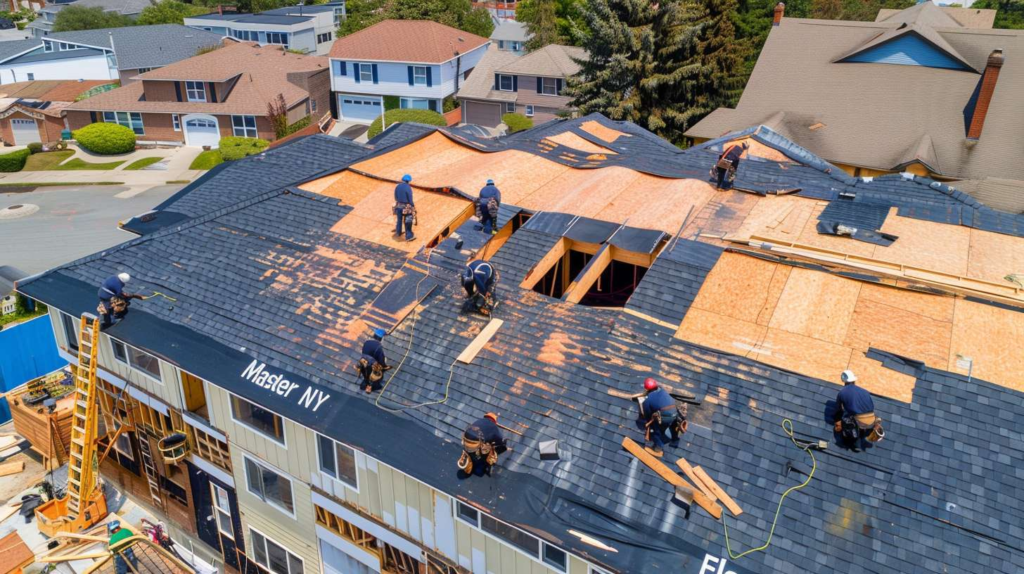
Everything You Need to Know About Flat Roof Costs - Before You Call Anyone
What Queens Owners Usually Pay Before Extras Show Up
Most homes in this zip code, when they're due for a flat roof replacement, are looking at somewhere between $4,500 and $14,000 for a typical residential job - and in Queens, I'll give you the number before the speech: that range isn't a mistake. Two roofs that look nearly identical from the sidewalk can land on completely opposite ends of that range once you factor in square footage, membrane choice, how many layers need tearing off, what the drainage situation looks like, and whether you've got a tight alleyway or a landlord's second-floor window between you and the dumpster.
Here's the thing - good estimates show their work, and cheap ones skip steps. I'd rather hand a homeowner an uncomfortable honest range on day one than a pretty low number that falls apart three weeks into the job when wet insulation shows up under the old membrane. The baseline cost bands come down to size and system: a small garage roof in a modified bitumen overlay runs very differently from a full TPO replacement on a 900-square-foot two-family with a tear-off. Think of it like grading math homework - the answer on the bottom of the page means nothing if the work above it is missing.
Queens Flat Roof Cost - Quick Facts
Typical Full Replacement Range
$4,500 - $14,000+
For small-to-mid-size Queens residential flat roofs, before hidden conditions
Common Membrane Options
TPO · EPDM · Modified Bitumen
System choice affects both material cost and long-term warranty coverage
Most Common Surprise Add-On
Wet Insulation & Deck Repairs
Often invisible until tear-off; can add $1,500-$4,000+ to a quote
Scheduling Seasons
Best: Late spring / early fall
Emergency replacements peak in late summer storm season and mid-winter freeze-thaw cycles
Flat Roof Replacement Scenarios - Queens Price Ranges
| Scenario |
Roof Size / Condition |
Likely System |
Estimated Queens Price Range |
| 1. Garage Roof Overlay |
250-350 sq ft, one existing layer in fair condition |
Modified Bitumen or EPDM overlay |
$2,200 - $4,500 |
| 2. Rowhouse Roof Replacement |
400-600 sq ft, full tear-off, standard condition |
TPO or Modified Bitumen |
$4,500 - $7,500 |
| 3. Two-Family Replacement w/ Tear-Off |
700-900 sq ft, two existing layers, standard deck |
TPO or EPDM fully adhered |
$7,000 - $11,500 |
| 4. Replacement w/ Wet Insulation & Deck Repairs |
600-800 sq ft, saturated insulation, partial deck rot |
TPO with new ISO board |
$9,500 - $14,000+ |
| 5. Replacement w/ Drainage Correction & New Insulation |
500-750 sq ft, scupper/drain relocation needed, full insulation replacement |
TPO or Modified Bitumen, tapered insulation |
$8,500 - $13,500 |
Why One Estimate Gets an A and Another Flunks the Math
Here's the part nobody likes, but everybody needs: reading a flat roof estimate line by line is the only way to know whether you're comparing the same job or two completely different scopes dressed up in similar totals. I'm Darlene "Ms. D" Velez - I've been doing flat roofing in Queens since 2006, and my specialty is breaking down replacement scopes for rowhouses and two-family homes where the details hide in plain sight. A solid estimate is like a student who shows every step of the math problem. You can follow the logic, question any line, and trust the answer at the bottom. A sloppy one just hands you a total and hopes you don't ask questions.
I remember standing on a two-family in Ridgewood at 7:15 in the morning, coffee still too hot to drink, while the owner waved around a quote that was somehow half the price of everyone else's. It was late March, windy, and I could see from the scupper alone that the cheaper contractor hadn't included drainage correction anywhere in the scope. No drain re-pitch, no scupper extension, nothing. That roof had standing water issues you could practically read from the street. This is where the estimate drops to a C-minus - when it ignores a visible problem because fixing it costs money and mentioning it costs the sale.
The most common omissions I see on lowball quotes: number of tear-off layers, insulation replacement, edge metal, flashing details, drain and scupper work, permit and debris disposal fees, and warranty terms. Any one of those left vague can mean hundreds to thousands added mid-job. That's not a surprise - that's an incomplete worksheet getting graded in your driveway.
Line Items Honest Contractors Include
Thorough Estimate vs. Lowball Quote - What the Lines Actually Say
| Line Item |
Thorough Estimate Says |
Lowball Estimate Usually Says |
| Tear-Off |
Specifies number of existing layers to be removed and disposed of |
"Remove old roof" - no layer count, no disposal detail |
| Decking / Substrate |
States what happens if decking is damaged, with a per-sheet cost for replacement |
Not mentioned at all; damage becomes an add-on after work starts |
| Insulation |
Names type (ISO, polyiso), R-value, and whether tapered board is included |
"Install insulation" - no specs, brand, or thickness |
| Membrane |
Brand name, system type (TPO/EPDM/Mod Bit), mil thickness, and attachment method |
"New flat roof membrane" - no brand, no specs |
| Flashing & Edge Metal |
Lists all flashing locations: parapet walls, pipes, HVAC curbs, edge terminations |
Omitted or listed as "standard flashing" with no scope |
| Drain / Scupper Work |
Addresses existing drain condition, any re-pitching, and hardware replacement |
Not mentioned; drainage problems become separate invoices |
| Permit & Disposal |
Permit fee included or itemized; debris removal method spelled out |
Permit "if required" - disposal method and cost left open |
| Warranty |
States manufacturer warranty length, what's covered, and contractor labor warranty separately |
"10-year warranty" - no detail on what triggers a void |
The Missing Pieces That Create Fake Low Bids
⚠ Red Flags Before You Sign Anything
- One-page quote with no tear-off detail - if it doesn't say how many layers come off, that's incomplete math
- No mention of drainage - flat roofs with standing water problems don't fix themselves with new membrane
- No disposal language - somebody has to move that debris off your Queens property; find out who and how
- Material brand not specified - "quality membrane" is not a spec; it's a placeholder
- Square footage missing from the document - if the size of the job isn't written down, the scope isn't locked in
- Warranty language too vague - "10-year warranty" without terms is meaningless on paper and in court
- Price significantly below the local norm - something in the scope is missing; your job is to find out what
📋 Translate the Roofing Math - What Each Line Actually Costs You
Tear-Off
Removing existing roof layers before new installation. Each layer adds labor and disposal cost - typically $0.50-$1.50/sq ft per layer. If a quote skips specifying how many layers come off, the price can jump when the crew shows up and finds three layers instead of one.
Substrate / Decking
The structural surface the new roof attaches to - usually plywood or tongue-and-groove boards. Rotted or soft decking must be replaced before any membrane goes down. Good estimates include a per-sheet rate ($60-$120/sheet) so you're not blindsided mid-job.
Insulation
Polyisocyanurate (polyiso) board is the most common on Queens flat roofs. Tapered insulation adds cost but corrects slope and drainage. Saturated insulation holds moisture against your deck and must come out - replacing it can add $1,500-$3,500+ to a job.
Membrane
The waterproofing layer - TPO, EPDM, or modified bitumen. Each has different material costs, labor methods, and warranty terms. Thickness (60-mil vs. 45-mil TPO, for example) affects price and durability. An estimate without the brand and mil spec is an incomplete one.
Flashing
Metal or membrane material sealing the transitions at parapet walls, pipes, vents, and HVAC units. Flashing failures cause the majority of flat roof leaks. Labor to flash properly costs more than skipping it - and skipping it costs you far more in water damage later.
Drain Work
Interior drains and exterior scuppers direct water off your roof. Clogged, pitched wrong, or undersized drains cause ponding - which destroys membrane and insulation fast. Correcting drainage during a replacement is far cheaper than coming back for it separately.
Edge Metal
The metal termination bar and drip edge at the roof perimeter. It seals the membrane edge, controls water runoff direction, and is a required component of most manufacturer warranties. If it's not listed, ask specifically whether it's included.
Cleanup / Disposal
Old roofing material weighs a lot and doesn't disappear on its own. In Queens, where many properties are attached with tight or no side access, debris removal requires planning - sometimes a chute, sometimes a staged haul. Disposal costs that aren't quoted upfront become charges you absorb at the end.
Where Flat Roof Budgets Blow Up After the Tear-Off
Last spring, on a roof off Northern Boulevard, I saw this exact mistake: a landlord had budgeted for what he called "a straightforward replacement" based on a surface inspection and a number he'd gotten from a cousin who knew a roofer. We pulled up the old layers and found three things he wasn't paying for - wet insulation that had probably been saturated for two seasons, buried patchwork that had been torched over at least twice, and decking in one corner that had the structural integrity of a soggy cereal box. The roof he thought he was buying and the roof his building actually needed were two completely different jobs. That's not the contractor's fault and it's not the homeowner's fault - it's what happens when a price is built on assumptions instead of conditions.
Now let's move from the math to the mess underneath - because hidden conditions grade out differently by cost impact. A-level routine: clean deck, dry insulation, single layer tear-off - the job runs close to the original quote. B-level fix: minor flashing repairs, one soft spot in the deck, scupper that needs re-bedding - adds a manageable amount, usually flagged mid-job. D-level budget hit: saturated insulation across a large section, multiple patchwork layers to remove, drain correction needed - adds $1,500-$4,000 depending on scope. F-level structural surprise: compromised decking across significant area, deteriorated parapet, major drainage re-engineering - these are the jobs where the original number becomes a memory.
What Homeowners Assume vs. What Tear-Off Reveals
| The Myth |
Reality in Queens |
| "Flat roofs are simple - they should be cheap." |
Flat roofs collect water instead of shedding it. That means drainage, insulation slope, and flashing details matter more, not less - and doing them right costs accordingly. |
| "The bubbling is just cosmetic - it's fine." |
Blisters usually mean moisture is trapped between layers. Press one with your boot - if water moves, you don't have a cosmetic problem, you have a wet insulation problem and a clock ticking on your deck. |
| "An overlay always saves money." |
An overlay saves money when the existing layers are dry and structurally sound. When they're not, you've just locked the problem underneath a new roof and shortened the lifespan of both. |
| "All the leaks come from one spot." |
Water travels. Where it drips inside is rarely where it entered. A roof with one visible leak often has multiple compromised seams or flashing points that will surface the moment the original entry is patched. |
| "The membrane price is basically the whole job." |
Membrane material is typically 25-40% of total cost. Labor, tear-off, insulation, flashing, drainage, edge metal, permits, and disposal make up the rest - and those are the lines that separate real quotes from hollow ones. |
Overlay vs. Full Tear-Off - Queens Flat Roof Decision
Overlay - Pros
- Lower upfront cost - no tear-off labor or disposal fees
- Faster installation; less disruption to tenants or building use
- Viable option when existing layers are dry and deck is solid
- Can extend roof life by 10-15 years on a sound substrate
Overlay - Cons
- Locks in any existing moisture - wet insulation below accelerates failure
- Most manufacturers won't issue full warranty over existing layers
- NYC building code typically limits layers to two before mandatory tear-off
- Hidden deck problems remain hidden - and get worse faster
- Cost visibility is lower: you're pricing on assumptions, not confirmed conditions
Full Tear-Off - Pros
- Full visibility: deck, insulation, and drainage inspected before new system goes down
- Manufacturer warranties fully applicable - longer coverage, stronger terms
- Longer lifespan for new roof (15-25 years depending on system)
- Hidden moisture and rot addressed before they compound in cost
- Required when more than one layer is already present on most Queens roofs
Full Tear-Off - Cons
- Higher upfront cost - tear-off labor and disposal fees add to base price
- Longer job timeline; building may be temporarily more exposed
- Tight Queens properties make debris removal more complex and sometimes costlier
- Hidden conditions discovered during tear-off can add mid-job costs - though these would have escalated anyway
Which Question Decides Your Price Faster Than Anything Else
Repair, Recover, or Replace?
If you were standing in front of me, I'd ask you one thing first: are you pricing a repair, an overlay, or a full replacement? That answer changes the entire math. I had a retired bus dispatcher in Sunnyside call me during a light drizzle around 6 p.m., convinced he only needed a small repair because his cousin said the bubbling was cosmetic. I got up there, pressed one blister with my boot, and water shifted under it like a waterbed from 1989. He went quiet for a full ten seconds, then said, "Okay, give me the grown-up version of the cost." And honestly, that's the conversation that saves people money - not the one where we both pretend a repair solves a replacement-level problem. Before you call anyone, take photos: your drains or scuppers, the parapet edges, any seam trouble spots, and any ceiling stains inside the building directly below. When a contractor can see those images before the first conversation, the first number they give you is a lot less guesswork.
Before you chase a price, figure out which test you're actually taking - repair, overlay, or replacement.
Decision Tree: Repair, Overlay, or Full Replacement?
Is the leak isolated to one clearly defined spot - like a single pipe boot or one seam?
YES ↓
Are there no blisters, no ponding areas, and no interior water staining beyond that spot?
NO ↓
Multiple problem areas suggest systemic failure. Move toward replacement pricing.
If YES above - Is the roof less than 10 years old with no known layering history?
YES ↓
Repair pricing conversation is likely appropriate. Get a targeted inspection first.
NO ↓
Roof is aging. Ask: Has it already been layered once?
NOT LAYERED YET ↓
Is insulation likely dry? No ponding, no blisters? Possible overlay pricing - but get a moisture scan or probe first.
ALREADY LAYERED ↓
Two or more existing layers means full tear-off and replacement is likely required by NYC code and by common sense.
→ REPAIR PRICING
Isolated issue, young roof, dry substrate
→ OVERLAY PRICING
One layer present, dry insulation, no ponding
→ REPLACEMENT PRICING
Multiple layers, wet insulation, aging system
✅ Before You Call for a Flat Roof Quote - Gather These 6 Things
- Approximate roof dimensions - length x width if you can get up there or read a property survey
- Age of the current roof - even an estimate ("installed around 2011") helps narrow the pricing conversation
- Number of existing layers if known - prior permits or a quick probe at the edge can reveal this
- Photos of drains and scuppers - show their condition and whether water collects around them
- Photos of seams, blisters, and any ponding areas - taken from multiple angles if possible
- Whether there is interior water damage below - ceiling stains, bubbling paint, or soft drywall tell a roofer a lot before they even get on the roof
Questions to Ask So the Number Stops Moving
Blunt truth - flat roof pricing goes sideways fast when scopes are vague, conditions are unknown, and homeowners compare totals instead of line items. That's especially true in Queens, where you've got attached rowhouses sharing party walls, rear extensions that need separate access, two-family homes where the second-floor tenant can hear every footstep, and tight driveways where a debris chute has to thread between a fence and a neighbor's AC unit. These aren't just inconveniences - they're labor variables that honest contractors price for and cheap ones leave out. At Flat Masters, we price Queens properties the way they actually exist, not the way a generic calculator assumes they do.
Questions Every Queens Homeowner Should Ask a Roofer
-
✔
How many layers are included in tear-off? - Get a number in writing, not "existing layers."
-
✔
What happens if insulation is wet when you open the roof? - Ask for the per-square-foot or per-board rate upfront.
-
✔
Is drain or scupper correction included in this price? - If ponding is visible, this should not be optional.
-
✔
Which membrane brand and system is quoted? - Carlisle, Firestone, GAF, Polyglass - the name matters for warranty validation.
-
✔
What edge and flashing metal is included? - Parapet coping, termination bar, drip edge - ask for each to be listed.
-
✔
How is debris removed from this property? - On a tight Queens lot, this needs a real answer, not a shrug.
-
✔
What exactly voids or limits the warranty? - Get the specific conditions in writing before anything is signed.
Flat Roof Cost Questions Queens Owners Ask Most
How much is a flat roof in Queens? ▾
For a residential flat roof replacement in Queens, expect a range of $4,500 to $14,000+ depending on roof size, membrane system, number of tear-off layers, drainage needs, insulation condition, and site access. A garage overlay on the lower end, a full two-family replacement with drainage correction on the higher end. Any number you hear without a site assessment is an estimate built on assumptions.
How much is a new flat roof for a rowhouse? ▾
A typical Queens rowhouse flat roof replacement - around 400-600 square feet, single or double layer tear-off, standard insulation, TPO or modified bitumen membrane - runs $4,500 to $8,500 in most cases. If insulation is wet, drainage needs correcting, or there's deck damage, add $1,500-$4,000 to that baseline.
Why is one estimate so much cheaper than the others? ▾
Because it's pricing a smaller job. When a quote is significantly below the others, something is missing from the scope - usually tear-off layer count, drainage correction, insulation replacement, edge metal, or disposal. That work doesn't disappear just because it's not written down. It shows up mid-job as a change order, or it shows up three years later as a failed roof.
Is a repair ever smarter than replacement? ▾
Yes - when the roof is relatively young, the problem is isolated, the insulation is dry, and there's no systemic failure happening. A targeted repair on a 5-year-old TPO roof with one compromised seam makes complete sense. A repair on a 20-year-old roof with multiple blisters and standing water is just postponing a more expensive conversation, usually at a worse time of year.
Does insulation replacement change the price a lot? ▾
Yes - it's one of the bigger variables in flat roof pricing. New polyiso insulation board runs roughly $1.50-$3.00 per square foot installed, and tapered insulation for drainage correction costs more. On a 700-square-foot roof, full insulation replacement can add $2,000-$4,000. That's not optional when existing insulation is wet - installing new membrane over saturated board is one of the fastest ways to void a manufacturer warranty.
Can I get a real quote before tear-off starts? ▾
You can get a thorough, well-informed estimate before tear-off - and a good contractor will give you one that includes base scope plus clearly itemized contingencies for what happens if conditions are worse than expected. What you can't get is a fully locked final price, because flat roofs hide what they hide until you open them. What you should demand is a contractor who tells you exactly which scenarios would change the number and by how much - so nothing hits you sideways mid-job.