
How Long Does a Flat Roof Really Last Before It Needs Replacing?

How Long Does a Flat Roof Really Last Before It Needs Replacing?

How Long Does a Flat Roof Really Last Before It Needs Replacing?

Lifespan is a condition question before it is an age question

Was there a time you got a straight answer about flat roof replacement frequency and felt like something was still missing? That feeling is usually right. Flat roof replacement is rarely determined by age alone - some roofs outlast every expectation while others burn through their useful life early because of neglect, poor drainage, or a patch history that added weight without solving anything.

Before we ask how often should a flat roof be replaced, how has this one actually been wearing? Service life is a blend of years on paper and rhythm in performance - and I mean that literally. I'm Ephraim Cole, with 30 years helping Queens owners decide replacement timing by reading wear patterns, maintenance history, and system balance rather than chasing a magic lifespan number. I worked for years restoring old clock movements before roofing, and that background left me permanently suspicious of anyone who hands out a single lifespan number for a system that depends on whether its small parts were respected. A flat roof ages the way a clock movement runs: steady care keeps it ticking, drift sets in when maintenance slips, and enough skipped beats will throw the whole rhythm off before the calendar says it should.
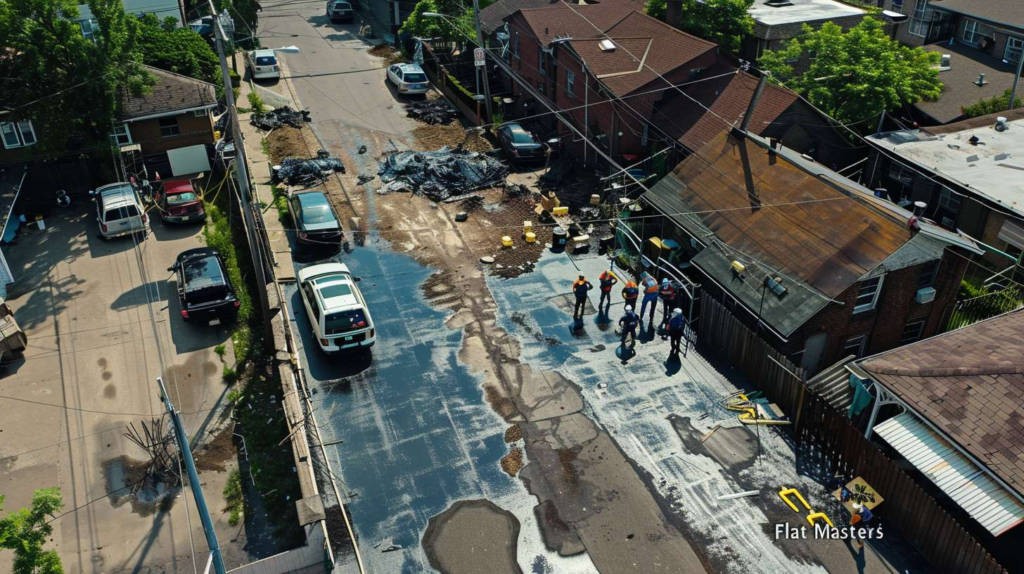
A contractor examining a commercial flat roof to assess if it requires replacement due to visible signs of wear and damage.

Is This Roof Aging Steadily, Limping Unevenly, or Ready for Replacement?
1
Is the roof still performing with only isolated, manageable issues?
Yes → Stay on a repair and maintenance path. Condition is still holding rhythm.

2
Are failures repeating in multiple areas or returning after multiple patches?
Yes → The roof is aging unevenly. This is the signal that something structural is drifting.

3
Is the system still balanced overall, or are weak parts dragging the rest down?
Balance is gone → Open a replacement conversation. One failing zone is now taxing the whole assembly.

4
Has the roof lost its pattern - irregular failures, no clear recovery between storms?
Yes → The roof is no longer aging. It is limping. Replacement timing is no longer theoretical.

Verdict: Condition decides the calendar. Not the other way around.

4 Things That Really Change Flat Roof Lifespan
Maintenance History
A roof that received regular attention holds its rhythm far longer than one that was ignored between visible problems.

Drainage Behavior
Ponding water is slow damage. It weakens seams, softens the substrate, and accelerates aging in ways that don't show up until the roof is already compromised.

Repeated Patching
Patches fix symptoms. When the same area needs attention every season, the patches are masking a pattern - not resolving it.

Failing Details Throwing Off the System
One weak edge, flashing, or penetration detail can pull an otherwise sound roof out of balance - aging the whole assembly faster than necessary.

Two roofs with the same birthday can be living completely different lives

The calendar does not measure care

At twenty years, two roofs can be living completely different lives. One drizzly October morning in Kew Gardens, a homeowner asked me how often does a flat roof need to be replaced because his neighbor had said "twenty years, period" - the kind of certainty that sounds authoritative right up until you get on the roof. I've heard that answer a hundred times. Once I inspected his roof, I found age, yes, but also a maintenance history that had kept the assembly in better shape than the calendar suggested. I remember standing by the hatch telling him that roofs, like clocks, do not all wear at the same pace just because they were made in the same decade.

A flat roof lifespan is a lot like a clock movement - steady care keeps it ticking, but neglect throws the whole rhythm off. Across Queens, I've seen roofs built in the same era on Jamaica Avenue and two blocks over on 168th Street that look nothing alike in condition - one maintained, properly drained, with a clean patch history, and another that's been quietly accumulating compromise for years. The years on paper match. The wear in reality? Not even close. That gap between age and condition is exactly where replacement decisions should live.

Condition Clue Why It Matters More Than Age What It Suggests About Replacement Timing
Patch frequency A roof patched once or twice is being maintained. A roof patched every season is telling you something the patches aren't fixing. High frequency = getting used up, not aging gracefully
Ponding or poor drainage Standing water softens the substrate and stresses seams over time, even when the surface looks intact from street level. Chronic ponding compresses the useful lifespan regardless of material quality
Seam or detail fatigue Seams and flashing details fail before the field membrane does. If these are repeatedly failing, the system's rhythm is breaking down. Repeated seam failure is often the first sign replacement is getting close
Maintenance record A documented maintenance history is evidence that the roof has been heard, not ignored. It directly extends useful service life. Good record = replacement timing stays a planning issue, not an emergency
Edge condition Edges and perimeters take the most wind stress and thermal movement. A compromised edge drags the rest of the assembly out of balance faster than any other single point. Failing edges accelerate aging across the whole system
Storm-to-storm behavior A roof that performs consistently after weather is aging steadily. One that needs attention after every significant storm has lost its rhythm. Inconsistent storm recovery is the clearest behavioral sign that replacement timing is near

Myth Fact
"All flat roofs should be replaced at the same age." Flat roof replacement timing varies significantly based on material type, installation quality, drainage, and how consistently the roof has been maintained.
"A neighbor's timeline is a safe guide." Your neighbor's roof and your roof have different maintenance histories, drainage patterns, and sun exposures. Their timeline tells you almost nothing useful about yours.
"If it isn't leaking badly, age doesn't matter at all." A roof can be aging unevenly, losing substrate integrity, or accumulating hidden moisture damage without producing obvious leaks. Condition matters - not just leak status.
"Patch history doesn't change lifespan much." Repeated patching in the same areas indicates a pattern the roof can no longer recover from on its own. It compresses the remaining useful life faster than age alone does.
"An old roof that looks okay must still have lots of life." Surface appearance is not the same as system health. Some of the most compromised roofs I've inspected looked fine from a distance and were quietly failing at their seams and edges.

Replacement usually becomes the right call when the roof stops aging evenly and starts limping from one weak point to the next

I still remember telling one owner that his roof was aging, but not failing. He'd come expecting bad news - the roof was old by any sidewalk standard, and a contractor had already told him replacement was overdue. But when I got up there, the field membrane was holding, drainage was reasonable, and the patch history was light. Not every nervous owner needs replacement just because the roof has years on it. Sometimes the roof is simply getting older in a steady, predictable way - and that's a very different situation from one that has started breaking down unevenly.

Here's the blunt truth: some roofs grow old, and some roofs get used up. I had a garage owner in Ridgewood call me just after sunrise - one of those early calls that usually means something is already wrong - wanting to know how often should you replace a flat roof before listing the property. The roof was old enough to make him nervous, but the real problem wasn't age alone. One neglected edge had started pulling the rest of the system out of balance, making the whole assembly feel older than it actually was. That job stayed with me because it showed how one failing component can make a replacement conversation feel urgent when the majority of the roof still has life in it.

My opinion? Calendar-only answers are what people give when they haven't looked closely enough. A mixed-use building in Astoria still stands out: the owner had spent years patching and asked me flat roof replacement how often as if I could answer from the sidewalk. It was a warm June evening, and once I got on the roof, I could see the pattern immediately - repeated local failures, uneven aging, and enough accumulated compromise that the roof had stopped aging gracefully and started limping from one storm to the next. That's when I told him the replacement decision was less about age and more about the loss of rhythm. And here's the insider question worth asking your roofer: which single detail is aging the rest of the roof fastest? A good inspector can usually point to it. That answer will tell you whether replacement timing is truly near or whether it's just being pushed by anxiety and sidewalk math.

Steady Aging
Uneven Breakdown
Issue frequency: Isolated issues, manageable and infrequent between seasons.
Issue frequency: Problems recurring after each significant weather event, no clear recovery period.
Location of failures: Failures concentrated in one spot, not spreading across the system.
Location of failures: Failures appearing in multiple zones - edges, seams, penetrations - at once.
Patch history: Patches are holding. Same areas aren't returning for repeat attention.
Patch history: Patches are temporary fixes. The same zones keep coming back for more.
Drainage behavior: Water moves off the roof as designed. No chronic ponding zones.
Drainage behavior: Ponding is worsening, suggesting substrate depression or drain compromise.
Owner stress after storms: Owner checks the roof but isn't bracing for a call. Roof is predictable.
Owner stress after storms: Every storm brings anxiety. The roof has become unpredictable and expensive.
Replacement timing: A planning conversation - something to schedule thoughtfully, not urgently.
Replacement timing: An immediate discussion. Waiting is now costing money and risking interior damage.

⚠ When Patching Starts Masking a Replacement Decision

There's a point where every local repair is buying days, not seasons. If your roof has started failing in sequence - one area patched, then another fails nearby, then another - it is no longer responding to maintenance. It is limping through a cycle.

Watch for: edges or flashing details demanding disproportionate attention after each weather cycle, patches that hold for weeks instead of years, and a growing sense that you're always just behind the next leak. That pattern is the roof telling you something. It's worth listening to it before the interior tells you louder.

The right replacement answer is usually less dramatic and more specific than people expect

What you are really asking is whether the roof still has rhythm left

At twenty years, two roofs can be living completely different lives - and if that sentence sounds familiar, it should. The point isn't to be alarming. It's to be accurate. Flat Masters owners in Queens who want a real answer about how often to replace a flat roof deserve better than a number somebody repeated from a sidewalk conversation. Seek out condition-based answers: what is this roof actually doing, storm to storm, season to season, detail to detail? There's something almost quietly amusing about the confidence with which people announce magic lifespan numbers for systems they've never inspected. The right answer is almost always less dramatic, and far more specific, than any number you've heard before.

Open the Rhythm Check
What is still sound?

Start by identifying the parts of the roof that are genuinely holding - field membrane condition, intact seams, functioning drains. A sound core changes the replacement conversation entirely.

Knowing what's still working gives you a baseline for what's actually failing, which is the only way to make a condition-first decision rather than a fear-first one.

What is out of balance?

Identify any detail - an edge, a penetration, a low drain point - that is aging faster than the rest of the system and pulling attention toward itself repeatedly. One unbalanced component can make the whole roof feel older than it is.

If you can isolate that one detail and address it, the rest of the roof may recover its rhythm. If you can't, the imbalance is likely structural and broader than a single repair.

What is repeating often enough to stop trusting?

When the same issue returns in the same place after multiple repairs, the roof is no longer responding to intervention - it's tolerating it temporarily. That's the moment when continued patching stops being maintenance and starts being denial.

Repeated failures in the same zone, or failures that migrate from one area to an adjacent one, are the clearest behavioral sign that the roof's useful rhythm has ended and replacement timing is a real, near-term question.

Common Questions About Flat Roof Replacement Frequency
How often should a flat roof be replaced?
There's no single honest answer - and that's not a dodge. Flat roof replacement frequency depends on the material used, how the roof has been maintained, drainage performance, and whether failures are isolated or spreading. A well-maintained roof can outlast an unmaintained one by a decade or more. Condition is the answer, not a calendar.
How often does a flat roof need to be replaced if it has been maintained?
Maintained flat roofs regularly push beyond general lifespan estimates for their material type. Maintenance doesn't pause aging - it keeps aging steady and predictable rather than sudden and expensive. A roof that's been properly cared for gives you warning signs early, which means replacement happens on your terms instead of the weather's.
What makes one area age faster than the rest?
Usually it's an edge, a flashing detail around a penetration, or a low-drainage zone that collects water. These spots experience more stress - thermal movement, wind uplift, standing moisture - than the field membrane does. When they fail repeatedly while the rest of the roof holds, that single detail is pulling the whole system's lifespan down faster than it should go.
When do repeated patches stop making sense?
When the patches are holding for weeks rather than years, when the same zones keep returning, or when failures start appearing in adjacent areas after a repair - that's the shift. At that point, patching is spending money to delay a conversation rather than extend a roof. Worth having that conversation honestly before the interior of the building forces it.
What should a contractor explain before recommending replacement?
They should be able to tell you which specific condition is driving the recommendation - not just the age. Ask them what part of the roof is aging fastest, whether the rest of the system still has rhythm, and whether isolated repairs could extend useful life. A contractor who can answer those questions specifically is reading the roof. One who can't is reading a calendar.

If you want to know how often your flat roof should be replaced based on what it's actually doing - not a number someone repeated from the block - call Flat Masters. We'll tell you what the roof is telling us, and we'll base the timing on its rhythm, not ours.

Faq’s

Flat Roofing FAQs: Everything Queens, NY Homeowners Need to Know

How much does flat roof replacement really cost in Queens?
Most Queens flat roof replacements run $8-15 per square foot, depending on materials and building complexity. While that seems steep, remember you’re looking at 15-20 years of protection. The full article breaks down specific costs for EPDM, TPO, and modified bitumen systems to help you budget properly.
Waiting might cost you thousands more if your roof fails completely. Small leaks become major water damage fast in Queens weather. If you’re already seeing persistent leaks, membrane shrinkage, or ponding water, delaying replacement usually leads to emergency situations and higher costs.
Look for persistent leaks, widespread cracking, or repair costs adding up to over 50% of replacement cost. Our article explains the warning signs and the “repair vs replace” decision process. If you’re calling for repairs more than twice yearly, replacement typically makes financial sense.
Flat roof replacement requires specialized skills, proper materials, and weather timing that DIYers rarely have. Poor installation can void warranties and create expensive problems within years. Professional installation ensures proper drainage, seam integrity, and material performance for the full lifespan.
Most residential flat roofs take 2-4 days, while commercial buildings might need 1-2 weeks depending on size and complexity. Weather, permits, and material delivery affect timing too. The article covers optimal seasons for replacement and planning tips to avoid rushed emergency installations.

Ask Question

Or

Flat Roof Leaking Problems - We Diagnose and Fix Them Properly

11 min read

Replacing a Flat Roof on a Home - From First Survey to Final Finished Surface

21 min read

Professional Composite Decking on Flat Roof Installation Services

9 min read

Not All Roofing Felt Is the Same - Here's How to Tell the Good From the Basic

17 min read

How to Install a Rubber Flat Roof - or Let Our NYC Pros Handle It

6 min read

Timber Flat Roof Construction - What NYC Homeowners Need to Know

8 min read

Professional Fiberglass Flat Roof Systems Installation & Repair

6 min read

Garden Rooms with Flat Roofs - Built and Installed by NYC Experts

6 min read

Expert Fibreglass Flat Roof Problems Solutions & Repairs

6 min read

Tarping a Flat Roof Isn't Like Covering a Tent - Here's the Right Way to Do It

13 min read

Cold Roof or Warm Roof - and Why the Wrong Choice Can Cause Real Problems

14 min read

Asphalt Flat Roof Services in NYC - Durable, Affordable, Guaranteed

7 min read

Flat Roof Glass Replacement in NYC - Clear Views, Watertight Seal

7 min read

Cleaning a Flat Roof Takes More Than a Hose - Here's the Right Way to Do It

13 min read

What Is a Flat Roof and Is It Right for Your NYC Building?

6 min read

Not All Flat Roof Companies Are Equal - Here's How to Tell the Good Ones Apart

13 min read

Understanding Residential Flat Roof Layers: Your Complete Guide

9 min read

Patching a Flat Roof Leak Can Work - If You're Doing More Than Covering It Up

16 min read

Flat Roof Fascia Board Replacement - Clean Finish, Built to Last

7 min read

Professional Fibreglass Flat Roof Leaking Repair Services

4 min read

Professional Flat Roof Not Draining Solutions & Expert Repair

8 min read

What's the Average Cost of Conventional Flat Roof Construction?

7 min read

Expert Flat Roof Rafter Replacement Services Near You

8 min read

What Do You Actually Put on a Flat Roof? Here's Every Option Explained Clearly

18 min read

Can You Have Flat Roof in Snow? Expert Solutions & Safety Tips

7 min read
Flat Roof Replacement near Addisleigh Park, Queens Flat Roof Replacement near Arverne, Queens Flat Roof Replacement near Astoria, Queens Flat Roof Replacement near Auburndale, Queens Flat Roof Replacement near Bay Terrace, Queens Flat Roof Replacement near Bayside, Queens Flat Roof Replacement near Bayswater, Queens Flat Roof Replacement near Beechhurst, Queens Flat Roof Replacement near Belle Harbor, Queens Flat Roof Replacement near Bellerose, Queens Flat Roof Replacement near Breezy Point, Queens Flat Roof Replacement near Briarwood, Queens Flat Roof Replacement near Broad Channel, Queens Flat Roof Replacement near Broadway-Flushing, Queens Flat Roof Replacement near Cambria Heights, Queens Flat Roof Replacement near Chinatown, Queens Flat Roof Replacement near College Point, Queens Flat Roof Replacement near Corona, Queens Flat Roof Replacement near Douglaston, Queens Flat Roof Replacement near East Elmhurst, Queens Flat Roof Replacement near Edgemere, Queens Flat Roof Replacement near Elmhurst, Queens Flat Roof Replacement near Far Rockaway, Queens Flat Roof Replacement near Floral Park, Queens Flat Roof Replacement near Flushing, Queens Flat Roof Replacement near Forest Hills, Queens Flat Roof Replacement near Fresh Meadows, Queens Flat Roof Replacement near Fresh Pond, Queens Flat Roof Replacement near Glen Oaks, Queens Flat Roof Replacement near Glendale, Queens Flat Roof Replacement near Hammels, Queens Flat Roof Replacement near Hillside, Queens Flat Roof Replacement near Hollis, Queens Flat Roof Replacement near Holliswood, Queens Flat Roof Replacement near Howard Beach, Queens Flat Roof Replacement near Jackson Heights, Queens Flat Roof Replacement near Jamaica Estates, Queens Flat Roof Replacement near Jamaica Hills, Queens Flat Roof Replacement near Jamaica, Queens Flat Roof Replacement near Kew Gardens Hills, Queens Flat Roof Replacement near Kew Gardens, Queens Flat Roof Replacement near Koreatown, Queens Flat Roof Replacement near Laurelton, Queens Flat Roof Replacement near Locust Manor, Queens Flat Roof Replacement near Long Island City, Queens Flat Roof Replacement near Maspeth, Queens Flat Roof Replacement near Meadowmere, Queens Flat Roof Replacement near Middle Village, Queens Flat Roof Replacement near Neponsit, Queens Flat Roof Replacement near Ozone Park, Queens Flat Roof Replacement near Pomonok, Queens Flat Roof Replacement near Queens Village, Queens Flat Roof Replacement near Queensboro Hill, Queens Flat Roof Replacement near Rego Park, Queens Flat Roof Replacement near Richmond Hill, Queens Flat Roof Replacement near Ridgewood, Queens Flat Roof Replacement near Rockaway Beach, Queens Flat Roof Replacement near Rockaway Park, Queens Flat Roof Replacement near Rockaway, Queens Flat Roof Replacement near Rosedale, Queens Flat Roof Replacement near Roxbury, Queens Flat Roof Replacement near Seaside, Queens Flat Roof Replacement near South Jamaica, Queens Flat Roof Replacement near South Ozone Park, Queens Flat Roof Replacement near Springfield Gardens, Queens Flat Roof Replacement near St. Albans, Queens Flat Roof Replacement near Sunnyside Gardens, Queens Flat Roof Replacement near Sunnyside, Queens Flat Roof Replacement near The Hole, Queens Flat Roof Replacement near Whitestone, Queens Flat Roof Replacement near Willets Point, Queens Flat Roof Replacement near Woodhaven, Queens Flat Roof Replacement near Woodside, Queens Flat Roof Replacement near Wyckoff Heights, Queens
blue circle

Get a FREE Roofing Quote Today!

Schedule Free Inspection