
Building a Flat Roof Over a Screened Porch? Here's What Makes It Work
What decides success before the membrane even shows up
We're not here to talk about membrane brands first - because the roofing material is rarely the first reason a screened porch flat roof fails. In almost every troubled porch roof I've walked onto in Queens, the framing, the slope, and the tie-in to the house wall had already decided the outcome before anyone unrolled a single layer. Think of each component as earning a grade: structure, drainage, and flashing each get a pass, a borderline, or a fail - and that score is set early, usually by decisions made before roofing day even arrives.
Quarter-inch per foot - that's the number I wish more porch builders respected. A flat roof screened porch is never actually level; "flat" just means low-slope, and that slope has to be intentional, measurable, and consistent across the whole deck. When it isn't, water doesn't drain - it sits. And a screen porch flat roof that ponds quietly fails quietly, too. The first sign is usually a soft stain on the ceiling or a slow edge drip that only shows up two days after a storm, long after the connection between cause and effect has blurred.
| Component | ✔ Passing Grade | ⚠ Borderline Grade | ✘ Failing Grade |
|---|---|---|---|
| Framing & Structure | Sized for load, properly attached to house with correct ledger hardware | Meets minimum span but has no plan for snow or wind uplift | Undersized joists, improper ledger connection, or no tie to structure |
| Slope / Pitch | Minimum ¼" per foot, built in at the framing stage and verified with a level | Slight slope present but not consistent - low spots likely | Visually level deck; no measurable drainage pitch |
| Drainage Path | Water exits to a properly sized gutter or scupper within 24 hours of rain | Drainage exists but is undersized or partially blocked by poor gutter placement | Water has no clear exit path; ponds at edge or near house wall |
| Wall Tie-In & Flashing | Step or counter flashing integrated under house siding; no exposed caulk as primary seal | Flashing present but not tucked under siding; relies partly on sealant | Caulk-only wall tie-in; water can track behind siding undetected |
Myth vs. Fact - Screened Porch Flat Roof
| Myth | Fact |
|---|---|
| "Any low-slope porch roof is flat enough." | Slope must be intentional and measurable - at least ¼" per foot, built into the framing, not assumed by eye. |
| "A better membrane will fix bad framing." | No membrane corrects a structural pitch error. The membrane is only as good as what's underneath it. |
| "Caulk at the wall is proper waterproofing." | Caulk is a cosmetic seal. Flashing integrated under the siding is what actually stops water from tracking behind the wall. |
| "If it doesn't leak right away, it's fine." | Slow moisture infiltration often starts weeks or months before any visible drip appears. By then, the damage is already stacking up inside the wall or deck. |
| "Porch roofs are simpler than house roofs." | Small roofs fail faster. The details are tighter, the margins are smaller, and shortcuts that might survive on a larger roof show up immediately on a porch. |
Where screened porch flat roofs in Queens usually lose points
Slope and framing errors
I'm going to be plain here: the most common failure patterns I see on a screen porch flat roof in Queens come down to four things - undersized framing, a pitch so shallow it barely registers, a sloppy ledger attachment to the main house, and drainage that was never planned, just assumed. Queens rear-yard additions bring their own complications: tight footprints, older vinyl or aluminum siding transitions that don't play well with new flashing, and weather that doesn't ease up. Summer downpours off Jamaica Bay can drop two inches in an hour, and snowmelt from a February warm snap pushes water toward every weak point at once. I'm Darlene Velez - I've spent 27 years in flat roofing, with a specialty in fixing exactly these kinds of misframed porch roofs across Queens, and the same three errors keep showing up on the paperwork.
Wall tie-ins and trapped runoff
One windy March morning in Kew Gardens, I saw the whole problem from the gutter line. A retired piano tuner had called me out because his screened porch with flat roof dripped at one corner even though the membrane looked fine from every angle. When I climbed up and checked the gutter, the answer was obvious: one section had been installed lower than the roof's edge on the street side, so runoff pooled in that corner instead of flowing toward the downspout. The membrane wasn't guilty. The drainage setup had framed it. That's a borderline grade on drainage that behaves like a failing one in practice.
One Saturday morning in Bayside, I walked onto a screened porch and immediately felt the soft crunch of wet plywood under my boot - the kind that tells you something's been wrong for a long time. The roof looked perfectly neat from the backyard. Trim was straight, edges were clean. But the wall tie-in to the house had been done entirely with caulk and wishful thinking. Water had been sneaking in behind the siding for years, and by the time we opened it up, we were doing a full tear-off instead of a simple repair. Here's the thing about caulk: it's not a roofing system. It's a finish detail. The actual waterproofing work happens when flashing is tucked properly under the house cladding - invisible from the yard, but the reason the roof either holds or fails over time.
Drainage Options for a Screened Porch with Flat Roof - Queens Conditions
⚠ Warning - These Three Mistakes Send the Roof Straight to a Failing Grade
If the porch deck is level with no measurable pitch, the wall tie-in is surface-sealed with caulk, or the gutter traps water at the edge instead of carrying it away - the roof is already on a path toward ponding, rot, and leaks. A new membrane on top of those conditions doesn't fix them. It just buries them until the next hard rain.
How to judge your own porch roof before calling anyone
If I were standing on your porch right now, the first thing I'd ask is this: where does the water actually go when it rains? Not where you think it goes - where does it go? Can you point to the exit? Does the roof meet the house wall cleanly, with no bubbling paint or dark staining at the joint? Is there any soft give in the ceiling or deck surface when you press on it? Those three questions tell you more than a dry-day visual inspection ever will. And here's the insider tip that most people miss: inspect right after a steady, moderate rain - not two days later, not on a sunny afternoon. Water paths reveal themselves while the test is live. Slow drainage, trapped corners, and bad wall tie-ins all announce themselves within the first hour after rain stops. That's the window.
So here's the quiz: after the next rain, can you point to the exact path the water takes off your porch roof?
Decision Tree - Repair, Reframe, or Full Rebuild?
START: Does water leave the roof surface within 48 hours after rain?
✔ YES →
Drainage is working. Move to wall tie-in inspection. Check where porch meets house wall for staining, soft material, or paint failure.
✘ NO →
Ponding is present. Slope and framing must be evaluated. This is a reframing or structural correction issue - a new membrane won't solve it.
Are leaks appearing where the porch meets the house wall?
✔ YES →
Wall flashing has failed or was never properly installed. This requires a flashing and wall tie-in rebuild - not just a surface seal or caulk touch-up.
NO →
Wall tie-in appears sound for now. Move to deck condition inspection before determining scope.
Is the roof deck soft, sagging, or stained on the underside?
✔ YES →
Full tear-off and structural repair required. The substrate has been compromised. This is not a recoverable situation with surface patching.
NO →
Deck is structurally sound. You're a candidate for targeted membrane repair and maintenance if slope and flashing grades are passing.
Which build details actually make the roof work long term
Drainage path
A screened porch roof can look tidy and still earn a failing grade. Neat trim, clean edges, and a fresh membrane don't tell you anything about slope, substrate integrity, or whether the drainage actually exits. I remember one August evening in Forest Hills - the air still felt like soup around 6:30 - when a homeowner kept insisting the new porch framing was "flat enough." I set a level on the deck framing and watched the bubble sit dead wrong. I told him the roof was already failing before we'd even rolled out a membrane. Two months later, after one hard storm, he called back about ponding in exactly the spot I'd pointed to. That wasn't bad luck. It was a predictable result of a framing decision that earned a failing grade on day one. The details that deserve a passing grade - consistent measurable slope, solid substrate with no soft spots, controlled edge termination, continuous membrane with no bridging, and a drainage path that exits cleanly without pooling - have to all pass together. One failing grade tends to drag the others down with it.
Flashing sequence
Think of this roof like a cafeteria tray - if it doesn't tilt properly, everything collects in the wrong place. And honestly, the same applies to how people choose materials. I see homeowners spend real time comparing membrane brands, TPO versus modified bitumen versus EPDM, before anyone's confirmed that the carpentry is correct and the flashing sequence is in the right order. That's backwards. Pick your membrane after the slope is locked in and the wall tie-in detail is settled, not before. Now the next test is whether your roofer can actually describe that sequence to you before the work starts - if they can't, that's a failing grade on the hiring decision.
Best-Practice Build Sequence - Screened Porch with Flat Roof
Verify joist sizing, span, and that the ledger attachment to the house meets load requirements. This is the foundation of every grade that follows.
Minimum ¼" per foot, built into the framing with tapered sleepers or correctly pitched rafters - not assumed, not eyeballed. Verify with a level at multiple points.
Replace any soft, stained, or previously wetted plywood. The substrate must be dry, flat, and fully fastened before any membrane touches it.
Step flashing and counter flashing go in before the membrane reaches the wall. Siding must be lifted, not just sealed over. This is the step that most failed porch roofs skipped.
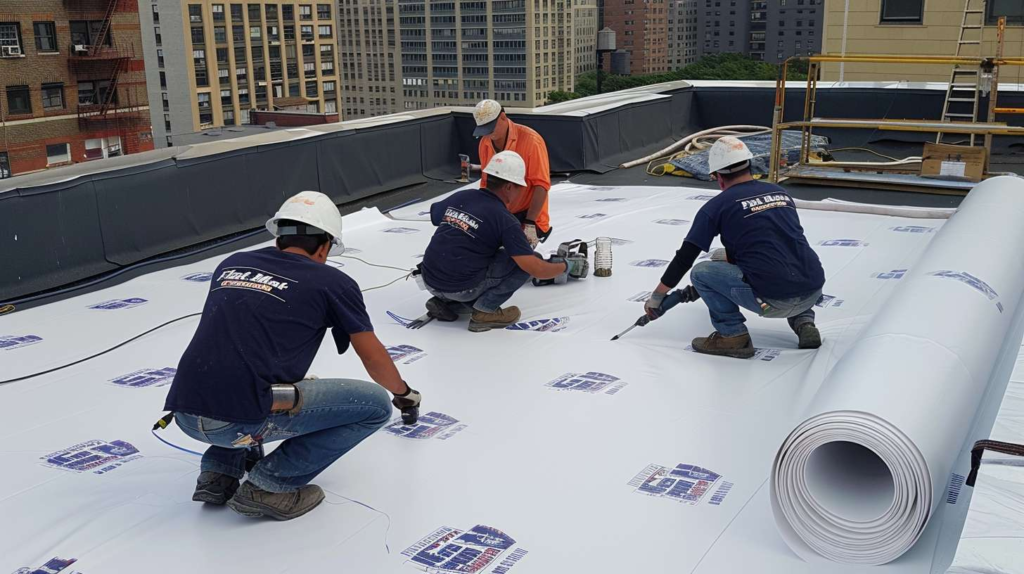
Now the membrane goes down - after everything beneath it has earned a passing grade. Edge termination bars and drip edge must be set to direct water cleanly off the roof.
Run water across the finished membrane and watch it exit. Confirm the gutter or scupper carries it away cleanly. Don't enclose or finish the porch until this test passes.
Passing Grade Checklist by Component
Questions worth asking a roofer before your porch gets covered in mistakes
If a contractor can't answer these questions clearly before the estimate is signed, that proposal is already earning a borderline grade at best. Ask them directly: how will slope be created - tapered framing, sleepers, or something else - and how will they verify it? How does the porch roof tie into the main house wall, and what happens to the siding during that process? Where does drainage exit, and what's the plan if the gutter or scupper needs to be repositioned? And don't skip the hard one: what happens if hidden rot appears once the deck is opened up - is that included, excluded, or figured by the square foot? A roofer who fumbles those answers is telling you something important before work even starts.
Frequently Asked Questions - Screen Porch Flat Roof
Before You Sign - Compare These Two Proposals Side by Side
---
If your screened porch flat roof in Queens is being planned from scratch or already showing ponding, drip stains, or edge leaks, call Flat Masters for a real slope-and-flashing evaluation - before anyone covers the problem under a fresh layer of material.