
Electronic Leak Detection Finds What the Eye Can't - Here's How It Works
Anything that needs repeating every season isn't solving the problem. That ceiling stain you keep painting over marks where water finished its trip - not where it entered, and those two spots are rarely the same place. Electronic Flat Roof Leak Detection is the disciplined method that traces the actual breach point instead of chasing visible symptoms around the building.
Ceiling Stains Finish the Story, They Rarely Start It
Water on a flat roof doesn't fall straight through. It moves laterally through insulation, follows the path of least resistance across a membrane, pools against a curb, then drops - sometimes traveling ten, fifteen, even twenty feet before it ever appears inside. Following the route, not the rumor, is the only way to find where that journey started. A stain tells you where water ended up. Electronic detection tells you where it came in.
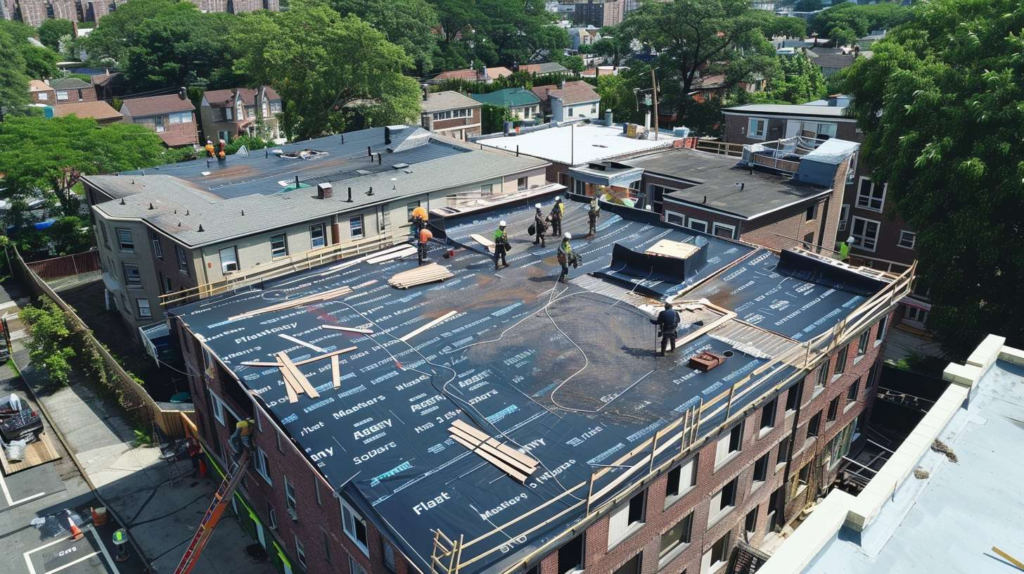
At 7 a.m. on a Queens roof, the membrane tells the truth if you know how to ask. The insulation layout, the slope direction, where the drains sit relative to penetrations, which sections are older versus newer - all of that creates the real map of moisture movement. Repeated seasonal patching isn't bad luck. It's usually evidence that the source was never isolated in the first place. My honest opinion: if a patch didn't hold through one full freeze-thaw cycle, somebody fixed the symptom and left the problem alone.
| Myth | Real Answer |
|---|---|
| The ceiling stain sits directly below the leak. | Water travels laterally through insulation layers before dropping. The stain can be feet - sometimes many feet - from the actual breach. Tracing moisture movement is what reveals the real entry point. |
| If the membrane looks intact, there is no breach. | Many breaches are invisible to the naked eye - hairline membrane splits, seam separations under lap edges, and compromised flashing toe-downs look perfectly fine from three feet away. Electronic methods detect where the waterproof barrier is interrupted, not just where it's visibly damaged. |
| Fresh patch material proves the problem area was fixed. | A patch covers an area, not necessarily a source. If the breach sits two feet from where the patch ended, water still has a path in. Detection finds the breach first; patching follows that specific location. |
| Bigger stains mean bigger holes. | Stain size reflects how long water traveled and how much insulation it saturated - not the dimensions of the breach. Some of the largest interior stains I've traced came from openings smaller than a fingernail. |
| A full replacement is the only answer when a leak keeps returning. | Recurring leaks usually signal an unlocated source, not a failed roof system. Electronic detection can isolate specific breach points, and in many cases the rest of the membrane is performing perfectly well. Targeted repair beats unnecessary tear-off. |
Detection Methods Change Depending on Roof Conditions
Here's the part people don't love hearing: there is no single machine you roll out on every flat roof and get a clean answer. Electronic detection methods depend on the membrane type, whether the surface is dry enough to test, how the assembly is constructed, and whether the setup can complete a proper circuit. In Queens specifically, that matters more than people expect - co-op buildings with layered repair histories, small commercial roofs buried under HVAC equipment, drains that become suspect after a hard wind-driven storm, mixed-age membrane sections that behave differently under the same test. The local variables are real and they change how you run the test.
I had a superintendent in Elmhurst tell me, flat out, "Can't you just flood test it?" And honestly, I get why he asked. Flood testing is familiar. But it's slower, significantly heavier on the structure, and far less precise when you're trying to isolate a small breach on a roof that has three different repair generations on it. As Rosa Mendez - with 17 years in flat roofing and a specialty in moisture migration and membrane failure diagnosis - will tell you straight: the method only gives you reliable results if the method fits the assembly. Flood testing tells you water came in somewhere. Electronic detection narrows it to where.
I remember a sticky August afternoon in Astoria when a co-op board president followed me around asking, "If you can't see it, how do you know it's real?" The roof was dry enough for testing that day, so I ran it. Electronic flat roof leak detection picked up a breach along a seam that had already been patched twice by someone chasing symptoms instead of the source. That job stuck with me. The board had paid for three summers of repairs, and the actual opening was smaller than a MetroCard corner. The right method on the right day found what every prior attempt missed.
| Roof Condition | Best-Fit Method | What It Helps Locate | Main Limitation |
|---|---|---|---|
| Exposed single-ply membrane, dry surface | Low-voltage vector mapping | Breach points across open field membrane and detail areas | Requires surface to be dry and circuit path to be established |
| Protected membrane area with selective exposure | Low-voltage if conductive path can be confirmed | Hidden breaches beneath ballast or cover board sections | Partial exposure may be needed before testing can proceed |
| Detail flashing or seam quality control | High-voltage holiday testing | Pinholes, seam voids, or flashing discontinuities not visible on surface | Best suited to specific assembly types; not universal across all membranes |
| Saturated area suspected but source unknown | Detection plus moisture verification scan | Breach location and extent of wet insulation beneath membrane | Moisture extent and breach location are two separate findings |
| Roof too wet or active storm conditions | Postpone testing; stabilize conditions first | N/A - testing not reliable in these conditions | Wet surface creates false signals and unreliable readings |
⚠ Timing and Roof Prep Matter as Much as the Device
Running electronic detection during active rain, over ponded water, or without proper grounding and operator training doesn't just produce weak results - it produces wrong results. Repairs made from bad readings go to the wrong locations, and now you've disturbed a roof in two places for no reason. Don't rush the test to match the schedule. If conditions aren't right, the correct answer is to wait.
What a Queens Visit Looks Like From Setup to Marked Breach
If I asked you to point at the leak, what are you actually pointing at? Most people point at the stain, the wet ceiling tile, or the bucket they moved last week. That's where the call starts, but it's not where the work starts. A proper electronic detection visit begins with confirming membrane type and age, checking whether surface conditions allow testing that day, setting up grounding or circuit configuration, and only then running the scan - across field membrane, seams, penetrations, and drainage details. Ask the technician directly whether each breach point will be physically marked on the roof and documented with photos. That step matters. Repair crews working off verbal descriptions or memory-based notes have a way of ending up in the wrong square foot, and then you're back to square one by November.
I was on a school roof in Rego Park at 6:40 in the morning, still holding bad coffee, when the custodian swore the leak had to be directly above the library ceiling stain. It made sense to him - the stain was centered, roughly below a rooftop penetration, and the building was old enough to have mystery layers built into the assembly. But the detection scan put the breach almost eighteen feet away, near a pitch pan that looked completely fine from a standing distance. We opened that area later in the afternoon, and the membrane split was exactly where the equipment said it was. Quiet moment for the stain-trusting crowd. The route, not the rumor, is always the better guide.
Review leak history, interior damage reports, and any prior repair records before touching the roof.
Inspect membrane type, surface condition, and assembly details to confirm which test method fits.
Prepare the roof surface and establish proper grounding or circuit setup before scanning begins.
Run the detection scan across seams, penetrations, drains, flashing tie-ins, and open field membrane.
Mark each breach point physically on the roof surface and document every location with photos.
Recommend targeted repairs at marked locations and note any areas warranting follow-up moisture checks.
Repair Scope Gets Smaller When the Source Gets Specific
Bluntly: your eyes are useful, but they are not enough.
| Pros of Electronic Detection | Cons to Know Before You Schedule |
|---|---|
| Targeted repair scope - work addresses confirmed breach points, not guessed areas | Requires proper surface conditions - wet or storm-active roofs can't be tested reliably |
| Less unnecessary tear-off - performing membrane stays untouched | Not every roof assembly is equally test-ready - membrane type and construction matter |
| Helps verify recurring problem areas - confirms whether a previously patched spot was actually the source | Skilled interpretation is required - equipment gives readings, but experience reads them correctly |
| Useful documentation for boards and property managers - findings are photographed and mapped, not just described | Repair is separate from diagnosis - detection tells you where to fix; the actual repair is a distinct scope of work |
Questions Owners Usually Ask Before Approving the Test
A flat roof leak is a little like a student passing a note three desks over - by the time you catch it, it's already traveled through a chain of hands you didn't see. Detection isn't an upsell. It's what keeps property owners from approving broad repairs based on where the note landed instead of who wrote it. One November evening in Forest Hills - with that annoying pre-winter wind coming off the Grand Central Parkway - I was checking a small medical office on a block where every exam room had its own theory about where the water was coming from. The doctor wanted a full replacement. The building owner wanted one cheap patch. Neither of them was right. Electronic leak detection flat roof testing isolated two separate entry points: one near a drain bowl that had been recaulked twice, and one at a flashing tie-in that looked solid from the outside. That building in Queens, NY got targeted repairs on two specific locations and kept the rest of a still-functional membrane. Full replacement would have been unnecessary and expensive.
Quick Facts
Best Condition
Dry roof surface
Best Use
Recurring or hard-to-locate leaks
Main Outcome
Marked breach locations for targeted repair
Common Problem Areas in Queens
Seams, drains, pitch pans, flashing tie-ins
If your flat roof has leaked more than once and the repairs haven't held, the source probably hasn't been found yet. Call Flat Masters to schedule Electronic Flat Roof Leak Detection and get a clear, documented answer about where the breach actually is - and what targeted repair actually makes sense. - Rosa Mendez, Flat Masters