
That Silver Coating on a Flat Roof Isn't Just for Looks - It Does Real Work
Weren't you told this was resolved? That's the thing about silver flat roof coating - it looks so finished, so deliberate, that it's easy to assume the job underneath got handled too. The surprise is that reflective coatings can do real protective work, but only when they're sitting on top of the right roof in the right condition.
Reflective coatings preserve sound roofs; they do not rewrite damaged ones
Silver and aluminum flat roof coatings earn their place on a roof by reflecting solar load, slowing surface degradation, and extending the life of asphalt-based membranes that are still fundamentally worth protecting. That's real value - not cosmetic, not marketing spin. The catch is that none of those benefits reach down through the coating into the substrate below it. What's underneath stays exactly what it was.
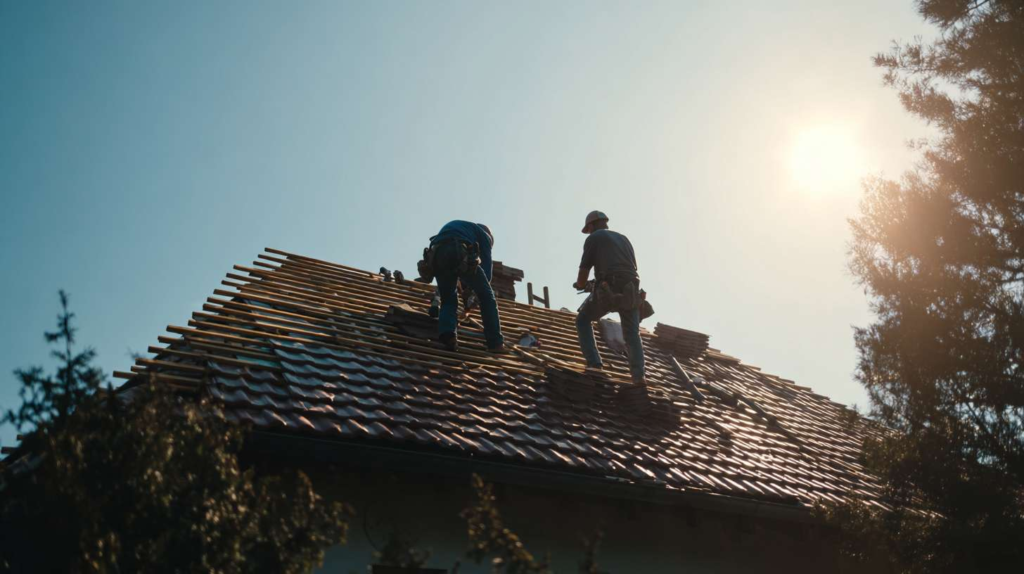
Before you buy aluminum flat roof coating, what condition is the roof underneath actually in? That question decides everything. I'm Alonzo Britt, and with 20 years working on older asphalt-based flat roofs in Queens, I've watched reflective maintenance coatings either preserve a sound surface or flatter a failing one - sometimes on the same block. Think of it like polished aluminum shielding a still-sound shell: the reflective layer deflects punishment beautifully, but it won't pretend that what it's protecting was already compromised before the brush hit it.
Is This Roof a Real Candidate for Silver Coating?
If No → Coating is not the cure. Stop here and assess real repair or replacement options.
If No → Repair those areas first. Coating over active failures is money spent on decoration.
If Yes → You're thinking about this correctly. Proceed to evaluate coating type and application.
What Silver Roof Coating Can - and Cannot - Do
✓ Reflect Solar Load
Aluminum and silver pigments bounce a significant portion of solar radiation away from the roof surface, reducing heat transfer into the building below.
✓ Slow Surface Aging
UV exposure and thermal cycling break down asphalt binders over time. A reflective coating slows that process on a roof that still has useful life left.
✓ Preserve Asphalt Surfaces
On built-up and modified bitumen roofs, a well-applied silver or aluminum coating can genuinely extend the membrane's protective lifespan.
✗ Cannot Substitute for Repairs
A reflective coating applied over failed seams, bad substrate, or active leaks does not fix those problems. It hides them until they get worse.
Shine can confuse people because it looks finished even when the underlying roof is not
Reflective does not mean restored
I still remember that glare making my eyes water while the owner called it "just paint." It was a blazing July afternoon in Ozone Park - the kind of afternoon where the gravel on Northern Boulevard shimmers and you can smell the tar from two blocks away. A silver roof coating for flat roof maintenance had been applied about a year before my visit, and the owner genuinely assumed that meant everything up there was permanently handled. I had to squint hard just to show him where the seams had started separating beneath that bright surface, because the coating itself wasn't the problem - the assumption was.
In hard sun, a silver roof tells you what it's doing. The reflection is real, the heat deflection is real - but those are separate facts from structural integrity, substrate health, and whether the flashing details around the parapet wall are still holding. Queens asphalt-based flat roofs take serious summer punishment, and in neighborhoods like Ozone Park or South Jamaica where you see wall-to-wall attached garages and flat-roof warehouses, the local tendency runs one of two directions: either the owner treats reflective coating as a miracle cure, or they dismiss it as meaningless paint. Both are wrong, and both cost money.
What Owners Often Believe About Silver Flat Roof Coating
| Myth | Fact |
|---|---|
| Silver means the roof is waterproof again | Waterproofing comes from the membrane underneath. A reflective coating can slow surface degradation, but it doesn't restore a compromised membrane. |
| A reflective finish proves the roof is solved | It proves the surface was coated. What's underneath is still running its own scorecard, unimpressed by the shine. |
| Coating replaces repairs | Repairs go first, coating goes after. Reversing that order is how you turn a $400 fix into a $4,000 problem. |
| Shiny means healthy underneath | Reflectivity is a surface property. Substrate condition, seam integrity, and drainage have nothing to do with how bright the top looks. |
| If it was coated recently, the substrate no longer matters much | The substrate always matters. A fresh coat doesn't restart the clock on deterioration that was already in progress when the brush came out. |
⚠ When Silver Coating Becomes False Reassurance
- Using a reflective finish to delay obvious repairs that have already started failing
- Coating over active seam or flashing failures without addressing them first
- Ignoring soft, saturated, or degraded substrate because the surface looks sealed
- Calling an aging roof "handled" without inspecting what's under the reflective layer
- Accepting a silver coating proposal that never mentions what repairs are happening underneath it
The useful question is not whether coating works, but what work you expect it to perform
Here's the blunt truth: reflective does not automatically mean restorative. Those are four different verbs - reflect, protect, preserve, rebuild - and keeping them separate is the whole game. A silver coating reflects heat away from the building. It protects the top surface of a still-sound membrane from UV and thermal cycling. It can preserve an asphalt-based roof that was already in decent shape. It does not rebuild failed details, consolidate a deteriorated substrate, or restore waterproofing integrity that was already lost. If someone's pitch blurs those lines, push back.
A silver coating is a bit like polished aluminum on an old trailer - it can shield and preserve, but it won't pretend rust never started. Back when I was refinishing vintage Airstream panels before I got into roofing, I learned quickly that reflective aluminum is remarkable at deflecting punishment and slowing surface degradation. The moment you asked it to cover structural compromise underneath, though, it just made the problem look better while it got worse. Flat roofs work exactly the same way. The coating is the finish layer, not the foundation.
My opinion? People either dismiss these coatings unfairly or trust them way too much. I had a warehouse owner in Maspeth call me at sunrise - sun just coming up over the East River side, hitting one half of his built-up roof while the other half was still dull - wanting to know whether aluminum flat roof coating would help with heat and squeeze more life out of his aging roof. Reasonable question, and honestly the right question. We walked through what the coating could realistically do: reflect, protect, slow surface aging. What it couldn't do: magically rebuild failed details at the perimeter, which is where his actual problems were hiding. He appreciated a straight answer because he'd been pitched silver seal flat roof treatment like it was going to raise the dead. Here's my insider tip: ask the roofer exactly what the coating is expected to preserve and what roof condition underneath is being relied on to make it work. If that answer is vague, the coating plan probably is too.
Protective Coating vs. Rebuilding: Six Points That Don't Overlap
| Factor | What Coating Can Do | What Coating Cannot Do |
|---|---|---|
| What it addresses | Surface degradation, UV exposure, thermal cycling on sound membranes | Failed seams, saturated substrate, structural damage, active leaks |
| What it leaves untouched | Everything below the membrane surface - insulation, decking, substrate | Nothing is off-limits to a full rebuild; it addresses what coating skips |
| Effect on heat | Real and measurable - reflects solar load and reduces building heat gain | A rebuild alone doesn't prioritize heat reflection without a reflective finish added |
| Effect on waterproofing | Extends waterproofing reliability on a membrane that's already performing | Cannot restore waterproofing that has failed - that requires new material |
| Roof it belongs on | Sound asphalt-based surfaces with stable details and repairable minor issues | Roofs that are past the point of preservation - those need rebuilding, not coating |
| What happens if you expect too much | Coating performs fine - your expectations fail, not the product | Skipping the rebuild when it's needed turns a 1-year problem into a 3-year emergency |
Before You Approve a Silver Seal Flat Roof Coating Job, Ask These
- ✓What condition is the roof in right now? Get a real answer - not "it needs a coat."
- ✓What defects are being repaired before the coating goes on? If nothing is being repaired, that's a problem.
- ✓What specifically is the coating expected to preserve? Vague answers here mean a vague plan.
- ✓What detail areas are not covered by any miracle claims? Flashings, parapet edges, and penetrations are where failures hide.
- ✓Is the goal heat reflection, life extension, or both? Both are valid - just name them clearly so the scope matches.
- ✓What signs would make this roof a bad coating candidate? Any roofer worth hiring should be able to answer this without hesitation.
- ✓What would still fail even after coating? Honest answer here separates a real maintenance plan from wishful thinking.
A fresh silver finish can be part of a good roof plan or part of a very convincing mistake
The difference is underneath
In hard sun, a silver roof tells you what it's doing. That line is just as true as a judgment call as it is a technical observation - and I want to use it both ways. It was a cool September evening in Ridgewood, last light coming sideways over the attached garages off Cypress Avenue, and the homeowner was genuinely thrilled with how clean and sharp the flat roof silver coating looked. He told me the roof had been "taken care of." I had to walk him around to his truck and use the hood - still warm from the afternoon - to explain the difference between a reflective top layer and a restored waterproofing system. The shine was real. The protection it offered depended entirely on what was underneath it. And what was underneath it hadn't changed a bit since before the brush came out.
When Silver Coating Makes Sense - and When It Doesn't
| Roof Condition or Goal | Why Coating May Help or Fail | Appropriate? |
|---|---|---|
| Sound asphalt-based roof needing preservation | Coating adds real reflective and surface-protection value to a membrane that's still performing | ✓ Appropriate |
| Aging built-up roof with repairable detail issues | Complete the repairs first, then coat - sequence matters, and skipping repairs first guarantees the coating fails early | ⚠ Conditional |
| Roof with active seam or flashing failure | Coating covers the evidence without stopping the failure - water finds its own path regardless of the finish on top | ✗ Wrong Call |
| Roof with bad or saturated substrate | No surface treatment fixes what's failing from inside out - saturated insulation and degraded decking need replacement | ✗ Wrong Call |
| Owner seeking meaningful heat reduction | Silver and aluminum coatings deliver genuine solar reflectance - this is a legitimate and well-supported use case | ✓ Appropriate |
| Owner seeking a total cure-all solution | Coating can't deliver total cure-all results - if the expectation is one product to fix everything, the plan needs to be rebuilt from scratch | ✗ Wrong Call |
Common Questions About Silver Roof Coating for Flat Roof Use
Is the silver finish on your roof preserving something solid underneath - or just flattering something that's already tired? Those are two very different jobs, and one of them costs you more in the long run. Call Flat Masters in Queens and let's take an honest look at what your roof is actually a candidate for before any coating decision gets made.
- Alonzo Britt, Flat Masters