
Sealing a Flat Roof Leak Sounds Simple - Here's Why It Often Goes Wrong
I rarely see this done correctly. Most failed attempts at sealing flat roof leaks go wrong for one simple reason: people patch the visible drip instead of tracing where water actually entered the roof system. Let's separate the symptom from the source - because those two things are almost never in the same place.
Visible Drips Fool People Into Sealing the Wrong Spot
On a Queens roof at 7 a.m., the first thing I trust is the water trail, not the ceiling stain. A ceiling stain tells you where water ended up - not where it started, not how it traveled, and definitely not what you need to seal. I was on a two-family in Elmhurst at 6:40 in the morning after an overnight thunderstorm, and the homeowner kept showing me the stain over the dining room light fixture like that stain was the leak itself. The actual opening was twelve feet away, at a failed seam someone had smeared with hardware-store sealant the week before. By sunrise, that fresh goop was already lifting because it had been slapped onto a damp surface. As Alicia Moreno, with 19 years in flat roofing and a specialty in recurring leak diagnosis, I've seen this same pattern play out on wood-frame two-families off Woodhaven Boulevard all the way to brick multifamily buildings in Jackson Heights - and it always starts with someone trusting the stain.
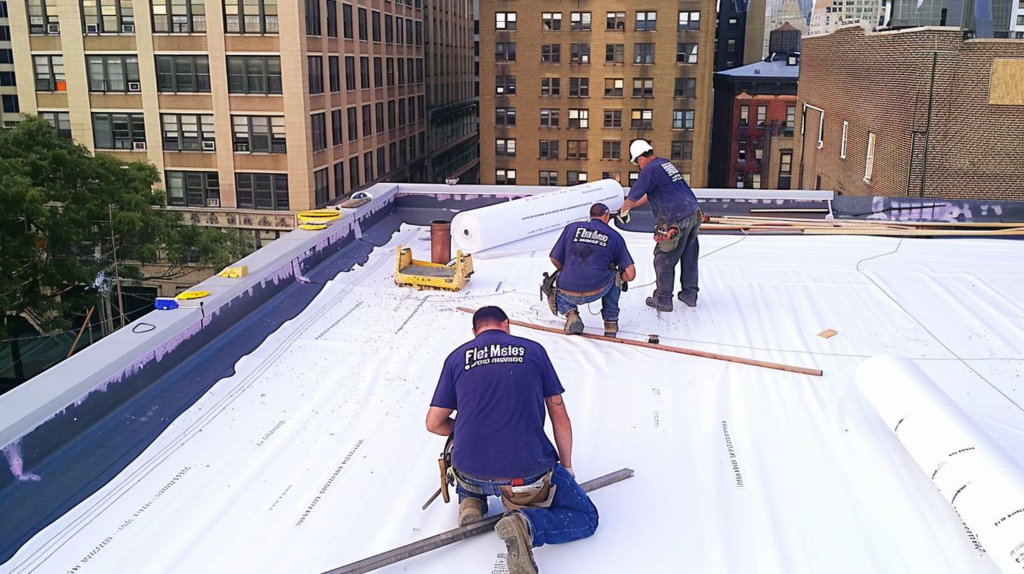
Trace the seam path, drain line, and flashing transitions uphill from the visible symptom before applying any sealant. Skipping this step is why patches fail.
Is the membrane dry and structurally sound in that area?
| Myth | Reality |
|---|---|
| The stain on your ceiling shows you exactly where to seal. | Ceiling stains show where water exited the roof system - the entry point is almost always somewhere else uphill. |
| More sealant means a better, longer-lasting repair. | Volume doesn't fix poor adhesion or the wrong product choice. A thick smear on a damp or degraded surface fails faster than a thin, correct repair on a prepped one. |
| If the roof looks dry in the afternoon, it's dry enough to seal. | Surface dry and assembly dry are two very different things. Insulation and substrate below the membrane can hold moisture for days after rain stops. |
| All flat roof membranes accept the same patch products. | TPO, EPDM, modified bitumen, and built-up roofing each require compatible materials. Cross-product patches often fail within one season. |
| One successful dry patch means the root cause is fixed. | A patch that holds through one storm doesn't mean the underlying issue is resolved. Water finds the next weak point - often at the patch edge itself. |
Damp Membranes, Hidden Moisture, and Trapped Blisters Ruin Repairs Fast
Why timing matters more than the tube label
Here's the blunt version: wet roofs and rushed sealant do not become dry roofs just because you're optimistic. Moisture under or around a patch weakens adhesion immediately - heat then softens the membrane, and trapped water doesn't sit still, it keeps moving laterally until it finds another exit. One August afternoon in Ridgewood, I got called by a landlord who said, "We sealed the flat roof leak three times, so now it must be coming through the wall." It was 92 degrees - the kind of Queens summer heat that bounces hard off the dark membrane of a rowhouse roof and makes the whole surface feel like it's breathing. Every patch they'd put down had trapped water underneath because nobody cut out the wet blister first. The tenant thought the roof was cursed; really, it was just bad sequencing and wishful thinking.
I had a landlord in Ridgewood tell me, "But the crack is right there," and that's exactly how people miss the real leak. That sounds reasonable, but here's where it breaks: cracks, fishmouths, and surface splits are often symptoms of membrane movement - thermal expansion, substrate shift, or age. The actual water entry is frequently at laps, drain collars, edge metal, or flashing transitions several feet away. Sealing the crack you can see while ignoring the seam you can't is a way of looking productive while the real problem keeps running.
Sealing over wet insulation is not repair. It is delay with better marketing.
| Condition | Common Sealing Method | Why It Fails or Holds | Temporary or Corrective |
|---|---|---|---|
| Surface crack, dry membrane, stable substrate | Roofing cement smear | Holds short-term if surface is truly dry; cracks again with thermal movement | Temporary only |
| Small puncture, sound membrane around it | Self-adhesive tape patch | Works if membrane is compatible and surface is clean; fails on chalky or aged surfaces | Temporary to short-term corrective |
| Large crack or seam separation, dry area | Liquid-applied sealant | Holds well when applied to correct membrane type with proper primer; fails on damp or degraded surfaces | Corrective if prepped properly |
| Blister, wet insulation below, or active moisture area | Reinforced membrane patch | Only holds if wet material is removed first; traps moisture and lifts without cut-out | Corrective - requires substrate work first |
| Ponding near drain, clogged or low drain bowl | Drain reset with sealant | Fails immediately if drain isn't cleared and reset; holds well once drainage is restored | Corrective only after drain work |
| Open lap seam, flashing separation, edge metal gap | Seam repair with compatible tape or weld | Holds reliably if seam is dry, primed, and properly bonded; fails if only surface-coated without edge reinforcement | Corrective |
Moisture trapped below a sealed patch doesn't disappear - it migrates. It lifts adhesives from the inside, corrodes fasteners and metal decking over time, and pushes water laterally into walls, ceiling assemblies, and light fixtures far from the original patch location.
A dry surface is not the same thing as a dry roof assembly. What you see on top and what's happening in the insulation layer below can be two completely different conditions - and sealing based on surface appearance alone is one of the most common reasons leaks keep coming back.
Drainage Problems Make Even Good Sealing Methods Look Bad
If I'm standing next to you by the roof hatch, I'm going to ask one question first: where did it leak after the last rain, not this one? The timing of a leak - whether it appears during rain, an hour after, or the following morning - tells you a lot about whether water is entering at an open seam, backing up behind a clogged drain, or sitting in a low spot and finding its way through a small gap after hours of ponding. I remember a Sunday in Astoria, windy and cold, helping a restaurant owner who needed the best way to seal a leaking flat roof before Monday lunch service. Someone had used roofing cement around the drain like they were frosting a cake. But the drain bowl was partly clogged, and the water line on the membrane told the whole story - that roof had been holding water for hours after every storm. I had to explain that no sealing method holds up when the roof is still functioning as a bathtub.
Here's an insider move worth doing before you call anyone: go up after a rain, not during it. Look for clean silt rings around drains and penetrations - those rings show you the high-water mark after the drain cleared. Check debris trails and water staining around curbs, vent stacks, and scuppers. Those marks are usually more honest than a fresh smear of sealant somebody applied in dry conditions. Let's separate the symptom from the source one more time: a silt ring two inches above the drain collar isn't a seam problem - it's a drainage problem, and sealing around it without fixing the flow is just redecorating the failure.
- The exact room and location where the leak or stain appeared inside the building
- Whether the leak happened during rain, hours after it stopped, or the following morning - timing matters
- Any recent DIY patch or prior repair, including what product was used and when it was applied
- Photos of both the roof surface and the interior stain - taken from multiple angles if possible
- Whether you've noticed standing water near drains, scuppers, or parapet edges that stays for hours after rain
- Whether the leak is near any electrical fixtures, recessed lights, or junction boxes - this affects urgency and safety
Choosing the Right Repair Means Matching the Roof Condition, Not Guessing
Temporary stopgap versus real corrective repair
This is the part people hate hearing - some leaks should not be sealed before the area is opened up and checked underneath. If there's moisture in the insulation, a soft or delaminated substrate, or a failed seam that's been covered twice already, adding more sealant on top is not a repair strategy. It's avoidance. In my experience, the best way to seal a leaking flat roof is usually the least dramatic option done in the right sequence - match the repair method to the membrane type, address drainage before sealing around drains, cut out wet material before patching over it. Big, heavy smears of roofing cement don't outperform a clean, compatible seam repair done on dry, prepped material. They just look more committed.
A bad roof patch is like taping over the warning light on a dashboard: quieter for a minute, more expensive later. For owners in Queens managing multifamily homes, mixed-use buildings, or small commercial roofs - the kind of flat-topped brick buildings you see stacked from Sunnyside all the way out through Richmond Hill - a repeated leak that keeps coming back after two or three patch attempts isn't a material problem. It's a sequencing and diagnosis problem. Get the source right, match the method, and the repair holds. Skip those steps and you're scheduling the next call before the caulk dries.
| Approach | Pros | Cons |
|---|---|---|
| Emergency Temporary Seal |
|
|
| Full Corrective Repair |
|
|
If a flat roof leak keeps coming back after one or two patch attempts, Flat Masters can inspect the roof path, moisture condition, and drainage before anyone adds more sealant - because more product on an undiagnosed problem is not a repair, it's a delay. Give us a call and let's figure out what's actually happening up there.
